

Himalayan dog chews are dense yak cheese chews traditionally made in the Himalayan regions of Nepal, Bhutan, and Tibet using yak milk, cow milk, lime juice, and salt. Unlike rawhide and heavily processed dog chews, authentic Himalayan chews contain minimal ingredients, develop their hardness through weeks of natural drying, and provide long-lasting chewing engagement without artificial preservatives or chemical binders. Their dense structure supports slow gnawing behavior, making them popular among dog owners looking for a durable, natural chew that also helps reduce boredom, support dental hygiene, and satisfy instinctive chewing needs.
Choosing the best Himalayan dog chew depends on more than brand labeling or package appearance. Ingredient transparency, yak milk percentage, chew density, country of origin, and proper sizing all directly affect safety, durability, and overall value. A chew that is too soft can break into unsafe fragments, while an incorrectly sized chew may increase choking or dental fracture risk for aggressive chewers. This guide explains how authentic Himalayan yak cheese chews are made, what separates premium products from low-quality imitations, how to choose the right chew for your dog’s size and chewing intensity, and which safety and quality indicators matter most before buying.
What Are Himalayan Dog Chews Made From?

Himalayan dog chews are made from hardened yak and cow milk cheese, with lime juice and salt used as natural preservatives and binding agents. The finished product contains no grain, no rawhide, and no artificial ingredients. The 4 core ingredients, yak milk, cow milk, lime juice, and salt, create a dense, odor-free chew that lasts significantly longer than most conventional chews.
The simplicity of the ingredient list is one of the strongest quality indicators. Any Himalayan chew listing more than 5 ingredients warrants close inspection before purchase.
How Is Traditional Himalayan Yak Cheese Made?
Traditional Himalayan yak cheese is made through a multi-step boiling, pressing, and drying process that takes between 4 and 6 weeks to complete. Yak and cow milk are boiled together, then acidified with lime juice to separate the curds from the whey. The curds are drained, hand-pressed into dense blocks, and smoked or sun-dried at high altitude for several weeks until the moisture content drops below 10%.
This low moisture content is what gives authentic Himalayan chews their characteristic hardness and extended shelf life. The practice originated in the Himalayan regions of Nepal, Bhutan, and Tibet, where herders developed this technique as a way to preserve dairy nutrition through long mountain winters. Dogs in those regions were traditionally given the hardened leftover pieces, a practice that eventually became formalized into the modern Himalayan dog chew product.
Why Are Himalayan Dog Chews So Hard?
Himalayan dog chews are hard because the cheese is compressed under pressure and then dried for weeks until nearly all moisture is removed. Moisture content below 10% creates a structural density that resists cracking, splintering, or breaking under normal chewing pressure.
This hardness serves a specific purpose. It forces dogs to gnaw slowly, activating jaw muscles, stimulating saliva production, and preventing them from biting off large fragments. A chew that is too soft breaks apart quickly and increases the risk of ingesting large chunks. What most people overlook is that the hardness is not a sign of being overly processed; it is a direct result of the natural drying method used for centuries in Himalayan communities.
What Makes Himalayan Chews Different From Rawhide?
Himalayan chews differ from rawhide in 3 critical ways: composition, digestibility, and safety profile. A deeper look at how yak chews compare to other popular chew types makes each of these distinctions immediately apparent.
A documented FDA recall found that major rawhide manufacturers in Mexico, Colombia, and Brazil were using quaternary ammonium compounds, industrial antimicrobials approved for cleaning equipment, not for use in dog food production, as processing aids in rawhide chews, causing ‘gastric irritation, including diarrhea and vomiting’ in dogs. Himalayan chews are made entirely from dairy, no animal skin, no chemical treatment, no artificial enhancement.
Digestibility is where the distinction matters most for dog health. Rawhide expands significantly when wet and is poorly digestible, creating documented risks of gastrointestinal blockages. Himalayan chews soften into a digestible, cheese-like consistency as dogs chew them. Board-certified veterinary nutritionists writing in Today’s Veterinary Practice (2024) confirm that rawhide production commonly involves hydrogen peroxide, lime, detergents, and sodium bicarbonate, and that rawhide digestibility varies wildly from 35% to 95% across tested products, creating an unpredictable safety profile (Gaylord & Raditic, Today’s Veterinary Practice 2024).
Why Do Dogs Love Himalayan Dog Chews?
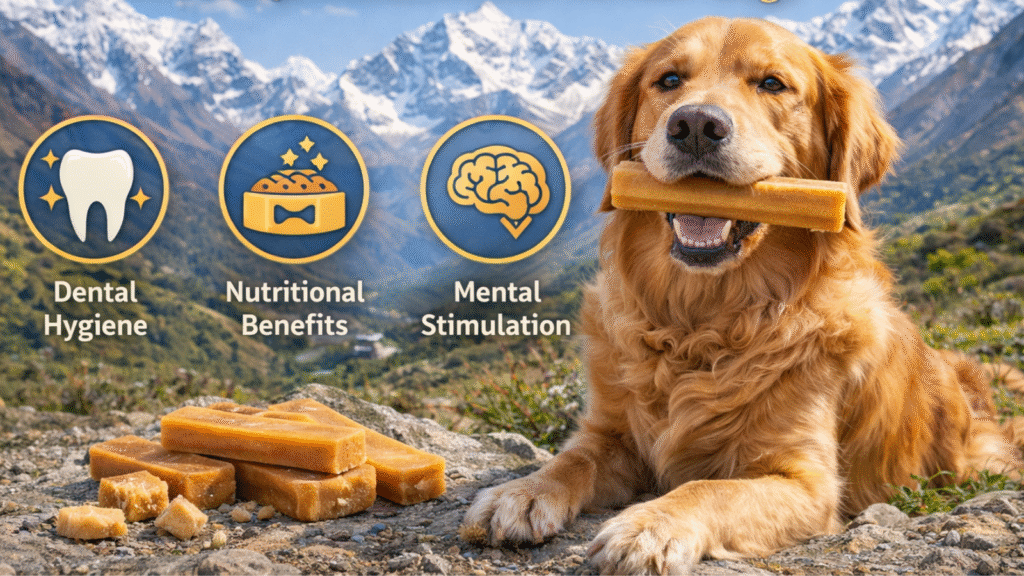
Dogs love Himalayan dog chews because the chews satisfy 3 core behavioral needs simultaneously: the instinct to gnaw, the need for sustained mental engagement, and the reward of a palatable flavor derived from natural dairy. Unlike synthetic chews that rely on artificial flavoring, Himalayan chews offer a smell and taste that dogs recognize as food.
How Do Himalayan Chews Satisfy Natural Chewing Instincts?
Himalayan chews satisfy natural chewing instincts by providing resistance-based engagement that mimics what dogs historically experienced when gnawing on bones or tough material in the wild. The hard texture requires continuous jaw movement, activating the full chewing mechanism rather than allowing quick consumption.
Dogs have a neurological reward response tied to sustained chewing. A 2023 controlled study by Flint et al. published in Animals found that long-lasting chews produced the most positive emotional states and lowest arousal scores in dogs during 20-minute isolation periods, outperforming treat-dispensing toys and smart device alternatives. The resistance of a Himalayan chew sustains this response longer than soft treats, which is why dogs return to the chew repeatedly across multiple sessions rather than consuming it in a single sitting.
Can Himalayan Dog Chews Help Reduce Boredom?
Himalayan dog chews reduce boredom by providing a mentally engaging activity that occupies dogs for 30 to 90 minutes per session, depending on the dog’s size and chewing intensity. Boredom in dogs manifests as 5 common destructive behaviors: excessive barking, furniture chewing, digging, pacing, and attention-seeking aggression. A long-lasting chew addresses the root cause, insufficient mental stimulation, rather than treating the symptoms.
The key distinction from shorter treatments is duration. A standard soft treat lasts under 60 seconds. A Himalayan chew sustains engagement long enough to shift a dog’s mental state from restless to calm. Dog owners who use Himalayan chews regularly report fewer instances of destructive behavior, particularly during high-stimulation periods like thunderstorms, fireworks, or extended time alone. For a full picture of what consistent chewing does for your dog’s wellbeing, explore the documented health and behavioral benefits of Himalayan yak dog chews.
Do Himalayan Dog Chews Support Dental Health?
Himalayan dog chews support dental health through mechanical abrasion, the same physical process that a toothbrush applies to human teeth. As a dog gnaws against the hard surface, plaque and tartar deposits are physically scraped from the enamel, particularly along the gumline where buildup concentrates. For a full breakdown of each mechanism and what the evidence shows, see the complete resource on the dental benefits of Himalayan yak chew churpi.
The VOHC’s 2024 Accepted Products Table documents over 30 dog products that have earned the VOHC Seal of Acceptance through controlled clinical trials demonstrating ≥15% plaque reduction or ≥20% tartar reduction, confirming that mechanical chewing action meets a measurable, evidence-based threshold for dental benefit. While Himalayan chews are not formally VOHC-approved (as that designation applies to specific product formulations), their hard texture produces consistent mechanical cleaning effects. A 2022 study in BMC Veterinary Research found that dental chews significantly reduced both the total bacterial load in plaque and volatile sulfur compounds linked to oral malodour, with reductions confirmed at p < 0.001 compared to no-chew controls, supporting the case for consistent chewing as a measurable dental maintenance tool.
What Should You Look for in the Best Himalayan Dog Chew?
The best Himalayan dog chew contains 4 ingredients or fewer, carries a country-of-origin statement indicating Nepal or the Himalayan region, and shows no signs of surface cracking, discoloration, or chemical odor. Evaluating these 3 factors before purchase eliminates 80% of low-quality products.
Which Ingredients Should Be Included in a Quality Chew?
A quality Himalayan chew includes exactly these ingredients: yak milk, cow milk, lime juice, and salt. Each ingredient serves a defined functional role.
- Yak milk provides the primary protein matrix and gives the chew its density.
- Cow milk is commonly blended at a ratio of 30–40% to reduce cost without significantly affecting quality.
- Lime juice acts as the natural acidifying agent that curdles the milk and contributes to antimicrobial preservation.
- Salt draws out residual moisture during the drying phase and enhances flavor.
The yak milk percentage matters. Chews labeled as “80% yak milk” or “70% yak milk” are higher in the structural protein that creates lasting hardness. Products that list cow milk first or omit the yak milk percentage often contain significantly less yak milk than the branding implies. Understanding what makes Himalayan yak chews unique in the market explains why the yak milk ratio is the single most telling quality indicator on any label.
Which Artificial Additives Should You Avoid?
Avoid Himalayan chews that contain any of these 6 additives: glycerin, artificial flavoring, sodium tripolyphosphate, potassium sorbate, carrageenan, and artificial colorants.
Glycerin is commonly added to prevent surface drying in storage, a sign that the chew was not properly dried during manufacturing. Artificial flavoring masks the odor of lower-quality milk or processing byproducts. Sodium tripolyphosphate, while used in some dental chews, is not a natural component of traditional yak cheese and signals a hybrid manufacturing process. Any chew requiring artificial color has been processed beyond the traditional method and typically uses lower-quality base material.
How Can You Tell If a Himalayan Chew Is Authentic?
An authentic Himalayan chew displays 4 verifiable characteristics: a rough, uneven surface texture; a natural off-white to light golden color; a faint dairy odor when opened; and a country-of-origin label stating Nepal, Bhutan, or a Himalayan region.
Surface texture is the first visual test. Machine-extruded imitation products have uniform, smooth surfaces. Authentic hand-pressed chews show slight surface variation, irregular edges, and minor inconsistencies in shape, all markers of artisan production.
Color tells the processing story. Pure, properly dried yak cheese ranges from off-white to light golden-brown. A very white, chalky product was likely bleached or over-processed. A dark brown product may have been over-smoked or produced from lower-quality milk. Importers and retailers that source directly from Himalayan cooperatives or certified Nepali producers consistently deliver more authentic products than those relying on secondary distributors.
How Do You Choose the Right Size Himalayan Dog Chew?
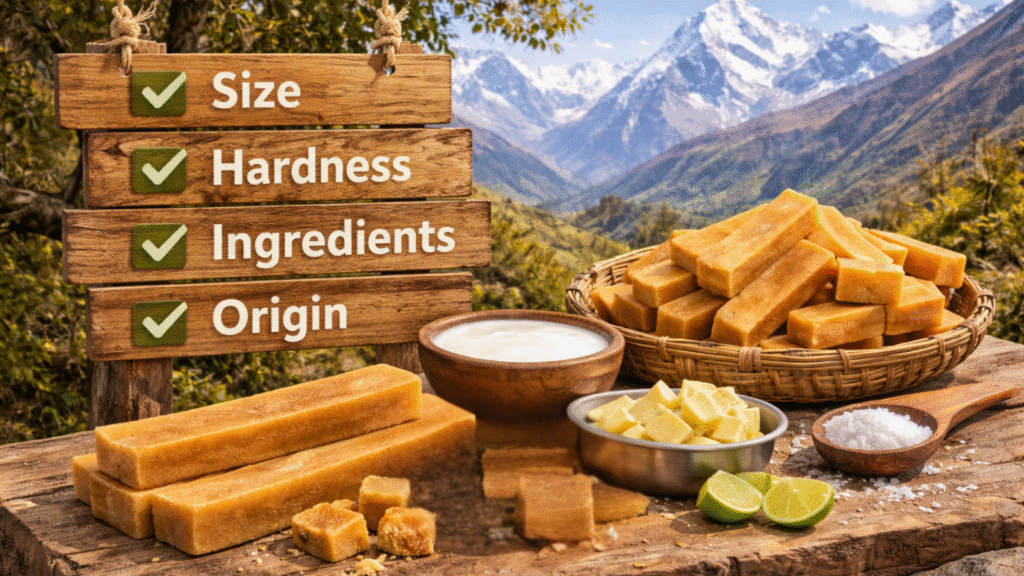
Choose a Himalayan dog chew size based on your dog’s body weight, not breed name alone, because chewing intensity varies significantly within breeds of the same size. Most manufacturers use a 3-tier sizing system: small (under 15 lbs), medium (15–35 lbs), and large (35 lbs and above). For a dedicated resource covering all variables, the guide to choosing the right dog chew for your dog’s size, age, and chewing style walks through every decision point.
What Size Chew Is Best for Small Dogs?
Small dogs weighing under 15 pounds, such as Chihuahuas, Toy Poodles, and Yorkshire Terriers, require chews labeled as small or extra-small, typically weighing between 1 and 2 ounces. The primary risk for small dogs is not that the chew is too hard, but that large chews create a size mismatch that allows them to bite off fragments too large for safe consumption.
A chew sized correctly for a small dog presents a surface area that the dog’s jaw can grip without generating the torque necessary to snap off large pieces. When in real-world use, many small dog owners undersize the chew, thinking it is safer, but undersized chews are consumed too quickly and lose the dental and behavioral benefits that make the product valuable.
What Size Chew Is Best for Medium Dogs?
Medium dogs weighing 15 to 35 pounds, such as Beagles, Cocker Spaniels, and French Bulldogs, perform best with medium-sized chews weighing 2 to 3.5 ounces. This weight range provides enough mass for 3 to 7 days of intermittent chewing before the chew reaches a size that requires monitoring.
Medium-sized dogs are the group where chewing style matters most. A moderate chewer in this weight range will get weeks of use from a medium chew. An aggressive chewer of the same weight may consume the same chew in 2 to 3 sessions. Identifying your dog as a moderate or power chewer before purchase, based on how quickly they have consumed previous chews, is the single most accurate sizing decision factor.
What Size Chew Is Best for Large or Aggressive Chewers?
Large dogs weighing over 35 pounds and dogs classified as aggressive chewers, including Labrador Retrievers, German Shepherds, Pit Bulls, and Rottweilers, require large or extra-large chews weighing 3.5 ounces or more. Some manufacturers produce jumbo options exceeding 5 ounces specifically for dogs over 65 pounds.
ed paragraph: Aggressive chewers create the greatest sizing risk on both ends: a chew that is too small becomes a choking hazard quickly, while a chew that is too soft fragments and creates ingestion risks. For large aggressive chewers, the chew density matters as much as the weight. Look for products that specify “for power chewers” and carry a noticeably higher price; that premium typically reflects a higher yak milk percentage and extended drying time, both of which produce a chew dense enough to withstand aggressive chewing without premature fracturing. Products manufactured by a trusted Himalayan dog chew manufacturer that applies traditional multi-week drying protocols are the most consistent option for this chewer category.
Are Himalayan Dog Chews Safe for Every Dog?
Himalayan dog chews are safe for most adult dogs, but are not appropriate for puppies under 6 months, dogs with advanced dental disease, or dogs with dairy protein sensitivities. Supervised use during initial sessions is the standard safety practice recommended by veterinarians familiar with hard chew use. For a dedicated review of each risk category, the full guide covering whether yak chews are safe for dogs addresses each condition in depth.
At what age should dogs be before using Himalayan Chews?
Dogs should be at least 6 months old before using standard Himalayan dog chews. At 6 months, most dogs have transitioned from deciduous (puppy) teeth to adult dentition, and the jaw has developed sufficient structural integrity to engage a hard chew without risking tooth fracture.
The 6-month threshold is a minimum, not a guarantee. Dogs in the 6 to 12-month range still have developing adult teeth. Starting with a softer or smaller chew during this window, and graduating to full-hardness products at 12 months, reduces fracture risk during the critical early dental development phase.
Can Puppies Have Himalayan Dog Chews?
Puppies under 6 months of age cannot safely use standard hard Himalayan dog chews. The puppy’s deciduous teeth are not structurally capable of withstanding the pressure required to gnaw a fully dried yak cheese chew without fracturing.
Some manufacturers produce puppy-specific Himalayan chews that are softer, smaller, and formulated to meet the lower jaw pressure capacity of young dogs. These products undergo a shorter drying period, typically 2 to 3 weeks rather than 4 to 6, resulting in a chew that yields more easily under pressure. Puppy Himalayan chews remain a legitimate option for dogs 3 to 6 months old when the product is specifically labeled for puppies and supervision is maintained for every session. See the full age breakdown covering at what age puppies can have yak chews before introducing any chew to a young dog.
What Safety Risks Should Dog Owners Watch For?
Dog owners using Himalayan chews watch for 4 specific safety risks: tooth fracture, large fragment ingestion, choking on end pieces, and dairy intolerance reactions.
Tooth fracture occurs when a dog applies maximum bite pressure to a chew that is too hard for their specific dental condition. Dogs with existing dental disease, cracked teeth, or worn enamel face a higher fracture risk. The knuckle test, pressing the chew firmly against the back of your hand, is a practical field check: a chew that does not yield slightly under firm human pressure may be too hard for dogs with compromised dental health.
Large fragment ingestion happens when a dog manages to bite off a piece larger than 1 inch in diameter. Always remove the chew for 15 minutes to observe whether your dog is chewing normally or working to split off chunks.
End piece choking is the most documented safety event with Himalayan chews. When the chew reaches approximately 2 inches in length, it enters the choking zone for most dogs. Remove it at this stage and use the microwave softening method (described in the section below) to convert the end piece safely.
Dairy intolerance reactions present as loose stool, gas, or vomiting within 6 hours of the first session. Hard yak cheese contains very low lactose levels due to the acidification and drying process, significantly lower than those of fresh dairy. Most lactose-sensitive dogs tolerate yak chews without reaction, but dogs with confirmed dairy protein allergies require veterinary clearance before use. For a detailed breakdown of digestive responses by sensitivity type, the dedicated resource on can yak chews upset your dog’s stomach covers every scenario.
How Long Should a Himalayan Dog Chew Last?
A properly sized Himalayan dog chew lasts between 1 and 4 weeks when used in supervised sessions of 20 to 30 minutes, 3 to 4 times per week. Chew longevity varies by 4 primary factors: the dog’s weight, chewing intensity, the chew’s yak milk percentage, and the session frequency.
What Factors Affect Chew Durability?
Chew durability depends on 4 measurable variables:
- Yak milk percentage: Chews with 70–80% yak milk last 30–50% longer than those with 50% or less due to higher protein density
- Moisture content: Properly dried chews with moisture below 10% maintain structural integrity longer than under-dried products
- Dog body weight: A 60-pound dog generates approximately 3 times more bite force than a 15-pound dog, consuming the same-sized chew proportionally faster
- Chewing style: Gnawing dogs consume chews more slowly than biters; dogs that attempt to crack the chew laterally wear it down 40–60% faster
The most common mistake owners make with Himalayan chews is allowing unlimited access. Unrestricted chewing accelerates consumption, eliminates the durability benefit, and increases the risk of ingesting a large end piece without supervision.
How Often Should Dogs Have Himalayan Chews?
Dogs should have access to Himalayan chews 3 to 4 times per week in sessions lasting 20 to 30 minutes each. Daily access is acceptable for moderate chewers, provided each session is supervised, and the chew is stored between uses. For breed-specific and age-adjusted guidance, the resource on how often you should give your dog a chew provides a practical frequency framework tailored to different chewing profiles.
Frequency also affects the dental benefit. Three to 4 chewing sessions per week is the minimum interval necessary to produce consistent mechanical plaque reduction. Fewer sessions produce diminishing dental benefit. More frequent sessions without supervision increase the ingestion risk as the chew wears down faster than owners anticipate.
What Should You Do With Small Leftover Pieces?
Small leftover pieces, fragments under 2 inches, convert into safe, edible puff treats using a microwave. Place the end piece on a microwave-safe plate and heat it on high power for 30 to 45 seconds. The residual moisture inside the dense cheese expands, puffing the piece into a light, crunchy treat that dogs consume safely without choking risk. For step-by-step timing and wattage guidance, see the complete resource on how to puff yak chews in the microwave.
This conversion method eliminates waste, extends the value of each chew, and gives dogs a satisfying bonus treat. It is one of the most practical features of authentic Himalayan chews and something no synthetic chew alternative replicates. The puffed piece still contains the same protein as the original chew; it simply becomes digestible and soft enough for safe immediate consumption.
Which Types of Himalayan Dog Chews Are Available?
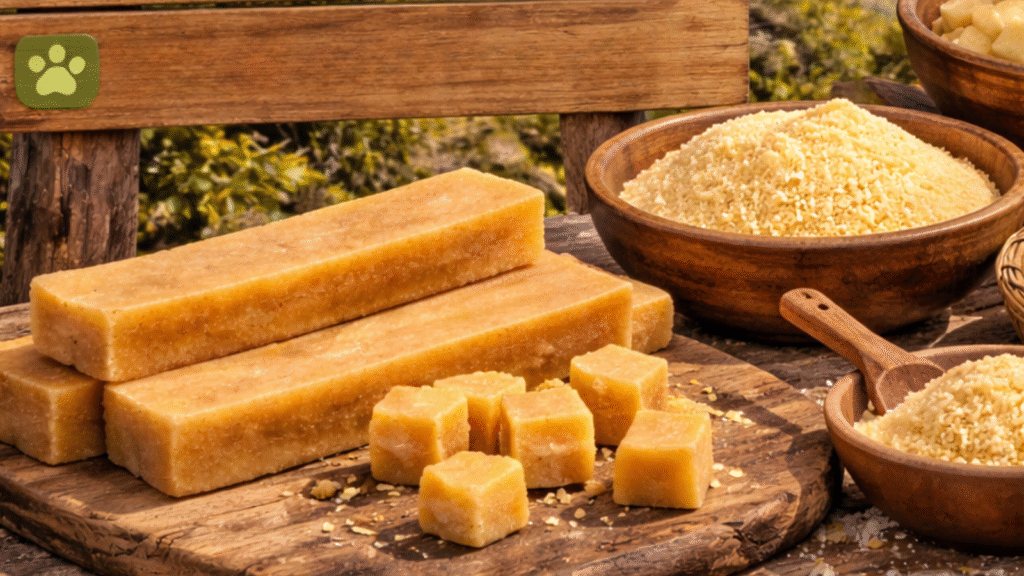
Himalayan dog chews are available in 4 primary formats: standard dried, smoked, soft or junior, and flavored. Each format targets a different dog profile based on age, chewing strength, and dietary preference.
What Are Smoked Himalayan Dog Chews?
Smoked Himalayan dog chews undergo an additional cold-smoking step after the standard drying process, using wood smoke, typically hickory, applewood, or pine, to enhance flavor and add a surface layer of antimicrobial protection. The smoking process does not significantly change the chew’s hardness or nutritional profile, but produces a more pronounced aroma that appeals to dogs with lower motivation for standard dairy-scented chews.
Smoked chews are particularly effective for picky eaters or dogs that have shown disinterest in standard Himalayan chews. The smoke aroma activates scent-driven interest before the dog engages with the flavor. Dogs with existing interest in smoked meat flavors, those regularly given smoked bones, smoked salmon treats, or smoked jerky, adapt quickly to smoked Himalayan chews without requiring an introduction period.
Are Soft Himalayan Chews Better for Senior Dogs?
Soft Himalayan chews are better for senior dogs in 3 specific situations: dogs over 8 years old with visible dental wear, dogs diagnosed with periodontal disease, and dogs that have undergone recent dental extraction. Standard hard Himalayan chews carry a measurably higher fracture risk for dogs whose enamel and dentin have thinned with age.
Soft Himalayan chews achieve their lower hardness through a shorter drying period, typically 2 weeks rather than 4 to 6, leaving a residual moisture content of 15–20% rather than under 10%. This produces a chew that yields under jaw pressure rather than resisting it, preserving the chewing engagement and flavor without the structural demands of a fully hardened chew. Veterinary dentists commonly recommend soft or junior-grade chews for senior dogs as a safer alternative to both hard chews and no-chew activity at all.
What Flavored Himalayan Dog Chews Can You Buy?
Flavored Himalayan dog chews are available in 5 common varieties: plain (traditional dairy), bacon, peanut butter, turmeric, and chicken. Each flavoring is typically applied as a coating or infused during a secondary dipping process after the initial drying.
Peanut butter and bacon flavors are the highest-selling flavored variants, particularly for dogs that need motivation to engage with a new chew type. Turmeric-infused chews carry an added anti-inflammatory claim that some manufacturers highlight, though the turmeric concentration in a chew consumed over multiple sessions is unlikely to produce clinically significant anti-inflammatory effects. Flavored chews are worth considering for picky dogs or during the introduction phase. After a dog establishes a preference for the chew format, switching to an unflavored version is cost-effective and eliminates any risk associated with the flavoring additives.
How Can You Spot Low-Quality Himalayan Dog Chews?
Low-quality Himalayan dog chews display 4 identifiable warning signs: excessive smoothness of surface texture, very white or very dark coloration, an absence of country-of-origin labeling, and an ingredient list exceeding 5 items. Any single sign warrants caution; multiple signs confirm low quality.
Why Do Some Himalayan Chews Crack Too Easily?
Some Himalayan chews crack too easily because they were under-dried during manufacturing, have an insufficient yak milk percentage, or were stored in conditions that allowed moisture reabsorption after production. A properly made Himalayan chew does not crack; it wears down through slow surface abrasion.
Premature cracking creates 2 practical problems. First, it produces sharp-edged fragments that present a laceration risk inside the dog’s mouth or esophagus. Second, it allows a dog to consume the chew rapidly in large chunks, bypassing the slow-gnawing behavior that makes the chew safe. Cracking-prone chews are almost always the result of cost-cutting in the drying phase, a step that requires time and cannot be accelerated without compromising structural integrity.
What Packaging Details Indicate Better Quality?
Packaging details that indicate better quality include 6 specific elements: a country-of-origin statement, a yak milk percentage disclosure, a best-by date (not a manufactured-on date alone), an NASC or USDA-compliant quality seal, clear ingredient disclosure on the primary panel, and contact information for the manufacturer or importer.
Country of origin is non-negotiable. Products that list “made with Himalayan yak milk” without specifying where the product was manufactured often source the dried cheese from Nepal but conduct final processing in a lower-cost facility, a practice that can affect quality control. Products manufactured and finished in Nepal or Bhutan under fair-trade or cooperative certification consistently outperform others on both quality and ingredient authenticity.
How Important Is Ingredient Transparency?
Ingredient transparency is the most reliable quality differentiator available to a buyer without opening the product. A manufacturer confident in their sourcing and production lists every ingredient, every percentage, and every supplier claim on the primary label, not buried in fine print or absent from the packaging entirely.
Products that withhold the yak milk percentage, omit the country of manufacture, or list vague terms like “natural flavors” are providing incomplete information that protects the manufacturer rather than the buyer. Dogs cannot advocate for ingredient quality. That responsibility falls entirely on the owner, and ingredient transparency is the minimum standard a quality manufacturer owes to both.
Are Himalayan Dog Chews Worth the Price?
Himalayan dog chews priced between $8 and $20 per chew are worth the price for most dog owners because a single chew replaces 3 to 5 lower-cost treats that would have been consumed in the same time period. The per-use cost, when measured correctly, is lower than the per-use cost of cheaper alternatives consumed at a higher frequency.
Why Are Premium Himalayan Chews More Expensive?
Premium Himalayan chews are more expensive for 4 concrete reasons: longer drying periods (4–6 weeks vs. 1–2 weeks for lower-cost versions), higher yak milk content (70–80% vs. 40–50%), ethical sourcing from small-scale Himalayan herding cooperatives, and third-party quality testing for contaminants and moisture content.
The cost of authentic yak milk is significantly higher than that of cow milk or synthetic dairy alternatives. Yak herds in Nepal and Bhutan are small, seasonal, and managed by individual herding families, not industrial dairy operations. Sourcing from these cooperatives involves fair-trade pricing commitments that are reflected in the retail cost. Buyers paying a premium for a Himalayan chew from a transparent brand are paying for verifiable authenticity, not marketing.
Can Higher-Quality Chews Save Money Over Time?
Higher-quality Himalayan chews save money over time through 3 direct cost mechanisms: longer per-unit lifespan, reduced frequency of purchase, and lower veterinary costs from dental complications that regular chewing helps prevent.
A $15 premium chew lasting 3 weeks for a medium dog costs $0.71 per day. A $6 budget chew consumed in 5 days costs $1.20 per day, 69% more per day of use. The math favors the premium product, yet most buyers make the decision based on the unit price rather than the daily cost.
Dental care provides the most significant long-term savings. Per the 2019 AAHA Dental Care Guidelines for Dogs and Cats, the current clinical standard for professional under-anesthesia cleaning, a full dental procedure includes oral exam, radiographs, and scaling; 2024 market-rate data shows this now costs $300 to $1,200 at a general practice and up to $4,000 at a veterinary dentist, making consistent mechanical chewing a potentially significant preventive cost offset. Consistent mechanical chewing that slows tartar accumulation can extend the interval between professional cleanings by 6 to 12 months, generating hundreds of dollars in preventive savings annually.
How Should You Approach Himalayan Dog Chews for Your Pet?
Choosing the right Himalayan dog chew for your pet requires 3 decisions made in sequence: first, confirm your dog’s age and dental health suitability, then match the chew size and hardness to their weight and chewing style, then evaluate the product’s ingredient transparency and sourcing authenticity. Making these 3 decisions before purchase eliminates the most common causes of dissatisfaction and safety concerns.
Introduce the chew during a calm, supervised 20-minute session. Observe whether your dog gnaws the surface steadily or attempts to crack the chew laterally. Gnawers are appropriate candidates for standard or hard-grade chews. Dogs that bite aggressively or attempt to fracture the chew laterally benefit from a denser, higher-yak-milk product or supervision to interrupt cracking attempts before they succeed.
Can a Trusted Pet Brand Help You Choose Better Chews?
A trusted pet brand simplifies the selection process by pre-screening sourcing, certifying ingredient percentages, and providing sizing guidance calibrated to real-world testing rather than generic weight ranges. Brands that publish their supplier relationships, conduct third-party contaminant testing, and provide a clear size-to-weight chart remove the guesswork that leads to poor purchases.
When evaluating a brand, look for 3 trust signals: a published sourcing statement naming the region or cooperative, a satisfaction or safety guarantee that covers returns if the product is refused or causes a reaction, and customer reviews that specifically address chew longevity for dogs of a similar weight and chewing style to yours. A brand that provides all 3 signals has structured its product offering around customer outcomes rather than unit volume.
What Are the Key Takeaways About Himalayan Dog Chews?
Himalayan dog chews deliver genuine value for dogs and owners when the product is authentic, correctly sized, and used under appropriate supervision. The 6 most important takeaways from this guide are:
- Ingredient count is the first quality filter: 4 ingredients or fewer is the standard for authentic products
- Size to body weight, not breed name: chewing intensity within breeds varies too widely to use breed as a reliable sizing proxy
- Dogs under 6 months require puppy-specific, softer chews: standard hard chews are not appropriate for developing puppy dentition.
- Remove the chew when it reaches 2 inches in length: microwave the end piece to convert it into a safe puff treat.
- Premium chews cost less per day of use than budget alternatives: calculate daily cost, not unit price, to make an accurate value comparison.
- Country of origin and ingredient transparency are non-negotiable quality standards: any product that withholds this information provides an insufficient basis for a confident purchase.
Himalayan dog chews represent one of the few pet products that deliver simultaneously on natural ingredients, behavioral enrichment, dental benefit, and long-lasting engagement. Choosing the right one comes down to knowing what to look for, and this guide provides every criterion you need to make that decision with confidence.