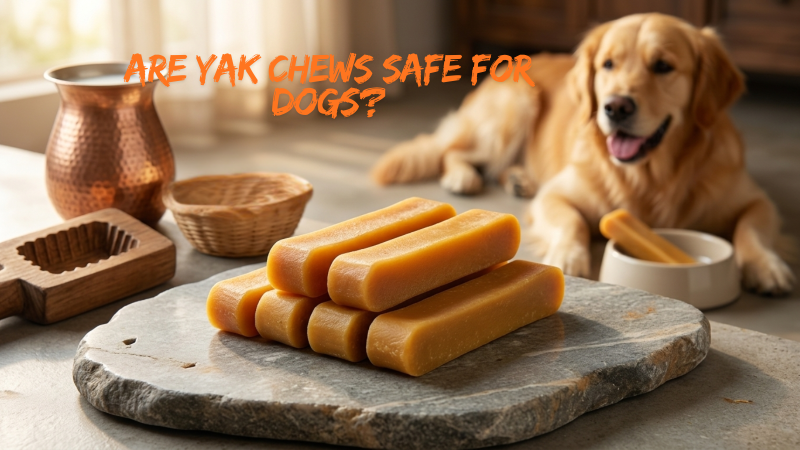
Yak chews (Chhurpi) are hard cheese dog chews made from yak and cow milk, widely used as a long-lasting, high-protein alternative to rawhide and synthetic bones. Dog owners choose Himalayan yak chews for their digestibility, minimal 4-ingredient composition, and ability to support natural chewing behavior. Safety depends on correct use, including matching the chew to the dog’s size, age, and bite strength, along with controlled chewing sessions of 15–30 minutes, 3–5 times per week. Their dense structure, created through an 8–12 week drying process, delivers both durability and a functional dental benefit through mechanical plaque reduction.
Regular use of yak chews requires understanding both their benefits and risks across different life stages and chewing behaviors. Adult dogs with healthy teeth can safely use properly sized chews, while puppies under 6 months, senior dogs with dental issues, and aggressive power chewers require special consideration or alternatives. Key safety factors include supervision, proper sizing, removal of small end pieces, and adherence to the recommended frequency to prevent dental damage, choking, or digestive issues. When used within these guidelines, yak chews function as a nutritionally valuable, low-fat enrichment tool that balances safety, digestibility, and long-lasting engagement.
What Are Yak Chews and How Are They Made?

Yak chews, traditionally called Chhurpi, originate from the high-altitude Himalayan regions of Nepal and Tibet. A 2023 peer-reviewed study in the Journal of Ethnic Foods (Panta et al., PMC9806816) documented that Nepali Chhurpi exporters have recorded an annual average growth of 10–11% over five consecutive fiscal years, driven by rising global demand for the hard, defatted yak cheese chew. The study confirms that modern dog chew production preserves the same core process as traditional Chhurpi: coagulation of yak and cow milk, whey draining, and extended drying.
Chhurpi (also spelled Churpi or Churpee) is classified as a hard cheese chew derived from the milk of domesticated yaks (Bos grunniens) and crossbred cattle grazing at elevations above 3,000 meters in Nepal, Tibet, and Bhutan. The term “Himalayan dog chew” refers specifically to this category of product. It is distinct from rawhide chews, synthetic nylon bones, and collagen sticks in both composition and digestibility profile.
What Ingredients Are Used in Yak Chews?
Authentic yak chews contain exactly 4 natural ingredients: yak milk, cow milk, lime juice (used as a coagulant), and a trace amount of salt for curdling and preservation. No bleach, artificial binders, chemical preservatives, or synthetic flavor additives are present in compliant Himalayan chews.
The 4 ingredients and their functional roles are:
- Yak and cow milk: primary protein and calcium source, sourced from free-range animals in high-altitude Himalayan pastures
- Lime juice: a natural acid coagulant that separates whey from curd
- Salt: a trace mineral that initiates curd formation and inhibits microbial growth during drying
- Smoke: natural preservative and flavor agent applied during the curing phase
Most of the fat and lactose are removed during boiling and churning, which is why yak chews carry a low-fat nutritional profile and reduced dairy allergen load compared to standard cheese products.
Are Yak Bones Safe for Dogs?
“Yak bones” is an informal name used in the pet product market for yak chews (Chhurpi), the same compressed cheese blocks made from yak and cow milk that this page covers. These products are composed of dairy protein, not animal bone tissue. The label can cause confusion when comparing safety profiles between chew types.
The distinction matters:
- Yak chews (sold as “yak bones”): A compressed, smoke-dried cheese block. Does not splinter under chewing force. Fully digestible when broken down. Subject to the same sizing, supervision, and session guidelines throughout this page.
- Actual skeletal bones from any animal: A different product category. Raw or inadequately processed animal bones can splinter under compressive force, and raw bones carry bacterial contamination risks not associated with cheese-based chews. This page does not apply to actual yak or other animal bones.
Any product labeled “yak bones,” “Himalayan yak bones,” or “yak cheese bones” that uses the 4-ingredient Chhurpi formulation, yak milk, cow milk, lime juice, and salt, is a yak chew. All safety guidelines on this page apply.
How Does the Traditional Drying Process Work?
The traditional yak chew manufacturing process spans 8 to 12 weeks and involves 4 sequential stages: milk boiling and churning, curd pressing into blocks, smoke-drying, and sun-drying, each stage progressively reducing moisture content until the block achieves its signature rock-hard density.
The 4-stage process in sequence:
- Milk boiling and churning: Raw yak and cow milk is boiled and churned to separate fat (used for butter) and to reduce lactose concentration by approximately 95%.
- Curd separation: Lime juice is added to the skimmed milk to coagulate the remaining protein into solid curds, which are then drained of whey.
- Block pressing: The curds are compressed into rectangular molds under weight for 24–48 hours to expel residual liquid.
- Smoke-drying and sun-drying: Pressed blocks are alternately smoked and sun-dried over 8–12 weeks until water activity drops below the threshold for microbial spoilage.
The result is a chew with a shelf life of up to 5 years in dry storage conditions without refrigeration. This extreme dehydration is what makes yak chews hard enough to resist rapid consumption by most dogs.
Are Yak Chews Safe for Dogs of All Sizes and Ages?
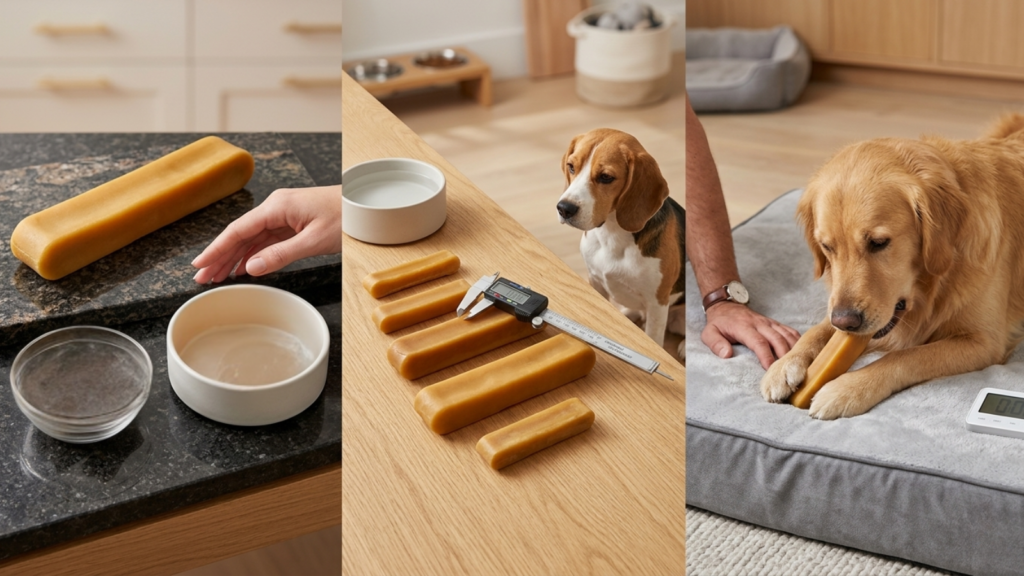
Yak chews are safe for most adult dogs when properly sized, but they are not universally appropriate across all life stages. Puppies, senior dogs, and dogs with worn, fractured, or diseased teeth should be assessed individually by a veterinarian before any hard chew is introduced.
Age, tooth development stage, jaw strength, and chewing behavior pattern all determine whether a yak chew is a safe enrichment tool or a dental risk factor for a specific dog.
Can Puppies Safely Eat Yak Chews?
Puppies under 6 months of age must not receive yak chews because deciduous (baby) teeth are structurally more brittle than adult teeth. A 2023 study in Veterinary Sciences (Wallis et al., PMC10384937) found that permanent dog teeth begin erupting around 3 months of age, with most breeds completing adult dentition between approximately 24–26 weeks (around 6–7 months). Until the adult tooth eruption sequence is complete, including premolars at roughly week 25 and molars by week 26, hard chews carry fracture risk to both the existing baby teeth and the unerupted adult tooth buds beneath the gumline.
The 6-month threshold corresponds with the completion of adult tooth eruption in most dog breeds. Before this stage, 2 specific risks apply:
- Deciduous tooth fracture: Baby teeth crack more easily under the compressive load of a hard chew.
- Permanent tooth bud damage: Trauma to the jaw at this stage can deform adult teeth before they emerge.
For puppies aged 6 months and older with fully erupted adult dentition, a small-sized yak chew (20–30 g) under direct supervision is appropriate. Veterinary confirmation of full adult tooth eruption before introduction is the safest protocol. For a breed-by-breed breakdown of when puppies can safely have yak chews, including size recommendations by developmental stage, see our dedicated age guide.
Are Yak Chews Suitable for Senior Dogs?
Senior dogs should be evaluated individually because age alone does not make hard chews safe; worn enamel, periodontal disease, or missing teeth increase risk. Dogs with missing teeth, advanced enamel erosion, or diagnosed periodontal disease require softer alternatives such as collagen sticks or puffed Chhurpi treats.
2 conditions signal that a senior dog is not a candidate for hard yak chews:
- Jaw arthritis: Extended chewing sessions cause pain in dogs with degenerative joint disease of the temporomandibular joint.
- Severe enamel thinning: Exposed dentin fractures under the same compressive force that healthy enamel withstands.
A veterinary dental examination before introducing yak chews to any senior dog is the recommended protocol.
How Should You Choose the Right Size Yak Chew?
Select a yak chew that matches the dog’s body weight range and is significantly wider and longer than the dog’s jaw width. This dual criterion prevents both underpowered chewing frustration and the risk of the dog swallowing the chew whole.
The size-to-weight selection table below covers 5 standardized size categories used by Himalayan dog chew manufacturers:
| Dog Weight | Chew Size | Chew Weight | Breed Examples |
| Under 10 lb | Mini | 20–30 g | Chihuahua, Yorkshire Terrier |
| 10–25 lb | Small | 30–50 g | Pug, Shih Tzu |
| 25–50 lb | Medium | 50–80 g | Beagle, Border Collie |
| 50–80 lb | Large | 80–130 g | Labrador Retriever, German Shepherd |
| Over 80 lb | XL / Jumbo | 130–250+ g | Great Dane, Mastiff |
The Muzzle Rule: A chew should always be significantly larger than the dog’s muzzle width. If a chew is too short or small, the dog may try to swallow it whole, creating a severe choking hazard or risk of intestinal blockage. Always size up when the dog sits between two weight categories. Apply these principles using our complete yak chew sizing guide by breed and age, which covers toy breeds through giant breeds with per-stage recommendations.
What Are the Benefits of Yak Chews for Dogs?
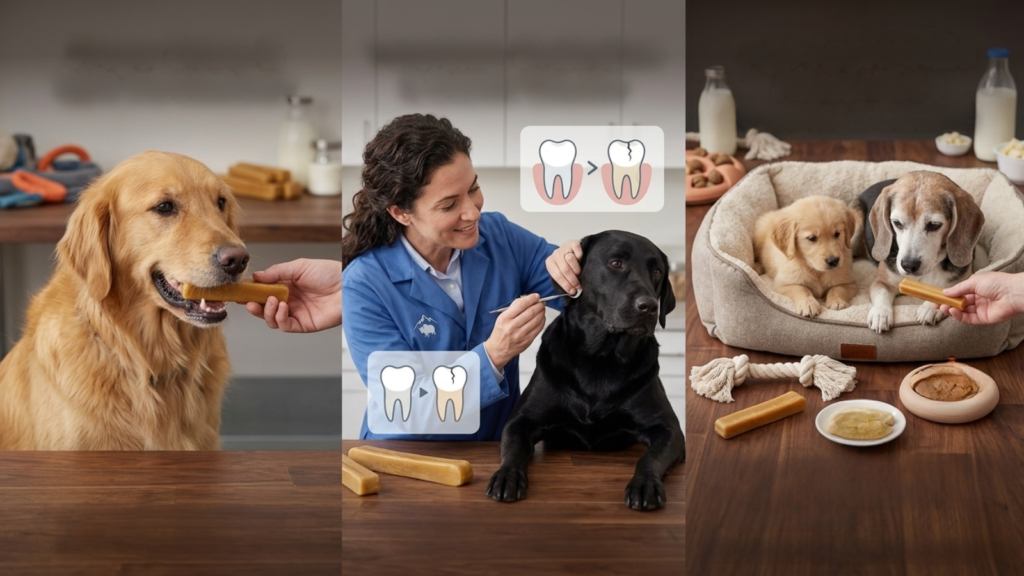
Yak chews deliver 4 documented benefits for dogs: mechanical plaque removal through abrasive gnawing, superior digestibility compared to rawhide, low-fat protein supplementation, and behavioral enrichment through extended oral engagement.
Each benefit maps to a specific nutritional or physiological mechanism, distinguishing yak chews from synthetic alternatives that provide enrichment without nutritional contribution.
How Do Yak Chews Support Dental Health?
Yak chews support dental health through mechanical debridement; the abrasive surface of the hardened cheese block scrapes plaque and early-stage tartar from tooth enamel during gnawing, replicating the natural dental cleaning function of prey bone consumption in wild canids.
The dental health mechanism operates across 3 surfaces:
- Incisors: engage the surface during initial gnawing contact
- Premolars: apply a lateral shearing force across the chew face
- Carnassial teeth (upper P4 / lower M1): These are the primary shearing teeth. Caution: If an aggressive chewer applies their maximum crushing load to a rock-hard yak chew using these teeth, it can result in a painful carnassial slab fracture. Always supervise to ensure your dog is gnawing, not bearing down with full crushing force.
For the full clinical breakdown of each mechanism, see the10 dental benefits of Himalayan yak chews documented across peer-reviewed and practitioner sources. Regular yak chew use reduces visible plaque accumulation between professional veterinary dental cleanings. It does not replace scaling, but it extends the interval between sessions for dogs without existing periodontitis. This abrasive effect is a direct result of the compression and drying methods used by leading Himalayan yak chew manufacturers to achieve the block’s characteristic rock-hard density.
Are Yak Chews a Healthy Alternative to Rawhide?
Yak chews are a healthier alternative to rawhide chews across 3 measurable criteria: ingredient transparency (4 food-grade ingredients vs. chemically processed hide), digestibility (protein-based cheese vs. collagen hide that swells in gastric fluid), and absence of processing chemicals, including bleach and hydrogen peroxide used in rawhide whitening.
Rawhide chews carry documented safety concerns that extend beyond ingredient transparency. The FDA’s Center for Veterinary Medicine has published consumer complaint records (fda.gov) documenting adverse events, including vomiting, diarrhea, and gastrointestinal distress linked to commercial rawhide products. Rawhide processing typically involves lime treatment to remove hair, followed by chemical whitening steps, and chemical residues that are absent from the 4-ingredient Himalayan yak chew formulation.
When swallowed, rawhide pieces swell and form semi-solid masses that resist stomach acid breakdown. Yak chew fragments are protein-based and break down within normal gastric digestion timelines.
Do Yak Chews Provide Nutritional Value?
Yak chews provide measurable nutritional value in 3 categories: high crude protein content for lean muscle maintenance, low crude fat content suitable for weight-managed dogs, and naturally occurring calcium, phosphorus, and magnesium for bone density support.
The nutritional profile of a typical medium-sized yak chew (50–80 g) includes:
- Crude protein: 60–65% on a dry matter basis, supports muscle tissue maintenance and repair
- Crude fat: 1–5%, significantly lower than bully sticks (15–30% fat), making Chhurpi appropriate for overweight dogs
- Calcium: Naturally present in the milk substrate, supports enamel remineralization and skeletal density
- Phosphorus: Present in the calcium-phosphorus balance, critical for metabolic bone function
- Magnesium: Trace mineral supporting neuromuscular function
Caloric contribution from a medium chew (50–80 g) typically ranges from 175 to 300+ kilocalories, as dense, dried protein yields about 3.5 to 4 calories per gram. Adjust your dog’s daily meal portion accordingly on chew days to maintain a healthy energy balance and prevent weight gain. These figures are consistent across products sourced from established Nepal-basedChhurpi dog chew producers who follow the traditional 4-ingredient formulation without fillers or fortifiers.
What Are the Risks or Dangers of Yak Chews?
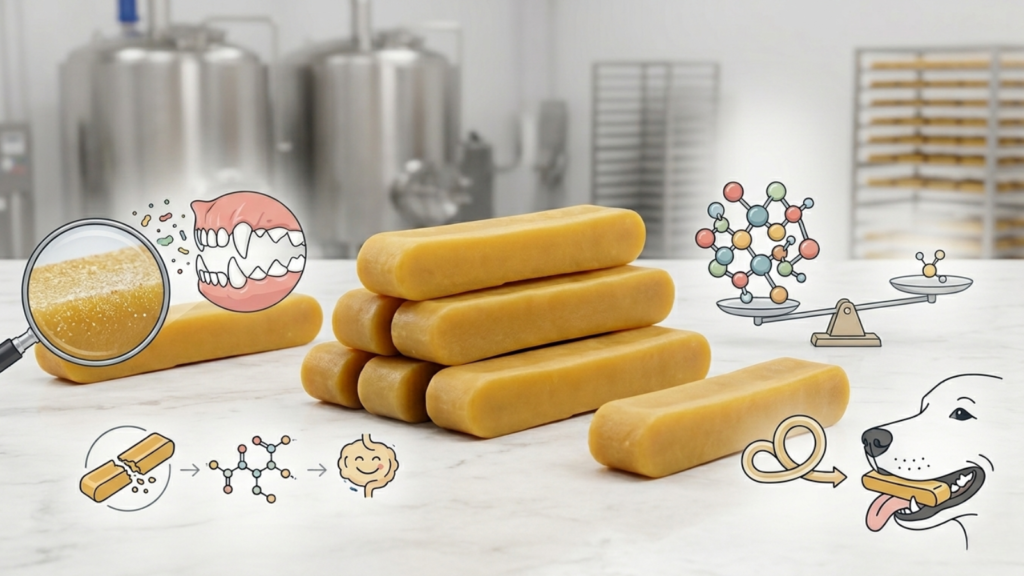
The 3 primary risk categories associated with yak chew use are: slab tooth fracture from excessive compressive force by power chewers, choking or intestinal obstruction from swallowed end-piece nubs, and gastrointestinal upset in dogs with residual dairy sensitivity.
All 3 risks are manageable through proper size selection, session supervision, and the nub-puffing protocol described in the safety section below.
Can Yak Chews Cause Choking or Tooth Damage?
Yak chews can cause slab tooth fractures in power chewers. Tooth fracture is a clinical condition affecting 20–27% of dogs, and research from the University of Pennsylvania (Frontiers in Veterinary Science, 2018) found that any chew material failing to yield below 1,281 Newtons poses a measurable fracture risk to the maxillary fourth premolar, the carnassial tooth most at risk during high-force chewing sessions. The Thumbnail Test remains the most practical field assessment: a chew showing no indentation under thumbnail pressure may exceed the safe hardness threshold for your dog
2 specific tooth fracture indicators require veterinary evaluation:
- Slab fracture of the carnassial tooth: Visible as a vertical crack exposing the tooth pulp; signs include sudden reluctance to chew, pawing at the mouth, and visible blood on the chew surface.
- Crown fracture of incisors: Less common, occurs when dogs bite laterally on the chew end.
The Thumbnail Test: Press your thumbnail firmly into the chew surface. Be aware that authentic, solid yak chews are rock-hard and will not dent under your thumbnail, meaning they inherently fail this veterinary test. Because of this extreme density, they should only be given to healthy adult dogs who are gentle gnawers, and must be strictly avoided for dogs with any existing dental compromise.
Are There Digestive Issues Linked to Yak Chews?
Digestive issues linked to yak chews occur primarily in dogs with severe dairy protein sensitivity and present as gas, loose stool, or diarrhea within 6–12 hours of first consumption. The traditional manufacturing process removes approximately 95% of lactose, making lactose intolerance the least common trigger. Whey protein sensitivity is the more frequent cause of gastrointestinal upset in sensitive dogs.
3 clinical signs that indicate a dog is not tolerating yak chews:
- Soft stool or diarrhea: appearing 6–12 hours post-chewing session
- Excessive flatulence: indicates fermentation of undigested dairy proteins in the large intestine
- Vomiting: rare; signals acute sensitivity requiring permanent discontinuation
Dogs with confirmed dairy protein allergies are not candidates for yak chews regardless of the lactose-reduction process. For a detailed breakdown of causes, triggers, and management strategies by sensitivity type, see our guide on whether yak chews can upset your dog’s stomach.
Can Dogs Be Allergic to Yak Chews?
Dogs develop allergic reactions to yak chews through an IgE-mediated immune response to bovine casein or beta-lactoglobulin, the 2 primary dairy proteins retained in Chhurpi, producing dermatological and auricular signs distinct from the gastrointestinal signs of food intolerance.
A food allergy and a food intolerance are mechanistically distinct conditions. A food allergy activates the immune system, producing IgE antibodies against a specific protein antigen. A food intolerance involves a digestive enzyme deficiency or sensitivity without immune system involvement.
The traditional Chhurpi manufacturing process removes approximately 95% of lactose — the carbohydrate responsible for lactose intolerance. It does not remove casein or beta-lactoglobulin. These 2 bovine milk proteins are the primary dairy antigens capable of triggering IgE-mediated reactions in dogs with confirmed bovine milk allergy.
3 clinical signs that distinguish an allergic reaction to yak chews from digestive intolerance:
- Pruritus: persistent itching localized to the face, paws, ears, and groin, appearing 24–72 hours after consumption
- Recurrent otitis externa: chronic ear canal inflammation recurring consistently in the days following chew sessions
- Urticaria: raised, fluid-filled skin welts appearing within 1–6 hours of consumption
Gastrointestinal signs, gas, loose stool, and vomiting indicate food intolerance. Dermatological and auricular signs indicate food allergy. Both conditions require discontinuation of yak chew, but confirmation of food allergy requires an 8–12-week elimination diet containing hydrolyzed or novel protein, the diagnostic gold standard according to the American College of Veterinary Dermatology. Serum IgE tests and intradermal skin tests for food antigens carry high false-positive rates and do not replace elimination diet trials.
Breeds with documented higher rates of bovine milk protein food allergy include West Highland White Terriers, English Bulldogs, Golden Retrievers, and German Shepherds. Dogs in these breeds warrant veterinary allergy screening before yak chew introduction.
How Can You Minimize Safety Risks?
Minimize yak chew safety risks through 4 concurrent protocols: mandatory direct supervision during all chewing sessions, 15–30-minute session time limits, immediate removal and puffing of the end-piece nub, and proper dry storage between sessions.
No single safety measure is sufficient on its own. All 4 protocols operate as a system.
How Should You Safely Give Yak Chews to Your Dog?
Give yak chews under direct visual supervision at all times, with the owner present and attentive, never behind a closed door, in a crate unattended, or left overnight, because the transition from safe chewing to choking hazard occurs within seconds when the bar reduces to nub size.
3 non-negotiable supervision rules:
- Remain in the same room with a clear sightline to the dog during the entire session.
- Remove the chew immediately if the dog vocalizes, gags, paws at the mouth, or if blood appears on the chew surface.
- Conduct a dental inspection after the first 3 sessions to confirm no enamel damage is occurring.
How Long Should a Dog Chew on Yak Chews?
The safe session duration for yak chew consumption is 15 to 30 minutes per sitting. Sessions exceeding 30 minutes create 2 compounding risks: jaw muscle fatigue that causes dogs to bite with altered mechanics, and accelerated enamel wear from prolonged abrasive contact on the same tooth surfaces.
Session duration by dog size:
- Small dogs (under 25 lb): 15 minutes maximum per session
- Medium dogs (25–50 lb): 20 minutes per session
- Large and XL dogs (over 50 lb): 25–30 minutes per session
When Should You Take the Chew Away?
Take the chew away when it reaches the final 1–2 inches (the nub stage). This is the point at which the remaining piece fits entirely inside the dog’s mouth, creating an immediate choking and intestinal obstruction risk.
Do not discard the nub. Apply the Puff Protocol:
- Soak the nub in warm water for 5 minutes.
- Place it on a microwave-safe plate.
- Microwave on high for 45–60 seconds.
- Allow to cool completely before returning to the dog.
The puffed nub expands into a light, crunchy, popcorn-textured treat that is fully digestible and eliminates the obstruction risk of the original dense nub. For wattage-specific timing, visual cues, and common troubleshooting scenarios, visit the complete guide on how to puff yak chews in the microwave.
What Are Safe Storage and Usage Practices?
Store yak chews in a cool, well-ventilated location, not in airtight plastic bags, which trap residual moisture and promote mold growth on the chew surface. Between sessions, simply wipe the chew firmly with a clean, dry cloth to remove excess saliva before returning it to storage. Never rinse the chew with water, as reintroducing moisture to the porous, chewed surface promotes rapid bacterial and mold growth.
4 storage rules that extend shelf life and maintain safety:
- No airtight containers: Use breathable mesh bags or open cardboard boxes.
- Dry environment: Avoid bathroom or laundry room storage where humidity exceeds 60%.
- Wipe dry between sessions: Do not rinse the chew. Simply wipe away surface saliva with a dry towel before storing to prevent moisture buildup and microbial growth.
- Discard on mold detection: Any visible green, black, or white surface growth means the chew is no longer safe.
A properly stored yak chew maintains structural integrity and safety for up to 5 years from the manufacture date.
How Do Yak Chews Compare to Other Dog Chews?
Yak chews rank above rawhide and antlers in combined safety and digestibility, comparable to bully sticks in enrichment value, and superior to bully sticks in fat content and session duration. Each chew category presents a distinct risk-benefit profile based on ingredient source, hardness, and digestibility.
Are Yak Chews Better Than Rawhide or Synthetic Chews?
Yak chews are objectively superior to rawhide chews across 4 criteria: ingredient cleanliness, digestibility, absence of processing chemicals, and protein nutritional contribution, and superior to synthetic nylon bones across all criteria, including edibility and safety during ingestion.
The 4-way comparison across major chew categories:
| Chew Type | Digestible | Chemical-Free | Dental Benefit | Fat Content |
| Yak Chews | Yes | Yes | High (abrasive) | Low (1–5%) |
| Rawhide | No | No (bleach/peroxide) | Low | Low |
| Antlers | No | Yes | High | None |
| Bully Sticks | Yes | Yes | Moderate | High (15–30%) |
| Nylon Bones | No | No | Low | None |
Antlers carry a higher dental fracture risk than yak chews because antler density exceeds yak chew density. Antler composition is mineralized bone tissue; yak chew composition is compressed dairy protein, softer under equivalent compressive load.
What Alternatives Should You Consider for Your Dog?
Consider collagen sticks, puffed Chhurpi treats, or dental chews with the VOHC (Veterinary Oral Health Council) seal for dogs excluded from hard yak chews, including puppies under 6 months, seniors with periodontal disease, and dogs recovering from dental procedures.
3 alternative categories with clinical justification:
- Collagen sticks: Derived from bovine hides via food-grade processing; softer than yak chews, fully digestible, appropriate for puppies over 4 months.
- Puffed Chhurpi treats: The microwaved expansion of yak nubs; same ingredient profile as the original chew but at a fraction of the hardness; suitable for senior dogs with mild enamel wear.
- VOHC-certified dental chews: For dogs excluded from hard yak chews, VOHC-certified dental chews are a clinically validated alternative. The Veterinary Oral Health Council, an independent organization recognized by veterinary dentists globally, awards its Registered Seal only to products whose efficacy in retarding dental plaque and tartar has been demonstrated in controlled clinical trials conducted to VOHC protocol standards (VOHC Registered Seal Brochure, vohc.org).
How Often Can Dogs Have Yak Chews?
Dogs can have yak chews 3 – 5 times per week, with each session lasting 15–30 minutes. Daily use is not recommended; continuous hard chewing accelerates enamel wear, and the caloric contribution (50–100 kcal per session) requires meal reduction on chew days.
What Is the Recommended Frequency for Safe Use?
Give yak chews 3 to 5 times per week, not daily. Because a whole medium chew (50–80 g) contains approximately 175–300+ kilocalories, a typical 15–30-minute chewing session will contribute roughly 50–100 kilocalories. You must make a proportional reduction in the dog’s daily meal allocation on chew days to prevent a caloric surplus.
Frequency guidelines by life stage:
- Adult dogs (1–7 years): 3–5 sessions per week, 15–30 minutes per session
- Senior dogs (7+ years) with healthy teeth: 2–3 sessions per week, 15 minutes maximum per session
- Puppies (6–12 months), newly introduced: 2 sessions per week for the first 30 days to assess tolerance
If you rotate multiple chew types throughout the week, see the broader guide on how often you should give your dog a chew for a combined scheduling framework by life stage.
Can Overuse of Yak Chews Be Harmful?
Overuse of yak chews, defined as daily sessions exceeding 30 minutes or more than 5 sessions per week, causes 3 cumulative harms: accelerated enamel wear from chronic abrasive contact, caloric surplus leading to weight gain, and jaw muscle fatigue that alters bite mechanics over time.
The protein and calorie density of yak chews means they function as a partial dietary supplement, not a zero-calorie enrichment tool. A medium chew contributes approximately 50–100 kcal per session, significant given that the Association for Pet Obesity Prevention’s 2024 survey (APOP PDF) found 35% of U.S. dog owners already report their dog is overweight or obese. For a 30 lb dog on a 750 kcal daily allowance, a medium chew represents 7–13% of total daily energy intake, making proportional meal reduction on chew days a necessary habit for weight-managed dogs.
How Should You Approach Yak Chews with Professional Guidance?
Consult a veterinarian before introducing yak chews to dogs with a documented history of dental fractures, diagnosed periodontal disease, dairy protein allergy, gastrointestinal sensitivity, or any active jaw injury. Professional guidance ensures the chew type, size, and frequency are calibrated to the dog’s current dental health status.
Can Pet Experts Help You Choose Safe Dog Chews?
Veterinarians and veterinary dental specialists can perform a pre-introduction dental examination that assesses enamel thickness, periodontal pocket depth, and carnassial tooth integrity, the 3 structural factors that determine whether a dog’s teeth can safely withstand the compressive load of Himalayan yak chews.
3 professional assessments that inform yak chew eligibility:
- Dental radiograph: Reveals subgingival bone loss and root health invisible during surface examination
- Periodontal probing: Measures gum pocket depth; pockets exceeding 3mm in small dogs or 4mm in large dogs indicate active disease
- Enamel hardness evaluation: A clinical tactile assessment of surface integrity using a dental explorer
For dogs with complex oral health histories, a veterinary dental examination by a board-certified specialist is the highest-confidence pathway before introducing any hard chew. Board-certified veterinary dentists, Diplomates of the American Veterinary Dental College (AVDC), have completed advanced residency training and passed specialty board examinations, making them the most qualified professionals to assess enamel thickness, periodontal pocket depth, and carnassial tooth integrity. The AVDC maintains a publicly searchable directory at avdc.org/animal-owner-resources.
Are Yak Chews Fattening for Dogs?
Yak chews are low-fat when used appropriately because their 0.9–5.2% crude fat content is significantly lower than most commercial treats. However, they are not automatically “non-fattening”—owners must control total calorie intake by limiting chewing time and selecting the correct size for their dog.
The 10% Treat Rule (Veterinary Standard)
All treats and chews combined should not exceed 10% of a dog’s total daily caloric intake. This guideline is established by UC Davis Veterinary Medicine, the World Small Animal Veterinary Association (WSAVA), and the American Veterinary Medical Association.
- For a 20 lb dog (550 kcal daily requirement): 10% = 55 kcal maximum from treats
- For a 50 lb dog (1,000 kcal daily requirement): 10% = 100 kcal maximum from treats
What Are the Key Takeaways About Yak Chews for Dogs?
Yak chews are safe, nutritionally valuable, and chemically clean dog treats when 5 core protocols are followed: correct size selection, session time limits of 15–30 minutes, removal of the nub at the 1–2-inch threshold, puffing of the nub before returning it to the dog, and 3–5 sessions per week.
The 5-point safety checklist for every yak chew session:
- Size up: Select the chew by weight category; go one size larger when the dog falls between weight ranges.
- Supervise: Remain present with a direct sightline for the full session duration.
- Time the session: Remove the chew after 15–30 minutes, regardless of how much remains.
- Remove the nub: Take the chew away when 1–2 inches remain; apply the Puff Protocol before returning.
- Limit to 3–5 sessions per week: Reduce meal portions on chew days to account for caloric contribution.
Yak chews (Chhurpi) represent a 4-ingredient, centuries-old Himalayan food technology repurposed as a high-protein, low-fat, fully digestible enrichment tool for dogs. Their safety profile exceeds that of rawhide, antlers, and synthetic bones when size, supervision, session duration, and frequency protocols are observed. Veterinary dental consultation before introduction remains the highest-confidence pathway for dogs with complex oral health histories.