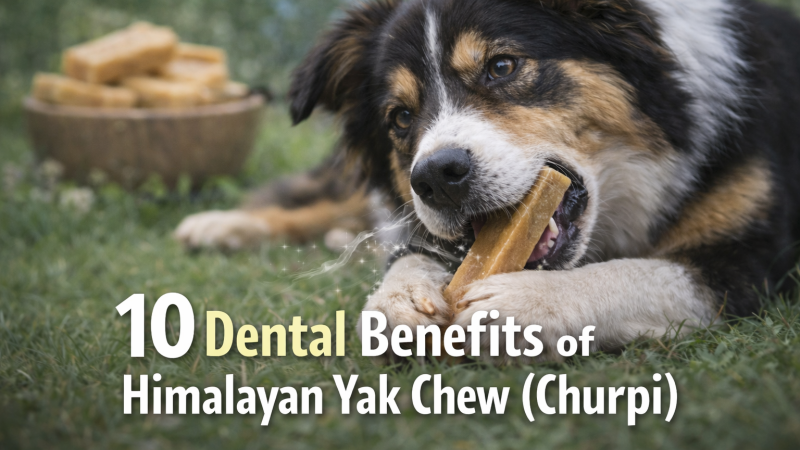
Himalayan Yak Chews (Churpi) are dense, long-lasting dog chews designed to support oral health through sustained mechanical chewing activity. Their compressed dairy structure produces a slow-wear texture that engages teeth and gums over extended periods, activating multiple physiological and mechanical processes involved in plaque control, gum stimulation, salivary flow, and bacterial disruption. These mechanisms align with established veterinary dentistry principles describing how repetitive chewing influences supragingival oral hygiene.
The 10 dental benefits associated with yak chews reflect broader evidence from canine chewing research rather than extensive product-specific clinical trials. Veterinary literature consistently shows that mechanical chewing contributes to plaque reduction, biofilm disruption, and improved oral conditions, though outcomes vary by chewing duration, frequency, and individual anatomy. According to the WSAVA Global Dental Guidelines, the global standard for small animal veterinary dentistry, periodontal disease affects approximately 80% of dogs by age two, making it the most common clinical condition in companion animals and the primary reason preventive at-home strategies like consistent chewing carry genuine clinical significance for most dog owners. Within this context, Himalayan Yak Chews function as an adjunct tool in a tiered dental care system supported by organizations such as the Veterinary Oral Health Council (VOHC), the American Animal Hospital Association (AAHA), and the World Small Animal Veterinary Association (WSAVA), complementing but not replacing professional cleanings and daily toothbrushing.
Is Himalayan Yak chew (churpi) good for Dog Teeths?
Yes, authentic Himalayan churpi is highly effective for dog teeth when used correctly. Its primary dental benefit comes from sustained mechanical abrasion, the physical action of the hard cheese scraping against the tooth surface as the dog chews. This process disrupts soft plaque biofilm before it can calcify into stubborn tartar.
Plaque Support Benefits
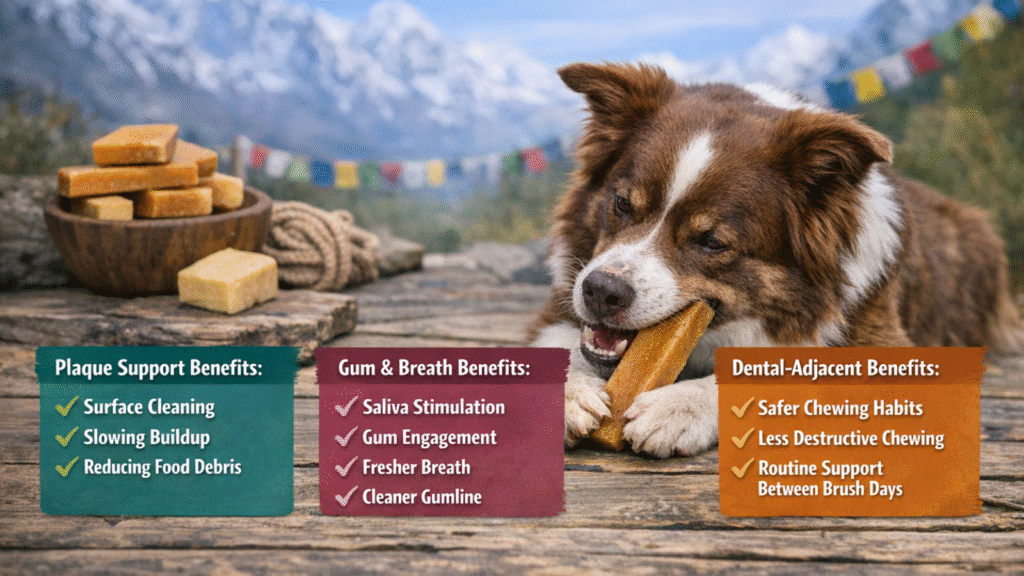
Chewing activity supports plaque control through 3 primary mechanisms: surface abrasion against tooth enamel, disruption of early-stage bacterial biofilm, and physical displacement of post-meal food debris. Himalayan yak chews deliver these mechanisms through their resistance and texture. The evidence base for these mechanisms comes from veterinary dental chew research broadly, with yak chews serving as a natural, hard-chew vehicle for the same principles.
1. Surface Cleaning Through Mechanical Abrasion
Mechanical abrasion is the process by which a hard chew surface contacts a dog’s tooth enamel during chewing, physically dislodging soft plaque deposits before they mineralize into calculus (tartar).
Plaque is a bacterial biofilm, a structured colony embedded in a polysaccharide matrix that adheres to tooth enamel. According to the Veterinary Oral Health Council (VOHC), plaque in its early stage remains soft and removable through mechanical contact. Once calcium and phosphate from saliva penetrate the biofilm over several days to weeks, it mineralizes into calculus, which requires professional scaling to remove. The mineralization timeline varies widely based on individual salivary pH, diet, and bacterial species present; it is not a fixed 5 to 7 days for all dogs.
The chewing action against the fibrous, compressed surface of a yak chew creates repeating contact across the tooth’s buccal (outer-facing) and occlusal (biting) surfaces, the zones where plaque accumulates most visibly. This is the same mechanical principle underlying VOHC-accepted dental chews: abrasive surface contact disrupts the biofilm before it matures.
One practical limitation most guides omit: not all tooth surfaces receive equal contact during chewing. The carnassial teeth (the large shearing premolars in the mid-jaw) and back molars receive the most consistent contact. The front incisors receive less unless the dog adjusts its chewing posture. Owners with small-breed dogs, which have proportionally more crowded teeth, should monitor which surfaces are engaged and occasionally reposition the chew to encourage broader contact.
Dogs fed exclusively wet diets benefit most from this mechanism. Wet food leaves a higher residue on tooth surfaces than dry food, accelerating plaque density. Regular chewing sessions directly counteract this pattern.
2. Slowing the Rate of New Plaque Buildup
Chewing slows new plaque formation through 2 combined effects: physical disruption of early-stage bacterial colonies and the increased salivary flow that chewing triggers, which raises oral pH and reduces the acidic environment bacteria require to anchor and replicate.
Plaque formation follows a documented biological sequence. Salivary glycoproteins coat tooth enamel to form the acquired pellicle. Early colonizer bacteria, primarily Streptococcus and Actinomyces species, attach to this pellicle. Late colonizers then build structured biofilm layers on top. Disrupting this process at the early colonization stage, before the biofilm matures and develops adhesion strength, is the target of mechanical chewing interventions.
Research on the dental chew category supports this principle directly: a 2024 clinical study published in the Journal of Animal Science found that dogs receiving a daily dental chew alongside their standard diet showed statistically significant reductions in plaque coverage, calculus accumulation, and oral malodor compared with control dogs, evidence that regular chewing produces measurable, multi-endpoint oral health improvements. This body of evidence informs how yak chews are expected to function, but direct randomized controlled trials on Himalayan yak chews specifically are not yet available at the scale that exists for VOHC-accepted products. Owners seeking dental products with the highest level of independently validated evidence can reference the VOHC Accepted Products Registry, updated in November 2025, which lists over 40 products meeting clinical standards for retarding plaque and/or tartar accumulation, including dental chews, diets, water additives, and enzymatic toothpastes suitable for dogs of all sizes.
The key variable most owners underestimate is chewing duration per session. A 5-minute chew session creates less biofilm disruption than a 25-minute session. The compressed density of Himalayan yak chews extends average chewing duration well beyond what soft chews and bully sticks typically provide, which is one of their functional advantages for this benefit.
3. Reducing Food Debris Left on Teeth After Meals
Food debris, particulate matter from meals lodged between teeth, along the gumline, and in molar fissures, provides the primary substrate for oral bacteria between meals. Bacteria ferment these particles and produce acidic byproducts that accelerate enamel erosion and support plaque mineralization.
Chewing a hard chew within 30 to 60 minutes of a meal assists in dislodging food particles through 2 mechanisms: direct mechanical contact between the chew surface and tooth fissures, and the increased salivary volume stimulated by chewing, which flushes particles off tooth surfaces. The effectiveness of this benefit depends on chewing duration and the degree of tooth-surface contact the dog’s chewing posture achieves.
This benefit is particularly relevant for brachycephalic breeds, such as Bulldogs, French Bulldogs, and Pugs. These breeds have crowded dentition with tighter interdental spaces, creating more debris retention and faster plaque accumulation compared to dogs with standard jaw geometry. If your dog falls into this category, selecting the right chew for your dog’s breed, size, and chewing style directly affects how well this debris-clearing benefit translates in practice.
A frequently overstated claim in canine dental content deserves precise correction: standard dry kibble does not meaningfully clean teeth for most dogs, but this does not apply to all formulations. Veterinary dental research confirms that standard kibble crumbles before creating meaningful abrasive tooth contact. However, kibble formulations specifically accepted by the VOHC, which use enlarged kibble size and modified texture to force tooth penetration before crumbling, demonstrate measurable plaque and calculus reduction. The distinction is between standard kibble (no meaningful dental effect) and VOHC-accepted dental diets (demonstrated effect). Yak chews supplement either diet type by providing mechanical cleaning that kibble alone cannot replicate.
Gum and Breath Support Benefits
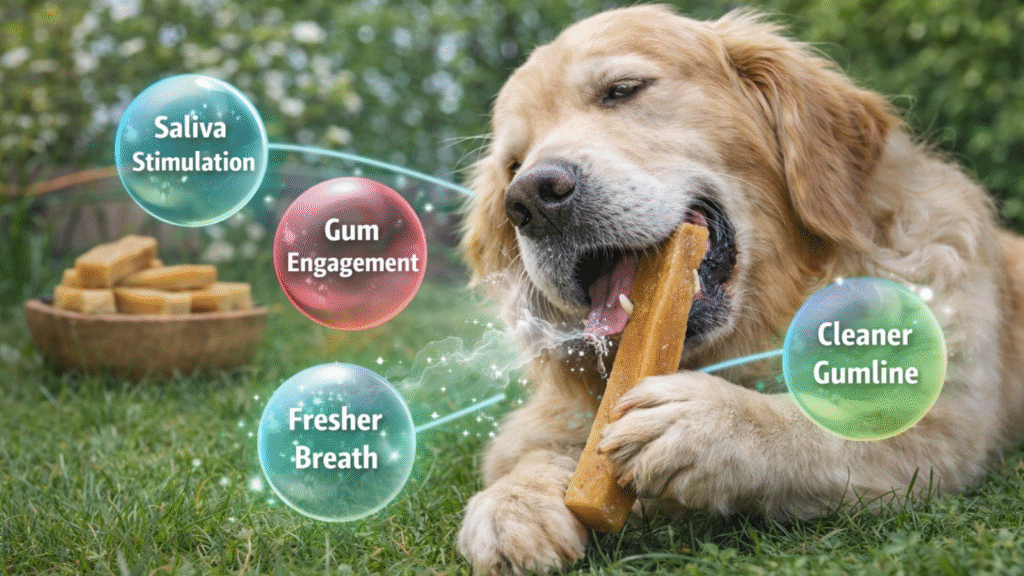
Regular chewing activity supports gum health and reduces oral malodor through 4 mechanisms: salivary gland stimulation, gingival tissue compression, reduction of volatile sulfur compound-producing bacteria, and consistent gumline contact during chewing sessions. These 4 benefits address the soft tissue dimension of canine oral health, an area frequently underemphasized relative to tooth-surface cleaning.
Periodontal disease, a progressive infection of the bone and soft tissue supporting teeth, begins at the gumline, not on enamel surfaces. According to the AVMA, periodontal disease is the most common clinical condition affecting adult dogs, with prevalence reaching approximately 80% in dogs over 3 years of age. Chewing activity supports the preventive maintenance that reduces the rate of periodontal disease progression in dogs with healthy or mildly inflamed gums. It does not reverse established periodontal disease, which requires professional veterinary treatment.
4. Stimulating Saliva Production to Neutralize Oral Bacteria
Chewing activates the masticatory reflex, the neurological pathway linking jaw movement to salivary gland activation across the parotid, sublingual, and submandibular glands. This reflex produces sustained saliva flow throughout a chewing session.
Dog saliva contains 3 key antibacterial components documented in veterinary physiology literature: lysozyme (an enzyme that hydrolyzes bacterial cell walls), lactoferrin (an iron-binding glycoprotein that starves bacteria of iron required for growth), and secretory immunoglobulin A (an antibody class targeting mucosal pathogens). Chewing-stimulated saliva delivers these agents at a higher volume and flow rate than baseline resting saliva production.
Saliva also performs a mechanical flushing role. The higher pH of dog saliva (approximately 7.5 to 8.0) buffers the acidic byproducts of bacterial fermentation, reducing enamel demineralization and the acidic conditions that favor early plaque colonization. Increased salivary volume washes loose food particles and bacterial colonies off tooth and gum surfaces.
Dogs prone to dry mouth, a condition associated with dehydration, certain medications such as antihistamines and diuretics, or reduced salivary gland function, benefit most from chewing stimulation. Veterinary dental literature identifies reduced salivary flow (xerostomia) as a risk factor for accelerated plaque accumulation and periodontal disease progression.
5. Engaging Gums Through Gentle Pressure and Massage
Gingival health depends on adequate blood circulation within the gum tissue. Circulation delivers immune cells, oxygen, and nutrients to the gingival connective tissue while removing inflammatory byproducts. Rhythmic compression during chewing stimulates microcirculation in a manner analogous to gum massage techniques used in human dental hygiene protocols.
The resistance of a Himalayan yak chew creates a compression-and-release cycle on gum tissue with each chewing stroke, driving blood flow into and out of the gingival papillae, the triangular projections of gum tissue between adjacent teeth, which are the primary sites of early gingivitis (gingival inflammation).
This benefit applies specifically to dogs with healthy gums or mild early gingivitis. Dogs with moderate-to-severe periodontal disease, characterized by bleeding on probing, gingival recession, or mobility of teeth, require veterinary dental treatment before introducing any hard chew. In dogs with active infection or severely inflamed tissue, chewing pressure worsens inflammation and causes pain. Yak chews support prevention and early-stage maintenance, not treatment of established disease.
Hard natural chews differ from soft chews in this regard: soft chews compress fully without creating meaningful gingival stimulation. Dental gels address bacterial load chemically but provide no tissue compression benefit. Himalayan yak chews from a trusted Himalayan dog yak chew manufacturer and exporter deliver both abrasive cleaning and gingival stimulation in a single session, a dual-function benefit that neither soft chews nor topical gels can replicate.
6. Reducing Odor-Causing Bacteria for Fresher Breath
Canine halitosis originates primarily from volatile sulfur compounds (VSCs) produced by anaerobic bacteria colonizing the gumline and periodontal pockets. A 2023 study in Veterinary Sciences identified Porphyromonas gulae as the dominant VSC-producing pathogen in dogs with periodontal disease, with methyl mercaptan levels elevated above hydrogen sulfide, confirming that bacterial load reduction through consistent mechanical chewing targets the actual biochemical origin of bad breath rather than masking it. These compounds are measurable biochemical byproducts of bacterial proteolysis, not a general consequence of diet alone.
Chewing activity reduces VSC-producing bacterial populations through 2 primary pathways: mechanical disruption of surface bacterial colonies and increased salivary volume flushing oral surfaces. These are general benefits of sustained chewing that Himalayan yak chews deliver through their extended chewing duration.
The breath improvement owners report from consistent chewing reflects a genuine reduction in oral bacterial load, not temporary odor masking. This is functionally different from breath-masking products (parsley-based treats, minty dental chews), which address the odor without reducing its bacterial cause.
An important clinical distinction: severe or sudden-onset halitosis in dogs warrants veterinary evaluation before attributing it to bacterial accumulation. Pronounced oral malodor is a recognized clinical indicator of advanced periodontal disease, oral neoplasia, kidney disease (uremic breath), and diabetes mellitus. The chewing-related halitosis improvement described here applies to dogs with bacterial-origin bad breath from plaque and gingival bacteria, the most common cause, not to systemic disease presentations.
7. Supporting a Cleaner Gumline Through Consistent Chewing Patterns
The gumline, the interface between gingival tissue and tooth enamel, is the highest-risk anatomical zone for plaque accumulation and periodontal disease initiation. Subgingival plaque, which develops in the gingival sulcus (the shallow groove between gum and tooth), triggers the inflammatory cascade responsible for bone loss and tooth loosening in progressive periodontal disease.
Consistent chewing creates repeating mechanical contact at the cervical region of the tooth, the area at the base of the crown adjacent to gum tissue, disrupting supragingival plaque accumulation before it migrates below the gumline. This mechanism is supported by veterinary dental chew research broadly; direct clinical data for yak chews specifically are limited, and outcomes vary by chewing frequency, individual tooth anatomy, and how the dog positions the chew.
The word “consistent” carries specific functional weight. A once-per-month chewing session delivers minimal gumline benefit. For guidance on building this habit effectively, how often you should give your dog a yak chew covers the evidence-based frequency that maximizes gumline benefit. Regular sessions 4 to 5 times per week disrupt each new plaque cycle before it matures and develops subgingival potential. The cumulative 30-day plaque profile differs meaningfully between dogs with regular chewing activity and those without.
A practical observation many guides skip: dogs develop dominant-side chewing preferences, and the non-preferred side accumulates more plaque and gumline disease. Owners who notice a strong side preference can occasionally reposition the chew to encourage bilateral contact and more uniform gumline coverage.
Dental-Adjacent Benefits That Still Matter
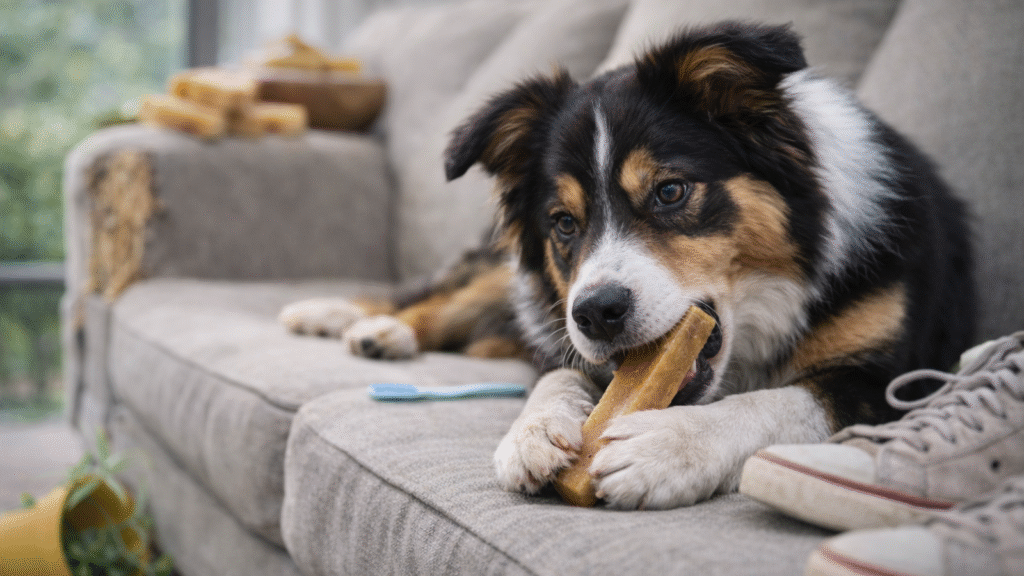
Beyond direct plaque and gum support, Himalayan yak chews deliver 3 behavioral and routine-building benefits: reinforcing controlled chewing technique, redirecting destructive chewing toward safer objects, and supporting the formation of a home dental care routine. These benefits operate at the behavioral level. Their contribution to long-term dental health is real but depends on individual dog temperament, training reinforcement, and consistency of owner implementation.
8. Teaching Safer Chewing Habits Through Controlled Hardness
Chewing safety in dogs is determined by the hardness of the chewed object relative to the tooth structure. Objects harder than tooth enamel cause slab fractures, typically of the carnassial teeth, exposing the pulp canal and creating immediate pain and infection risk. Veterinary dental trauma literature identifies cooked bones, antlers, hooves, and some nylon chews as common causes of slab fractures in dogs.
Himalayan yak chews fall within a hardness range that supports abrasive cleaning without fracturing tooth enamel. The commonly used clinical benchmark, the thumbnail test, classifies a chew as appropriately hard if it yields slightly under thumbnail pressure. Quality yak chews compress minimally under this test, placing them in the safe range for most adult dogs with healthy dentition.
Behavioral outcomes from chew conditioning vary significantly by dog temperament and prior chewing history. Dogs that have been exclusively given ultra-hard chews may initially apply a higher bite force than necessary to a yak chew. Supervision during early sessions allows owners to observe chewing technique and intervene if the dog attempts to crack rather than abrade the chew.
Puppy owners commonly use yak chews during the teething phase (3 to 6 months). Saliva softens the chew’s surface progressively, making it more forgiving for puppy enamel, which is thinner and more fracture-susceptible than adult enamel. For size and hardness guidance specific to young dogs, see the best yak chews for puppies by developmental stage.
9. Reducing Destructive Chewing on Furniture, Shoes, and Dangerous Objects
Destructive chewing in dogs is driven by 3 primary motivations: environmental under-stimulation, anxiety (particularly separation anxiety), and the innate predatory jaw-activity drive. The dental relevance of this benefit is direct: dogs chewing furniture, baseboards, and household objects expose their teeth to materials, wood, plastic, rope fibers, and painted surfaces that cause dental trauma.
Wood splinters cause gingival lacerations. Plastic fragments create slab fractures. Synthetic rope materials generate floss-friction at the gumline that erodes enamel over repeated exposure. Redirecting this chewing drive to a purpose-built chew that falls within a proven safe hardness range for dogs eliminates this class of dental hazards.
Himalayan yak chews address all 3 destructive-chewing motivations by providing 30 to 90 minutes of durable, engaging jaw activity. Sustained jaw motion also activates the parasympathetic nervous system via vagal pathways, which produces a mild calming effect relevant for anxiety-driven chewing.
A necessary qualification: behavioral redirection through chew provision is most effective when paired with consistent training reinforcement. Simply providing a yak chew does not guarantee that a dog stops chewing furniture. Dogs with severe separation anxiety or deeply conditioned destructive chewing patterns benefit from behavioral intervention alongside chew provision. Outcomes vary widely by temperament, environment, and training history. Owners dealing with persistent, destructive chewing warrant consultation with a certified applied animal behaviorist or veterinary behaviorist.
10. Establishing a Home Dental Routine When Brushing Isn’t Daily
Veterinary consensus, formalized in the 2019 AAHA Dental Care Guidelines for Dogs and Cats, a 12-step clinical protocol endorsed by the American Animal Hospital Association, is consistent: daily toothbrushing with veterinary-enzymatic toothpaste remains the gold standard for canine home dental care, providing subgingival access and interdental cleaning that no chew tool can replicate. Toothbrush bristles access subgingival surfaces, interdental spaces, and the lingual (tongue-side) tooth surfaces that chewing tools cannot reliably reach.
Survey data confirms how rare consistent brushing is in practice: a study of more than 209,000 dog owners published in BMC Veterinary Research found that only 4% brush their dogs’ teeth daily, with reported barriers including uncooperative dogs and difficulty establishing a routine, exactly the context in which yak chews function as the most realistic preventive tool available to most households. The reasons are documented: dogs resist the process, owners find it time-consuming, and effective toothbrushing requires progressive training over weeks to implement without causing stress.
For dogs not receiving daily brushing, Himalayan yak chews function as a meaningful adjunct to professional dental cleanings, not as a replacement for brushing or as the primary dental hygiene tool. They provide consistent mechanical cleaning and bacterial disruption that genuinely slows plaque accumulation between veterinary cleanings, and that outcome has real clinical value when measured at annual dental exams.
Professional dental cleanings remain essential. Chewing tools address supragingival plaque on accessible tooth surfaces. Veterinary cleanings under anesthesia provide subgingival scaling, periodontal probing, full-mouth radiographic evaluation, and treatment of established disease, none of which chewing tools provide. The relationship between cleanings and chew-based home care is additive, not competitive.
Structuring yak chew sessions as a formal routine, consistent timing, 4 to 5 times per week, produces better outcomes than sporadic use. Dogs on predictable schedules develop positive anticipation, and owners who integrate the chew into an existing routine (after the evening meal, for example) maintain consistency over months.
A secondary benefit of regular chew sessions: they normalize oral handling in a rewarding context, which gradually reduces the conditioned resistance that makes toothbrushing introduction difficult. Owners who start with yak chew sessions often report that their dogs become more tolerant of mouth examination and toothbrush contact over 4 to 8 weeks, making the gold-standard practice more achievable over time.
What to Know Before Using Himalayan Yak Chews for Dental Support
Himalayan yak chews are made from 4 ingredients: yak milk, cow milk, lime juice, and salt. The mixture is boiled, compressed, and smoke-dried into a hard, low-moisture block. Authentic Churpi contains no artificial preservatives, synthetic binders, or added flavorings. This simple composition is consistent with traditional Himalayan dairy production methods and is one reason the chews have become a widely trusted natural chew option. Authentic Himalayan yak chews, historically known as Nepali churpi (or chhurpi), owe their dental efficacy to this rigorous high-altitude drying process. The weeks spent smoke-drying create an exceptionally dense, low-moisture paste. This specific structural hardness is what allows the chew to resist immediate jaw pressure, forcing the dog to gradually abrade the chew over extended sessions and providing the prolonged tooth-surface contact necessary to clean the hard-to-reach posterior molars.
3 practical guidelines ensure safe and effective use:
- Size selection determines safety: Select a chew sized for your dog’s specific breed and body weight. A chew small enough to be swallowed whole is a choking hazard. Most manufacturers provide weight-based sizing guidelines; choose a size that the dog must actively hold and gnaw rather than fit entirely in the mouth.
- Supervise initial sessions: Dogs unfamiliar with yak chews occasionally attempt to bite off and swallow large pieces rather than abrade the surface gradually. Supervise the first 3 to 4 sessions to confirm the dog is chewing rather than attempting to break the chew.
- The remnant nub becomes a safe snack: When the chew is worn down to approximately 1 inch, microwave it using the correct puffing technique for 30 to 45 seconds. It puffs into a light, aerated cheese snack the dog can safely consume whole. This eliminates the choking hazard of the final remnant and eliminates waste.
Dogs with existing moderate-to-severe dental disease, visible heavy tartar, gum recession, tooth mobility, or active oral infection require professional veterinary dental treatment before introducing hard chews. Chewing on diseased or compromised teeth and gum tissue causes pain and can worsen inflammation. Schedule a veterinary oral examination first; introduce yak chews as part of a post-treatment maintenance plan.
Summary: The 10 Dental Benefits of Himalayan Yak Chews
The table below organizes the 10 benefits by category, mechanism, evidence basis, and primary beneficiary.
| No. | Benefit | Mechanism | Evidence Basis | Best For |
| 1 | Surface plaque removal | Mechanical abrasion | Dental chews broadly; VOHC-supported principle | All dogs; especially wet-food-fed dogs |
| 2 | Slowing plaque formation | Biofilm disruption and pH modulation | General chewing research | Dogs prone to rapid tartar accumulation |
| 3 | Reducing post-meal debris | Mechanical displacement and salivary flush | General chewing mechanism | Brachycephalic breeds; post-meal use |
| 4 | Saliva stimulation | Masticatory reflex activation | Veterinary physiology (established) | Dogs with reduced salivary flow |
| 5 | Gum tissue stimulation | Compression-release microcirculation | Principles from human/vet periodontology | Healthy gums; mild early gingivitis |
| 6 | Fresher breath | Bacterial load reduction via chewing | General chewing evidence | Dogs with bacterial-origin halitosis |
| 7 | Cleaner gumline | Cervical plaque disruption | Dental chew category research | All dogs, single-sided chewers especially |
| 8 | Safer chewing technique | Controlled hardness conditioning | Veterinary dental trauma literature | Puppies; dogs with a poor chew history |
| 9 | Destructive chewing redirection | Behavioral outlet provision | Behavioral principle; training-dependent | Under-stimulated or anxiety-prone dogs |
| 10 | Home routine anchor | Oral handling normalization and frequency | Adjunct to professional care | Dogs without daily brushing |
Himalayan yak chews occupy a clearly defined and clinically supported position within the tiered home dental care framework endorsed by the WSAVA Global Dental Guidelines, a system that places daily toothbrushing at the top, professional cleanings as the diagnostic foundation, and regular chewing activity as an accessible adjunct tool that meaningfully supports plaque maintenance between those two higher-tier interventions.
Used consistently, appropriate size, 4 to 5 times per week, with veterinary cleanings maintained on the schedule your veterinarian recommends, yak chews contribute genuine, cumulative value to your dog’s oral health outcomes. They are not a shortcut around brushing or cleanings. They are a practical tool that makes a real difference when used as part of a complete approach.