

Yak chews typically last from a few hours to several weeks, depending on your dog’s size, chewing style, bite force, and the thickness and density of the chew. Small dogs often make a properly sized yak chew last 2–3 days, medium dogs usually get 3–7 days, and large and giant breeds can enjoy a large chew for 1–3 weeks when used in supervised, time-limited sessions. Although body weight influences chew time, aggressive chewers often finish a chew much faster than gentle nibblers, making chewing behavior just as important as size.
Understanding what affects yak chew longevity helps you choose the right chew, improve safety, and get better value from every purchase. This guide explains how dog size, jaw strength, chewing style, chew thickness, moisture content, and storage conditions influence how long yak chews last. It also compares yak chews with bully sticks, rawhide, antlers, and nylon chews, explains when a chew should be replaced, and shares practical tips to extend chew life while reducing choking and tooth-fracture risks.
What Affects How Long Yak Chews Last?
Three key variables decide how long a yak chew lasts: your dog’s size and bite force, their individual chewing style, and the thickness and density of the chew you buy. Size sets the upper limit on how much material there is to work through. Chewing style determines how fast your dog works through that material. Thickness and density determine how much resistance the chew offers at every bite. Moisture content and storage also play a role in how quickly the chew softens and wears down.
Does Your Dog’s Size Change How Long a Yak Chew Lasts?
Size affects duration mainly through bite force, not just body weight. Larger dogs generate more compressive force per bite, which breaks a chew down faster than a smaller dog working the same piece. A 60-pound Labrador closes its jaw with substantially more pressure than a 12-pound Shih Tzu, so a chew sized for a small dog disappears far faster in a large dog’s mouth, sometimes in a single sitting.
Breed plays a role that weight charts alone miss. Retrievers, Shepherds, Huskies, and bully-type breeds tend to chew with more drive than companion breeds of a similar size, while brachycephalic (flat-faced) dogs such as Bulldogs and Pugs grip a chew differently because of their shorter jaw structure. Matching the chew to your dog’s actual weight and jaw width, not just their breed’s average size, is the most reliable place to start.
How Does Your Dog’s Chewing Style Affect Longevity?
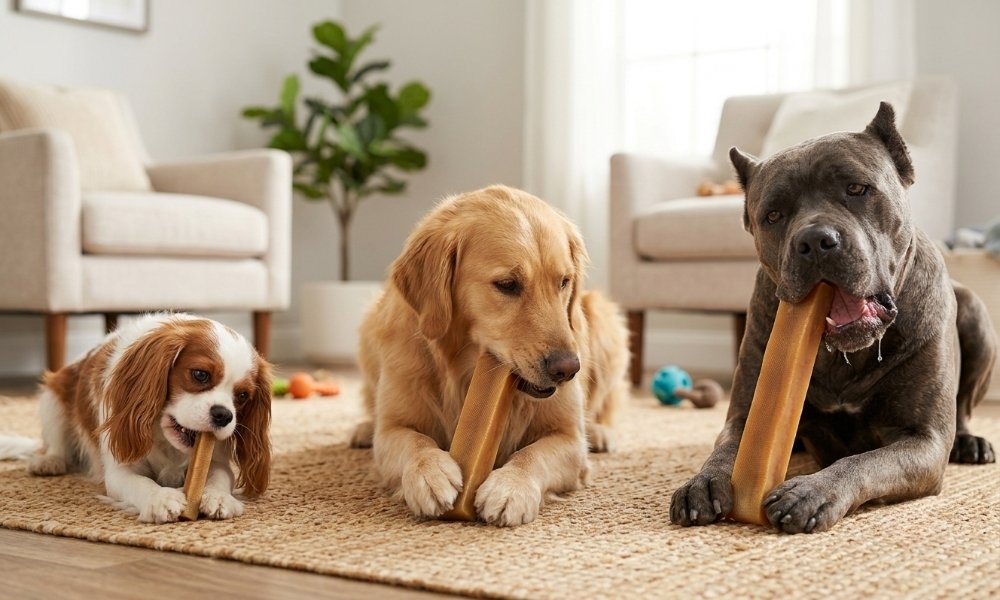
Chewing style changes chew life more than size does. Veterinary behavior guidance generally groups dogs into four chewing styles: nibblers, who lick and gnaw slowly and can take weeks over one chew; moderate chewers, who work steadily and finish a chew in days; power chewers, who apply constant, forceful pressure and can wear down a large chew in a matter of hours; and gulpers, who bite off chunks and swallow with minimal chewing at all.
The gulper category matters most for safety, independent of speed. A gulper doesn’t so much finish a chew as remove pieces of it, which raises the choking and blockage risk covered later in this guide. If you’re not sure which category fits your dog, watch the first two or three sessions closely. Does your dog work one end down gradually, or come away with chunks?.
Does Chew Thickness and Density Make a Difference?
Thickness affects longevity more directly than overall length. A long, thin stick snaps under pressure and disappears fast, while a short, thick bar wears down gradually and lasts longer, even at a similar total weight. As a practical rule, choose a chew that’s clearly larger than the gap between your dog’s back molars so it can’t be enclosed fully in a single bite; when unsure, size up and supervise.
Density matters just as much as thickness. Chews with lower moisture content, generally under 10 percent, are harder and denser, and they wear down more slowly than a chew that was dried quickly or incompletely. This is also why two chews of identical size from different manufacturers can behave completely differently in the same dog’s mouth. See what makes Himalayan yak chews unique in the market for a breakdown of what to look for when comparing producers.
How Long Should a Yak Chew Last for Different Dogs?
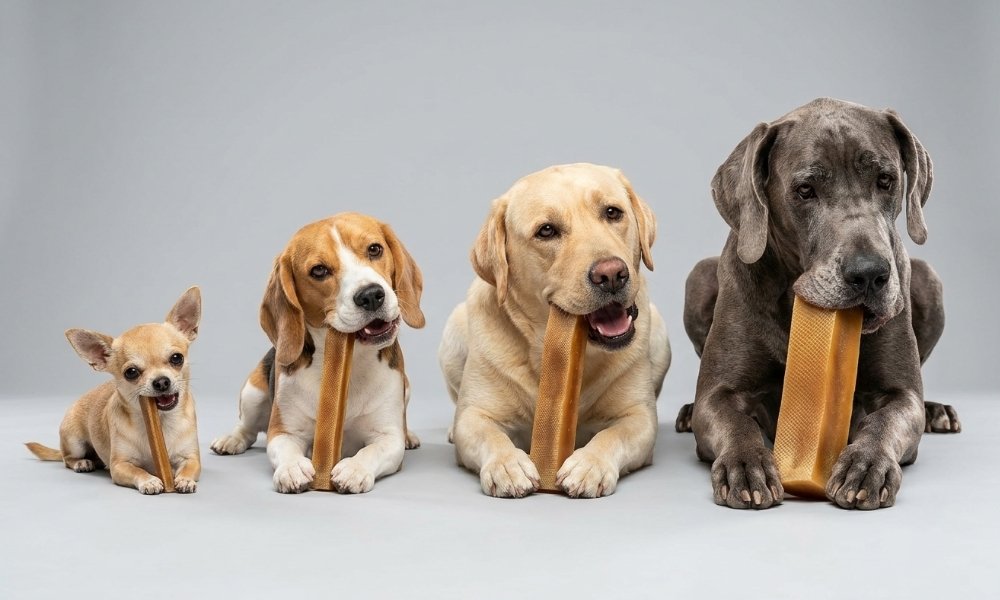
A correctly sized small chew lasts a few hours to about three days, a medium chew lasts three to seven days, and a large or extra-large chew lasts one to three weeks, assuming supervised, session-based use rather than round-the-clock access. The table below gives a practical starting point; treat your dog’s individual chewing style as the adjustment factor once you know it.
| Dog size | Typical weight | Chew size to buy | Realistic chew life |
| Small | Under 20 lb (9 kg) | Small bars or puffed nuggets | A few hours to 2–3 days |
| Medium | 20–50 lb (9–23 kg) | Medium bars | 3–7 days |
| Large | 50–85 lb (23–38 kg) | Large or extra-large bars | 1–3 weeks |
| Extra-large / giant breed | Over 85 lb (38 kg) | Jumbo or XXL bars | 2–4+ weeks |
These figures assume a moderate chewer working in supervised, time-limited sessions. A power chewer with unlimited access will move through the same chew considerably faster than the table suggests. For a breed-by-breed and weight-based breakdown, this guide to matching yak chew size to your dog’s breed and age is a useful next step after the table above.
How Long Do Yak Chews Last for Small Dogs?
Small dogs under 20 pounds typically work through a correctly sized chew over a few hours to two or three days. Their narrower jaws generate less bite force, so width, not speed, tends to be the limiting factor. A chew between 0.6 and 0.8 inches (1.5 to 2 cm) in diameter is wide enough to prevent gulping while still being manageable for a small mouth. Puffed nuggets work particularly well here, since they offer a softer texture without losing the slow, scraping motion that may help with dental hygiene.
Toy breeds and brachycephalic dogs such as French Bulldogs do best with wider, shorter pieces they can grip securely between their front teeth, rather than long, narrow bars.
How Long Do Yak Chews Last for Medium Dogs?
Medium dogs between 20 and 50 pounds sit in the most forgiving size range, and a single medium bar generally lasts three to seven days across several supervised sessions. This is the bracket where the widest range of breeds and chewing styles overlaps comfortably, from a moderate Beagle to a more determined Border Collie. One medium chew typically supports three to seven separate 15 to 30-minute sessions spread across a week, rather than disappearing in a single sitting, which is both safer and more cost-effective than unrestricted access.
How Long Do Yak Chews Last for Large Dogs?
Large dogs between 50 and 85 pounds need extra-large chews to last a comparable one to three weeks, and giant breeds such as Mastiffs, Great Danes, and Bernese Mountain Dogs need jumbo sizing regardless of exact body weight, since jaw width matters as much as weight for this group. A narrower but heavy breed, such as a Greyhound, does fine with a standard extra-large size rather than jumbo. The single most common mistake with large or powerful dogs is sizing down to save money. An undersized chew forces a large dog into direct, downward biting instead of the side-to-side gnawing that wears a chew down safely, which raises both fracture risk and the speed of consumption.
How Can You Make Yak Chews Last Longer?
Yak chews last the longest when you limit each session, store the unused portion correctly between sessions, and remove the chew before it becomes a small, swallowable stub. None of these steps reduces how much your dog enjoys the chew. They mainly control the pace.
Should You Limit Chewing Sessions?
Limiting sessions to 15 to 30 minutes, then removing and storing the remainder, extends a chew’s total life far more than leaving it out all day. Unrestricted access lets a motivated dog wear down even a large bar in one long sitting, while the same chew offered in short, structured sessions can provide three to seven separate sessions across a week. Sourcing from a dedicated yak chew manufacturing company in Nepal that slow-dries to a consistent moisture level helps ensure the chew behaves predictably across every session. This approach also keeps your dog more engaged over time, since a chew that reappears after being put away tends to hold more interest than one left on the floor as background furniture.
How Should You Store Yak Chews?
Store yak chews in a cool, dry, dark, and well-ventilated place, ideally at 40 to 60 percent relative humidity, using a breathable paper bag or cloth rather than an airtight container. Below that range, the surface can dehydrate and turn brittle; above it, the chew absorbs ambient moisture, softens faster than it should, and becomes more vulnerable to mold. A sealed container or paper bag works better than a loosely closed plastic bag, which tends to trap moisture unevenly against the chew’s surface.
Refrigeration is usually fine for short-term storage between sessions; freezing may alter texture and risks condensation on thawing that promotes spoilage, so follow the manufacturer’s guidance and ensure chews are sealed and fully dry before freezing if you choose to do so. Most properly dried yak chews are typically shelf-stable without refrigeration or added preservatives due to the slow drying process, though specific practices vary by manufacturer. The complete yak chew storage guide covers humidity ranges, container types, and freezing trade-offs in more depth.
When Should You Replace a Yak Chew?
Replace a yak chew once the remaining piece is small enough to fit entirely inside your dog’s mouth, generally around 1.5 to 2 inches (4 to 5 cm) for many medium and large dogs, regardless of how much chewing time is technically left in it. This is also the point where a chew stops offering meaningful dental benefit and starts posing a choking risk instead. If a piece does get swallowed at this stage, this step-by-step guide on what to do if your dog swallowed a yak chew covers the signs to watch for and when to call a vet.
Separately from size, watch for spoilage signs on any chew that’s been stored for a while: a sour smell, visible mold, discoloration, or a texture that’s turned sticky or unusually soft all mean it’s time to throw the piece away rather than offer it again.
Are Yak Chews Longer Lasting Than Other Dog Chews?
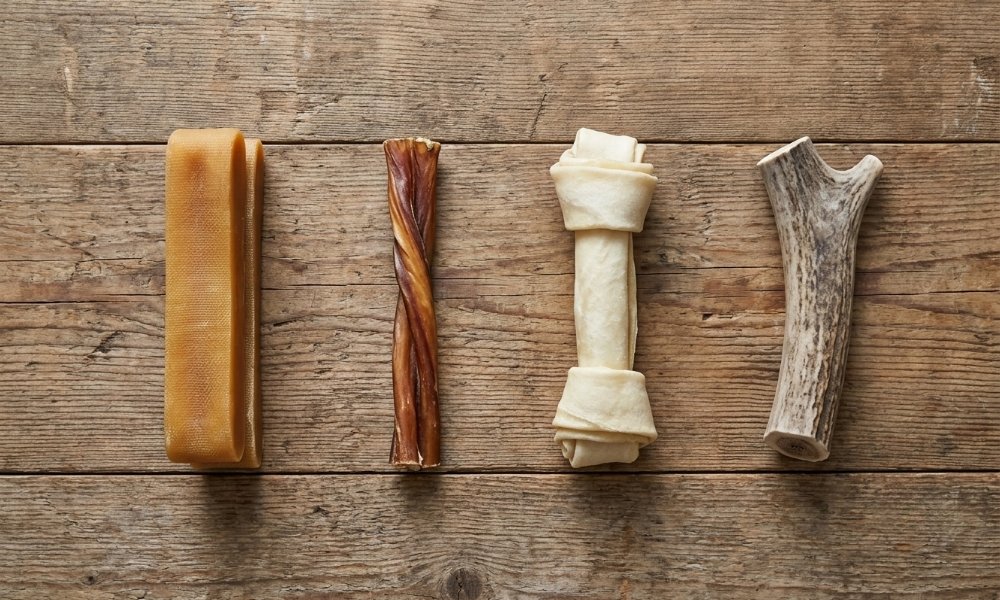
Yak chews generally outlast bully sticks and most rawhide products, while lasting somewhat less time than a whole antler. Where yak chews stand out isn’t raw duration alone but the combination of long chew time, low odor, and a controlled break pattern that wears down gradually instead of snapping into fragments. Here’s how the three most common alternatives stack up.
| Chew type | Typical duration | Main advantage | Main risk |
| Yak chew | Hours to weeks | Long-lasting, low odor, gradual wear | Very hard when fresh; needs sizing discipline |
| Bully stick | Minutes to a couple of hours | Highly digestible, single-ingredient | Fast for power chewers; higher fat and calories |
| Rawhide | Minutes to a few hours | Widely available, low cost | Swells when wet; choking and blockage risk |
| Antler | Weeks to months | Extremely long-lasting | Very hard; higher tooth fracture risk |
How Do They Compare With Bully Sticks?
Bully sticks are a single-ingredient product, dried muscle tissue, which makes them highly digestible but also softer and faster to consume than a yak chew. A determined chewer can finish a bully stick in minutes, while the same dog typically needs hours or days to work through a comparably sized yak chew, since yak chews are a dense, low-moisture dairy protein rather than muscle tissue.
That density is also the tradeoff: yak chews are a dairy product, and a 2026 University of Évora veterinary review lists dairy among the five most-reported canine food allergens, though confirmed food allergy overall affects under 1% of dogs. Bully sticks avoid that particular risk entirely but run higher in fat and calories per piece. If odor matters in your home, yak chews are close to scentless, while bully sticks carry a distinct smell that gets stronger as they’re chewed. Choose bully sticks for a puppy in the teething stage or a dog that needs a softer, quickly digestible chew. Choose yak chews when duration and low mess matter more. Thisin-depth yak chews vs. bully sticks breakdown walks through the calorie, odor, and digestibility trade-offs side by side.
How Do They Compare With Rawhide Chews?
Rawhide is processed animal hide, and its main safety issue isn’t hardness but behavior once it’s wet: rawhide swells and turns slippery as a dog chews it, which raises the odds that a dog bites off and swallows a piece rather than working it down gradually. Some rawhide products may be processed using substances such as lime, bleach, or hydrogen peroxide. According to The Benefits and Risks of Chew Treats, a 2023 veterinary continuing-education review published in Today’s Veterinary Practice, minimally processed rawhide is not classified as “food” by the FDA, so manufacturers are generally not required to disclose the processing chemicals used. This disclosure gap is one that simple, minimally processed yak chews typically do not have.
Yak chews behave differently as they wear. Rather than turning gummy, they soften slowly and predictably, and their firmer starting texture makes it less likely that a dog tears off a large, swallowable chunk in one bite. That said, a yak chew’s greater hardness when fresh is its own consideration, which is why size and supervision matter regardless of which chew you choose.
How Do They Compare With Antlers and Nylon Chews?
Antlers and hard nylon chews sit at the far end of the hardness spectrum, and that hardness is exactly what makes them riskier for teeth. Yak chews are quite hard, but reported hardness values vary by producer and moisture content; antler material is generally harder and stays rigid until it cracks. A widely used field test, sometimes called the thumbnail test, asks whether you can press a slight indentation into the chew’s surface with your thumbnail. A chew that leaves no mark at all when pressed with your fingernail may be hard enough to fracture a dog’s tooth under normal chewing pressure. A Frontiers in Veterinary Science study on the fracture limits of canine maxillary fourth premolar teeth found that the average dog molar failed at just over 1,280 newtons of applied force, a level that can be reached by some exceptionally hard chews. This is an informal field test; consult a veterinary dentist for precise risk assessment.
Antlers and nylon bones fail the thumbnail test far more often than yak chews do, because yak chews soften progressively with saliva while antlers and nylon stay rigid until they crack. The tradeoff is straightforward: antlers last considerably longer than yak chews, sometimes weeks to months for a moderate chewer, but that added durability comes with meaningfully higher fracture risk, which is why many veterinary dentists recommend chews with at least some give over those with none. If the hardness question is your main concern, this guide to whether yak chews are too hard for dogs helps you assess the right risk threshold before choosing.
What Signs Show a Yak Chew Is Near the End?
A yak chew is at the end of its safe life once the remaining piece is small enough to fit fully inside your dog’s mouth, roughly 1.5 to 2 inches (4 to 5 cm) for many medium and large dogs, regardless of how solid it still feels. Size, not remaining hardness, is what determines the point of replacement.
When Is a Yak Chew Too Small to Use Safely?
A simple way to judge this in the moment: if your dog could close its jaw completely around the remaining piece, or swallow it in one motion, it’s too small to keep supervising safely. This threshold arrives sooner for narrow-jawed and small dogs than the size chart might suggest, and it arrives sooner for gulpers of any size, who are more likely to attempt swallowing a shrinking piece rather than continuing to gnaw it. Once a chew reaches this stage, remove it immediately rather than allowing “just a few more minutes.” The final stretch of any chew is where fragment generation and swallowing risk both increase at once.
Can You Turn Small Pieces Into a Puff Treat?
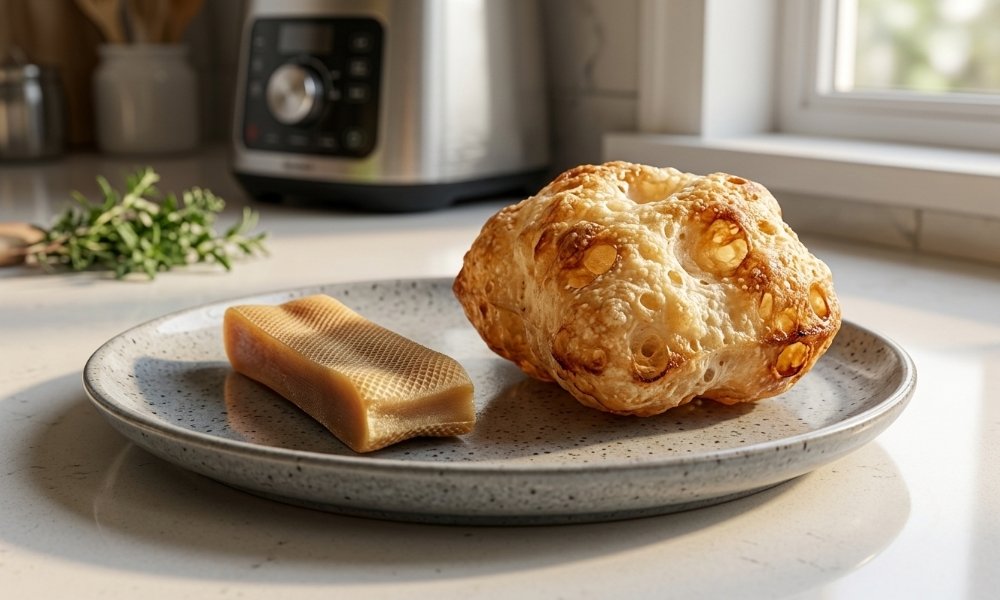
Yes, and this is a useful technique many owners discover only after using yak chews for some time. Place the leftover piece on a dry, microwave-safe plate rather than in a bowl, since a flat surface heats more evenly. Microwave in short bursts, checking every 15 to 20 seconds, until the piece visibly puffs to roughly three times its original size. Total time is usually 30 to 60 seconds, depending on your microwave’s wattage and the size of the piece, so watch it rather than relying on a fixed timer. Let it cool completely; a full five minutes is a safe rule of thumb, since the interior holds heat longer than the surface suggests.
What you end up with is a light, airy, fully cooled cheese puff your dog can crunch through safely, rather than a dense stub that posed a choking risk minutes earlier. Only attempt microwave puffing with single-ingredient chews that the manufacturer says are safe to heat. If the product label or manufacturer advises against heating, don’t attempt it. This full guide to puffing yak chews in the microwave, including exact timing by wattage, is useful for getting consistent results from one batch to the next. It’s a genuinely useful trick for getting full value out of every chew instead of throwing away the end piece.
Are Yak Chews Safe for Daily Chewing?
Yak chews are safe for regular use for most healthy adult dogs, provided sessions stay time-limited and supervised, though “daily” doesn’t need to mean a fresh chew every day. One correctly sized medium chew, offered in short sessions, can reasonably cover three to seven days of use. Treats and chews, no matter how natural, still contribute to a dog’s daily calorie intake. The WSAVA guide to feeding treats to your dog recommends limiting treats, including chews, to less than 10% of a dog’s total daily calorie intake. For comparison, a single rawhide bone can contain around 700 calories, exceeding the entire daily treat allowance for some small dogs.
How Long Should Dogs Chew Per Session?
Most adult dogs do well with 15 to 30 minute sessions, after which the chew should be put away rather than left out. Puppies and dogs new to a particular chew do better starting even shorter, around 5 to 10 minutes, so you can observe how they handle it before extending the time.
Which Dogs Should Be Supervised More Closely?
Some dogs need closer attention regardless of how well they normally handle chews. Puppies under six months still have deciduous teeth, which fracture more easily under compressive load than adult teeth, so hard chews should wait until adult teeth are fully in. Many safety sources recommend waiting until around six months before introducing even softer puffed yak chews, and only under close supervision and with veterinary approval.
Senior dogs with worn enamel or existing periodontal disease face a similar risk from the other direction, since aging teeth tolerate less force than they once did. This guide to the safest chews for senior dogs with no teeth covers puffed and softened alternatives specifically for that group. Dogs recovering from recent dental work need a veterinarian’s clearance before returning to any hard chew, and dogs with a documented dairy sensitivity should be introduced to yak chews gradually, in small amounts, rather than given a full-size piece on the first try. Power chewers and gulpers of any age also warrant closer supervision than a moderate chewer would, simply because both styles compress the timeline between “this looks fine” and “this piece is now a hazard”.
What Mistakes Can Make Yak Chews Wear Out Faster?
The two most common mistakes are exposing the chew to moisture between sessions and underestimating how quickly an aggressive chewer works through even a well-sized piece. Both are easy to fix once you know to watch for them.
Does Moisture Reduce Their Lifespan?
Yes, and this applies during chewing as well as storage. Saliva softens the surface of a yak chew as your dog works on it, which is expected, but humidity, soaking, or careless storage between sessions compounds that softening and shortens how long the chew ultimately lasts. Soaking a chew in warm water is a legitimate technique for puppies and dogs with weaker teeth, since it deliberately trades some duration for a softer, safer texture. It’s a tradeoff, though, not a shortcut, and shouldn’t be treated as free. Outside of intentional softening, keep chews away from humid rooms, damp storage containers, and prolonged exposure near water bowls if you want to preserve their full working life.
Can Aggressive Chewers Finish Them Too Quickly?
Yes, and sizing is the fix, not the chew itself. A power chewer applying sustained pressure can work through a chew sized for a moderate chewer in a fraction of the expected time, which is a sizing mismatch rather than a flaw in the chew. Sizing up to the next weight bracket, prioritizing thickness over length, and rotating between two or three chews on a weekly cycle all extend total value for a determined chewer. A chew holder can also help slow down a dog that tends to gulp rather than gnaw by making it physically harder to bite off large sections in one motion. None of these adjustments will make an aggressive chewer’s chew last as long as a nibbler’s identical chew would, and that gap is expected rather than a sign that something is wrong.
How Can You Get the Most Value From Yak Chews?
Getting full value from a yak chew comes down to a short list of habits rather than any single trick:
- Match the chew size to your dog’s actual weight and jaw width, not just their breed’s typical size.
- Identify your dog’s chewing style within the first two or three sessions so you can size accordingly from the start.
- Limit sessions to 15 to 30 minutes and store the remainder properly rather than leaving it out continuously.
- Remove the chew at the 1.5 to 2-inch stub stage (or the equivalent size for your dog’s mouth) and puff or discard that final piece rather than letting it become a choking hazard.
- Buy from a manufacturer that discloses drying time and moisture content, since a properly dried, dense chew wears down gradually and predictably.
Taken together, these habits typically get considerably more chewing time out of the same chew than unrestricted access ever would, without changing how much your dog enjoys each session.
Can YforYak Dog Chew Help Your Dog Enjoy Longer-Lasting Chews?
Everything in this guide comes down to two things: how a chew is made and how it’s sized. YforYak chews are handcrafted in Nepal using the traditional chhurpi method, a centuries-old Himalayan technique for hardening yak and cow milk, lime or citrus juice, and salt into a dense, dried cheese, then sun-dried and naturally smoked rather than rushed through artificial drying. That slower process produces the controlled break behavior described earlier in this guide: the chew wears down gradually at the surface instead of cracking into sharp fragments, the same property that makes a chew both longer-lasting and easier to supervise safely.
Because sizing matters as much as manufacturing, YforYak chews are graded across small, medium, large, and extra-large weight brackets with consistent dimensions within each size, so you’re not left guessing whether a medium from one batch matches a medium from the next. Puffed bars and nuggets are also available for puppies, senior dogs, and dogs with more sensitive teeth, using the same softening process described in the puff treat section above. YforYak’s production is in facilities that are FDA-registered and HACCP- and GMP-certified; if consistency and traceability are part of what you’re evaluating in a chew brand, it’s always wise to request certificates and test reports directly from the manufacturer.
What Are the Key Takeaways About How Long Yak Chews Last?
How long a yak chew lasts depends far more on your dog’s individual chewing style and the chew’s size and thickness than on any single number a package can promise. As a starting point: expect a few hours to three days from a small chew, three to seven days from a medium chew, and one to four weeks from a large or extra-large chew, adjusted up or down based on whether your dog nibbles, chews steadily, or powers through everything in sight.
A few habits make the biggest difference in stretching that time further:
- Size the chew to your dog’s actual weight and jaw width, not just their breed’s average size.
- Limit sessions to 15 to 30 minutes and store the remainder in a cool, dry, airtight container.
- Remove the chew at the 1.5- to 2-inch stub stage (or the equivalent size for your dog’s mouth) and puff the final piece instead of discarding it, if the manufacturer says it’s safe to heat.
- Watch for moisture exposure from both storage and soaking, since it directly shortens working life.
- Supervise puppies, seniors, and power chewers more closely than a moderate adult chewer.
- Remember that yak chews are not the fastest-consumed chew on the market, nor the single longest-lasting one available, but the combination of duration, low odor, and gradual wear is what keeps them a practical everyday option for most dogs