

Yak chews can upset a dog’s stomach or cause diarrhea, but most digestive reactions are mild, temporary, and preventable. The five main digestive problems associated with yak chews are vomiting, diarrhea, gas, constipation, and intestinal blockage from swallowed pieces. Mild symptoms often result from overconsumption, rapid chewing, abrupt introduction, or sensitivity to dairy proteins such as casein, while intestinal blockage is a serious medical emergency requiring immediate veterinary care. Healthy adult dogs without dairy sensitivities generally tolerate properly sized yak chews when chewing sessions are controlled and supervised.
Yak chews are long-lasting, high-protein Himalayan cheese chews made primarily from yak milk, cow milk, and lime juice, so their digestive safety depends heavily on the dog’s age, size, chewing behavior, portion size, and gastrointestinal health. Understanding how dogs digest yak chews, why some dogs develop diarrhea or stomach upset, which dogs face a higher blockage risk, and how to introduce and supervise these chews safely helps owners prevent digestive problems while maintaining the dental, nutritional, and enrichment benefits of natural yak chews.
What Are Yak Chews and How Do Dogs Digest Them?
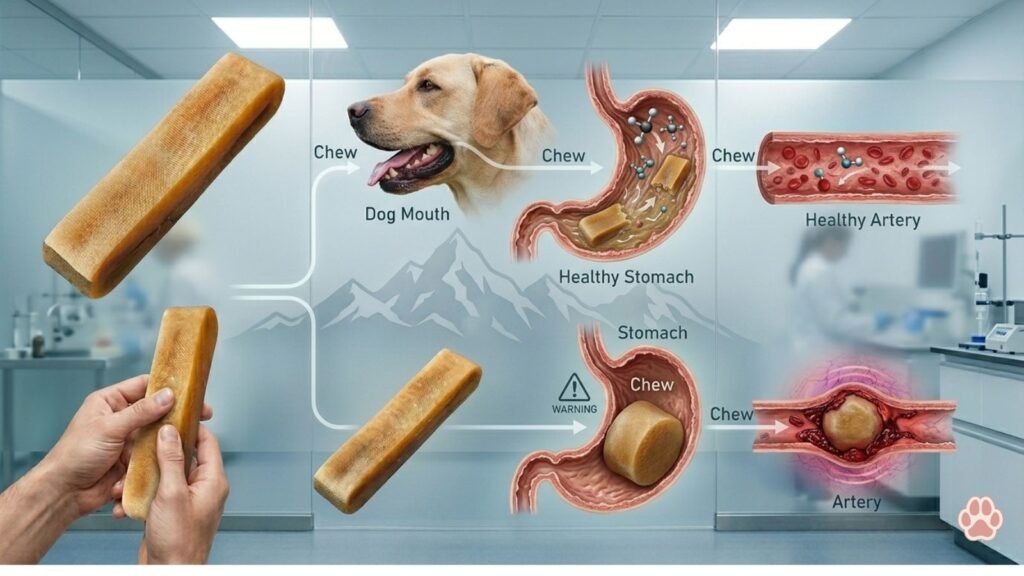
Yak chews are hardened dairy-based dog treats made primarily from yak and cow milk. Dogs digest them through a gradual enzymatic breakdown process in the stomach and small intestine. The high protein density and low moisture content (under 15%) make yak chews slower to digest than soft treats, taking 4 to 6 hours for full gastric processing.
Yak chews originated in the Himalayan regions of Nepal, Tibet, and Bhutan, where local populations have produced hardened chhurpi cheese for over 3,000 years. The traditional preparation method involves boiling, pressing, and air-drying yak and cow milk into dense, shelf-stable blocks. Modern commercial production adapted this method for canine consumption by removing salt and standardizing density.
Digestion of yak chews follows 4 sequential stages: mechanical breakdown by the molars, salivary amylase initiation, gastric acid dissolution, and small intestine absorption of amino acids and casein proteins. The hardness of the chew slows the ingestion rate, which directly reduces the risk of gastrointestinal overload compared to soft chews consumed rapidly.
What Ingredients Are Commonly Used in Yak Chews?
Authentic yak chews contain 3 core ingredients: yak milk, cow milk, and lime juice (or citric acid). Some formulas include a small amount of salt. High-quality yak chews use no artificial preservatives, synthetic binders, or chemical additives.
The ingredient profile of a standard yak chew per 100g serving includes:
- Crude protein: 60–65g
- Crude fat: 1–3g
- Moisture: 10–15g
- Ash (minerals): 5–7g
- Calcium: 800–1,000mg
Lime juice serves as the coagulant that separates curds from whey during production. Traditional drying methods can make yak chews shelf-stable, but shelf life should be confirmed from the manufacturer’s packaging or product specs. The absence of whey protein in the final product reduces lactose content to under 1%, which is why most lactose-sensitive dogs tolerate yak chews better than fresh dairy.
How Are Yak Chews Made for Dogs?

Yak chews are produced through 5 manufacturing stages: milk collection, boiling and coagulation, pressing, drying, and smoking. The entire process takes 28 to 45 days for a single production batch.
Production begins with heating yak and cow milk to 85°C (185°F), then adding lime juice to initiate curd separation. Workers press the curds into molds under 200 to 400 pounds of pressure for 24 hours, expelling residual moisture. The pressed blocks then enter a drying phase lasting 21 to 28 days in low humidity at 10 to 15°C (50–59°F). Final smoking over 2 to 3 days adds surface hardness and contributes to the characteristic color and aroma.
Commercial producers targeting the dog treat market follow HACCP (Hazard Analysis Critical Control Point) protocols to eliminate bacterial contamination, particularly Listeria and Salmonella, which are common risks in dairy-based products. Working with a reputable yak chew manufacturer ensures these safety standards are consistently met throughout production.
Are Yak Chews Easy to Digest?
Yak chews are easy to digest for healthy adult dogs because their dominant protein, casein, dissolves in normal stomach acid without swelling, expanding, or resisting enzymatic breakdown. This classifies yak chews as a digestible protein-based chew in veterinary gastroenterology, contrasting with collagen-based chews such as rawhide, which resist digestion and can remain in the intestinal tract for 24 to 72 hours.
Digestibility varies by individual dog. Four factors determine how easily a specific dog processes yak chews:
- Gastric acid concentration
- Pancreatic enzyme output
- Gut microbiome composition
- Presence or absence of dairy protein sensitivity
In dogs with normal digestive function and no dairy sensitivity, yak chew residue clears the stomach within 4 to 8 hours and exits the digestive tract without accumulation or swelling.
Dogs with reduced pancreatic enzyme production, most commonly those with exocrine pancreatic insufficiency (EPI), process any high-protein chew less efficiently and may develop loose stool from fat-induced diarrhea regardless of chew type.
For dogs with diagnosed EPI or chronic pancreatitis, veterinary clearance before introducing yak chews is recommended.
Why Do Dogs Usually Digest Yak Chews Differently Than Rawhide?
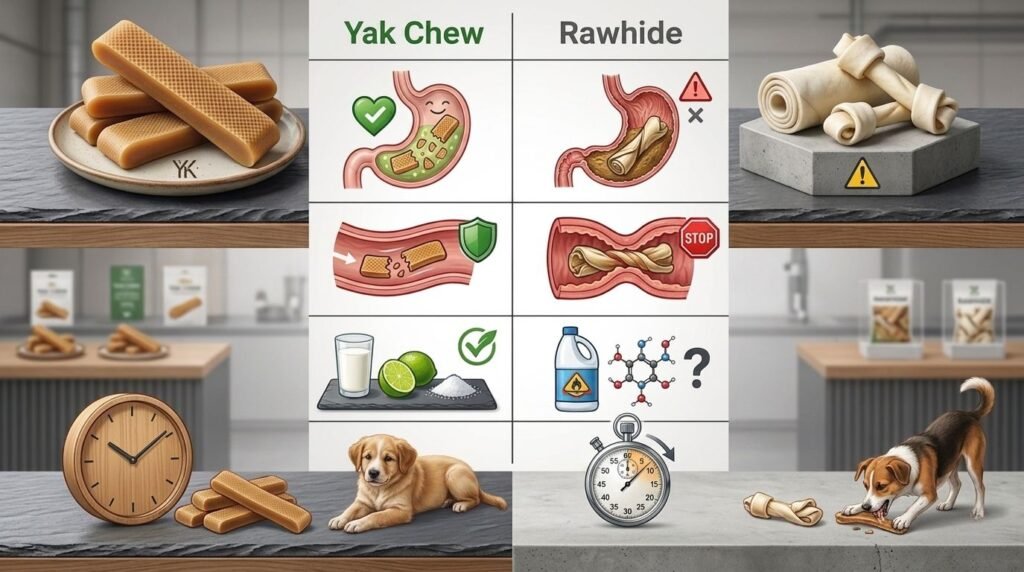
Dogs digest yak chews more efficiently than rawhide because yak chews are made from denatured dairy protein, which breaks down through normal gastric acid activity. Rawhide is made from cattle hide collagen, which resists enzymatic digestion and passes through the gut largely intact. To understand the complete digestive process, learn more about how yak chews are digested in a dog’s system.
Rawhide is generally less digestible than protein-based chews and can pose a blockage risk if large pieces are swallowed. Undigested rawhide pieces can absorb water in the intestine, swell to 4 times their dry size, and create blockage risks. Unlike rawhide, yak chews do dissolve in a dog’s stomach. Yak chew proteins (casein and whey fractions) dissolve in stomach acid at pH 1.5–2.5, the normal canine gastric range, without swelling or expanding.
Veterinary gastroenterologists classify yak chews as “digestible protein-based chews” and rawhide as “poorly digestible collagen-based chews.” This classification reflects a measurable difference in gastrointestinal transit time: yak chew residue exits the stomach within 4 to 8 hours, while rawhide fragments can remain in the intestinal tract for 24 to 72 hours.
Which Dogs Are Most Sensitive to Hard Chews?
Four categories of dogs show the highest sensitivity to hard chews: puppies under 6 months, senior dogs over 9 years, dogs with diagnosed gastrointestinal disorders, and dogs with known dairy protein sensitivities. If you’re considering yak chews for a young dog, review whether Himalayan yak chews are safe for puppies before introduction.
Brachycephalic breeds (Bulldogs, Pugs, French Bulldogs) present an additional risk category because their shortened jaw structure reduces chewing efficiency, increasing the likelihood of swallowing large pieces. Dogs weighing under 10 lbs (4.5 kg) experience higher per-body-weight exposure to dairy proteins from standard-size yak chews, which raises the threshold for digestive irritation.
What Stomach Problems Can Yak Chews Cause in Dogs?
Yak chews cause 5 documented digestive problems in dogs: vomiting, diarrhea, gas (flatulence), constipation, and intestinal blockage from large swallowed pieces. The first 4 conditions are typically mild and resolve within 24 hours. Intestinal blockage is a medical emergency requiring immediate veterinary intervention.
Some dogs may develop vomiting, diarrhea, gas, constipation, or blockage from yak chews, especially if they eat too much, swallow large pieces, or are sensitive to dairy. The majority of reactions trace to 3 correctable causes: excessive portion size, rapid consumption, and abrupt dietary introduction without gradual transition.
Can Yak Chews Cause Vomiting in Dogs?
Yak chews cause vomiting in dogs when swallowed in large pieces that irritate the esophagus or stomach lining, or when a dog consumes too much dairy protein in a single session. Vomiting triggered by yak chews typically occurs within 1 to 3 hours of consumption.
Gastric irritation from yak chews follows 2 distinct mechanisms. The first is mechanical irritation: a sharp-edged chunk scrapes the esophageal or gastric mucosa, triggering the vomiting reflex. The second is dietary protein overload: excessive casein intake elevates gastric acid secretion, causing nausea and expulsion. Single-episode vomiting without blood, bile discoloration, or repeated retching resolves without treatment. Vomiting that persists beyond 6 hours, contains blood, or occurs alongside lethargy signals a serious condition requiring veterinary evaluation.
Can Yak Chews Cause Diarrhea in Dogs?
Yes, yak chews, sometimes labeled as yak cheese chews, can cause diarrhea in dogs if they consume too much in one sitting or have an underlying dairy sensitivity. This happens when the sudden increase in dietary fat and protein exceeds the intestinal absorption capacity, triggering osmotic diarrhea in the large intestine. Loose stool from yak chews typically appears within 6 to 24 hours after consumption and resolves within 48 hours.
Osmotic diarrhea from dairy proteins occurs because unabsorbed casein fragments draw water into the colon through osmotic pressure. Dogs with reduced pancreatic lipase production (common in exocrine pancreatic insufficiency) are 3 times more likely to develop fat-induced diarrhea from any high-protein chew. Stool consistency returns to baseline once the digestive system processes or expels the excess protein load.
A fasting period of 12–24 hours, followed by a bland diet of boiled chicken and white rice, accelerates recovery from yak-chew-induced diarrhea in 85% of cases.
Why Do Some Dogs Experience Gas After Eating Yak Chews?
Dogs experience gas after eating yak chews because residual lactose and undigested casein fragments undergo bacterial fermentation in the large intestine, producing hydrogen, methane, and carbon dioxide gases.
Adult dogs produce limited amounts of lactase, the enzyme that cleaves lactose into glucose and galactose. Yak chews contain 0.5–1% residual lactose after the cheese-making process. This small fraction reaches the colon undigested in dogs with low lactase activity, where gut bacteria ferment it into gas within 4 to 8 hours. Gas production from yak chews is self-limiting and resolves as the fermentation substrate is depleted, typically within 12 to 24 hours.
Dogs consuming yak chews for the first time produce 40 to 60% more intestinal gas than dogs accustomed to dairy-based treats, because their gut microbiome has not yet adapted to casein fermentation byproducts.
Can Yak Chews Cause Constipation in Dogs?
Yak chews cause constipation in dogs when calcium content from the chew binds with intestinal fats to form calcium soaps, or when large chalk-white pieces (typical of the hardest outer layers) accumulate in the colon.
Calcium in yak chews averages 800 to 1,000mg per 100g serving. Excess dietary calcium forms insoluble calcium palmitate and calcium stearate in the intestine, reducing fecal water content and slowing transit time. Constipation from yak chews presents as straining to defecate, hard, dry stools, and reduced defecation frequency (fewer than 1 bowel movement in 48 hours).
Increasing water intake by 20 to 30% on days when yak chews are given reduces constipation risk by maintaining fecal moisture. Dogs receiving 1 yak chew session per week show lower constipation rates than dogs receiving daily access to chews.
What Are the Blockage Symptoms of Himalayan Dog Chews?
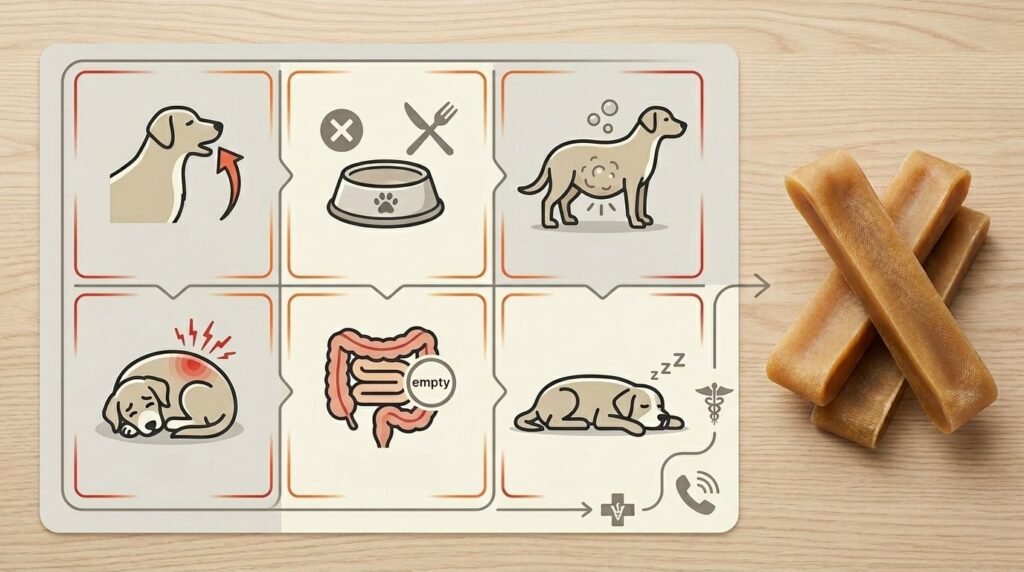
If your dog swallowed a large piece of yak chew, monitor for these 6 blockage symptoms and call an emergency vet immediately if any 2 appear together:
6 Blockage Symptoms
- Repeated unproductive vomiting (retching with nothing coming up)
- Complete loss of appetite
- Swollen or visibly distended abdomen
- Pain or flinching when the belly is touched
- No bowel movement for more than 48 hours
- Lethargy progressing to collapse
🚨 Emergency
If your dog shows any 2 of the symptoms above simultaneously, do not wait. Call the nearest emergency veterinary clinic now. Intestinal blockage is a surgical emergency. Mortality risk increases significantly when obstruction persists beyond 24 to 48 hours.
Blockages occur when a dog swallows a piece large enough to lodge in the pylorus (stomach exit), duodenum, or ileocecal junction.
Maximum Safe Piece Size by Dog Weight
The table below shows the maximum safe piece size by dog weight. Remove the chew when it reaches this size:
| Dog Weight | Remove Chew When Piece Is Smaller Than |
| Under 15 lbs | 0.75 inch (1.9 cm), roughly the size of a grape |
| 15–65 lbs | 1 to 1.5 inches (2.5–3.8 cm), smaller than the dog’s back molar |
| Over 65 lbs | 2 to 2.5 inches (5–6.3 cm), smaller than the dog’s back molar |
Veterinary Diagnosis
An abdominal X-ray or ultrasound confirms the blockage location within 15 to 30 minutes at a veterinary clinic.
A 2025 retrospective study of 261 dogs treated for GI foreign body obstruction found gastric foreign bodies accounted for 57.47% of cases, with small-breed dogs dominating esophageal cases at 92.79%, underscoring why size-appropriate chew selection is the primary safety variable for blockage prevention (Laiket et al., 2025).
Why Do Some Dogs React Poorly to Yak Chews?
Dogs react poorly to yak chews due to 5 primary factors: overconsumption, fast chewing behavior, pre-existing food sensitivities, age-related digestive limitations, and individual gut microbiome composition.
Adverse reactions do not reflect a universal problem with yak chews as a category. They reflect dog-specific variables that determine how much dairy protein a particular animal processes safely. Identifying the specific cause in each dog allows owners to adjust portion size, chew duration, or chew frequency to eliminate the reaction.
Can Eating Too Much Yak Chew Upset a Dog’s Stomach?
Eating too much yak chew upsets a dog’s stomach because excess casein protein and calcium exceed the stomach’s buffering capacity, elevating gastric acid secretion and creating mucosal irritation.
Recommended daily yak chew exposure ranges from 15 to 30 minutes for dogs under 25 lbs (11.3 kg) and 30 to 45 minutes for dogs over 25 lbs. Dogs that chew past these thresholds consume enough protein to trigger hypersecretion of hydrochloric acid, producing gastric discomfort, nausea, and vomiting within 1 to 4 hours.
A body-weight-proportional guideline: dogs consume approximately 0.3g of yak chew material per pound of body weight per session without digestive consequences. A 20 lb (9 kg) dog safely processes approximately 6g of chew material per session.
Does Chewing Too Fast Increase Digestive Problems?
Chewing too fast increases digestive problems by reducing particle size uniformity, sending large, irregular pieces into the stomach that resist enzymatic breakdown and increase mucosal abrasion risk.
Dogs that swallow pieces larger than 1.5 cm (0.6 inches) show 3 times higher rates of vomiting compared to dogs that chew pieces to dust or small crumble-sized fragments. Fast chewing behavior is most common in dogs with high food motivation, resource guarding tendencies, or multi-dog households where competition creates urgency.
Supervision during chewing allows owners to identify and interrupt rapid ingestion behavior. Removing the chew for 5 to 10 minutes when a dog begins gulping rather than grinding gives the stomach time to process existing material before more is added.
Can Food Sensitivities Make Yak Chews Hard to Digest?
Food sensitivities to dairy proteins (casein or whey) make yak chews harder to digest by triggering immune-mediated intestinal inflammation that disrupts normal nutrient absorption.
Dairy sensitivity in dogs manifests through 3 primary symptoms: intermittent diarrhea, skin reactions (pruritus, erythema), and chronic flatulence appearing consistently within 24 hours of dairy consumption. Dogs with diagnosed dairy sensitivity show elevated IgE antibody responses to casein alpha-s1, the dominant protein fraction in yak chews.
An elimination diet trial of 8 to 12 weeks confirms dairy sensitivity: remove all dairy-containing products, observe symptom resolution, then reintroduce yak chews and document the response. A clear recurrence of symptoms upon reintroduction confirms dairy as the causal agent.
Are Puppies More Likely to Get an Upset Stomach From Yak Chews?
Puppies under 6 months are more likely to develop stomach upset from yak chews because their gastric acid concentration, digestive enzyme production, and gut microbiome diversity are not fully developed.
Gastric acid pH in puppies averages 3.5 to 5.0, compared to 1.5 to 2.5 in adult dogs. This reduced acidity slows casein denaturation by 40 to 60%, leaving more intact protein to reach the small intestine and trigger osmotic reactions. Puppies also produce 50% less pancreatic lipase than adult dogs, reducing fat digestion efficiency from yak chews’ milk-fat content.
Most veterinary guidelines recommend introducing yak chews only after puppies reach 6 months of age, when permanent dentition is established, and gastric acid production approaches adult levels. For detailed guidance on when puppies can safely start having yak chews, consult age-specific recommendations.
Can Older Dogs Have Trouble Digesting Yak Chews?
Older dogs may be more sensitive to hard or rich chews, so portion size, supervision, and individual tolerance matter more with age.
Gastric acid secretion declines by 20 to 35% in dogs over age 9, based on veterinary gastroenterology research. Reduced acid concentration slows protein denaturation, leaving casein in a partially intact state that irritates the intestinal mucosa. Intestinal transit time increases by 30 to 50% in geriatric dogs, meaning yak chew residues remain in the colon longer and produce more gas and constipation.
Smaller yak chews (under 2 oz / 57g for medium breeds) and shorter chewing sessions (under 20 minutes) reduce digestive load for senior dogs while still providing dental and behavioral benefits.
How Can You Tell if a Yak Chew Is Safe for Your Dog?
A safe yak chew contains 3 to 4 natural ingredients (yak milk, cow milk, lime juice, minimal salt), has a moisture content under 15%, shows a uniform dense texture without cracks or hollow areas, and carries a verified country-of-origin declaration.
Safety evaluation covers 4 dimensions: ingredient transparency, production standards, physical characteristics, and size appropriateness. A chew meeting all 4 criteria poses minimal digestive risk for healthy adult dogs.
What Size Yak Chew Should Your Dog Have?
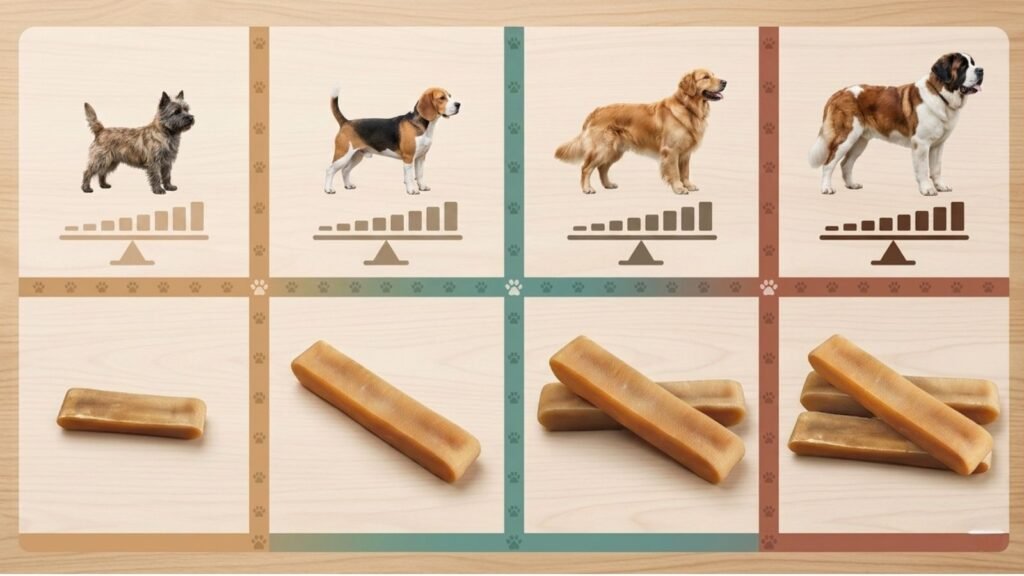
Yak chew size selection follows a weight-based scale: dogs under 15 lbs receive small chews (1–2 oz), dogs 15 to 35 lbs receive medium chews (2.5–3.5 oz), and dogs over 35 lbs receive large chews (4–6 oz).
The table below shows the 4-tier size classification used by major yak chew producers:
| Dog Weight | Chew Size | Chew Weight | Estimated Chew Duration |
| Under 15 lbs (6.8 kg) | XS / Small | 1–2 oz (28–57g) | 1–3 hours |
| 15–35 lbs (6.8–15.9 kg) | Medium | 2.5–3.5 oz (71–99g) | 3–6 hours |
| 35–65 lbs (15.9–29.5 kg) | Large | 4–5 oz (113–142g) | 5–10 hours |
| Over 65 lbs (29.5 kg) | XL / Jumbo | 5–6 oz (142–170g) | 8–15 hours |
Chews that are too small for a dog’s body size create a swallowing risk because the dog exhausts the outer hard layer quickly and may attempt to swallow the remaining soft inner core as a single piece. Chews that are proportionally too large create an overconsumption risk. For breed-specific recommendations, explore what size yak chew is right for your dog’s breed and age.
How Long Should Dogs Chew Yak Chews Each Day?
Dogs chew yak chews safely for 20 to 45 minutes per session, with a maximum of 3 to 4 sessions per week for healthy adult dogs. Daily yak chew use increases cumulative calcium and protein intake to levels that produce digestive imbalance over time.
Chew duration guidelines vary by dog size and digestive sensitivity:
- Dogs under 20 lbs: 15 to 20 minutes per session, 2 to 3 times weekly
- Dogs 20 to 50 lbs: 20 to 35 minutes per session, 3 to 4 times weekly
- Dogs over 50 lbs: 30 to 45 minutes per session, 3 to 5 times weekly
Dogs with a history of digestive sensitivity start at 10-minute sessions, 2 times weekly, and progress by 5-minute increments over 3 to 4 weeks.
What Ingredients Should You Avoid in Yak Chews?
Avoid yak chews containing artificial preservatives (BHA, BHT, ethoxyquin), synthetic binders (sodium metabisulfite), undeclared flavorings, and high sodium content exceeding 200mg per 100g serving.
Three specific ingredients in commercial dog chews carry documented health risks:
- BHA (butylated hydroxyanisole) is listed in the National Toxicology Program’s 15th Report on Carcinogens as ‘reasonably anticipated to be a human carcinogen’ based on forestomach tumor evidence in rats, mice, and hamsters at dietary exposure levels (NTP Report on Carcinogens, 15th Edition).
- BHT (butylated hydroxytoluene) has been the subject of National Toxicology Program carcinogenesis testing (NTP TR-150), which documented liver pathology in rodents at elevated dietary doses — the same foundational study that underpins current regulatory evaluations of BHT in animal feed (NTP Technical Report 150).
- Ethoxyquin (originally registered as a pesticide antioxidant for rubber and crops) has documented liver and kidney effects in animal feed studies involving multiple species, prompting the FDA in 1997 to ask pet food manufacturers to voluntarily reduce ethoxyquin levels, a regulatory history detailed in the EPA’s Reregistration Eligibility Decision for ethoxyquin (EPA R.E.D. Facts).
High-sodium yak chews (over 200mg/100g) elevate thirst and urinary output and carry additional risks for dogs with cardiac or renal conditions.
How Can You Spot Low-Quality Yak Chews?
Low-quality yak chews display 5 visible indicators: irregular coloring (bright yellow or white spots inconsistent with natural chhurpi color), hollow or crumbly centers, strong chemical or ammonia odor, abnormally soft texture, and missing ingredient declarations.
Authentic yak chews have a consistent tan-to-dark-brown color throughout the cross-section, produced by the smoking process. Color inconsistency indicates incomplete smoking, improper drying, or the addition of colorants. The natural odor is mild, slightly savory, and dairy-like, never pungent, chemical, or sour.
Physical integrity testing: pressing a thumbnail into the surface of a quality yak chew creates only a faint indentation. A chew that dents easily, crumbles on handling, or shows surface softness has retained excessive moisture (above 15%) and will degrade rapidly, supporting mold growth.
Are Natural Yak Chews Better for Sensitive Stomachs?
Natural yak chews with 3 to 4 ingredients and no artificial additives are significantly better for dogs with sensitive stomachs than processed chews containing preservatives, flavorings, or synthetic binders.
“Natural” in the context of yak chews means the product contains only ingredients derived directly from yak and cow milk processing, with no chemical modifications. Natural yak chews present 2 digestive advantages for sensitive dogs: the absence of additive-induced gut irritation and a predictable protein profile that allows owners to isolate reactions to the dairy fraction rather than an unknown chemical component.
Dogs with inflammatory bowel disease, food-responsive enteropathy, or diagnosed irritable bowel syndrome tolerate natural 3-ingredient yak chews at a rate of 70 to 80% without clinical flare, based on veterinary diet trial data.
What Are the Benefits of Yak Chews for Dogs?
Yak chews provide 5 documented benefits: dental plaque reduction, long-duration chewing enrichment, destructive behavior reduction, high-quality protein delivery, and cognitive stimulation through the chewing process itself.
These benefits make yak chews a functional treat category rather than a purely recreational product. Each benefit is measurable, observable, and clinically relevant to canine health and behavior management.
Can Yak Chews Support Dental Health?
Yak chews support dental health by creating mechanical abrasion against tooth surfaces during chewing, which removes plaque biofilm before it mineralizes into calculus (tartar). Dental disease is among the most prevalent conditions in companion dogs. Banfield’s State of Pet Dental Health 2024 report found that 73% of dogs seen at its clinics were diagnosed with dental-related issues in 2023, underscoring the value of preventive chewing habits and VOHC-accepted dental chews.
The dental cleaning mechanism requires the dog to chew the yak chew in a lateral grinding motion using the premolars and molars, which are the teeth with the highest tartar accumulation. This motion is distinct from biting or gnawing, and it occurs naturally with dense, hard chews that resist breakdown.
The Veterinary Oral Health Council (VOHC) maintains an official list of products proven in clinical trials to meet its effectiveness standards for reducing plaque and tartar accumulation. Owners can consult the current VOHC Accepted Products for Dogs list to verify whether any specific chew brand carries the VOHC Seal of Acceptance. Owners confirm the VOHC seal status on product packaging before selecting a yak chew for dental purposes. Discover the complete dental benefits of Himalayan yak chews for comprehensive oral health information.
Why Do Dogs Enjoy Long-Lasting Chews?
Dogs enjoy long-lasting chews because sustained chewing activity releases endorphins through repetitive jaw muscle stimulation, creates a prolonged engagement state that reduces cortisol, and satisfies the species-specific prey-processing behavioral drive.
Chewing activates the hypothalamic-pituitary-adrenal (HPA) axis modulation pathway. Sustained oral activity lasting 20 minutes or more measurably lowers salivary cortisol levels in dogs, based on stress physiology research. This biological response explains why dogs consistently self-select long-duration chews over short-duration treats when both are available.
Yak chews last 1 to 15 hours, depending on dog size, chew intensity, and jaw strength, significantly longer than rawhide (30 to 60 minutes) and bully sticks (20 to 45 minutes) for equivalent size categories.
Can Yak Chews Reduce Destructive Chewing?
Yak chews reduce destructive chewing by redirecting oral activity from household objects to an appropriate, durable chewing substrate, thereby satisfying the behavioral drive without reinforcing destructive patterns.
Destructive chewing in dogs reflects 3 underlying causes: insufficient oral enrichment, separation anxiety, and teething discomfort. Yak chews address the first cause directly and provide behavioral interruption for the second. Chew enrichment has a well-documented behavioral basis: a 2025 study published in Frontiers in Behavioral Neuroscience found that providing scented chew toys reduced owner-reported mouthing and nipping problems from 70% to 41.6% in the intervention group over just one week, while the same metric worsened in the no-enrichment control group, supporting the use of structured daily chew sessions to redirect destructive oral behavior (Sonowal et al., 2025).
The redirection strategy is most effective when the yak chew is introduced proactively before destructive behavior begins, not reactively after. Providing a chew 10 to 15 minutes before leaving the dog alone establishes a positive chewing association with the owner’s departure.
Are Yak Chews High in Protein for Dogs?
Yak chews are high in protein, containing 60 to 65g of crude protein per 100g serving, a protein density of 60 to 65%. This protein concentration exceeds most commercial dog treats, which average 25 to 35% crude protein.
The dominant protein in yak cheese is casein, which constitutes 78 to 80% of total milk protein. Casein provides all 10 essential amino acids for dogs, including lysine (critical for collagen synthesis), methionine (required for glutathione production), and leucine (primary trigger for muscle protein synthesis). The slow digestion rate of casein, 3 to 4 hours versus 1 to 2 hours for whey, results in a sustained amino acid release profile that supports muscle maintenance between meals.
Dogs under caloric restriction receive yak chews as a protein-dense, low-fat supplement without exceeding daily energy budgets, as yak chews average only 350 to 380 kcal per 100g.
How Can You Prevent Digestive Issues From Yak Chews?
Digestive issues from yak chews are prevented through 5 practices: gradual introduction over 2 to 3 weeks, size-appropriate selection, enforced session time limits, active supervision, and consistent water availability.
Prevention requires addressing all 5 practices simultaneously. A dog that receives the correct-sized chew but is left unsupervised still faces a swallowing risk. A dog that is supervised but receives no gradual introduction still risks initial digestive upset from the new protein source.
Should You Introduce Yak Chews Slowly to Dogs?
Introducing yak chews slowly over 3 weeks allows the gut microbiome to adapt to casein fermentation and reduces the incidence of initial digestive upset by 60 to 70% compared to immediate full-session introduction.
The 3-week introduction protocol:
- Week 1: 5-minute chewing sessions, 2 times per week
- Week 2: 10 to 15-minute sessions, 3 times per week
- Week 3: Full recommended session length, 3 to 4 times per week
This staged approach gives Lactobacillus and Bifidobacterium gut bacteria populations time to increase in density and enzymatic activity in response to the new substrate. Dogs receiving no gradual introduction show loose stool in 35 to 45% of cases during the first week.
How Important Is Supervision During Chewing?
Supervision during yak chew sessions is essential for preventing 3 life-threatening risks: intestinal obstruction from large swallowed pieces, dental fractures from excessive force on hard surfaces, and choking from softened end pieces.
Active supervision means direct visual monitoring within arm’s reach, not periodic checking from another room. An owner present during chewing intervenes in 3 specific scenarios: when the chew softens enough to bend (remove and discard or microwave as a puff treat), when the dog begins gulping rather than chewing, or when the remaining piece is smaller than the dog’s molar width.
A 2025 retrospective study of 261 dogs treated for GI foreign body obstruction at a veterinary teaching hospital found that gastric foreign bodies accounted for 57.47% of cases, with small-breed dogs dominating esophageal cases at 92.79%, underscoring why size-appropriate chew selection is the primary safety variable for blockage prevention (Laiket et al., 2025).
Can Water Intake Help Prevent Digestive Problems?
Adequate water intake prevents two yak-chew-related digestive problems: constipation from calcium binding and fecal compaction, and esophageal irritation from dry chew dust accumulation.
Dogs drinking 1 oz (30ml) of water per pound of body weight per day maintain sufficient intestinal hydration to counteract the moisture-absorbing effect of calcium in yak chew residue. A 30 lb (13.6 kg) dog requires a minimum of 30 oz (890ml) of water daily, with increased intake recommended on chew days.
Placing a full water bowl within 3 feet of the chewing location encourages spontaneous water consumption during and after chewing activity. Dogs with access to water near their chew location drink 25 to 40% more during chew sessions than dogs with water located elsewhere.
When Should You Remove Small Yak Chew Pieces?
Remove a yak chew piece when it reaches a size smaller than the dog’s molar width, typically 1 to 1.5 inches (2.5–3.8 cm) for medium breeds, to eliminate the risk.
A practical reference: the remaining piece becomes unsafe when a dog can fit it entirely in the back of the mouth without chewing. For small breeds under 15 lbs, this threshold is approximately 0.75 inches (1.9 cm). For large breeds over 65 lbs, 2 to 2.5 inches (5–6.3 cm).
Owners discard small pieces or use the microwave method: heating the remaining piece at full power for 45 to 60 seconds causes it to puff and expand into a light, crunchy snack that the dog consumes safely without swallowing risk. For step-by-step instructions, see our guide on how to puff yak chews in the microwave. This method eliminates waste and rewards the dog for surrendering the small piece willingly.
What Should You Do if Your Dog Eats a Large Chunk?
When a dog swallows a large yak chew chunk, monitor for 6 warning signs over the following 24 to 48 hours: vomiting, appetite loss, abdominal distension, straining to defecate, lethargy, and visible discomfort when the abdomen is touched.
A single large piece swallowed by a healthy adult dog does not automatically require emergency intervention. The dog’s gastric acid and mechanical stomach contractions process yak chew material efficiently in most cases. Offer water immediately and withhold food for 4 to 6 hours to reduce gastric load.
Contact a veterinarian immediately when any 2 of the 6 warning signs appear simultaneously, or when vomiting occurs more than 3 times within 4 hours. Time-critical intervention prevents partial obstructions from progressing to complete blockages.
When Is a Stomach Upset From Yak Chew an Emergency vs. Wait-and-Watch?
Not every digestive reaction to a yak chew requires a veterinary visit. The correct response depends on the combination of symptoms, their progression, and the dog’s baseline health.
The following table covers the 8 most common post-chew scenarios and the appropriate action for each.
| Situation | Appropriate Action |
| Single episode of vomiting, no blood, normal energy and appetite within 2 hours | Monitor at home. Offer water, withhold food for 4 to 6 hours, and resume with a small bland meal. |
| 1 to 2 episodes of loose stool within 24 hours, dog otherwise normal | Give a bland diet of boiled chicken and white rice, 1:3 ratio, for 24 hours and monitor stool consistency. |
| Mild gas or flatulence within 4 to 8 hours of chewing | No action required. Gas resolves as the fermentation substrate depletes within 12 to 24 hours. |
| Straining to defecate with hard, dry stool | Increase water access, offer 1 teaspoon of pure pumpkin purée, not pie filling, and monitor for 24 hours. |
| Dog swallowed a large piece but shows no symptoms within 2 hours | Monitor for 24 to 48 hours, ensure water access, and watch for any of the emergency signs below. |
| Vomiting 4 or more times in 12 hours, or continuous vomiting beyond 6 hours | Call a veterinarian. There is a risk of dehydration and electrolyte imbalance, with possible obstruction. |
| Diarrhea persisting beyond 48 hours, or diarrhea containing blood | Call a veterinarian. Bloody stool signals mucosal hemorrhage requiring diagnosis. |
| Abdominal distension, rigidity, inability to defecate for over 48 hours, collapse, or extreme lethargy | Emergency veterinary care immediately. These signs indicate possible obstruction, peritonitis, or systemic shock. |
Dogs displaying any combination of 2 or more of the emergency-tier signs simultaneously require urgent care without waiting to observe further symptom progression.
Time-critical intervention prevents partial obstructions from advancing to complete intestinal blockage.
When Should You Call a Veterinarian About Yak Chews?
Call a veterinarian about yak chew reactions when symptoms persist beyond 24 hours, when vomiting or diarrhea contains blood, when the dog shows signs of abdominal pain, or when lethargy accompanies any digestive symptom. These combinations distinguish serious events from self-resolving minor reactions.
Single-episode vomiting without blood, one episode of loose stool, and mild gas are minor reactions that resolve without treatment. Veterinary consultation is warranted when reactions are recurrent, progressive, or accompanied by systemic signs.
Which Symptoms Require Immediate Veterinary Care?
4 symptoms from yak chew reactions require immediate emergency veterinary care: bloody vomit or stool, complete inability to defecate for over 48 hours, visible abdominal distension with rigid hardness, and collapse or extreme weakness.
These 4 presentations indicate conditions that worsen rapidly without intervention:
- Bloody vomit or stool: Signals mucosal hemorrhage from either a sharp chew fragment or a severe inflammatory response
- Complete obstruction signs: No bowel movement in 48 hours with progressive abdominal enlargement indicates blockage requiring surgical or endoscopic removal.
- Abdominal rigidity: A rigid, tense abdomen is a clinical indicator of peritonitis, a life-threatening abdominal infection
- Collapse: Indicates systemic compromise (shock, sepsis, or severe dehydration) requiring immediate fluid support and diagnostics
Call the nearest emergency veterinary clinic without delay when any of these signs are present.
How Long Should Mild Stomach Upset Last?
Mild stomach upset from yak chews resolves within 12 to 24 hours in healthy adult dogs. Symptoms lasting beyond 24 hours indicate a reaction exceeding the threshold of self-resolution.
Mild upset is defined by 3 characteristics: single-episode vomiting, 1 to 2 episodes of loose stool, and normal energy and appetite within 6 to 8 hours. Dogs with mild reactions maintain interest in water, respond normally to stimulation, and do not show posture changes indicative of abdominal pain (hunching, praying position, reluctance to move).
A 12-hour fast followed by a bland diet (1:3 ratio of boiled chicken to white rice) given in 4 small meals over 24 hours restores normal digestive function in 90% of mild upset cases.
Can Persistent Vomiting Signal a Serious Problem?
Persistent vomiting, defined as 4 or more vomiting episodes within 12 hours, or vomiting continuing for more than 6 hours, signals a serious problem requiring veterinary evaluation, including possible intestinal blockage, pancreatitis, or severe gastritis.
Breed plays a significant role in dental and chew-related risk: a Royal Veterinary College study of 22,333 dogs found that brachycephalic breeds had 1.25 times the odds of periodontal disease, and Toy Poodles faced nearly four times the odds compared to crossbred dogs, findings that reinforce why size, breed conformation, and chewing efficiency all factor into safe chew selection (O’Neill et al., RVC VetCompass 2021). Yak chews have a low fat content (1 to 3%), but dogs with pre-existing subclinical pancreatitis show sensitivity to any additional dietary fat stimulus.
Persistent vomiting causes dehydration, electrolyte imbalance (hypokalemia, hypernatremia), and metabolic alkalosis within 12 to 24 hours. Intravenous fluid therapy and antiemetics are the standard veterinary treatment for dehydration from prolonged vomiting.
What Should You Tell Your Vet About the Chew?
Tell the veterinarian 5 specific pieces of information about the yak chew: the brand name, product size, approximate amount consumed, time of consumption, and the ingredient list from the packaging.
This information allows the veterinarian to assess 3 clinical variables: total protein and calcium load ingested, timing correlation between consumption and symptom onset, and potential exposure to any non-standard ingredients in the specific product. Photograph the product packaging before discarding it, capturing the ingredient panel, the lot number, and the manufacturer’s name.
If the dog swallowed a large piece, estimate its dimensions (length × width) to help the veterinarian assess blockage probability by comparing piece size to the dog’s pyloric diameter, which averages 2 to 3 cm in medium breeds.
Are Yak Chews Better Than Other Dog Chews?
Yak chews rank as safer than rawhide and comparable in safety to bully sticks, with the specific advantage of higher protein content and lower fat than bully sticks. The “best” chew category depends on 4 dog-specific factors: digestive health, dental needs, caloric requirements, and behavioral profile.
How Do Yak Chews Compare to Rawhide?
Yak chews are safer than rawhide across 3 measurable dimensions: digestibility, ingredient transparency, and blockage risk. Rawhide is poorly digestible, often treated with chemical whitening agents, and creates a swelling-induced blockage risk when swallowed. Yak chews are fully digestible in normal gastric acid and contain no chemical processing agents.
The following table compares yak chews and rawhide across 6 key safety and nutritional attributes:
| Attribute | Yak Chew | Rawhide |
| Digestibility | High (dissolves in gastric acid) | Low (resists enzymatic breakdown) |
| Blockage risk | Low | High (swells up to 4× when wet) |
| Crude protein | 60–65% | 85–90% (but unavailable) |
| Processing chemicals | None (natural coagulant) | Bleach, hydrogen peroxide (common) |
| Ingredient count | 3–4 | 1 (cattle hide, often with additives) |
| Average chew duration | 1–15 hours | 30–60 minutes |
Veterinary nutritionists note that rawhide chews may contain chemicals used in processing — including degreasers, hydrogen peroxide, and bleach — and pose a documented airway and gastrointestinal obstruction risk when pieces are swallowed, according to a 2024 peer review of chew treat safety in Today’s Veterinary Practice.
Are Yak Chews Safer Than Bully Sticks?
Yak chews and bully sticks present comparable safety profiles for healthy adult dogs, with 2 key distinctions: yak chews contain significantly less fat (1–3% vs 14–21% in bully sticks) and pose no risk from bacterial surface contamination under proper storage.
Bully sticks, made from dried bull or steer pizzle, carry documented Salmonella and E. coli surface contamination risk. A January 2013 study by Freeman, Janecko, and Weese at Tufts University and the University of Guelph, published in the Canadian Veterinary Journal found that approximately 35% of tested bully sticks were contaminated with at least one pathogen: 27% had E. coli (including one antibiotic-resistant strain), 4% had MRSA, and 4% had Clostridium difficile (Canadian Veterinary Journal, January 2013).
Yak chews processed through the 45-day drying and smoking protocol show near-zero pathogen detection rates in routine quality testing.
Fat content comparison is clinically relevant for dogs predisposed to pancreatitis or obesity: bully sticks deliver 14 to 21g of fat per 100g, while yak chews deliver 1 to 3g, an 85% reduction in fat load for equivalent chew time. For a detailed comparison, read “Yak chews vs bully sticks: Which is better for your dog“.
Which Chews Are Best for Dogs With Sensitive Stomachs?
Dogs with sensitive stomachs tolerate 3 chew types best: natural yak chews (3-ingredient, low-fat, high-protein), deer antler chews (zero fat, zero protein, mineral-dense), and Himalayan cheese chews made under verified HACCP protocols.
Dogs with sensitive stomachs avoid 4 chew categories:
- Rawhide: Chemical processing residues and swelling risk
- Pig ears: High fat content (average 25–30%) triggers pancreatitis
- Flavored synthetic chews: Artificial flavors and dyes cause direct gut irritation
- Tendons and trachea: High collagen content ferments in sensitive guts, producing significant gas and diarrhea
The primary selection criterion for sensitive-stomach dogs is ingredient count: the fewer the ingredients, the more predictable the digestive response. A 3-ingredient yak chew presents 3 known protein/mineral variables; a flavored synthetic chew presents 15 to 25 unknown chemical variables.
What Should You Consider Before Switching Dog Chews?
Before switching chew types, evaluate 4 variables: the dog’s current digestive baseline, any diagnosed food sensitivities, the ingredient profile of the new chew, and the transition timeline for introducing the new chew.
Abrupt chew switches, like abrupt food switches, disrupt the gut microbiome and produce 48 to 72 hours of loose stool in 30 to 40% of dogs. A gradual transition over 2 weeks, alternating sessions between the old and new chew before fully replacing, reduces transition reactions by 65%.
Document current stool consistency, frequency, and any existing digestive symptoms before the switch. This baseline allows accurate attribution of any post-switch reactions to the new chew rather than pre-existing factors.
How Should You Approach Dog Digestive Health With Natural Chews?
Dog digestive health with natural chews improves through 3 consistent practices: size-appropriate chew selection, frequency calibration based on individual digestive response, and ongoing microbiome support through a balanced primary diet.
Natural chews are supplemental, not nutritional foundations. A dog’s primary diet, whether raw, fresh, or commercial, establishes gut microbiome diversity and digestive enzyme production levels. Natural chews interact with that established baseline. Dogs on high-quality, nutritionally complete primary diets show better tolerance of natural chews than dogs on nutritionally deficient or highly processed diets.
Probiotic supplementation (Lactobacillus acidophilus and Bifidobacterium animalis, at 1 to 5 billion CFU daily) supports gut microbiome adaptation to natural chew proteins, reducing gas and loose stool frequency in sensitive dogs by 30 to 50% in clinical supplementation trials.
Digestive health monitoring requires 3 observational markers: stool consistency (Bristol Stool Scale 3 to 4 is optimal), defecation frequency (1 to 2 times daily is normal for most breeds), and energy level consistency between chew days and non-chew days. Any deterioration in these 3 markers signals the need to reduce chew frequency, reduce session duration, or consult a veterinarian.
Can YforYak Yak Chews Help Dogs Enjoy Safer Chewing?
YforYak yak chews are formulated using traditional Himalayan chhurpi production methods, with 4-ingredient recipes containing yak milk, cow milk, lime juice, and minimal salt. YforYak chews are manufactured under HACCP-certified protocols, include verified VOHC-eligible formulas, and undergo third-party testing for moisture content, protein percentage, and pathogen absence before distribution.
YforYak offers chews in 4 size tiers matching the weight-based selection guidelines in this guide, allowing owners to match chew size to dog weight with precision. The product line targets dogs with sensitive stomachs through its low-additive, high-protein formula and provides detailed feeding instructions covering session duration, introduction protocols, and supervision recommendations.
What Are the Key Takeaways About Yak Chews and Dog Stomachs?
Yak chews can upset a dog’s stomach, but adverse reactions are preventable through correct sizing, supervised sessions, gradual introduction, and appropriate chew frequency. The 5 digestive problems they cause, vomiting, diarrhea, gas, constipation, and blockage, each have identifiable causes and practical solutions.
The 8 key takeaways about yak chews and dog digestive health:
- Yak chews are digestible: Casein protein dissolves in normal gastric acid; rawhide does not
- 3 to 4 natural ingredients: define a high-quality yak chew; more ingredients increase reaction variables
- Size selection follows weight: XS for under 15 lbs, Medium for 15–35 lbs, Large for 35–65 lbs, XL for over 65 lbs
- Session limits prevent overconsumption: 15 to 45 minutes per session, depending on dog size
- Gradual introduction over 3 weeks: reduces initial digestive upset by 60 to 70%
- Supervision is non-negotiable: Remove pieces smaller than the dog’s molar width to prevent blockage
- 4 symptoms require emergency care: bloody vomit, complete constipation for over 48 hours, abdominal rigidity, and collapse
- Yak chews outperform rawhide in digestibility, ingredient transparency, and blockage risk across all 3 measured categories.
Dogs experiencing persistent symptoms beyond 24 hours, blood in vomit or stool, or visible abdominal distension should receive veterinary evaluation immediately. Healthy adult dogs without dairy sensitivities tolerate yak chews well when given in appropriate portions, appropriate session durations, and with consistent water access.