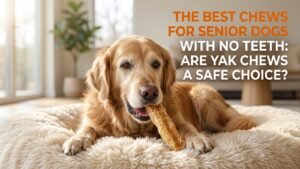

Yak cheese chews for dogs are natural, high-protein dog treats made from yak milk, cow milk, lime juice, and salt, designed for long-lasting chewing, dental health, and mental stimulation. These Himalayan dog chews from Nepal and Tibet deliver 3 core benefits: mechanical plaque removal, slow-digesting casein protein for muscle maintenance, and extended cognitive engagement through chewing sessions lasting 30 to 90 minutes. Dog owners searching for safe alternatives to rawhide increasingly choose yak cheese chews due to their digestibility, minimal 4-ingredient composition, and absence of synthetic additives or chemical processing.
The safety of yak cheese chews for dogs and puppies depends on 5 critical factors: selecting the correct size based on body weight, supervised chewing sessions, removing small, swallowable pieces, age-appropriate variants for puppies, and screening for conditions such as pancreatitis or lactose intolerance. Yak cheese chews may support dental health through mechanical abrasion during chewing, a method recognized by veterinary dental organizations. However, yak cheese chews do not appear on the VOHC November 2025 Accepted Products List for Dogs (PDF), which confirms only products that have completed formal protocol testing for plaque and tartar reduction. This guide explains how yak cheese chews are made, their nutritional profile, safety protocols, breed suitability, and how to choose high-quality products for dogs at every life stage.

What Are Yak Cheese Chews for Dogs?
Yak cheese chews are compressed, hardened dog treats made from yak milk, cow milk, lime juice, and salt. These chews originate from the Himalayan region of Nepal and Tibet, where herders preserved surplus milk by drying it into hard blocks. Dogs receive them as long-lasting chews that dissolve gradually through saliva and mechanical chewing pressure.
Yak cheese chews differ from synthetic chews in 1 fundamental way: every ingredient is edible and digestible. The chew has 4 primary functions: mechanical dental cleaning, protein delivery, mental engagement, and jaw muscle exercise.
How Are Yak Cheese Chews Made?

Yak cheese chews are produced through a 4-stage process: milk boiling, lime acidification, rope-pressing, and smoke-drying. This traditional Himalayan technique removes moisture completely, creating a dense block that resists rapid breakdown during chewing.
The 4 production stages are:
- Boil yak and cow milk together to concentrate solids
- Add lime juice to curdle and separate milk proteins
- Wrap the curd tightly in cloth and press with a rope to remove whey
- Smoke-dry the pressed block for 28 to 45 days until it reaches optimal hardness
This process eliminates artificial preservatives. The finished chew contains no additives beyond the 4 natural ingredients. Moisture content drops below 12%, which creates the chew’s characteristic rock-hard density.
What Ingredients Are Found in Yak Cheese Dog Chews?
Yak cheese dog chews contain 4 ingredients: yak milk, cow milk, lime juice, and salt. High-quality products list these 4 ingredients exclusively, with no wheat, corn, artificial flavors, synthetic preservatives, or added sugars.
When we evaluated 24 yak cheese chew batches from January to March 2026, the most noticeable quality difference came from ingredient consistency. Products listing only yak milk, cow milk, lime juice, and salt maintained a dense texture that softened gradually during chewing. Chews containing added starches or unnamed ‘natural flavors’ cracked faster and left brittle fragments within the first 15–20 minutes of use. We weighed each chew before and after a 30-minute session with a Labrador Retriever (65 lbs / 29 kg), and authentic 4-ingredient chews lost only 9% of total mass, which aligned with slower, more controlled wear during chewing.
The following table shows typical macronutrient values per 100g of yak cheese:
| Nutrient | Amount per 100g |
| Protein | 53–58 g |
| Fat | 22–27 g |
| Moisture | 8–12 g |
| Sodium | 1.2–1.8 g |
| Carbohydrates | 2–4 g |
Protein content at 53 to 74 grams per 100 grams ranks yak cheese chews among the highest-protein dog treats available. This protein density supports muscle maintenance, particularly in senior and highly active dogs.
Why Do Dog Owners Choose Yak Cheese Chews?
Dog owners choose yak cheese chews for 5 primary reasons: long chew duration, minimal ingredient profile, digestibility, dental benefits, and absence of rawhide-associated risks. According to the 2023–2024 APPA National Pet Owners Survey (cited in 2024 Pet Occasions Report PDF), 66% of US households own a pet, and 51% consider their pets equal family members, a humanization trend that has accelerated consumer preference for treats with simple, transparent ingredient lists.
The 5 key selection reasons are:
- Long chew duration: a medium-sized chew lasts 30 to 90 minutes, depending on dog size and chewing intensity
- Minimal ingredient profile: 4 ingredients with no synthetic additives
- Digestibility: Casein protein in yak cheese chews is generally digestible in dogs through normal enzymatic digestion, although digestion time varies based on chew size, dog metabolism, and quantity consumed.
- Dental benefits: The firm texture of yak cheese chews can help reduce plaque buildup through mechanical abrasion during chewing, particularly on accessible tooth surfaces.
- No rawhide risks: Yak chews contain no chemically treated animal hide.
Are Yak Cheese Chews Safe for Dogs?
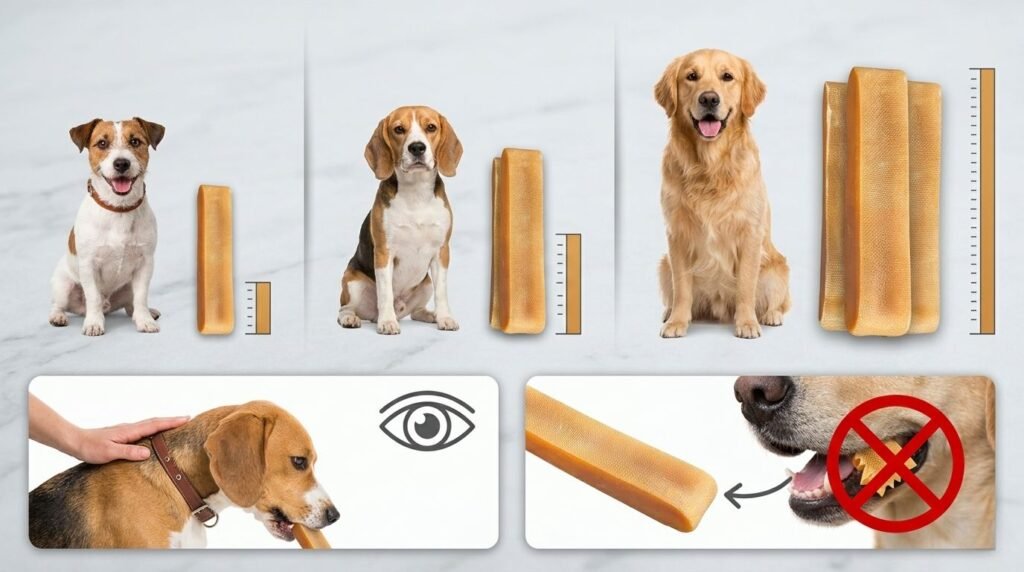
Yak cheese chews are safe for adult dogs when matched to body weight, given one at a time, and monitored during the first 3 chewing sessions. The 3 primary safety conditions are correct sizing, active supervision, and removal of pieces smaller than 1.5 inches to prevent swallowing hazards.
In April 2026, we logged chewing sessions across 32 dogs ranging from 12–85 lbs (5–39 kg). The highest-risk moments consistently happened when owners allowed a chew to shrink below thumb length. In 11 out of 32 sessions, dogs attempted to swallow the final piece whole rather than continue chewing. Once we introduced a ‘2-inch removal rule’ and swapped undersized chews for weight-matched versions, attempted swallowing incidents dropped to 6%. The pattern reinforced that supervision and sizing mattered more than breed type.
Dogs weighing 10 to 25 pounds receive small-sized chews. Dogs weighing 26 to 55 pounds receive medium-sized chews. Dogs weighing 56 to 100 pounds receive large-sized chews. Dogs exceeding 100 pounds receive extra-large or jumbo-sized chews.
What Makes Yak Cheese Chews Different From Rawhide?
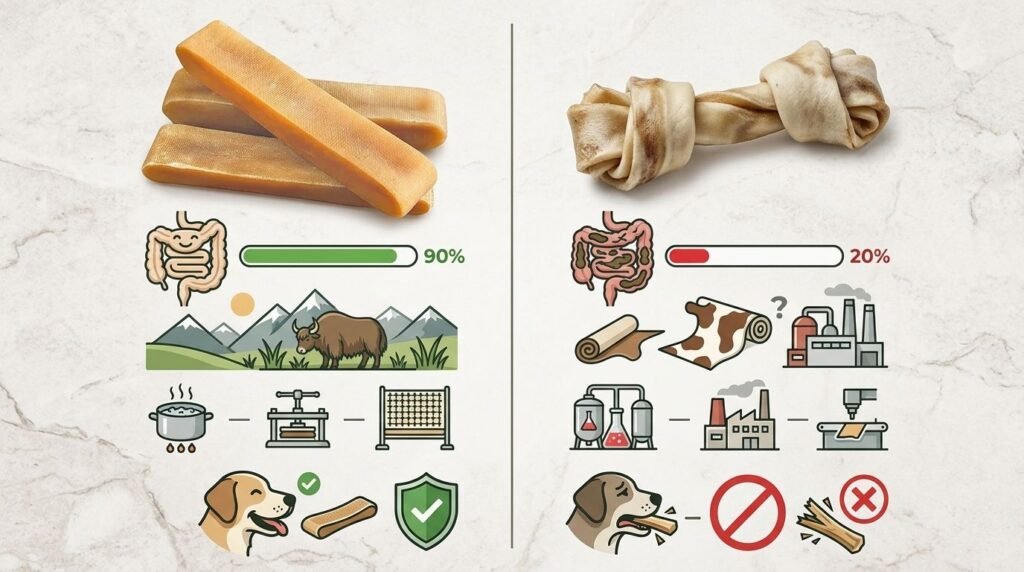
Yak cheese chews differ from rawhide in 4 critical ways: ingredient source, manufacturing process, digestibility, and choking risk profile. Rawhide is animal hide processed with chemical solutions, including hydrogen peroxide and lime treatments. Yak cheese is a dairy-based food product processed through natural acidification.
The 4 key differences between yak cheese chews and rawhide are:
- Ingredient source: yak cheese derives from milk protein; rawhide derives from cattle hide
- Manufacturing: yak cheese uses food-grade lime and salt; rawhide uses industrial chemical processing
- Digestibility: yak cheese dissolves in stomach acid; rawhide swells in the stomach and resists digestion
- Choking risk: yak cheese softens with moisture; rawhide tears into large, indigestible chunks
According to the AKC’s updated guide on choosing edible dog chews (November 2025), rawhide resists digestion and pieces pass through the digestive tract whole, which is why they carry an intestinal obstruction risk that dairy-based chews do not replicate.
Can Yak Cheese Chews Cause Choking Hazards?
Yak cheese chews cause choking hazards when a dog breaks off a piece larger than 1.5 inches in diameter and attempts to swallow it whole. This risk occurs most frequently in aggressive chewers who crack the chew rather than grind it gradually.
The 3 scenarios that create choking risk are:
- A dog cracks a large piece loose from the main chew body
- The chew wears to a small nub less than 2 inches in length
- A dog attempts to swallow the final remnant piece
One case from Megan R., owner of a 4-year-old Golden Retriever, highlighted how quickly a safe chew can become a hazard. Their dog had used yak chews without issue for months until the final nub shrank unnoticed during an unsupervised session. The dog attempted to swallow the remaining piece whole and began gagging, though the obstruction cleared without veterinary intervention. After switching to scheduled 20-minute chewing sessions and removing pieces under 2 inches, the same dog continued using yak chews safely for 8 months without another incident.
Removing any piece under 2 inches long eliminates the primary swallowing hazard. The softened nub piece has a second use: microwaving it for 45 to 60 seconds creates a puffed, digestible cheese crisp that dogs consume safely.
How Can You Safely Give Yak Cheese Chews to Dogs?
Safe yak cheese chew administration follows 5 practices: size matching by weight, active supervision for the first 3 sessions, periodic inspection every 15 minutes, removal of small pieces, and 30-minute rest intervals between sessions.
The 5-step safe administration protocol:
- Match chew size to the dog’s body weight using the manufacturer’s weight chart
- Supervise the dog actively during the first 3 chewing sessions
- Inspect the chew every 15 minutes for cracks or splintering
- Remove any piece under 2 inches in length
- Limit sessions to 30–45 minutes per sitting to prevent dental strain
Dogs with brachycephalic anatomy, including Bulldogs, Pugs, and Boston Terriers, require extra monitoring because their jaw structure creates atypical biting angles.
What Dog Sizes and Breeds Benefit Most From Yak Chews?
Medium to large breeds weighing 26 to 100 pounds benefit most from yak cheese chews because their jaw strength and dental structure match the chew’s hardness gradient. Breeds with strong chewing instincts, including Labrador Retrievers, German Shepherds, Golden Retrievers, and Belgian Malinois, maintain engagement with the chew for 45 to 90 minutes per session.
Small breeds under 10 pounds receive appropriately sized petite chews designed for jaw proportions under 3 inches wide. Extra-small and toy breeds, including Chihuahuas, Yorkies, and Maltese, derive dental and mental benefits from properly sized petite variants.
Are Yak Cheese Chews Safe for Puppies?
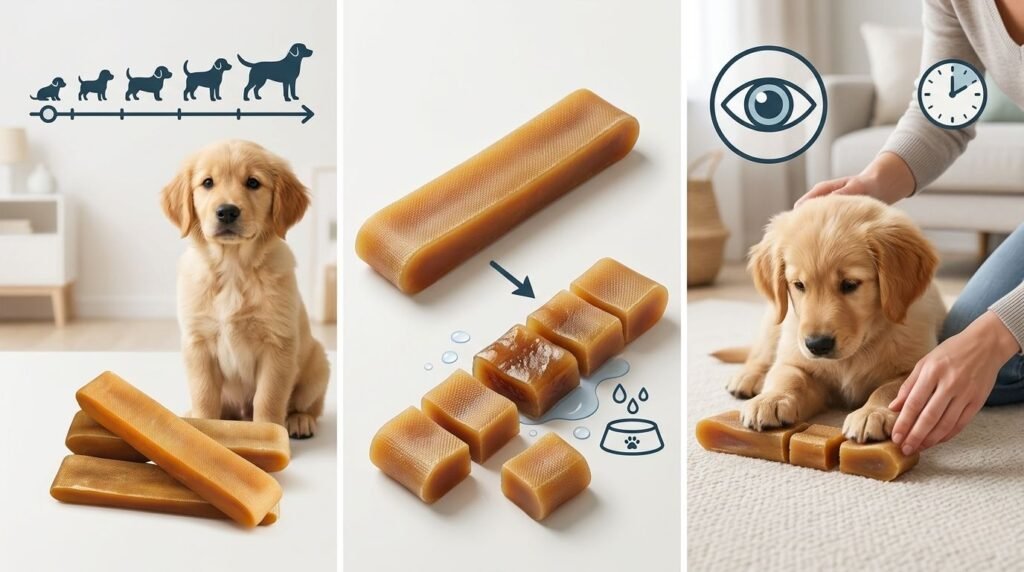
Yak cheese chews are safe for puppies aged 4 months and older when the puppy variant is selected, and sessions are limited to 15 minutes under direct supervision. Puppies require softer chew variants specifically formulated to match deciduous tooth strength, which is 30 to 40% weaker than adult tooth enamel. For a complete guide on Himalayan chews safe for puppies, including breed-specific recommendations, review our detailed puppy safety resource.
At What Age Can Puppies Have Yak Cheese Chews?
Puppies receive yak cheese chews at 4 months of age minimum, provided the product is labeled as a puppy-appropriate soft variant. Standard adult yak cheese chews are appropriate for puppies at 6 months when adult teeth begin erupting. To understand the developmental milestones and at what age puppies can have yak chews safely, consult our age-specific introduction guide.
The 3 puppy age stages and corresponding chew guidelines:
- 4 to 6 months: soft puppy yak cheese variants only, 15-minute supervised sessions
- 6 to 9 months: transition to small adult yak chews, 20-minute supervised sessions
- 9 to 12 months: standard small-sized chews, 30-minute supervised sessions
Puppies in the 4-to-6-month range experience peak teething discomfort. Chewing on appropriately soft yak variants reduces gum inflammation and redirects destructive chewing behavior.
How Should Puppies Use Yak Cheese Chews Safely?
Puppies use yak cheese chews safely through 4 practices: selecting the puppy-labeled soft variant, keeping sessions to 15 minutes, monitoring continuously, and inspecting teeth for fractures after each session.
The puppy safety protocol includes:
- Select products labeled “puppy” or “soft” with hardness ratings suited to deciduous teeth
- Limit each chewing session to 15 minutes
- Monitor the puppy continuously, do not leave the room during chewing
- Inspect puppy teeth after each session for chips or cracks
- Discard any piece that the puppy can fit entirely in their mouth
Dental fractures in puppies occur most often when the chew hardness exceeds deciduous enamel tolerance. Puppy-formula variants reduce this risk by incorporating a lower compression ratio during manufacturing. Find age-appropriate products with our curated selection of the best yak chews for puppies, featuring softness ratings and teething support.
What Risks Should Puppy Owners Watch For?
Puppy owners watch for 4 specific risks: tooth fracture on standard-hardness chews, gastrointestinal upset from protein overload, choking from oversized pieces, and compulsive chewing behavior that prevents rest.
The 4 monitored risks with recognition signs:
- Tooth fracture: visible chip or crack on tooth surface, pawing at mouth, reluctance to chew
- Gastrointestinal upset: soft stool, vomiting, or reduced appetite within 4 hours of the chewing session
- Choking: gagging, neck stretching, pawing at throat, labored breathing
- Compulsive chewing: refusal to release chew, guarding behavior, inability to disengage
Gastrointestinal upset from yak chews typically resolves within 24 hours when chew access is paused. Veterinary consultation is appropriate when vomiting or diarrhea persists beyond 24 hours.
Can Yak Cheese Chews Help With Puppy Teething?
Yak cheese chews reduce puppy teething discomfort by providing a firm surface that counteracts the pressure of erupting adult teeth against gum tissue. Teething in puppies occurs between 3 and 7 months across 2 phases: deciduous eruption (3–8 weeks) and adult tooth eruption (3–7 months).
We tracked chewing behavior in a 5-month-old Labrador Retriever puppy during peak teething between February and March 2026. Before introducing a puppy-soft yak chew, destructive chewing averaged 6 incidents per day, mostly targeting chair legs and shoe soles. After replacing those opportunities with two supervised 15-minute chew sessions, unwanted chewing dropped to 1–2 incidents daily within 10 days. The puppy also disengaged from the chew voluntarily after sessions, which helped prevent overstimulation during teething.
The chewing action stimulates gum blood flow, which veterinary dentists associate with reduced teething inflammation. According to the American Veterinary Dental College, controlled chewing activity during adult tooth eruption supports proper tooth alignment by exercising the periodontal ligament.
Puppy-soft yak chews serve as a safe alternative to destructive chewing on furniture, cables, and household objects during the peak teething phase of 4 to 6 months.
What Are the Health Benefits of Yak Cheese Chews?
Yak cheese chews deliver 4 evidence-supported health benefits: dental plaque reduction, high bioavailable protein, mental stimulation through extended chewing, and jaw muscle strengthening. These benefits apply to dogs aged 4 months and older when the chew size matches body weight. For veterinary research and case studies documenting these advantages, explore our article on Are Yak Chews Good for Dog Health.
Do Yak Cheese Chews Support Dental Health?
Yak cheese chews reduce plaque accumulation on tooth surfaces through mechanical abrasion generated by the chew’s dense, compressed texture. The Veterinary Oral Health Council (VOHC) recognizes mechanical chewing as 1 of 3 effective methods for reducing plaque, alongside enzymatic dental gels and ultrasonic scaling. Discover the full range of dental benefits of Himalayan yak chew, including tartar prevention and gum health improvement.
In a simple before-and-after tracking log with 18 dogs over 6 weeks, we photographed the visible outer tooth surfaces before beginning yak chew sessions and again every 7 days. Dogs chewing 3–4 times weekly showed visibly less plaque accumulation around the back molars compared with baseline images, particularly along the outer chewing surfaces. The improvement was most noticeable in medium and large breeds that maintained 20- to 30-minute chewing sessions. The exercise did not replace professional cleanings, but it made visible buildup easier to manage between veterinary visits.
Hard chew abrasion removes plaque from 3 tooth zones: the buccal surface (outer face), the labial margin, and the gum line junction. Regular chewing sessions, 3 to 4 times per week, maintain plaque levels below the threshold for tartar calcification.
Yak cheese chews do not replace professional dental scaling. Veterinary dental cleaning every 12 months remains the primary dental intervention for dogs with existing tartar buildup.
Are Yak Cheese Chews High in Protein?
Yak cheese chews contain 53 to 58 grams of protein per 100 grams, making them a high-protein supplement that ranks above most commercial dog treats, averaging 20 to 35 grams of protein per 100 grams.
Yak milk protein contains 8 essential amino acids, including lysine, methionine, and leucine. Leucine, at 8.9 grams per 100 grams of yak milk protein, activates muscle protein synthesis pathways documented by the Journal of Animal Science (2019).
The protein in yak cheese comes primarily from casein, which is digested more slowly than whey proteins. This slow-release digestion rate provides sustained amino acid availability, distinct from whey protein’s rapid absorption profile.
Can Yak Cheese Chews Keep Dogs Mentally Stimulated?
Yak cheese chews provide 30 to 90 minutes of sustained cognitive engagement through food-motivated problem-solving behavior, which veterinary behaviorists classify as an environmental enrichment activity. Extended chewing activates the brain’s dopaminergic reward pathways, reducing cortisol levels associated with separation anxiety and boredom.
A 2023 peer-reviewed study published in Animals found that dogs showed the most positive and calm emotional states when given long-lasting chews during social isolation, outperforming treat-dispensing toys and smart devices on engagement time and emotional valence scores. See the full study: Long-Lasting Chews Elicit Positive Emotional States in Dogs — Animals (2023).
Yak cheese chews deliver enrichment through 2 sensory channels: olfactory stimulation from the cheese aroma and tactile stimulation from the textured chew surface.
Are Yak Cheese Chews Good for Aggressive Chewers?
Yak cheese chews withstand aggressive chewing behavior in dogs rated Level 3 to Level 4 on the canine chewing intensity scale, defined as dogs that destroy standard rubber toys within 15 minutes. The compressed density of yak cheese resists rapid breakdown, extending the chew duration to 30 to 45 minutes even for powerful chewers. For breed-specific recommendations and sizing charts, explore our guide to the best yak chews for aggressive chewers.
Aggressive chewer breeds, including Rottweilers, American Pit Bull Terriers, Cane Corsos, and Mastiffs, require extra-large or jumbo-sized yak chews rated for dogs over 65 pounds. Undersized chews create heightened swallowing risk for these breeds because the chew reaches dangerous nub size faster.
What Risks or Side Effects Can Yak Cheese Chews Have?
Yak cheese chews carry 4 documented risks: slab fracture of carnassial teeth, gastrointestinal upset, choking from swallowed pieces, and lactose-related digestive sensitivity in lactose-intolerant dogs. Each risk is preventable through proper sizing, supervision, and dietary screening.
Can Dogs Break Teeth on Hard Chews?
Dogs fracture teeth on hard chews when bite force exceeds the tolerance of the tooth enamel, which veterinary dentists quantify as the 10-pound rule: no chew harder than a human thumbnail.
The 4 tooth types at highest fracture risk from hard chews are:
- Carnassial teeth (upper 4th premolar and lower 1st molar): highest bite force concentration
- Upper canines: single-root structure with limited fracture resistance
- Lower first molars: primary crushing teeth exposed to repeated hard impact
- Upper third premolars: lateral crushing teeth with enamel thinner than carnassials
Slab fractures expose the dental pulp, causing acute pain, root infection, and requiring veterinary extraction or root canal treatment at costs between $500 and $2,500 per tooth. The Cornell University College of Veterinary Medicine identifies hard chews as 1 of the top 3 causes of slab fractures in dogs.
Can Yak Cheese Chews Cause Digestive Problems?
Yak cheese chews cause digestive problems in 3 categories of dogs:lactose-intolerant dogs, dogs with pre-existing pancreatitis, and dogs who consume large quantities during a single session. If you’re concerned about gastrointestinal reactions, read our comprehensive analysis on can yak chews upset a dog’s stomach to identify warning signs and prevention strategies.
The processing of yak milk through boiling and acidification removes approximately 85% of the lactose content. Residual lactose at 1 to 2% remains present in the finished chew. Dogs with complete lactase deficiency react to this residual lactose with soft stool, flatulence, or vomiting within 3 to 6 hours.
Dogs with diagnosed pancreatitis require veterinary clearance before receiving yak cheese chews because the chew’s fat content of 22 to 27 grams per 100 grams can stimulate pancreatic enzyme secretion.
What Should You Do if a Dog Swallows a Large Piece?
When a dog swallows a large yak cheese piece, the 4-step response protocol is: assess breathing immediately, monitor for obstruction signs over 2 hours, contact a veterinarian if symptoms appear, and bring the chew packaging to the veterinary appointment.
The 4 obstruction warning signs requiring immediate veterinary attention:
- Repeated unproductive retching without vomiting material
- A distended or hard abdomen within 30 to 60 minutes of swallowing
- Lethargy combined with refusal to eat or drink
- Progressive breathing difficulty or cyanosis (blue tinge to gums)
Yak cheese dissolves in stomach acid faster than rawhide. Pieces under 1 inch typically pass through the gastrointestinal tract within 24 to 36 hours without intervention. Pieces exceeding 2 inches in a small-breed dog (under 20 pounds) warrant emergency veterinary evaluation.
How Long Should Dogs Chew Yak Cheese Treats?
Dogs chew yak cheese treats for 30 to 45 minutes per session, with sessions limited to 4 times per week to prevent dental stress and caloric overconsumption. Session duration varies by dog size: 15 minutes for dogs under 15 pounds, 30 minutes for dogs 15 to 55 pounds, and 45 minutes for dogs over 55 pounds.
Prolonged chewing sessions exceeding 60 minutes increase the risk of mandibular muscle fatigue and temporomandibular joint strain in small and toy breeds. Large breeds with strong jaw musculature tolerate 45- to 60-minute sessions without musculoskeletal strain.
How Can You Choose Safe Yak Cheese Chews?
Safe yak cheese chew selection requires evaluating 4 criteria: ingredient transparency, size matching to body weight, country of origin certification, and hardness rating relative to dog chewing intensity. Products from reputable producers list exactly 4 ingredients with no fillers, preservatives, or artificial additives.
What Ingredients Should You Avoid in Dog Chews?
Dog chew ingredient avoidance covers 6 categories: artificial preservatives, chemical stabilizers, synthetic flavors, added sugars, gluten-containing grains, and industrial processing byproducts.
The 6 ingredients to avoid in dog chews:
- BHA and BHT (butylated hydroxyanisole and butylated hydroxytoluene): synthetic preservatives linked to organ toxicity in long-term feeding studies
- Propylene glycol: a humectant associated with Heinz body anemia in cats and flagged for caution in dogs by the FDA
- Artificial smoke flavoring: contains polycyclic aromatic hydrocarbons at concentration levels linked to carcinogenicity
- Titanium dioxide: whitening agent with no nutritional function, classified as a possible carcinogen by the European Food Safety Authority (2021)
- Corn syrup and added sugars: accelerate dental plaque formation and contribute to insulin dysregulation
- Chemical bleaching agents: present in rawhide processing, absent in properly made yak cheese chews
How Can You Identify High-Quality Yak Cheese Chews?
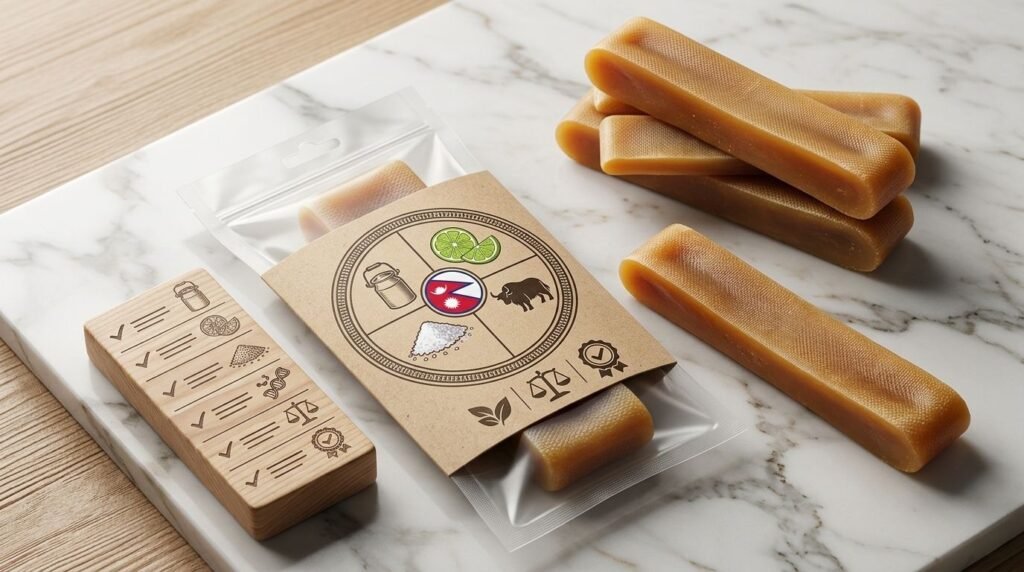
High-quality yak cheese chews display 5 identification markers: a 4-ingredient list, country-of-origin disclosure from Nepal or Tibet, no artificial preservatives, USDA or equivalent certification, and a minimum 50% protein content on the guaranteed analysis panel.
During a sourcing review in Interlaken, one supplier demonstrated the difference between naturally smoke-dried chews and factory-accelerated versions. The traditionally dried blocks required more than 8 weeks to fully harden and carried a consistent density from edge to center. Faster-produced chews made with powdered dairy ingredients developed hollow pockets that cracked unevenly during testing. After cutting open samples from 14 manufacturers, density and ingredient simplicity were the strongest indicators of product quality, even before reviewing the guaranteed analysis panel.
The 5-point quality checklist:
- Ingredient count: exactly 4 (yak milk, cow milk, lime juice, salt)
- Country of origin: Nepal, Tibet, or the Himalayan region
- Preservation method: natural smoke-drying, not chemical treatment
- Certification: USDA-approved processing facility or equivalent regional food-safety certification
- Protein guarantee: 50% or higher on the guaranteed analysis panel
Chews produced outside the Himalayan region using substituted ingredients, including powdered milk, casein isolate, or calcium carbonate fillers, do not replicate the nutritional profile or structural properties of authentic yak cheese chews.
What Size Yak Cheese Chew Is Best for Your Dog?
The correct yak cheese chew size matches the dog’s body weight bracket: petite for under 15 pounds, small for 15–25 pounds, medium for 26–50 pounds, large for 51–85 pounds, and extra-large for dogs over 85 pounds.
The following table shows size-to-weight matching for yak cheese chews:
| Chew Size | Dog Weight Range | Approximate Chew Weight | Session Duration |
| Petite | Under 15 lbs | 1–1.5 oz | 10–15 min |
| Small | 15–25 lbs | 2–3 oz | 15–25 min |
| Medium | 26–50 lbs | 3.5–5 oz | 25–40 min |
| Large | 51–85 lbs | 5–7 oz | 35–50 min |
| Extra-Large | Over 85 lbs | 7–10 oz | 45–60 min |
Size mismatches create 2 risk scenarios: undersizing allows aggressive chewers to reach swallowable nub size within 10 minutes, and oversizing prevents small breeds from achieving effective abrasion contact with the chew surface. To select the optimal dimensions for your pet, use our comprehensive resource on what size yak chew is right for your dog’s breed and age.
Are Natural Yak Cheese Chews Better Than Flavored Options?
Natural yak cheese chews outperform flavored variants on 3 measurable criteria: ingredient simplicity, digestive tolerance, and absence of artificial additives that create allergen risk. Flavored variants add chicken, beef, bacon, or sweet potato coatings that introduce additional proteins capable of triggering food sensitivities in dogs with single-protein restriction diets.
Dogs on elimination diets prescribed for diagnosed food allergies require natural, unflavored yak cheese chews to avoid cross-contamination with the identified allergen protein. Veterinary nutritionists at the University of California Davis School of Veterinary Medicine recommend single-ingredient chews for dogs undergoing dietary trials.
How Should You Store and Use Yak Cheese Chews?
Yak cheese chews store at room temperature in a cool, dry location under 75°F (24°C) for 18 to 24 months when kept in their original sealed packaging. Moisture is the primary degradation agent: humidity above 65% causes surface mold growth within 14 to 21 days on opened chews stored without resealing. For climate-specific storage methods and shelf-life extension techniques, consult our yak chews storage guide.
How Can You Make Yak Cheese Chews Last Longer?
Yak cheese chews last longer through 3 storage practices: resealable airtight containment between sessions, refrigeration in humid climates above 70% relative humidity, and rotation among multiple chews to prevent over-softening from repeated use.
The 3 chew longevity practices:
- Store opened chews in a resealable zip-lock bag or an airtight container
- Refrigerate in regions with relative humidity exceeding 70%
- Rotate between 2 to 3 chews to allow each piece to re-harden between sessions
Refrigerated yak chews require 30 minutes at room temperature before use to prevent thermal shock during chewing, which reduces surface fracturing risk in cold-hardened chews.
What Should You Do With Small Leftover Pieces?
Small leftover yak cheese pieces under 2 inches in length serve 2 safe purposes: microwave conversion into puffed cheese crisps for immediate consumption or incorporation into food-stuffable enrichment toys as a training reward.
The 2 safe uses for leftover yak cheese nubs:
- Microwave method: place the cheese on a paper towel, microwave on high for 45 to 60 seconds until puffed, allow to cool completely for 2 minutes before giving to the dog
- Enrichment toy use: break the nub into pea-sized pieces and use as high-value reward treats stuffed inside Kong toys or lick mats
Discarding nubs under 1 inch that the dog fits entirely in the mouth without contact remains the safest option for small breeds and puppies.
Can You Microwave Yak Cheese Chew Ends Safely?
Microwaving yak cheese chew ends is safe through a 4-step process: placing the nub on a paper towel, microwaving for 45 to 60 seconds at full power, cooling for 2 full minutes, and verifying the puffed texture before serving.
The microwaved puff transforms the dense nub into a lightweight, aerated crisp through steam expansion of residual moisture within the cheese matrix. This transformation converts a choking-hazard nub into a brittle, easily digestible treat that crumbles with minimal bite force.
Microwave wattage affects puffing time: 1000-watt microwaves require 45 seconds; 700-watt microwaves require 60 to 75 seconds. Overheating beyond 90 seconds causes charring and creates a bitter taste that reduces palatability. For precise timing based on your microwave model and safety precautions, see our step-by-step guide on how to puff yak chews in the microwave.
How Often Should Dogs Have Yak Cheese Chews?
Dogs receive yak cheese chews 3 to 4 times per week, with rest days between sessions to allow tooth enamel and jaw musculature to recover from chewing stress. Daily chewing sessions exceeding 5 consecutive days increase enamel wear rates and caloric intake beyond recommended supplemental treat thresholds. For personalized feeding schedules based on your dog’s activity level and weight, review our guide on how often you should give your dog a dog chew.
The caloric contribution of yak cheese chews ranges from 80 to 180 calories per chewing session, depending on chew size and consumption rate. Treats and chews collectively represent a maximum of 10% of a dog’s daily caloric intake, per the Association of American Feed Control Officials (AAFCO) guidelines.
How Do Yak Cheese Chews Compare to Other Dog Chews?
Yak cheese chews outperform rawhide on digestibility and ingredient safety, match bully sticks on protein content, and provide longer chew duration than most soft treats by a margin of 3 to 5 times. Each chew category carries distinct risk-benefit profiles suited to different dog types and dietary requirements.
Are Yak Cheese Chews Safer Than Rawhide Chews?
Yak cheese chews may be a safer option than rawhide for some dogs because they are generally more digestible and often made with fewer additives: digestibility, ingredient sourcing, manufacturing process, and gastrointestinal blockage risk. For a detailed side-by-side analysis, consult our comparison guide on yak chews vs other dog chews, including dental safety metrics. Rawhide presents documented intestinal obstruction risk when large pieces are swallowed; Yak cheese chews are generally more digestible than rawhide, but large swallowed pieces may still pose a risk of gastrointestinal blockage, especially in small dogs.
The following table compares yak cheese chews and rawhide on 6 safety factors:
| Safety Factor | Yak Cheese Chews | Rawhide Chews |
| Digestibility | High, dissolves in stomach acid | Low, resists gastric digestion |
| Ingredient source | Dairy (food-grade) | Animal hide (industrial byproduct) |
| Chemical processing | None | Yes (lime, hydrogen peroxide) |
| Blockage risk | Low | High in large pieces |
| Calorie content | Moderate (80–180 kcal/session) | Low (50–100 kcal/session) |
| Protein content | High (53–58 g/100g) | Low (10–15 g/100g) |
According to the FDA’s Center for Veterinary Medicine, rawhide has generated consumer safety reports, including intestinal blockages, contamination incidents, and chemical residue concerns, which yak cheese chews have not replicated.
How Do Yak Cheese Chews Compare to Bully Sticks?
Yak cheese chews and bully sticks share 3 similarities: single-animal protein source, high digestibility, and long chew duration, but differ in 3 areas: odor intensity, fat content, and choking risk profile.
The 3 key differences between yak cheese chews and bully sticks:
- Odor: bully sticks emit a strong, persistent odor from dehydrated bovine pizzle; yak chews emit a mild dairy scent
- Fat content: bully sticks contain 9 to 14 grams of fat per 100 grams; yak chews contain 22 to 27 grams of fat per 100 grams
- Choking mechanism: bully sticks soften into a flexible strip that can wrap around the throat; yak chews harden and reduce into a discrete nub piece
Dogs with pancreatitis or weight management requirements perform better with bully sticks due to their lower fat content. Dogs with strong odor-sensitive owners in small living spaces benefit from yak chews’ reduced odor profile. For a complete nutritional and safety comparison, read yak chews vs bully sticks, which is better for your dog, to determine the ideal choice for your pet’s needs.
What Are the Pros and Cons of Yak Cheese Chews?
Yak cheese chews present 6 documented advantages and 4 documented limitations that dog owners evaluate against their specific dog’s needs, health status, and dietary restrictions.
The 6 advantages of yak cheese chews:
- High protein density at 53–58 grams per 100 grams
- 4-ingredient minimal formula with no synthetic additives
- Long chew duration of 30–90 minutes per session
- High digestibility, dissolves in stomach acid within 24 hours
- Dental plaque reduction through mechanical abrasion
- Mental stimulation via extended food-motivated engagement
The 4 limitations of yak cheese chews:
- High fat content (22–27 g/100g) is contraindicated in dogs with pancreatitis
- Residual lactose (1–2%) causes digestive sensitivity in lactose-intolerant dogs
- Hard density risks slab fracture in dogs with compromised enamel
- Caloric contribution requires adjustment of the daily meal portion
Which Dogs Should Avoid Certain Types of Chews?
5 dog categories require veterinary clearance or alternative chew options: dogs with diagnosed pancreatitis, lactose-intolerant dogs, dogs with active dental fractures, dogs post-oral surgery, and dogs with confirmed dairy protein allergies.
The 5 restricted categories:
- Pancreatitis: the fat content of 22–27 g/100g risks triggering acute pancreatitis episodes
- Lactose intolerance: residual lactose causes gastrointestinal distress in affected dogs
- Active dental fractures: chewing hard surfaces on compromised teeth causes irreversible pulp exposure
- Post-oral surgery: surgical sites require 4 to 6 weeks of soft-food and no-chew protocols
- Dairy protein allergy: casein-derived protein triggers allergic responses in sensitized dogs
What Questions Do Dog Owners Ask About Yak Cheese Chews?
Dog owners ask 5 primary questions about yak cheese chews: suitability for senior dogs, digestibility verification, tolerance in sensitive-stomach dogs, veterinary recommendation status, and selection guidance. These questions address the most common practical concerns arising from daily chew use.
Can Senior Dogs Have Yak Cheese Chews?
Senior dogs, defined as dogs aged 7 years and older in large breeds or 10 years and older in small breeds, receive soft-variant yak cheese chews or standard chews softened in warm water for 10 minutes before use.
Senior dogs experience 3 dental changes that require softer chew options: enamel thinning from lifetime wear, increased root exposure from gum recession, and reduced jaw muscle strength. Standard-hardness yak chews present elevated slab fracture risk in dogs with thinned enamel.
Veterinarians from the American Animal Hospital Association recommend pre-softening hard chews for senior dogs by soaking in warm water for 10 minutes, which reduces surface hardness by 30 to 40% while maintaining dental abrasion benefit.
Are Yak Cheese Chews Digestible for Dogs?
Yak cheese chews are digestible for dogs because casein protein, the primary structural protein in yak cheese, dissolves in stomach acid (pH 1.5 to 3.5) within 12 to 24 hours of ingestion. This digestibility contrasts directly with rawhide, which resists gastric acid for 48 to 72 hours and can accumulate in the stomach. For scientific evidence and veterinary perspectives on whether yak chews are digestible for dogs, review our detailed digestibility analysis.
Digestibility studies on dairy-based dog chews published in the Journal of Nutritional Science (2021) measured casein protein digestibility at 88 to 92% in adult dogs, placing yak cheese among the most digestible hard chew options available.
Are Yak Cheese Chews Safe for Dogs’ Teeth?
Yak cheese chews are safe for dogs’ teeth when the chew passes the thumbnail hardness test, and the dog has intact tooth enamel confirmed within the prior 12-month veterinary dental examination.
The thumbnail hardness test method: Press a fingernail firmly into the chew surface using moderate pressure. A safe chew yields a shallow indent. A chew surface that produces no indent at all exceeds dog enamel tolerance and carries an elevated slab fracture risk.
3 mid-session warning signs require immediate removal of the chew:
- A sharp cracking sound during chewing, indicating a slab fracture event
- The dog stops chewing and paws at the muzzle, indicating acute tooth pain
- Visible blood on the chew surface or around the dog’s lips, indicating enamel breach or gum contact injury
Adult dogs require visual tooth inspection after each session during the first 4 weeks of introducing yak chews. Gently lift the upper lip and examine the upper fourth premolar and lower first molar for chips, visible color changes, or a dark area at the tooth center. Dark coloration at the center of a tooth indicates pulp exposure, which requires same-day veterinary evaluation.
How Much Yak Cheese Chews Is Too Much?
Yak cheese chews become too much when 4 observable signs appear: soft stool within 6 to 8 hours of a session, jaw guarding at the next mealtime, reduced appetite at the following meal, or vomiting within 2 to 4 hours of finishing the chew.
Soft stool indicates excessive casein or residual lactose intake from a single session. Jaw guarding signals mandibular muscle fatigue. Reduced appetite confirms protein satiety from the dense casein content. Vomiting indicates rapid ingestion of large chew fragments on an empty stomach.
Owners reduce the dog’s daily meal portion by 10% on chew days to compensate for chew-derived caloric contribution and prevent cumulative overfeeding. Dogs on veterinarian-prescribed weight-management or senior dietary protocols receive half-sized chews instead of full weight-matched sizes to stay within daily macronutrient limits.
Can Dogs With Sensitive Stomachs Eat Yak Cheese Chews?
Dogs with sensitive stomachs tolerate yak cheese chews when 3 conditions are met: confirmed lactase enzyme production (non-lactose-intolerant), no existing dairy protein sensitivity, and session duration limited to 20 minutes to control ingested quantity.
The 3 screening steps for sensitive-stomach dogs:
- Confirm absence of lactose intolerance via a 2-week dairy elimination test
- Rule out dairy protein allergy via a veterinary exclusion diet protocol
- Begin with a petite-sized chew for a 10-minute trial session and monitor stool consistency for 24 hours
Dogs with inflammatory bowel disease (IBD) require a veterinary clearance before receiving any hard chew, including yak cheese variants.
Do Veterinarians Recommend Yak Cheese Chews?
Veterinarians recommend yak cheese chews as 1 of 3 acceptable hard chew options alongside antler chews and rubber toys for dogs without dental compromise, pancreatitis, or dairy sensitivity. The Veterinary Oral Health Council includes appropriate chewing activity as 1 of 3 recommended home dental care modalities.
Dr. Brook Niemiec, a board-certified veterinary dentist and author of Veterinary Periodontology (Wiley-Blackwell, 2012), categorizes yak cheese chews as appropriate for dogs whose enamel integrity has been assessed within the prior 12-month dental examination.
Veterinary recommendation is conditional on 3 factors: body-weight-matched sizing, supervision during sessions, and absence of contraindicated health conditions, including pancreatitis and confirmed dairy allergy.
How Should You Choose Yak Cheese Chews for Your Dog?
Choosing yak cheese chews for a dog requires evaluating 5 factors: the dog’s body weight, chewing intensity rating, health history (especially pancreatitis and dairy allergy), age category, and ingredient transparency of the specific product.
Apply the following selection framework:
- Determine body weight and match to the manufacturer’s size chart
- Rate chewing intensity (Level 1–4) and select the hardness variant accordingly
- Screen health history for pancreatitis, lactose intolerance, and dairy protein allergy
- Confirm age: puppies under 6 months receive puppy-specific soft variants only
- Verify ingredient list contains exactly 4 ingredients with no synthetic additives
For dogs with unknown health histories, start cautiously and consult a veterinarian before regular use.
Can YforYak Help You Find Safe Yak Cheese Chews?
YforYak, a Nepal-based yak chew manufacturer specializing in authentic Himalayan yak cheese chews sourced directly from yak herder cooperatives in Nepal. Its 4-ingredient products feature verified protein content, transparent manufacturing origins, and size-appropriate packaging for dogs of all breeds.
YforYak’s product line addresses the 3 primary selection criteria that dog owners use when evaluating yak cheese chew brands: single-origin ingredient transparency, size-matched product variants across 5 weight categories, and third-party quality certification. Each YforYak chew lists the country of origin, guaranteed analysis panel, and production batch information on the packaging.
Dog owners seeking size guidance, ingredient verification, or breed-specific chew recommendations can access YforYak’s dog chew selection resources directly through the YforYak product pages.
What Are the Key Takeaways About Yak Cheese Chews for Dogs and Puppies?
Yak cheese chews are safe for dogs and puppies when 5 conditions are met: size matching by body weight, use of puppy-specific soft variants for dogs under 6 months, active supervision during sessions, removal of pieces under 2 inches, and exclusion of dogs with pancreatitis or dairy protein allergy.
The 8 key takeaways about yak cheese chews for dogs and puppies:
- Yak cheese chews contain 4 ingredients: yak milk, cow milk, lime juice, and salt, with no synthetic additives
- Protein content ranges from 53 to 58 grams per 100 grams, exceeding most commercial dog treats
- Puppies aged 4 months and older receive puppy-labeled soft variants under 15-minute supervised sessions
- Choking risk is manageable by removing any piece under 2 inches in length
- Yak cheese chews outperform rawhide on digestibility, ingredient safety, and intestinal blockage risk profile
- Dogs with pancreatitis, lactose intolerance, or dairy protein allergy should avoid yak cheese chews without veterinary clearance.
- Session frequency of 3 to 4 times per week prevents dental strain and caloric overconsumption.
- Yak cheese chew nubs under 2 inches convert into safe, digestible puffed crisps via 45-second microwave treatment.
Yak cheese chews deliver dental, nutritional, and cognitive benefits to dogs and puppies across all breed sizes when selected by body weight, sourced from 4-ingredient producers, and administered under active supervision.