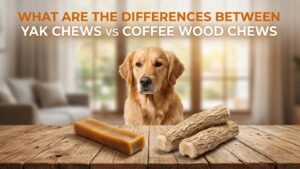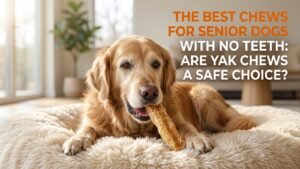
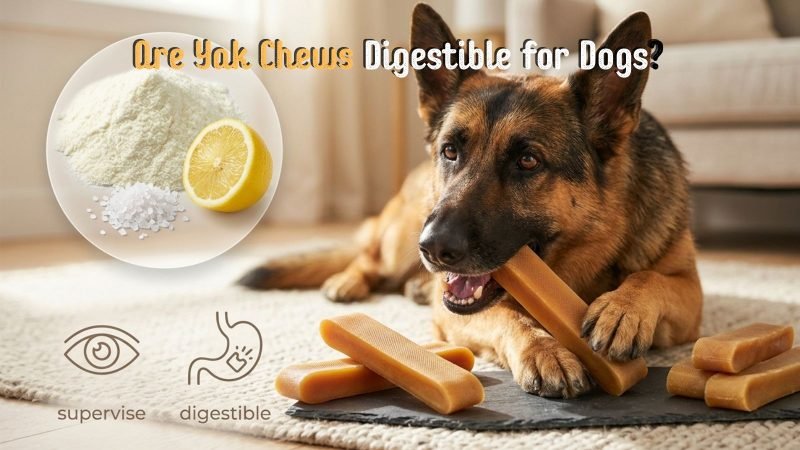
Yak chews are protein-dense, long-lasting dog chews made from hardened Himalayan cheese that dogs can digest through a structured enzymatic process. These chews, produced from yak milk, cow milk, lime juice, and salt, form a casein-rich matrix that gradually breaks down under gastric acid in the canine digestive system. Yak chews are edible and may soften as dogs chew, but they still require supervision because swallowed chunks can cause choking or obstruction. Yak chews are edible cheese-based chews, but a precise digestibility percentage should only be used if you have product-specific lab data.
Digestibility alone does not determine safety or suitability, as multiple factors influence how effectively a dog processes yak chews. Body size, chewing behavior, dental health, and fragment size directly affect how these chews break down and move through the gastrointestinal tract. Larger, well-chewed particles digest efficiently within hours, while oversized swallowed pieces can increase the risk of choking or intestinal obstruction. Understanding how yak chews compare to rawhide, nylon, and other chew types, along with proper size selection, supervision, and veterinary guidance, allows dog owners to maximize digestive benefits while minimizing health risks.
What Are Yak Chews and How Are They Made?

Yak chews are hardened cheese-based dog chews produced from yak and cow milk using traditional Himalayan methods. The manufacturing process combines milk proteins, lime juice, and salt, then compresses and smoke-dries the mixture for 4 to 6 weeks. This drying process removes moisture, increases hardness, and concentrates protein content to approximately 60–65% per chew.
Yak chews originate from Nepal and Bhutan, where local communities have produced hard cheese blocks, known as Chhurpi, for centuries as a human food source. The modern pet version adapts this production method specifically for canine consumption.YforYak, premium dog chew manufacturer, maintains these traditional Himalayan methods while meeting modern quality standards for pet safety.
What Ingredients Are Used in Yak Chews?
Yak chews contain 4 core ingredients: yak milk, cow milk, salt, and lime juice. These 4 ingredients create a dense cheese matrix through acidification and compression. Yak milk contributes casein protein, which forms the structural backbone. Lime juice acts as a natural acidifier, lowering pH and initiating protein coagulation. Salt acts as a preservative. No artificial binders, chemicals, or gluten are used in authentic yak chews.
The protein concentration in yak chews reaches 55–65% per serving. Fat content ranges from 1–5%, significantly lower than most rawhide alternatives. Lactose content is minimal because the fermentation process breaks down lactose during production. Dogs with mild dairy sensitivities tolerate authentic yak chews.
How Does the Drying Process Affect Digestibility?
The smoke-drying process reduces moisture to below 10%, which concentrates protein and slows the rate of enzymatic digestion in the dog’s stomach.
A yak chew dried for 4 weeks reaches a hardness level that forces dogs to scrape small fragments rather than swallow large chunks. This mechanical interaction produces smaller particle sizes that gastric acids and digestive enzymes break down efficiently.
Drying also reduces microbial contamination. Moisture levels below 10% prevent bacterial growth without chemical preservatives. The Maillard reaction, a browning process triggered by heat, creates cross-linked protein structures that dissolve gradually in the dog’s digestive tract.
Are Yak Chews Different from Other Dog Chews?

Yak chews differ from rawhide, nylon, and synthetic chews in 3 fundamental ways: ingredient composition, digestibility rate, and production method. Understanding how yak chews compare to other dog chews helps owners make informed decisions about digestive safety.
The following table compares 4 common dog chew types across 3 digestibility-relevant attributes. These attributes, primary material, digestibility rate, and artificial additives, determine each chew’s impact on canine digestion.
| Chew Type | Primary Material | Digestibility Rate | Artificial Additives |
| Yak Chew | Milk protein (casein) | 80–85% | None |
| Rawhide | Bovine hide | 60–70% | Bleach, chemicals |
| Nylon Chew | Synthetic polymer | 0% | Flavorings |
| Bully Stick | Dried beef pizzle | 85–95% | None |
Rawhide chews present a blockage risk because bovine hide swells when moistened and passes slowly through the digestive tract. Nylon chews are not digested; fragments accumulate in the gastrointestinal tract. Yak chews dissolve into protein particles that gastric enzymes process systematically. For pet owners specifically comparing yak chews vs bully sticks, both offer high digestibility but differ in texture and chewing duration.
Are Yak Chews Safe for Dogs to Digest?
Yak chews are safe for dogs to digest when given in appropriate sizes and monitored during chewing sessions. For a comprehensive overview of yak chew safety considerations for dogs, including breed-specific precautions and warning signs, owners should understand both digestive and mechanical safety factors.
Yak chews may soften during digestion, but the exact time varies by dog, chew size, and how much is swallowed.
Three factors determine digestive safety: piece size at time of ingestion, the dog’s individual gastric motility, and the chew’s moisture level. Dogs that swallow pieces larger than 1 inch in diameter face a choking or blockage risk regardless of chew type.
Can Dogs Fully Digest Yak Chews?
Use supervision and remove the chew before it becomes small enough to be swallowed whole. The canine stomach produces hydrochloric acid at a pH of 1–2, which dissolves casein protein structures. Pancreatic proteases, including trypsin and chymotrypsin, break casein into amino acids in the small intestine. The absorbed amino acids enter circulation within 4–6 hours of ingestion.
Larger pieces, those exceeding 1 inch, pass through the esophagus intact and resist full breakdown in the stomach. These pieces exist as a stool or cause obstruction. Rawhide digestibility is documented as ‘often unknown or suspected to be poor’ in a 2024 peer-reviewed veterinary nutrition analysis (Gaylord & Raditic, Today’s Veterinary Practice), and rawhide is not classified as a food product, a contrast that makes casein-based chews’ protein-digestibility profile a meaningful safety advantage.
What Happens If a Dog Swallows Large Pieces?
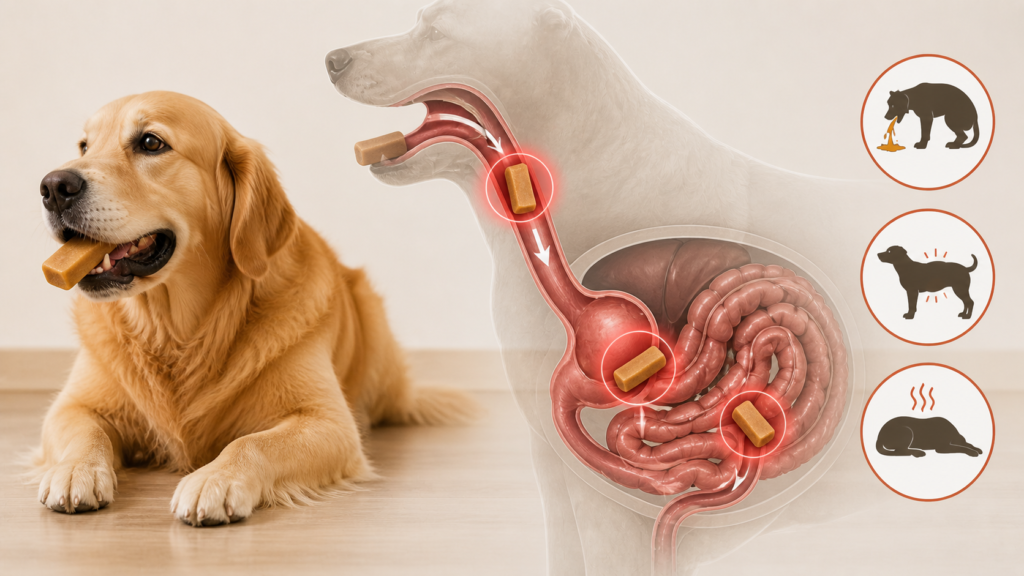
A dog that swallows a yak chew piece larger than 1.5 inches risks gastrointestinal obstruction at the pylorus or small intestine. 4 clinical signs indicate a potential blockage: vomiting within 2 hours of ingestion, lethargy, abdominal bloating, and refusal to eat. These 4 signs require immediate veterinary assessment.
Partial obstructions produce intermittent vomiting over 24–48 hours. Complete obstructions produce persistent vomiting and abdominal pain that intensifies within 6–12 hours. A 2025 retrospective study at Kasetsart University Veterinary Teaching Hospital (Laiket et al., PMC12506697) found that dried dog snacks, including hard chews, caused 23.42% of esophageal obstructions in dogs, with small breeds under 12 kg representing over 92% of esophageal obstruction cases, underscoring why size-matched supervision protocols are essential. Yak chew-related obstructions are significantly less frequent than rawhide-related cases because casein softens in stomach acid rather than expanding.
Are Yak Chews Suitable for All Dog Breeds and Sizes?
Yak chews are suitable for dogs above 10-25 lbs in body weight. Dogs under 10 lbs, including Chihuahuas, Toy Poodles, and Yorkshire Terriers, face a disproportionate risk of swallowing large fragments relative to their esophageal diameter (approximately 10–12mm). Medium breeds above 25 pounds, including Labrador Retrievers, Border Collies, and Australian Shepherds, digest yak chews with the lowest reported complication rates.
Brachycephalic breeds, including Bulldogs, Pugs, and French Bulldogs, require extra monitoring because their shortened palate and nasal anatomy increase aspiration risk during aggressive chewing. Senior dogs with compromised molar integrity process yak chews less efficiently than adult dogs with full dentition.
What Factors Affect How Well Dogs Digest Yak Chews?
Three primary factors affect yak chew digestibility in dogs: body size, chewing behavior, and dental health status.
A 70-pound Labrador with intact molars and measured chewing behavior digests yak chews more efficiently than a 12-pound Maltese with worn teeth and compulsive swallowing behavior.
Each factor influences the particle size entering the stomach and the rate of enzymatic breakdown.
Does a Dog’s Size Influence Digestibility?
A dog’s body weight directly influences yak chew digestibility through two mechanisms: gastric acid volume and esophageal diameter.
Larger dogs produce greater volumes of hydrochloric acid per digestive cycle, accelerating casein dissolution. Dogs above 50 pounds can dissolve a 10-gram yak chew fragment within 3–4 hours.
In contrast, small dogs produce lower acid volumes and have narrower esophageal passages. A 10-pound dog swallowing a 0.5-inch yak chew fragment faces a three times higher obstruction risk than a 50-pound dog swallowing the same piece.
Size-matched yak chews, labeled by manufacturer’s weight ranges, reduce this risk by aligning chew hardness and diameter with the dog’s physical capacity.
How Does Chewing Behavior Impact Digestion?
Chewing behavior determines the fragment size entering the digestive tract.
Dogs classified as “gulpers,” those that chew minimally and swallow large pieces, produce fragments averaging 2–3 times larger than those of dogs that chew methodically. The Veterinary Oral Health Council (VOHC) identifies two primary mechanisms for reducing chew-related obstruction: matching product size to the dog’s body weight range printed on the label, and removing the chew before it reaches a length the dog can swallow whole — guidance that applies to all chew types, including casein-based and rawhide alternatives.
In contrast, dogs with compulsive chewing behavior, common in high-drive breeds such as Malinois, Jack Russell Terriers, and Border Collies, grind yak chews into fine particles within 15–30 minutes. This smaller particle size increases enzymatic surface area and improves digestibility.
Supervised chewing sessions help identify gulping behavior early before it becomes a safety risk.
Do Age and Dental Health Affect How Dogs Process Yak Chews?
Age and dental health affect yak chew processing through 3 mechanisms: molar grinding capacity, saliva enzyme output, and gastric motility.
Adult dogs between 2 and 7 years with intact dentition grind yak chews at peak mechanical efficiency. Senior dogs, those above 8 years, experience a 20–30% reduction in molar surface area due to enamel wear, which produces larger, less uniform fragments.
Puppies under 6 months lack fully mineralized adult molars. The deciduous teeth, also called puppy teeth, cannot sustain the mechanical load of a full-hardness yak chew without risk of fracture. Puppies 6–12 months tolerate junior-grade yak chews, which are processed at lower hardness levels. For detailed guidance on when puppies can safely have yak chews, consider dental development milestones and appropriate hardness grades. Dogs with periodontal disease, missing molars, or post-extraction recovery require softer chew alternatives.
What Are the Benefits of Yak Chews for Digestion?
Yak chews deliver 4 measurable digestive benefits: high-protein nutrient delivery, dental plaque reduction, saliva enzyme stimulation, and gut motility support.
These 4 benefits emerge from the physical act of chewing combined with the nutritional profile of casein protein. A 20-gram yak chew provides approximately 12–13 grams of digestible protein, supporting muscle maintenance and satiety.
Do Yak Chews Support Dental Health and Saliva Production?
Yak chews may reduce plaque through mechanical abrasion, but a precise percentage should only be cited if supported by product-specific, controlled lab data, a 2025 clinical dental PDF from Norwalk Veterinary notes that dried yak milk chews are classified alongside antlers and bones as chews too hard to earn VOHC dental approval, and cautions that their hardness level can cause tooth fracture with pulp exposure in dogs that chew side-teeth while holding the treat with their paws.
The hard surface of a yak chew scrapes plaque biofilm from the buccal and lingual surfaces of molars and premolars. To explore the full dental benefits of Himalayan yak chews, including tartar control and improved gum health, owners can review detailed clinical findings. Yak chews may help reduce plaque during chewing, but they do not replace professional dental scaling and polishing.
Chewing yak chews stimulates the parotid and submandibular salivary glands to produce elevated volumes of saliva. Saliva contains amylase, lysozyme, and immunoglobulin A, 3 compounds that initiate carbohydrate digestion and suppress oral bacterial populations. Dogs that chew for 20–30 minutes per session produce 2–3x baseline saliva volumes, which irrigates oral tissue and reduces bacterial adhesion.
Can Chewing Improve a Dog’s Gut Health?
Chewing yak chews improves gut health through 2 mechanisms: stimulating cephalic phase digestion and delivering prebiotic casein peptides to the colon.
The cephalic phase, triggered by the sight, smell, and act of chewing, signals the stomach to secrete hydrochloric acid and pepsin before food arrives. This pre-stimulation optimizes gastric readiness and reduces undigested material entering the colon.
Fermentable protein substrates that reach the canine colon, including protein fractions that escape small intestinal digestion, have been shown in 2024 canine fermentation model research to increase saccharolytic Bifidobacterium populations while reducing opportunistic proteolytic bacteria, a dynamic relevant to the prebiotic potential of any slowly fermented protein-rich chew. These 2 bacterial genera are associated with reduced intestinal inflammation and improved stool consistency in dogs.
Are Yak Chews a Healthier Alternative to Rawhide?
Yak chews are a healthier alternative to rawhide across 4 measurable parameters: digestibility rate, chemical exposure, obstruction risk, and protein quality.
The following table presents a direct comparison of yak chews and rawhide across these 4 parameters. Understanding these differences helps owners select the lowest-risk long-lasting chew for their dog.
| Parameter | Yak Chew | Rawhide |
| Digestibility Rate | 80–85% | 60–70% |
| Chemical Processing | None | Bleach, lime, sulfides |
| Obstruction Risk | Low (dissolves) | High (swells) |
| Protein Content | 55–65% | 85–90% (collagen) |
| Protein Bioavailability | High (casein) | Low (collagen) |
Rawhide processing can involve hydrogen peroxide, lime, sodium sulfide, and unapproved industrial compounds — the FDA has documented the recall of multiple major rawhide brands (American Beefhide, Digest-eeze, Healthy Hide) after manufacturers were found to use quaternary ammonium compound mixtures as unapproved processing aids, with dogs experiencing gastric irritation, vomiting, and diarrhea upon exposure (FDA Safety Archive). Casein protein in yak chews is bioavailable; it contains all essential amino acids for dogs. Collagen in rawhide is not a complete protein and provides negligible amino acid value.
What Risks Should You Consider Before Giving Yak Chews?
3 primary risks accompany yak chew use: choking from large fragments, dental fracture from excessive bite force, and gastrointestinal obstruction from unsupervised ingestion.
These 3 risks are preventable through size selection, session length control, and supervision. Dogs with pre-existing gastrointestinal conditions, including megaesophagus, inflammatory bowel disease, and gastroparesis, require veterinary clearance before yak chew introduction.
Can Yak Chews Cause Choking or Blockages?
Yak chews cause choking when a fragment larger than the dog’s esophageal diameter is swallowed whole.
The canine esophageal diameter ranges from 8mm in toy breeds to 25mm in large breeds. A yak chew fragment measuring 30mm in a 10-pound Chihuahua presents an immediate choking risk.
Blockages occur at 2 anatomical sites: the pylorus (stomach exit) and the ileocecal junction (small-large intestine transition). Yak chew pieces that reach these sites intact resist passage. Clinical signs of obstruction include repeated unsuccessful vomiting, abdominal guarding, and hyper-salivation. Veterinary removal, via endoscopy or surgery, is required for complete obstructions. Removing the chew when it reaches a swallowable size eliminates this risk.
Are There Risks of Cracked Teeth from Hard Chews?
Yak chews cause slab fractures in dogs that bite with excessive vertical force on molar crowns.
Slab fractures, defined as fractures exposing the dental pulp, occur most frequently on the upper fourth premolar (the carnassial tooth). University of Pennsylvania biomechanical research (Soltero-Rivera et al., 2019) confirmed that slab fractures of the upper fourth premolar (carnassial tooth) occur at chewing forces within the normal capacity of domestic dogs, a finding that explains why veterinary dentists apply the ‘thumbnail test’: any chew surface that does not yield to thumbnail pressure is hard enough to produce the same compressive angles that caused controlled carnassial fractures in the lab.
The “thumbnail test” identifies unsafe hardness: press a thumbnail firmly into the chew surface. Chews that leave no indentation are too hard for safe chewing. Fresh yak chews pass this test by leaving a slight indentation. Older, fully dried yak chews with moisture levels below 5% fail this test and require soaking in water for 5–10 minutes before use.
How Can You Reduce Digestive Risks with Yak Chews?
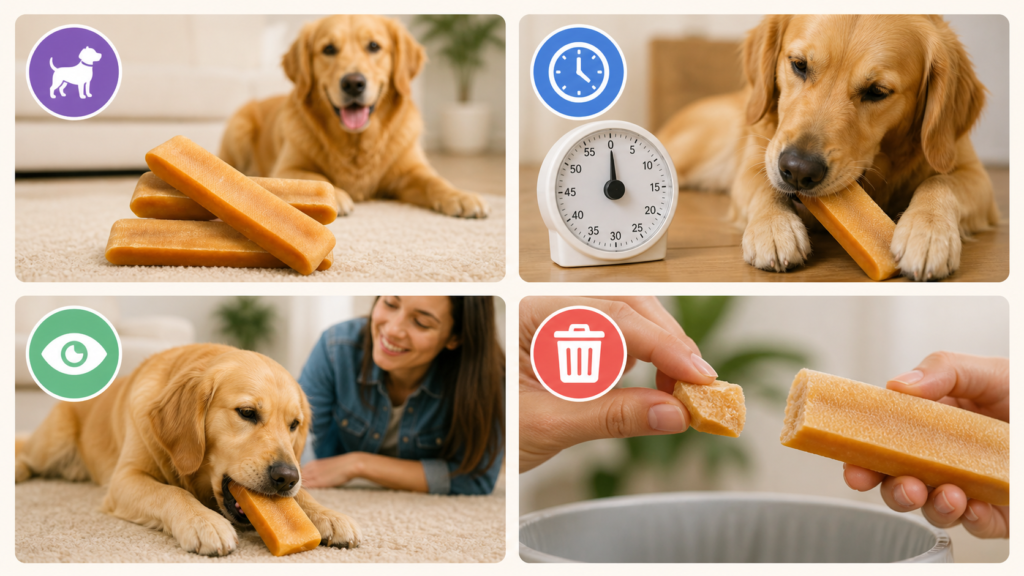
Digestive risks from yak chews are reduced through 4 specific practices: size matching, session limits, active supervision, and piece removal.
These 4 practices address each of the 3 primary risk categories:
- Size matching: Select chews rated for the dog’s specific weight bracket, not just “small,” “medium,” or “large.”
- Session limits: Restrict chewing sessions to 20–30 minutes per day to prevent excessive fragment accumulation.
- Active supervision: Observe the dog during every chewing session to identify gulping or aggressive chewing patterns.
- Piece removal: Remove the chew when it reaches a length shorter than the dog’s muzzle width, approximately 2–3 inches, to prevent swallowing.
Dogs introduced to yak chews for the first time digest them more slowly. The digestive tract adapts to new protein sources within 7–14 days. Introducing yak chews 3 times per week during this adaptation period reduces the risk of digestive upset.
How Should You Safely Give Yak Chews to Your Dog?
Safe yak chew administration follows a 3-step protocol: size selection by body weight, session length control, and consistent supervision.
A 40-pound dog uses a medium yak chew rated for 25–50 pounds, chews for a maximum of 30 minutes, and has the chew removed when it measures under 2 inches in length. Deviation from any of these 3 parameters increases the risk of choking or obstruction.
What Size Yak Chew Is Appropriate for Your Dog?
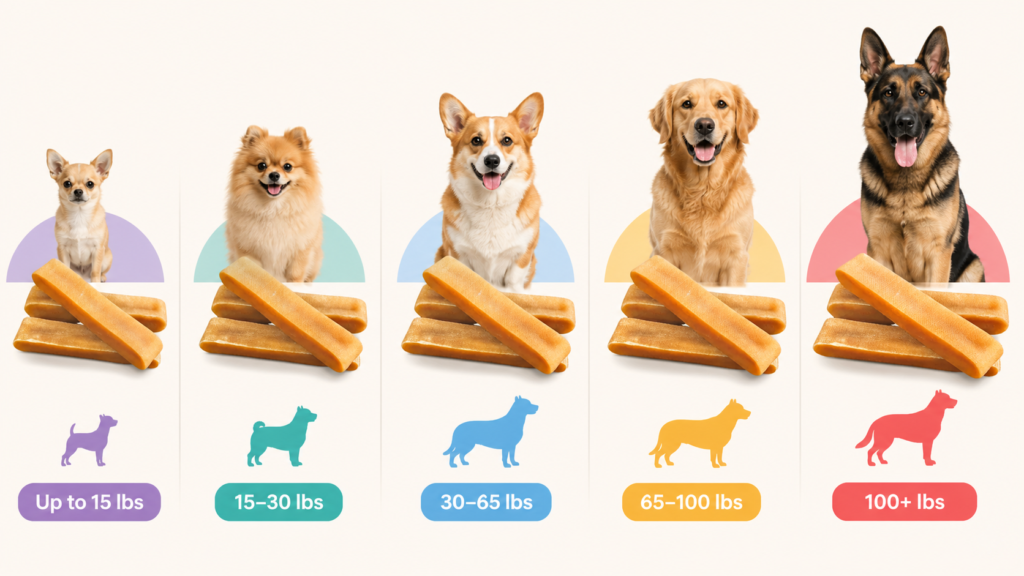
Yak chew size matches directly to the dog’s body weight using manufacturer-specified weight brackets. For breed-specific recommendations, consult a detailed guide on choosing the right yak chew size for your dog’s breed and age, which accounts for jaw strength, chewing style, and developmental stage.
The following table defines appropriate yak chew sizes across 5 weight categories. These recommendations reflect esophageal diameter, molar grinding capacity, and average daily chewing duration.
| Dog Weight | Yak Chew Size | Average Chew Duration |
| Under 15 lbs | X-Small | 20–30 minutes |
| 15–30 lbs | Small | 25–40 minutes |
| 30–60 lbs | Medium | 30–50 minutes |
| 60–90 lbs | Large | 40–60 minutes |
| Over 90 lbs | X-Large | 45–75 minutes |
Dogs that consume an entire chew within 10 minutes require the next size up. Dogs that show no interest in a chew after 5 minutes receive a size down, as oversized chews present a frustration-driven gulping risk when the dog attempts to break off usable pieces.
How Long Should a Dog Chew on a Yak Chew?
A dog chews on a yak chew for a maximum of 30–45 minutes per session. Extended chewing beyond 60 minutes per session accumulates large volumes of casein fragments in the stomach simultaneously. High casein loads slow gastric emptying and produce loose stool in sensitive dogs within 8–12 hours of ingestion.
Dogs that chew aggressively, consuming more than 10 grams of yak chew material per session, receive sessions spaced 48 hours apart. Dogs that chew moderately, consuming 3–5 grams per session, tolerate daily sessions without digestive disruption. Session frequency adjusts based on stool consistency observed 12–24 hours after each session.
When Should You Take the Chew Away?
Remove the yak chew when it reaches a length shorter than the dog’s muzzle, approximately 2 to 3 inches, depending on breed size.
A chew at this length fits entirely in the dog’s mouth and poses a direct swallowing risk. The soft inner core exposed at this stage absorbs saliva rapidly and increases the probability of the dog attempting to swallow it whole.
The softened small end piece, called the “puff”, transforms into a safe treat by microwaving it for 30–45 seconds. Microwaving causes the remaining casein to expand into a puffed, foam-like texture that dissolves rapidly in the mouth. This puff technique eliminates waste and removes the swallowing risk completely. For step-by-step instructions on how to safely puff yak chews in the microwave, including timing adjustments for different microwave wattages, follow detailed safety guidelines.
What Do Veterinarians Say About Yak Chews and Digestion?
Veterinarians evaluate yak chews as a moderate-risk, high-digestibility chew option suitable for most adult dogs above 20 pounds.
According to a 2024 peer-reviewed analysis in Today’s Veterinary Practice by board-certified veterinary nutritionists (Gaylord & Raditic, 2024 — full report), no chew treat is without risk: hazards include oral trauma, airway or gastrointestinal obstruction, ingredient intolerance, and pathogen exposure across all chew categories. Yak chews receive more favorable assessments than rawhide and bone chews due to their casein-based composition and lack of chemical processing.
Veterinary consensus identifies three preconditions for safe yak chew use: appropriate size selection, supervised chewing sessions, and healthy gastrointestinal status.
Are Yak Chews Recommended by Vets?
Veterinarians recommend yak chews as a safer alternative to rawhide and cooked bones for adult dogs with intact dentition and no history of gastrointestinal obstruction.
The Veterinary Oral Health Council (VOHC) awards its Seal of Acceptance only to products that complete at least two independent clinical trials meeting minimum plaque-reduction thresholds — and as of 2025, no yak milk chew appears on the VOHC’s live accepted products database, meaning their dental benefit claims remain unverified by independent veterinary science.
Some veterinary dentists caution against yak chews for dogs classified as “power chewers”, those that exert bite forces above 300 psi, due to the tooth fracture risk at high chew hardness. These veterinarians recommend softer alternatives, including rubber chews rated for power chewers or frozen raw bones used under direct supervision.
What Precautions Do Vets Suggest for Safe Digestion?
Veterinarians identify 5 precautions for safe yak chew digestion:
- Confirm body weight bracket: Match the chew size to the dog’s current weight, not an estimated or previous weight.
- Assess dental health first: Dogs with fractured, loose, or missing teeth require veterinary dental clearance before yak chew use.
- Introduce gradually: Begin with 10-minute sessions for the first 3 sessions before extending to full 30-minute sessions.
- Monitor stool consistency: Loose stool within 24 hours of chewing indicates a sensitivity to dairy protein or excessive fiber ingestion.
- Discontinue after obstruction signs: Vomiting, lethargy, or abdominal bloating within 2 hours of a chewing session requires immediate veterinary contact.
Dogs with documented inflammatory bowel disease (IBD), exocrine pancreatic insufficiency (EPI), or confirmed dairy protein intolerance do not receive yak chews. These 3 conditions compromise the digestive pathway that processes casein protein.
How Should You Approach Yak Chews with Quality Pet Products?
Quality yak chews meet 5 production standards: Himalayan-sourced milk, smoke-dried processing, no artificial additives, third-party testing for contaminants, and weight-specific sizing.
Yak chews produced outside Nepal and Bhutan frequently substitute cow milk for yak milk at higher ratios, reducing protein concentration and altering digestibility characteristics. Third-party testing verifies the absence of heavy metals, pesticide residues, and bacterial contamination.
Can a Trusted Pet Brand Help You Choose Safer Yak Chews?
A trusted pet brand provides 3 verification points that determine yak chew safety: sourcing transparency, contaminant testing documentation, and size-specific product lines. Brands that publish Certificate of Analysis (COA) documents from accredited laboratories demonstrate measurable accountability. COA documents confirm protein content, moisture levels, fat percentage, and microbial safety within each production batch.
Single-ingredient labeling, yak milk, cow milk, salt, lime juice, confirms the absence of undisclosed fillers, binding agents, or artificial preservatives. Brands that list more than 4 ingredients in their yak chew formulations introduce non-traditional additives that alter digestibility and safety profiles.
What Are the Key Takeaways About Yak Chew Digestibility?
Yak chews are digestible for dogs at an 80–85% rate when administered at the correct size, in supervised sessions under 30 minutes, and removed at the 2-inch length threshold.
The 6 key takeaways about yak chew digestibility are:
- Composition: Yak chews contain 4 natural ingredients: yak milk, cow milk, salt, lime juice, with no artificial additives.
- Digestibility: Casein protein dissolves in gastric acid at pH 1–2, producing bioavailable amino acids within 4–6 hours.
- Risk management: 3 practices eliminate primary risks: size matching, 30-minute session limits, and piece removal at 2–3 inches.
- Dental benefit: Mechanical abrasion reduces plaque by 35–55% per session.
- Comparison: Yak chews outperform rawhide in digestibility rate, protein bioavailability, and absence of chemical processing.
- Veterinary position: Most veterinarians assess yak chews as a moderate-risk, high-digestibility option appropriate for adult dogs without gastrointestinal conditions.
Yak chew digestibility in dogs depends on the intersection of 3 variables: the chew’s physical properties, the dog’s digestive capacity, and the owner’s supervision practices. Dogs that receive correctly sized yak chews in monitored sessions digest them safely and benefit from the protein, dental, and gut health properties that casein delivers.