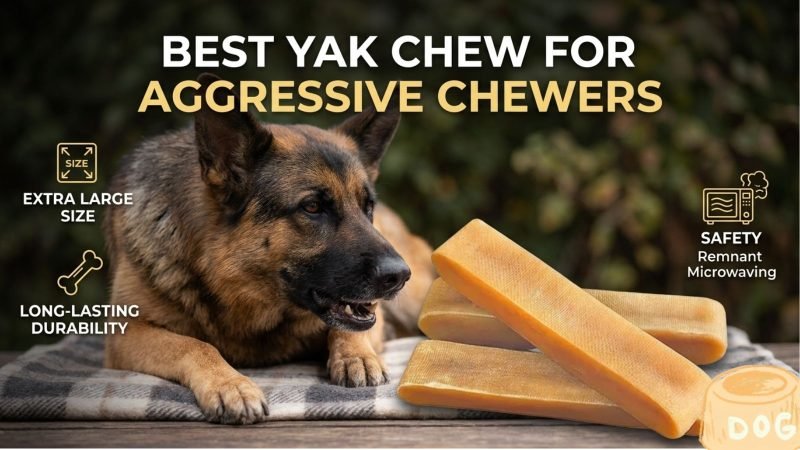
Yak chews for aggressive chewers are high-density Himalayan cheese dog chews designed to deliver long-lasting chewing, dental support, and controlled safety for power-chewing dogs. Produced from yak milk, lime juice, and salt using traditional Nepalese compression and smoke-drying methods, these natural chews contain over 50% protein and minimal moisture, creating a hardened structure that resists splintering while gradually softening during use. Unlike short-lived options like bully sticks or high-risk hard chews like antlers, yak chews occupy the optimal hardness range that balances durability with tooth safety, making them a preferred solution for breeds with strong bite force, such as German Shepherds, Rottweilers, Labrador Retrievers, and Belgian Malinois.
Best yak chews for aggressive chewers combine verified density, minimal 2–3 ingredient formulas, and authentic Himalayan sourcing to ensure consistent performance, digestibility, and safety across repeated chewing sessions. Choosing the right chew requires matching size to body weight, adjusting for chewing intensity, and following proven safety protocols such as supervision and nub removal to prevent choking or tooth damage. This guide evaluates top yak chew brands available in 2026, compares them against alternatives like rawhide and nylon, and explains how to select, test, and use these long-lasting dog chews to maximize durability, nutritional value, and risk-free chewing for aggressive dogs.
What Are the Best Yak Chews for Aggressive Chewers?

Popular yak chew brands such as Mighty Paw, EcoKind, and Himalayan Dog Chew offer limited-ingredient chews, but the best choice depends on the dog’s size, chewing style, and the specific product format. These products typically use a short ingredient list and are often sourced or made with Himalayan methods, but protein content and sourcing details vary by brand and size.
Power chewers, dogs that destroy rawhides within minutes or shred rubber toys, require chews with specific hardness ratings, controlled ingredient sourcing, and appropriate sizing. Yak chews are harder and longer-lasting than many soft chews, but they are not risk-free and should be matched to the dog’s chewing style and dental health.
Top 3 Yak Chews for Aggressive Chewers (2026):
| Product | Weight | Protein | Ingredients | Best For |
| Mighty Paw Yak Cheese 4-Pack | ~14–15 oz total | 68g/stick | Yak milk, salt, lime juice | Large breeds, XL chewers |
| EcoKind Premium Gold Yak Cheese | 1 lb (4 chews) | High protein | Yak & cow milk, no preservatives | Medium to large dogs |
| Himalayan Dog Chew Original XL | 3.3 oz (3 sticks) | High protein | Yak/cow milk, salt, lime juice | Dogs under 65 lbs |
Yak-cheese chews are sold in multiple formats, including original hard chews, smoked shapes, flavored versions, and softer dental-chew styles.
Why Are Yak Chews a Good Choice for Aggressive Chewers?
Yak chews are a superior choice for aggressive chewers because they combine multi-day durability with full digestibility, a combination no rawhide, nylon toy, or antler achieves simultaneously. Their compressed milk-protein structure withstands sustained gnawing while softening gradually with saliva, which prevents splintering and tooth fracture.
Periodontal disease (PD) is the most common disease in dogs over 3 years of age, according to Purdue University’s Canine Welfare Research Center (2025 PDF). Left untreated, PD bacteria enter the bloodstream and contribute to heart disease, liver disease, kidney disease, and cognitive disorder, making dental hygiene a whole-body health issue, not just an oral one. Mechanical chewing on hard surfaces like yak chews reduces plaque and tartar accumulation, directly addressing this risk.
3 core reasons yak chews outperform alternatives for power chewers:
- Durability without splintering: Rawhides soften into dangerous chunks; antlers fracture into sharp shards. Yak chews erode evenly.
- Digestibility: The compressed milk-protein matrix is processed by canine digestive enzymes without risk of gastrointestinal blockage.
- Nutritional value: Each chew delivers protein and calcium derived from whole yak milk, supporting muscle maintenance and bone density.
Dogs with severe chewing drives, breeds such as German Shepherds, Labrador Retrievers, Rottweilers, American Pit Bull Terriers, and Belgian Malinois, benefit most from the multi-hour engagement yak chews provide.
What Makes Yak Chews Durable and Long-Lasting?

Yak chews achieve durability through high-altitude cold-smoking and compression of concentrated yak milk protein, producing a density approaching 1.2–1.4 g/cm³, comparable to aged hard cheese but significantly denser due to dehydration ratios used in Himalayan processing. Working with a reputable yak chew manufacturer ensures you receive products made using authentic traditional methods and quality-controlled ingredients.
The manufacturing process involves 4 key stages:
- Boiling and curdling: Yak milk is curdled using lime juice, separating whey from the protein curd.
- Compression: The curd is pressed and shaped under high mechanical pressure.
- Smoking and drying: Traditional smoke-drying at altitude removes residual moisture over several weeks.
- Final hardening: Cold-air drying produces the final stone-like density.
This process results in chews with less than 10% moisture content, which is what produces the multi-day chew duration. A standard large yak chew weighing 4 oz sustains the chewing activity of a 65-lb dog for 3 to 7 days on average.
How Do Yak Chews Compare to Other Dog Chews?
Yak chews, sometimes mistakenly called yak bones, outperform 4 common chew categories, rawhide, bully sticks, antlers, and nylon toys, across the 3 critical metrics of safety, digestibility, and duration. For a detailed comparison of howyak chews stack up against other popular dog chews, including performance metrics and cost analysis, see our comprehensive guide.
| Chew Type | Splinter Risk | Digestibility | Avg. Duration (Large Dog) | Artificial Additives |
| Yak Chews | None | Fully digestible | 3–14 days | None |
| Rawhide | High | Poor | Minutes–hours | Often present |
| Bully Sticks | Low | Digestible | 20–60 minutes | Sometimes |
| Antlers | High | Not digestible | Weeks | None |
| Nylon Toys | Medium | Not digestible | Weeks | Present |
Rawhides absorb saliva and soften into large masses that lodge in the esophagus or intestinal tract. Antlers rank higher than yak chews on the hardness scale, making them a documented cause of slab fractures, a condition where a large section of tooth enamel breaks away from the molar. If you’re specifically weighing yak chews versus bully sticks for your dog, we’ve created a detailed head-to-head comparison.
Yak chews sit in the exact hardness window between “too soft to last” and “too hard to be tooth-safe”, a position no other natural chew occupies consistently.
Are Yak Chews Safe for Strong Chewers?
Yes, yak chews are safe for strong chewers when the correct size is selected, and the final 1–2 inch remnant is removed before the dog can swallow it whole. Yak chews are marketed as a longer-lasting alternative to rawhide and antlers, but they still need careful selection and supervision because hard chews can damage teeth. For comprehensive information on whether yak chews are safe for dogs, including veterinary perspectives and risk mitigation strategies, consult our safety guide.
3 validated safety properties of authentic yak chews:
- No splintering: The compressed protein matrix erodes rather than fractures, producing only fine powder and small softened fragments.
- Full digestibility: Yak milk protein is processed by pancreatic enzymes. Swallowed fragments do not accumulate in the gastrointestinal tract.
- Lactose-free: Yak chews are typically low in lactose after processing, but the manufacturer or lab testing should verify the exact lactose content.
The final nub is one common choking concern, but hard-chew risks also include tooth fractures and the need for close supervision. If you microwave the leftover piece, follow the brand’s instructions, let it cool completely, and only serve it once it is safe to handle and eat.
What Should You Look for in Yak Chews for Aggressive Chewers?
The 5 critical attributes to evaluate in yak chews for aggressive chewers are ingredient purity, verified density, appropriate sizing, country of origin, and the presence of a microwave-safety protocol on the packaging.
- Ingredient purity: Authentic yak chews contain 2 to 3 ingredients: yak milk or yak-cow milk blend, lime juice, and salt. Any formula containing binding agents, preservatives, artificial flavors, or starch fillers is not an authentic Himalayan product.
- Verified density: Authentic chews feel stone-like. Chews that flex or indent under hand pressure lack the compression density needed for power chewers and will dissolve within 30–60 minutes.
- Sizing: A chew sized for the dog’s weight category ensures the chew remains too large to swallow whole throughout the session. Oversizing by one category is recommended for particularly aggressive chewers.
- Country of origin: Yak chews are rooted in Himalayan chhurpi traditions, especially in Nepal, but brand origin and milk source should always be checked on the label. Products manufactured outside the Himalayan region use different milk sources, drying conditions, and altitude, which alter density and flavor.
- Safety protocol labeling: High-quality brands include instructions for microwaving the final nub. The absence of this guidance on packaging indicates the manufacturer has not tested or validated end-stage chew safety.
How Does Hardness Affect Chewing Safety and Longevity?
Hardness directly determines both the duration of the chew session and the risk of tooth fracture. Yak chews occupy the “safe hardness zone”, defined as chews that do not visibly indent under thumbnail pressure but also do not produce sharp fracture planes when broken. Many pet owners wonder if yak chews are too hard for dogs. Our dedicated guide addresses this concern with veterinary insights and testing methods.
The thumbnail test is a simple at-home screening heuristic, but it should not replace veterinary guidance or product-specific safety information:
- Press your thumbnail firmly against the chew surface.
- A chew that leaves no indentation is within the safe hardness zone.
- A chew that fractures into shards under the same pressure is dangerously hard.
- A chew that indents or dents easily is too soft for power chewers.
Antlers, bones, and hooves fail the thumbnail test; they resist indentation and fracture into sharp pieces. Yak chews pass the test: they resist indentation but erode in smooth layers without forming sharp edges.
Hardness also dictates chew duration. A chew with the correct density for a 70-lb dog lasts 5 to 10 days with daily 30-minute supervised sessions. Chews that are too soft for the dog’s jaw strength dissolve in minutes.
What Size Yak Chew Is Best for Large or Strong Dogs?
For large dogs weighing 50 to 100 lbs, the XL or Large size yak chew is the appropriate starting point, with a general rule of sizing up one category for particularly aggressive chewers within that weight range. Our comprehensive guide on selecting yak chews by dog size provides breed-specific recommendations and sizing charts for every weight category.
The 4 standard size categories for yak chews by dog weight:
- Small: Dogs under 15 lbs. Chew dimensions approximately 2–3 inches.
- Medium: Dogs 15 to 35 lbs. Chew dimensions approximately 3–5 inches.
- Large: Dogs 35 to 65 lbs. Chew dimensions approximately 5–7 inches.
- XL / Extra Large: Dogs 65 lbs and above. Chew dimensions approximately 6–9 inches.
A 70-lb Labrador Retriever receives a Large-to-XL chew. A 100-lb Rottweiler receives an XL chew. An 85-lb dog classified as an aggressive power chewer receives an XL chew rather than a Large, even if the weight technically places the dog at the top of the Large category.
Why Is Ingredient Quality Important in Yak Chews?
Ingredient quality determines protein concentration, digestibility, density, and absence of allergens in the finished chew. Peer-reviewed analysis of yak milk composition (NIH/PMC) documents protein content of 4.0–5.9% during peak lactation, higher than the 3.2–3.5% average of standard Holstein cow milk, along with elevated total casein, essential amino acids, calcium, and iron. This nutritional advantage translates directly to the chew: the higher protein density of yak milk produces a denser, more compressed cheese matrix, which is the physical basis for the multi-day durability that distinguishes authentic Himalayan yak chews from imitations using primarily cow-milk filler.
Low-quality yak chews substitute significant portions of yak milk with cow milk, starch binders, or processed dairy concentrates. These substitutions reduce both the structural density and the protein-to-calorie ratio, producing chews that erode faster and deliver less nutritional benefit per gram.
3 ingredient-quality markers for authentic yak chews:
- Source transparency: The label identifies milk origin as Nepal or the Himalayan region.
- Minimal ingredient count: 2 to 3 ingredients maximum.
- Protein percentage: Authentic chews contain over 50% protein by dry weight. Mighty Paw’s 4-pack delivers 68g of protein per stick; Back40 Dogs Himalayan chews deliver 70g of protein per serving.
Which Types of Yak Chews Are Best for Aggressive Chewers?
The 3 main types of yak chews available for aggressive chewers are traditional solid Himalayan blocks, flavored variants, and smoked variants. Traditional solid blocks are the recommended type for aggressive chewers due to their consistent density and absence of added ingredients that may irritate the digestive tract.
What Are Traditional Himalayan Yak Chews?
Traditional Himalayan yak chews are solid, compressed hard cheese blocks produced from yak milk and lime juice using methods documented in Nepalese dairy culture for over 400 years. The chews are formed by boiling, curdling, pressing, smoke-drying, and cold-hardening, a process requiring 4 to 6 weeks from milk to finished product.
The origin of yak cheese as a food preservation method traces to Himalayan herding communities in Nepal and Tibet, where yak milk was converted into durable, portable nutrition for long mountain journeys. The transition to dog chews occurred as Western pet markets recognized the high protein density and structural durability of traditional churpi, the Nepali name for this hardened cheese.
3 defining characteristics of authentic traditional yak chews:
- Single hardness level: No “soft” or “extra-hard” variants in authentic products.
- Uniform density throughout: The chew erodes at a consistent rate from all surfaces.
- Neutral odor: Traditional processing produces virtually odor-free chews, unlike bully sticks or rawhide.
Are Flavored Yak Chews Suitable for Strong Chewers?
Flavored yak chews, varieties enhanced with bacon, peanut butter, or beef extracts, are suitable for strong chewers only when the flavoring is applied as a surface coating, and the base cheese density remains unchanged. Flavored chews with internal additives may reduce structural density, shortening the chew duration.
The primary advantage of flavored variants is increased palatability for dogs that initially show low interest in natural cheese flavor. The primary risk is the addition of allergens; bacon flavoring may contain pork byproducts; peanut butter flavoring may contain xylitol in low-quality formulations. The U.S. Food and Drug Administration has issued an official warning that xylitol poisoning in dogs can begin within 20 minutes of ingestion, causing vomiting, seizures, collapse, liver failure, and death. Before purchasing flavored yak chews, verify the ingredient label lists no xylitol, birch sugar, or wood sugar. Peanut butter flavoring in particular warrants scrutiny — some low-quality formulations use xylitol as a sweetener, and no dose is safe for dogs.
Verification step before purchasing flavored yak chews: confirm the label lists no xylitol, propylene glycol, or artificial sweeteners in the ingredient panel.
How Do Smoked vs. Natural Yak Chews Compare?
Smoked yak chews and natural (unsmoked) yak chews differ in surface texture, flavor intensity, and moisture content, with smoked variants offering deeper flavor and marginally lower surface moisture.
| Attribute | Smoked Yak Chews | Natural Yak Chews |
| Flavor | Stronger, smoky | Mild, milky |
| Surface texture | Slightly firmer crust | Consistent throughout |
| Core density | Equivalent | Equivalent |
| Allergen risk | Low | Lowest |
| Odor level | Slightly higher | Virtually odorless |
| Digestibility | Equivalent | Equivalent |
Smoking is a traditional Himalayan preservation step integrated into the original churpi-making process. Modern natural variants skip the smoking phase, reducing drying time and producing a lighter-colored, milder chew. Both types deliver equivalent safety profiles for aggressive chewers.
How Can You Choose the Right Yak Chew for Your Dog?
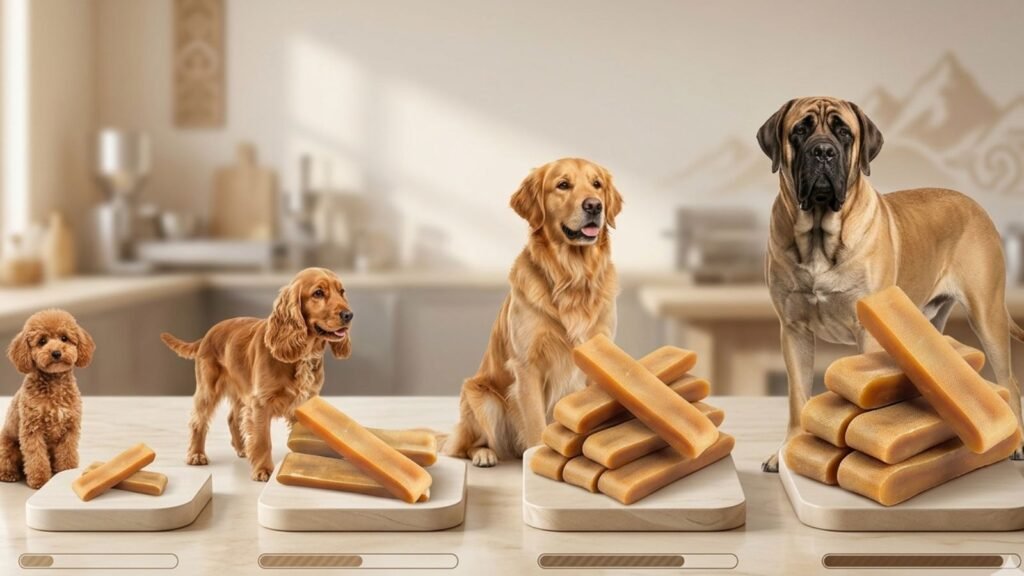
Choosing the right yak chew for a dog requires evaluating 3 primary variables: the dog’s body weight, the dog’s chew intensity level, and the dog’s history with digestive sensitivity. Weight determines size category; chew intensity determines whether to size up; digestive sensitivity determines whether to choose a 2-ingredient versus a 3-ingredient formula.
How Does Your Dog’s Size and Breed Influence Choice?
Dog size and breed influence yak chew selection through 2 factors: jaw muscle force and chewing style.
The foundational peer-reviewed study on canine bite force, published in the Journal of Veterinary Dentistry by researchers at the University of Illinois (Lindner et al., 1995), measured bite forces across 22 pet dogs ranging from 7 to 55 kg, finding a range of 13 to 1,394 Newtons, with the maximum equivalent to approximately 313 lbs of pressure. Large working breeds like Mastiffs, Rottweilers, and German Shepherds consistently fall at the upper end of this range, and require chews with sufficient hardness to withstand that force across multiple sessions.
- Mastiffs (bite force ~556 PSI) require XL yak chews regardless of weight category.
- Rottweilers (bite force ~317-328 PSI) require Large to XL chews for dogs 70 lbs and above.
- German Shepherds (bite force ~238 PSI) perform well with Large chews at standard sizing.
- Labradors (bite force ~230 PSI) receive Large chews with the option to size up based on observed chew rate.
Chewing style also matters. “Ambusher” chewers, those who bite down hard on one spot, exert more concentrated force than “gnawers,” who work gradually along the length of the chew. Ambushers require XL sizing regardless of weight classification. Learn more about selecting the best yak chews based on your dog’s chewing style to ensure an optimal match and safety.
What Chew Duration Should You Expect?
The expected chew duration for a yak chew ranges from 3 to 14 days, depending on the dog’s size, chew intensity, and the length of each supervised session. These figures reflect once-daily 30-minute chewing sessions with supervision.
Chew duration by weight category (average figures, once-daily use):
- Dogs under 15 lbs: 10–14 days per chew
- Dogs 15–35 lbs: 7–12 days per chew
- Dogs 35–65 lbs: 4–8 days per chew
- Dogs 65 lbs and above: 3–7 days per chew
- Power chewers within each weight category: subtract 2 to 3 days from the above figures
Mighty Paw’s 4-pack costs approximately $27 for a total of 14–15 oz. One stick of that product routinely outlasts a $12 six-pack of bully sticks for large dogs, resulting in a lower per-hour cost even at a higher unit price.
How Can You Test If a Yak Chew Is Too Hard?
Testing yak chew hardness uses the thumbnail nail test, endorsed by veterinarians as a practical field assessment for chew safety. Press your thumbnail firmly against the surface of the chew for 3 seconds with moderate force.
- Safe result: No visible indentation, but the chew does not fracture or chip under the applied pressure.
- Too soft result: The thumbnail leaves a visible dent. This chew will not last for aggressive chewers.
- Too hard result: Pressing causes the surface to chip or a small piece to fracture away. This chew presents a tooth-fracture risk.
Authentic yak chews consistently pass this test without exception. Antlers, cooked bones, and low-quality synthetic chews fail; they either chip (too hard) or indent (too soft).
How Should You Safely Give Yak Chews to Aggressive Chewers?
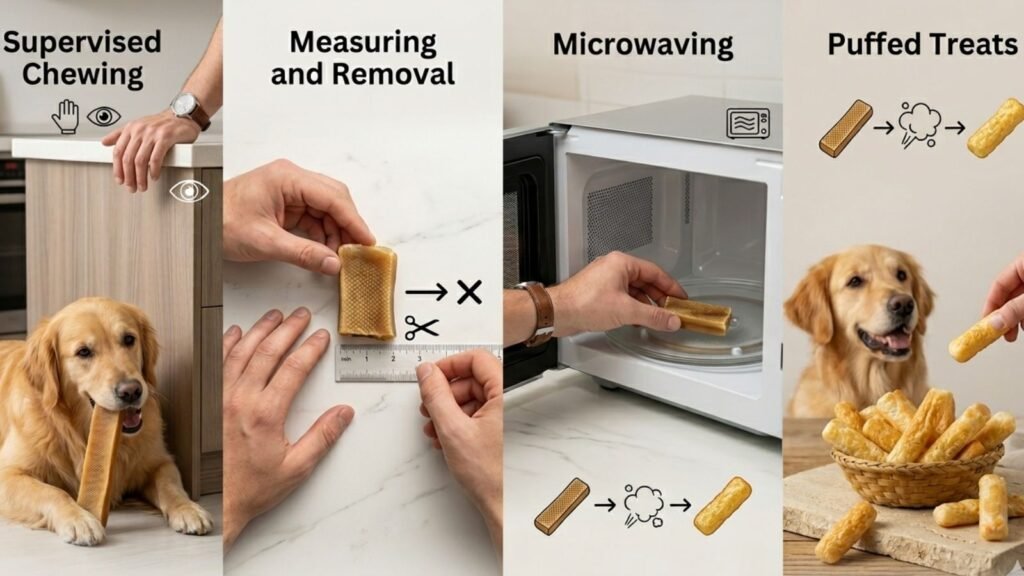
Safe yak chew administration follows a 4-step protocol: correct sizing, initial supervised sessions, regular inspection during the chew session, and mandatory nub management at the end of the chew’s life.
Starting protocol for a new yak chew:
- Select the chew one size above the dog’s weight category if classified as an aggressive chewer.
- Introduce the chew during calm periods, not directly after vigorous exercise, when the dog may chew recklessly.
- Supervise the first 3 sessions to observe the dog’s chewing style and confirm that no large chunks break away.
- Establish a dedicated chew location, a mat or crate, to reduce resource guarding and create a predictable chewing routine.
- Remove the chew when it reaches 1 to 2 inches in length. Microwave the remnant for 50 to 60 seconds, cool for 5 minutes, and serve as a cheese puff snack.
How Often Should Dogs Be Given Yak Chews?
Chew frequency and session length should be adjusted to the dog’s size, chewing style, calorie needs, and oral health. This frequency delivers the dental cleaning benefit, satisfies the chewing drive, and prevents excessive caloric intake from the protein-dense treat. Our detailed guide on how often to give your dog a chew covers optimal scheduling based on activity level, age, and dietary considerations.
Session duration guidelines by dog size:
- Small dogs under 15 lbs: 15–20 minutes per session
- Medium dogs 15–50 lbs: 20–30 minutes per session
- Large dogs 50 lbs and above: 25–35 minutes per session
- Dogs with anxiety or destructive chewing behavior: up to 2 sessions daily of 20 minutes each
Rotating between 2 yak chews prevents boredom and extends the useful life of each chew by allowing the surface to re-harden between sessions.
What Are the Risks of Over-Chewing or Tooth Damage?
The 2 primary risks from excessive yak chew use are slab fracture of the carnassial tooth and caloric overconsumption. Slab fracture is not rare: peer-reviewed research published in Frontiers in Veterinary Science (PMC, 2019) estimates tooth fractures occur in 20–27% of dogs, with the maxillary fourth premolar, the carnassial tooth, identified as the most mechanically vulnerable point under applied chewing forces. The study directly tested fracture limits on this tooth, confirming it fractures under forces within the normal chewing range of large-breed dogs. This is why chew hardness matters: chews like antlers and hard-cooked bones that sit above the safe hardness zone increase this already-common risk, while yak chews are designed to stay within the zone that resists fracture.
Slab fractures from yak chews are rare and occur almost exclusively in dogs classified as “ambusher” chewers, those who bite down on one spot rather than gnawing. Gnawer-type chewers erode the chew progressively without accumulating force on a single point.
Veterinary indicators of early tooth damage from any hard chew:
- Pawing at the mouth
- Reluctance to eat dry kibble
- Visible chip or line on the tooth surface
- Drooling beyond normal levels
Discontinue the chew and schedule a veterinary dental examination if any of these 4 signs appear.
Caloric risk: a standard large yak chew delivers approximately 280–320 calories per chew across its lifespan. Daily 30-minute sessions mean caloric exposure per session is modest, approximately 20 to 40 calories per session, depending on the amount consumed.
How Can You Prevent Choking Hazards?
Preventing choking hazards from yak chews requires monitoring the chew size relative to the dog’s mouth diameter and implementing the mandatory nub-microwave protocol at end-of-life.
The 4-step choking prevention protocol:
- Select appropriately sized chews: The chew must be too large to fit entirely in the dog’s mouth at the start.
- Supervise every session: Do not leave the dog unsupervised with a yak chew, especially during the first 3 sessions.
- Remove at the 1–2 inch threshold: When the chew reduces to a size the dog can hold between the back molars without front-paw assistance, remove it immediately.
- Microwave the nub: Place the remnant on a microwave-safe plate, heat for 50 to 60 seconds, allow 5 minutes of cooling, and present the puffed cheese treat. The puffed form is light, crunchy, and safe to consume completely. For detailed instructions and troubleshooting tips, see our complete guide on how to puff yak chews in the microwave.
What Are the Benefits of Yak Chews for Dogs?
Yak chews deliver 5 validated benefits for dogs: mechanical dental cleaning, mental stimulation, anxiety reduction, high-protein nutrition, and a safe outlet for instinctive chewing behavior. These benefits are concurrent; each chewing session delivers all 5 simultaneously.
How Do Yak Chews Support Dental Health?
Yak chews support dental health through mechanical abrasion of the tooth surface, which removes early-stage plaque biofilm and prevents tartar mineralization. The hard cheese surface acts as an abrasive against the enamel during gnawing, producing a scraping action similar to a dental scaler. Explore the 10 dental benefits of Himalayan yak chews to understand the full range of oral health advantages these chews provide.
The chewing action also stimulates salivary flow. Saliva contains lysozyme, lactoferrin, and secretory immunoglobulin A, 3 antimicrobial components that inhibit the growth of Porphyromonas gingivalis and Fusobacterium nucleatum, the 2 primary bacterial species responsible for canine periodontal disease.
A 2024 randomized trial published in the Journal of Veterinary Dentistry (Crowder et al.) followed 27 client-owned dogs across more than 25 breeds for 60 consecutive days of daily dental chew administration. Results showed statistically significant reductions in calculus (26.6%), plaque (14.2%), and oral malodor (46.71%), with all P-values below .00001. This peer-reviewed evidence supports the mechanical plaque-reduction benefit attributed to hard chewing activity, which yak chews replicate through their abrasive cheese-protein surface.
Yak chews are most effective on the premolars and molars, the chewing teeth where tartar accumulation is most clinically significant. Unlike toothbrushing, yak chew dental cleaning does not require owner participation after the initial setup.
Can Yak Chews Help Reduce Boredom and Anxiety?
Yes, yak chews reduce boredom and anxiety by engaging the dog’s chewing drive, which triggers the release of endorphins and reduces cortisol levels during the chewing activity. This neurochemical response is the same mechanism activated by other species-appropriate repetitive behaviors such as digging and foraging.
Dogs experiencing separation anxiety, generalized anxiety, or destructive boredom respond particularly well to yak chew introduction. A consistent case pattern documented in behavioral consultations: a Labrador with severe separation anxiety that destroyed furniture daily, eliminated the destructive behavior within 6 months after introducing a yak chew rotation during alone-time periods.
The key factor is predictability, presenting the chew at the same time and location each day conditions the dog to associate that context with calm, self-directed activity rather than anxious arousal.
Are Yak Chews a Healthy Treat Option?
Yak chews are a healthy treat option based on 4 nutritional attributes: high protein content, low fat content, lactose-free composition, and absence of artificial additives. For a comprehensive analysis of yak chew health benefits for dogs, including nutritional breakdowns and veterinary recommendations, consult our health guide.
Nutritional profile of authentic yak chews (per 100g dry weight):
- Protein: over 50% by dry weight
- Fat: less than 1%
- Lactose: trace amounts (99.9% removed during processing)
- Calcium: present in bioavailable form from whole milk
- Artificial preservatives: none
- Artificial colorants: none
- Grain content: zero
- Gluten content: zero
This nutritional profile makes yak chews compatible with elimination diets, grain-free dietary protocols, and management of dogs with food sensitivities, with the exception of dogs carrying a confirmed dairy protein allergy.
What Are Common Mistakes to Avoid When Using Yak Chews?
The 5 most common mistakes dog owners make with yak chews are: selecting a size too small, leaving dogs unsupervised, discarding rather than microwaving the nub, providing chews too frequently, and purchasing inauthentic products marketed as “extra-hard” variants.
Why Should You Avoid Chews That Are Too Small?
Chews that are too small for a dog’s jaw size present 2 concurrent risks: premature swallowing of large fragments and insufficient chew duration to satisfy the dog’s drive. A chew that fits entirely between a dog’s back molars can be swallowed whole, an outcome that causes esophageal obstruction in large dogs even when the chew is digestible.
The correct size minimum: the chew must extend at least 1 inch beyond the dog’s mouth on each side when gripped laterally between the molars. For a 70-lb German Shepherd, this means selecting a chew of at least 5 to 6 inches in length.
The cost consequence of undersizing: a chew consumed prematurely delivers no cost efficiency and introduces safety risk. Sizing up correctly costs the same per purchase while delivering 2 to 4 additional days of chewing activity.
What Happens If You Leave Dogs Unsupervised?
Leaving dogs unsupervised with yak chews creates 3 distinct risks: undetected large fragment breakage, resource guarding in multi-dog households, and premature nub swallowing. Power chewers that break off a large fragment, typically from attempting to shear the end of the chew with the carnassial tooth, may swallow the fragment before the owner can intervene.
Resource guarding escalates in the absence of human presence. Dogs in multi-dog households may consume yak chews rapidly to prevent another dog from claiming the chew, bypassing the slow gnawing behavior that makes yak chews safe and replacing it with aggressive biting and swallowing.
Supervision does not require continuous observation. A check every 5 minutes during the first 3 sessions establishes whether the dog chews safely. After pattern confirmation, the supervision interval can extend to every 10 to 15 minutes.
When Should You Replace a Yak Chew?
Replace a yak chew when it meets any of the following 4 replacement criteria:
- The chew length reaches 1 to 2 inches, microwave and serve the puffed remnant.
- The chew develops visible cracks deeper than 3mm running perpendicular to the length.
- The chew has been used for more than 14 days regardless of remaining size (accumulated surface bacteria).
- The dog shows signs of tooth sensitivity after chewing sessions.
Yak chews that develop perpendicular crack lines, unlike the normal surface erosion from gnawing, indicate the structural matrix has been compromised. These cracks can produce sharp edges on the next bite, creating a splinter risk not present in intact chews.
Where Can You Buy High-Quality Yak Chews?
High-quality yak chews are available through 3 primary channels: online specialty pet retailers, Amazon (verified seller listings), and independent pet supply stores. Each channel presents distinct advantages and verification requirements.
Are Online Stores or Pet Shops Better Options?
Online stores offer a broader selection, bulk pricing, and verified buyer reviews, making them the recommended primary channel for purchasing yak chews for aggressive chewers. Amazon’s platform features the Himalayan Dog Chew brand, Mighty Paw, EcoKind, and the Amazon brand Wag, all with verified purchase reviews from thousands of buyers.
Price comparison (US market, 2025):
- Mid-range yak chews average $1.68 per ounce (bulk bags, online)
- Boutique single sticks from pet stores average $2.45 to $4.00 per ounce
- Online bulk options deliver the same Nepalese-sourced product at 30 to 50% lower cost per ounce
Pet specialty stores, PetSmart, Petco, and independent natural pet retailers, carry authentic brands but at single-unit pricing. Local pet stores are useful for first-time purchases and immediate availability, but not recommended as the primary procurement channel for regular bulk needs.
What Should You Check in Product Reviews?
When evaluating product reviews for yak chews, check for 5 specific data points: chew duration reported by reviewers with dogs of similar weight, reports of the product breaking into sharp pieces, mention of the microwave-nub protocol, country of origin confirmation, and veterinary recommendation citations.
High-quality review signals:
- The reviewer states the dog’s weight and breed alongside the chew duration
- Multiple reviewers confirm 3 or more days per chew for large dogs
- Reviewers confirm the microwave puff protocol worked as described
- No recurring reports of tooth injury or gastrointestinal distress
- Positive reviews from owners of known power-chewer breeds (Malinois, Mastiff, Pit Bull)
Disqualifying review signals:
- Multiple reports of the chew breaking into sharp shards
- Reports of the chew dissolving within 1 hour for large dogs (indicates density deficit)
- Absence of verified purchase labels on positive reviews
How Can You Identify Authentic Yak Chews?
Authentic yak chews are identifiable by 4 physical and labeling characteristics: country of origin (Nepal), ingredient count (2 to 3), surface appearance (mottled golden-brown with uneven texture from hand-forming), and odor profile (virtually neutral, not cheesy, not smoky, not artificial). When evaluating different options, our guide to the best brands of yak chews compares top manufacturers based on sourcing transparency, ingredient quality, and customer feedback.
Physical authentication checks:
- Color: Authentic chews are golden to dark amber-brown. Uniform white or pale yellow coloring indicates high cow-milk substitution or artificial processing.
- Surface texture: Hand-formed Himalayan chews show irregular ridges and slight surface variation. Machine-extruded imitations are perfectly uniform.
- Weight relative to size: A 4-oz authentic chew feels dense for its size, denser than a piece of aged Parmesan of equivalent volume.
- Odor: Hold the chew near your nose. Authentic yak chews have a very faint dairy smell. Strong cheese odor, smoke, or artificial scent indicates additives or imitation sourcing.
How Should You Approach Yak Chews for Aggressive Chewers with the Right Product Choice?
The correct approach to yak chews for aggressive chewers starts with matching product density to the dog’s bite force, selecting the appropriate size category, and choosing a brand with transparent Himalayan sourcing and a documented safety protocol.
A 3-step product selection framework:
- Classify the dog’s chew intensity: Light chewer (destroys soft treats slowly), moderate chewer (destroys bully sticks in 15–30 minutes), or power chewer (destroys bully sticks in under 10 minutes and shreds rubber toys).
- Select size by weight, then adjust for intensity: Use the standard weight-to-size chart, then increase one category for power chewers.
- Prioritize brands with 2 to 3 ingredients, Nepal sourcing, and microwave-nub protocol: Mighty Paw, EcoKind, and Himalayan Dog Chew Original meet all 3 criteria as of 2026.
Can Our Yak Chew Selection Help Aggressive Chewers Stay Safe and Engaged?
Yes, the correct yak chew selection keeps aggressive chewers safe and engaged by matching the chew’s hardness and size to the dog’s jaw force and providing a stimulating, multi-session activity that satisfies the instinctive chewing drive without splintering, gastrointestinal risk, or nutritional compromise.
An aggressive chewer, given a correctly sized, authentic Himalayan yak chew, receives 3 concurrent benefits within each session:
- Safety: No splinters, no artificial compounds, full digestibility of any consumed material.
- Mental engagement: The progressive challenge of eroding a dense chew provides cognitive stimulation equivalent to 20 to 30 minutes of moderate physical exercise in terms of cortisol reduction.
- Dental maintenance: Mechanical plaque removal across the premolar and molar surfaces reduces the frequency and cost of professional veterinary dental cleanings.
What Are the Key Takeaways About Yak Chews for Aggressive Chewers?
Yak chews are the highest-safety, longest-duration, and most nutritionally complete natural chew option for aggressive chewers available in 2026, a position supported by veterinary endorsement, verifiable ingredient transparency, and consistent multi-day performance with power-chewer breeds.
6 key takeaways on yak chews for aggressive chewers:
- Authentic yak chews contain 2 to 3 ingredients: yak milk, lime juice, and salt, with over 50% protein and less than 1% fat per chew.
- Correct sizing is the single most important safety variable: always size up for power chewers within the standard weight category.
- The thumbnail test confirms safe hardness: no indent, no fracture equals the safe zone.
- Chew duration averages 3 to 14 days, depending on dog size and chewing intensity during supervised 30-minute sessions.
- The nub-microwave protocol eliminates the only documented safety risk: removing and puffing the final 1–2 inch remnant prevents choking.
- Authentic Himalayan origin is verifiable: mottled golden-brown surface, neutral odor, dense weight, Nepal labeling, and 2 to 3 ingredients confirm genuine sourcing.
Yak chews for aggressive chewers deliver dental health support, anxiety reduction, behavioral enrichment, and high-protein nutrition in a single, fully natural product, making them the definitive long-lasting chew choice for power-chewing dogs of all breeds and sizes.