

Himalayan yak dog chews are natural hard cheese chews made from yak milk, cow milk, salt, and lime juice using a centuries-old Himalayan preservation method originating in Nepal and Tibet. These long-lasting dog chews are designed to support healthy chewing behavior, dental hygiene, mental stimulation, and high-protein nutrition without the risks associated with rawhide, artificial additives, or synthetic binders. Unlike processed dog chews that contain fillers, preservatives, or chemically treated materials, Himalayan yak chews use a simple ingredient profile and slow smoke-drying process to create a dense, durable, and highly digestible chew suitable for many adult dogs, aggressive chewers, and lactose-sensitive dogs.
Dog owners increasingly choose Himalayan yak chews because they combine multiple functional benefits in a single natural dog treat. The hard compressed texture helps reduce plaque and tartar through prolonged chewing, while the protein-rich milk formula supports muscle maintenance, satiety, and low-fat nutritional supplementation. Yak chews also provide structured mental enrichment that can reduce boredom-related behaviors such as destructive chewing, excessive barking, and anxiety during owner absence. Compared to rawhide, bully sticks, antlers, and synthetic dental chews, premium Himalayan yak chews offer a safer, cleaner, and more nutritionally balanced chewing experience with longer engagement time and better ingredient transparency.
What Are Himalayan Yak Dog Chews Made From?

Himalayan yak dog chews are made from 4 primary ingredients: yak milk, cow milk, salt, and lime juice. No fillers, no gluten, no grains, no artificial preservatives. The combination of these ingredients, when hardened using a traditional smoke-drying process, produces a dense, odor-controlled, long-lasting chew block.
The simplicity of the ingredient list is a direct reflection of the food’s origin. These chews originated in the mountain communities of Nepal, Tibet, and Bhutan, where local herders developed a method to preserve surplus yak milk into a shelf-stable, protein-dense food. That same process is now applied to create dog chews that are functionally traceable, ingredient-transparent, and naturally processed.
How Is Yak Milk Used in Himalayan Dog Chews?
Yak milk is the primary protein source in Himalayan dog chews. It is boiled, curdled using lime juice, and then compressed into block form before undergoing a multi-week smoke-drying process that removes nearly all moisture and hardens the structure.
Yak milk delivers a total protein concentration of 4.5–5.5g per 100g, significantly above standard cow milk’s 3.2–3.5g per 100g, according to a peer-reviewed yak milk protein analysis showing 4.5–5.5g protein per 100g vs. cow milk. This elevated protein density carries directly into the finished chew product. This elevated protein density carries directly into the finished chew. The drying process concentrates these proteins further, resulting in a chew that delivers measurable protein per gram consumed. Dogs don’t just gnaw on yak chews; they actively digest a nutrient-dense food source as they chew.
Yak milk’s high casein content (3.2–4.0g/100g per a 2023 NCBi comprehensive review of yak milk nutritional composition, including lactose and casein data), combined with the lime-juice acidification and multi-week drying process, breaks down residual lactose, producing a chew that most lactose-sensitive dogs can tolerate without the digestive response triggered by standard dairy-based treats.
Why Are Traditional Himalayan Recipes Used for Dog Chews?
Traditional Himalayan recipes are used because the process itself creates the chew’s structural integrity, digestibility, and safety profile, not modern chemical hardening agents or synthetic preservatives.
The smoke-drying method, practiced for generations in high-altitude Himalayan communities, naturally removes moisture without the need for artificial desiccants. Low moisture content directly correlates with longer shelf life, reduced bacterial growth risk, and harder chew consistency. Modern manufacturing attempts to replicate this using industrial drying ovens, but the slow, low-temperature traditional method produces a more uniform density throughout the chew block.
The use of salt and lime juice serves dual purposes: curdling the milk proteins and acting as a natural preservative. This is not a modern food science innovation; it is a validated, multi-generational process applied to human food long before it was adapted for pet products.
Why Are Himalayan Yak Dog Chews Good for Dogs?
Himalayan yak dog chews are good for dogs because they address 3 distinct needs simultaneously: physical stimulation, nutritional intake, and behavioral enrichment, without introducing synthetic chemicals, harmful additives, or digestive risks associated with rawhide.
How Do Yak Chews Support Long-Lasting Chewing?
Yak chews support long-lasting chewing through extreme density created by multi-week dehydration of compressed milk solids. A single medium yak chew typically provides 30 to 90 minutes of active chewing per session, depending on the dog’s size and chewing style.
This density is the key differentiator. Most commercial dog chews, including softer bully sticks and processed dental chews, are consumed within 10 to 20 minutes by medium to large dogs. Yak chews resist this rapid consumption because the outer layer must be abraded slowly before the inner structure softens from saliva. Dogs physically cannot rush through a yak chew, which extends the engagement time and reduces the risk of large chunk ingestion.
Why Do Dogs Enjoy the Taste of Yak Chews?
Dogs enjoy yak chews because the mild cheese flavor profile triggers persistent interest without overstimulating the reward pathway the way artificial flavoring does.
Yak chews carry a naturally occurring savory, lactic taste derived from aged milk proteins. This flavor is not injected or sprayed on; it runs through the entire chew. As the dog works through the outer layer, a fresh savory surface is constantly exposed. This creates a self-reinforcing chewing loop: the dog chews to access more flavor, which keeps it engaged longer than a surface-flavored treat would.
Dogs with picky eating behaviors or high treat selectivity typically accept yak chews readily. The natural cheese aroma is appealing without being overwhelming, a meaningful distinction for dogs in multi-pet households or those sensitive to strong odors.
How Can Yak Chews Help Reduce Boredom?
Yak chews reduce boredom by providing 30 to 90+ minutes of focused physical and cognitive engagement that redirects attention from destructive behaviors toward a single, sustained activity.
Boredom-driven destruction, chewing furniture, excessive barking, and digging are rooted in unmet mental stimulation needs. Yak chews target this directly. A dog focused on working through a dense yak chew is not scanning the environment for outlets. The chewing action itself triggers the release of endorphins and activates the jaw muscles, producing a calming effect similar to what behavioral veterinarians call “displacement activity.”
In real-world use, dog owners report that introducing a yak chew before periods of owner absence, such as work hours or travel, measurably reduces anxiety-related behaviors. The chew provides structured engagement without requiring supervision.
How Do Himalayan Yak Dog Chews Support Dental Health?
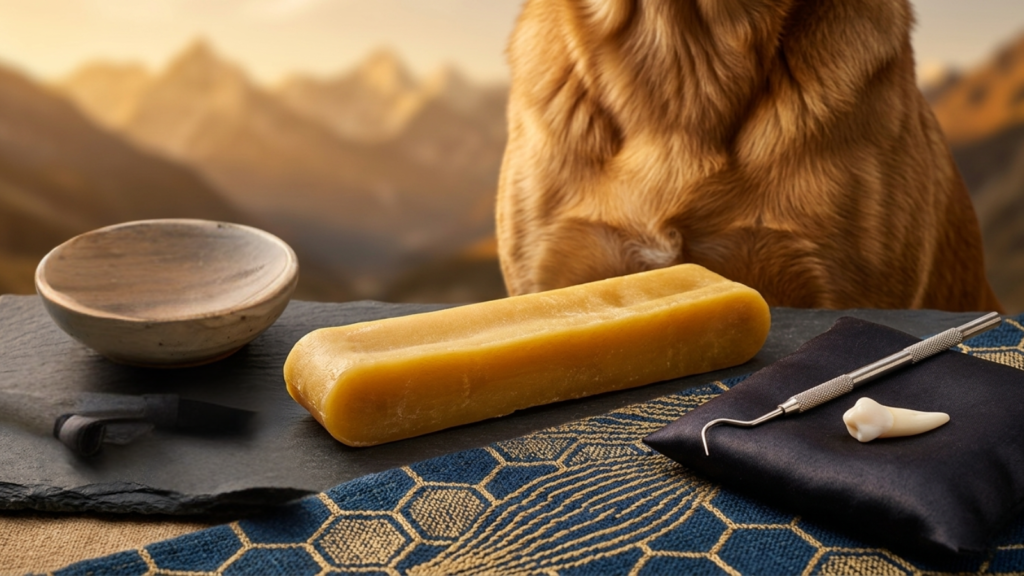
Himalayan yak dog chews support dental health by mechanically abrading plaque and tartar from tooth surfaces through sustained friction chewing on a hard, non-compressible surface.
How Can Chewing Help Reduce Plaque and Tartar?
Chewing reduces plaque and tartar through mechanical debridement, the physical scraping of biofilm from enamel and the gum line during sustained gnawing. For a deeper look at each specific benefit, read through the 10 dental benefits of Himalayan yak chews backed by veterinary evidence.
According to the AAHA 2019 Dental Care Guidelines for Dogs and Cats, dental plaque is the primary initiating factor for periodontal disease and requires consistent mechanical disruption to prevent calculus accumulation, a process that, without intervention, progresses in 24–48 hours of plaque formation. Dogs that chew regularly on appropriately hard surfaces disrupt this cycle. The chewing motion creates consistent friction against the premolars and molars, the teeth most prone to tartar accumulation. Yak chews, given their density, maintain firm contact with these surfaces throughout the session.
A 60-day controlled clinical trial (Journal of Veterinary Dentistry, 2024) confirmed that mechanical chewing produces a statistically significant 26.6% calculus reduction and 14.2% plaque reduction in dogs. A peer-reviewed dental chew trial showing 26.6% calculus and 14.2% plaque reduction in dogs.
Why Are Hard Chews Beneficial for Dog Teeth?
Hard chews are beneficial because they create the sustained mechanical friction necessary to abrade calculus deposits that soft chews, rubbery dental sticks, and flavored dental sprays cannot replicate.
The critical distinction is surface hardness versus tooth hardness. The 2023 JAVMA core competency guidelines for veterinary dentists explicitly recommend avoidance of hard chews as a preventive wellness measure, consistent with the AVMA Journal 2023 veterinary dentistry core competencies on hard chew avoidance. Yak chews fall within the safe hardness range: hard enough to abrade plaque, not so hard as to fracture enamel. Yak chews fall in the correct zone, hard enough to provide effective mechanical abrasion, but not so hard that they fracture tooth enamel or slab premolar cusps the way antlers or hard nylon bones can.
This places yak chews in a functionally superior position for dental health compared to both overly soft chews (insufficient abrasion) and overly hard chews (fracture risk).
How Often Should Dogs Use Yak Chews for Dental Support?
Dogs benefit most from yak chew dental support when used 3 to 5 times per week in sessions of 20 to 30 minutes. For a full usage schedule tailored to your dog’s size and dental goals, see our guide on how often to give your dog a chew, which helps avoid both under-use and over-exposure.
Daily use is acceptable for most dogs, but the dental benefit is not proportionally greater beyond this frequency. The goal is regular plaque disruption before it mineralizes into tartar. Owners who use yak chews as part of a broader dental care routine, alongside periodic professional cleanings and tooth brushing, report the best long-term outcomes.
What most owners miss: the dental benefit concentrates on the back teeth. Yak chews, unlike rawhide wraps that dogs tend to swallow whole, require active gnawing with the carnassial and molar teeth, exactly where tartar buildup is most problematic in dogs.
Are Himalayan Yak Dog Chews Healthy for Dogs?
Himalayan yak dog chews are healthy for most dogs because they deliver concentrated protein, calcium, and phosphorus in a low-fat, additive-free format that supports muscle maintenance, bone health, and satiety.
What Nutrients Are Found in Yak Dog Chews?
Yak dog chews are typically high in protein and low in fat, which is part of why they are a popular long-lasting chew for dogs. Their calorie content varies by brand, recipe, and chew size, but a typical finished chew generally falls in the ~330–390 kcal per 100g range.
| Nutrient | Approximate Value |
| Crude Protein | 40–60% |
| Crude Fat | 1–5% |
| Moisture | 10–15% |
| Calcium | 0.8–1.2% |
| Phosphorus | 0.6–0.9% |
| Caloric Value | ~330–390 kcal per 100g |
Because calories vary by size, the most accurate way to estimate per-piece energy is to use the chew’s weight in grams and the brand’s kcal per 100g value. For example, a 50g chew at 360 kcal per 100g provides about 180 kcal. Since treats should generally make up no more than 10% of a dog’s daily calories, larger yak chews can take up a meaningful part of a small dog’s treat budget.Yak chews are suitable for dogs on weight management diets. Unlike bully sticks, which can contain 15–25% fat, yak chews provide protein-dense nutrition without significantly impacting daily caloric intake when used in appropriate quantities.
How Many Calories Does a Yak Dog Chew Contain Per Piece?
A yak chew’s calories per piece depend on its weight, so there is no single universal number. Smaller chews may fit comfortably into a dog’s treat allowance, while larger chews can contribute a significant share of daily calories.
Why Are High-Protein Dog Chews Important?
High-protein dog chews are important because protein directly supports lean muscle maintenance, immune function, and enzyme production, particularly in active dogs, senior dogs experiencing muscle mass decline, and dogs recovering from illness or injury.
Most dog chews are nutritionally empty. Rawhide provides near-zero digestible protein. Synthetic dental chews are primarily starch-based. Yak chews are one of the few functional chews that contribute meaningful nutrition alongside behavioral and dental benefits.
The casein proteins in yak chews are slow-digesting, which extends satiety. Dogs that receive yak chews as part of their daily routine often show reduced food-seeking behavior between meals, a practical benefit for owners managing dogs prone to overeating.
How Do Yak Chews Compare to Rawhide?
Yak chews outperform rawhide across 5 critical comparison points: ingredient safety, digestibility, nutritional value, production transparency, and choking risk. Pet brands and retailers sourcing at scale should work directly with a certified Himalayan yak chew manufacturer to guarantee all five are met from origin through delivery.
| Comparison Factor | Himalayan Yak Chew | Rawhide |
| Primary Ingredients | Yak milk, cow milk, salt, lime | Cattle hide (chemically processed) |
| Digestibility | High (milk proteins) | Low to none |
| Protein Content | 40–60% | Near 0% |
| Chemical Processing | None | Bleach, formaldehyde (often) |
| Choking Risk | Low (softens, breaks into small pieces) | High (large strips that swell) |
| Splinter Risk | None | Moderate |
The FDA’s official recall documentation confirms undisclosed chemical processing in commercial rawhide chews: an FDA recall notice confirming unapproved chemical processing aids in rawhide dog chews documents manufacturing facilities using unapproved antimicrobial compounds with reported adverse effects, including gastric irritation and vomiting in dogs. Yak chews carry no such processing history. The 4-ingredient recipe is fully traceable, and the production process does not require chemical treatment.
Are Himalayan Yak Dog Chews Safe for Dogs?
Himalayan yak dog chews are safe for most dogs when matched to the correct size, supervised during initial sessions, and replaced when the remaining piece reaches a size that poses a swallowing risk. For edge cases, breeds with specific dental conditions, and first-time owner guidance, our complete guide to yak chew safety for dogs covers every scenario in detail.
What Size Yak Chew Should You Choose for Your Dog?
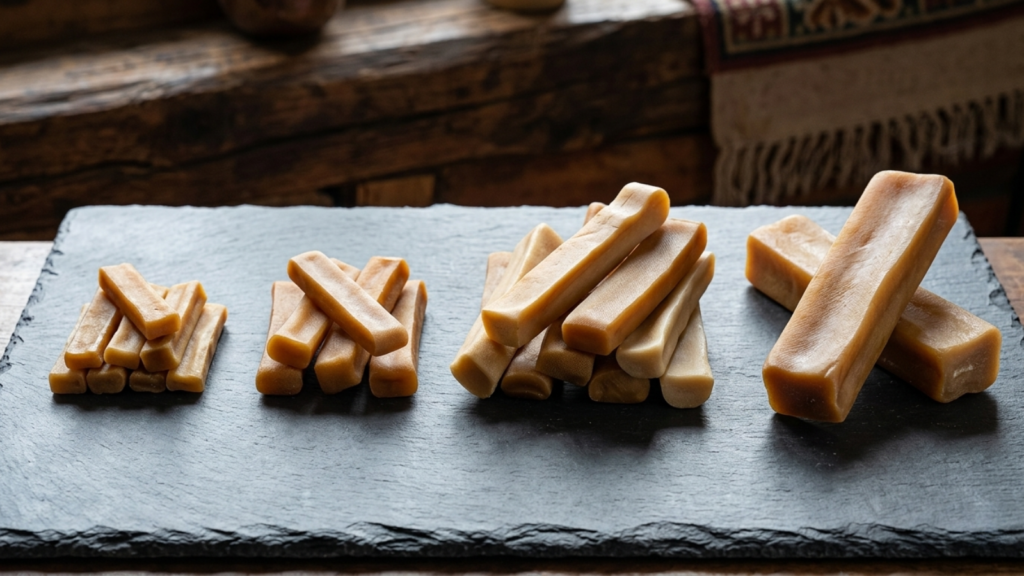
Choose a yak chew size that matches your dog’s weight range, with the chew measuring longer than the distance from your dog’s nose to the back of its jaw. For more precise guidance by breed and growth stage, see our full post on the right yak chew size for your dog’s breed and age.
Most manufacturers provide 4 size categories:
- Small (under 15 lbs): chews approximately 3–4 inches
- Medium (15–35 lbs): chews approximately 4–5 inches
- Large (35–65 lbs): chews approximately 5–6 inches
- Extra Large (65+ lbs): chews 6+ inches
The common mistake owners make is sizing down to save money. An undersized chew presents a choking hazard because the dog can fit the entire piece in its mouth. Always size up if your dog sits at the boundary between two weight categories.
How Can You Prevent Choking Risks With Yak Chews?

Prevent choking risks by supervising chewing sessions, selecting the correct size, and monitoring for pieces that become small enough to swallow whole.
3 practical prevention steps:
- Never leave a dog unattended during the first 2–3 chewing sessions with a new yak chew.
- Conduct a size check every 15–20 minutes during extended sessions. If the remaining piece is shorter than 2 inches, remove it.
- Microwave the end piece to safely puff it into a softer, larger-surface treat. 30 seconds on high transforms the hard stub into a lighter, airy chew that eliminates swallowing risk and remains fully digestible.
The microwave method is widely recommended and functionally transforms the dense stub into a lighter, airy chew that poses no choking risk and is safely digestible.
When Should You Replace a Small Yak Chew Piece?
Replace a yak chew piece when it reaches approximately 1.5 to 2 inches in length or becomes small enough for the dog to hold entirely in its mouth without needing to place it on the ground.
This threshold varies by dog size. For a 10-lb dog, 1.5 inches is the replacement threshold. For a 70-lb dog, 2.5 to 3 inches is safer. The practical test: place the remaining piece in the dog’s mouth during a supervised session. If the dog can maneuver it entirely behind the canine teeth without the piece protruding, remove it.
Which Dogs Benefit Most From Himalayan Yak Dog Chews?
Dogs that benefit most from Himalayan yak chews are aggressive chewers, boredom-prone dogs, adult dogs with dental hygiene needs, and dogs requiring high-protein, low-fat treat options. Puppies and senior dogs benefit from specific considerations applied.
Are Yak Chews Suitable for Puppies?
Yak chews are suitable for puppies 6 months of age and older who have transitioned to permanent adult teeth, provided the chew is appropriately sized and sessions are supervised. Our guide on what age puppies can safely start yak chews includes breed-specific timelines and teething stage guidance to avoid introducing chews too early.
Puppies under 6 months have deciduous (baby) teeth that are more susceptible to fracture under hard-chewing pressure. At 6 months, most breeds have begun the transition to permanent dentition. Starting a puppy on a small-sized yak chew at this stage supports healthy chewing habits, alleviates teething discomfort, and introduces dental hygiene benefits early.
The important caveat: avoid giving puppies yak chews during active teething phases when gum sensitivity is high. Wait until the teething period subsides before introducing a hard chew.
Can Aggressive Chewers Use Himalayan Yak Chews?
Aggressive chewers are the ideal target audience for Himalayan yak chews because the extreme density of the compressed milk product resists rapid destruction better than most natural chews.
Dogs classified as Power Chewers, such as Labrador Retrievers, American Pit Bull Terriers, German Shepherds, and Rottweilers, frequently destroy softer chews within minutes. Yak chews withstand this pressure because the compression and drying process creates uniform structural density throughout the block, with no soft inner layers or hollow centers to collapse under bite force. Browse the curated picks in our guide to the best yak chews for aggressive chewers to match your dog’s breed and jaw strength.
For aggressive chewers, always select the Extra Large or Large size regardless of body weight if the dog has a history of destroying standard-sized chews rapidly.
Are Yak Dog Chews Good for Senior Dogs?
Yak chews are good for senior dogs with intact, healthy dentition who maintain an active chewing interest. Senior dogs with significant dental disease, missing teeth, or jaw weakness require a softer chew alternative.
The high protein content of yak chews directly addresses sarcopenia, the age-related muscle mass decline common in dogs over 8 years. Senior dogs often eat less, making protein-dense supplemental chews a practical way to increase daily protein intake without adding volume to the main diet.
For senior dogs with moderate tartar buildup but intact teeth, yak chews provide a low-supervision dental hygiene option between professional veterinary dental cleanings.
How Long Do Himalayan Yak Dog Chews Last?
A Himalayan yak dog chew lasts 1 to 5 weeks of regular use, depending on the dog’s body weight, chewing intensity, jaw strength, and the frequency of chewing sessions offered.
What Factors Affect Yak Chew Durability?
4 primary factors determine yak chew durability:
- Dog body weight and jaw strength: A 90-lb Rottweiler will reduce a large yak chew 3 to 4 times faster than a 20-lb Beagle.
- Chewing style: Dogs that grind vs. those that gnaw laterally consume the chew at different rates. Grinders consume faster.
- Session frequency and duration: Daily 45-minute sessions reduce the chew faster than 3 sessions per week at 20 minutes each.
- Moisture exposure: Dogs that drool heavily or chew in moist environments soften the surface faster, accelerating consumption.
The chew’s density means that even partial sessions over weeks are common for lighter dogs. A small-sized yak chew given to a 10-lb dog with moderate chewing habits can last 4 to 6 weeks.
How Can You Make Yak Chews Last Longer?
Make yak chews last longer by limiting session duration to 20–30 minutes, storing the chew dry between sessions, and rotating it with other enrichment options.
3 practical methods to extend yak chew lifespan:
- Rotate chews: Offer the yak chew on alternating days rather than daily. The dog’s renewed interest after a day’s break may also increase engagement intensity.
- Dry the chew between sessions: Wipe off saliva and allow the chew to air dry before storing. Moisture softens the surface and accelerates breakdown.
- Refrigerate between sessions: Cold temperatures firm up the surface and slow the softening process, extending the functional lifespan of each chew.
Are Himalayan Yak Dog Chews Better Than Other Natural Chews?
Himalayan yak chews outperform most natural chew alternatives across 3 key performance categories: safety profile, nutritional value, and dental efficacy, though the best choice depends on individual dog needs.
How Do Yak Chews Compare to Bully Sticks?
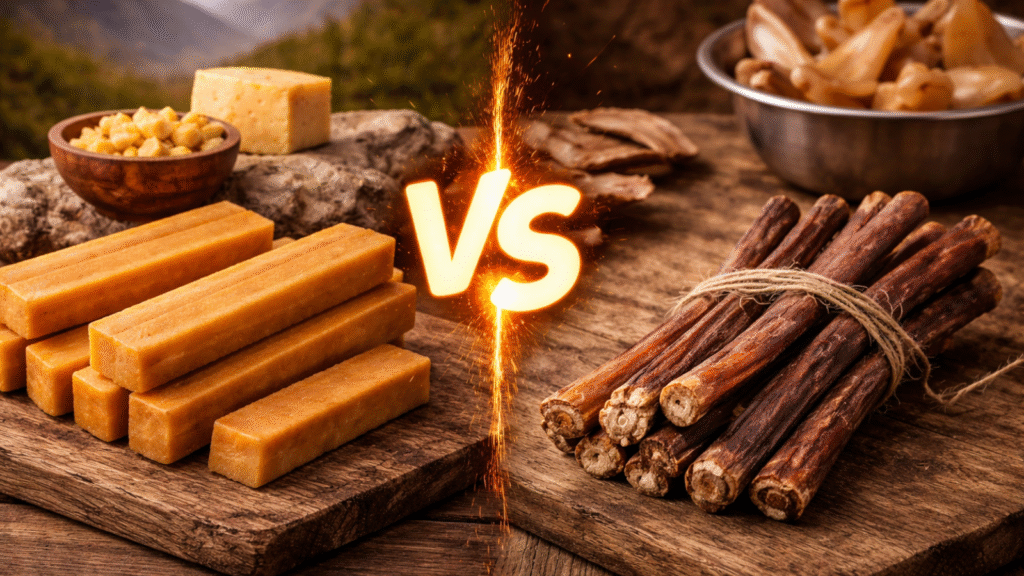
Yak chews and bully sticks serve similar purposes but differ across 4 measurable attributes: fat content, odor intensity, chew duration, and digestibility. For a full attribute-by-attribute breakdown, including caloric comparison and owner verdict, see our yak chews vs bully sticks detailed breakdown.
| Attribute | Himalayan Yak Chew | Bully Stick |
| Fat Content | 1–5% | 15–25% |
| Odor | Mild cheese | Strong (beef muscle) |
| Chew Duration | 30–90 minutes | 10–30 minutes |
| Caloric Impact | Lower | Higher |
| Digestibility | High | High |
Bully sticks are fully digestible and are an excellent option for dogs that need a high-calorie supplement. Yak chews are the better choice for dogs on caloric restriction, weight management programs, or those owned by people sensitive to strong pet treat odors.
Why Do Some Owners Prefer Yak Chews Over Rawhide?
Owners prefer yak chews over rawhide because rawhide carries documented risks of chemical contamination, intestinal obstruction, and salmonella contamination, none of which apply to yak chews.
The key concern with rawhide is not the hide itself but the processing. Commercial rawhide is treated with sodium sulfide (lye), hydrogen peroxide, and, in some cases, artificial flavoring sprays and formaldehyde-based preservatives. The finished product is not a food product; it is a chemically processed industrial byproduct repurposed as a dog chew.
Rawhide also swells significantly when wet. A dog that swallows a large rawhide strip risks gastric or intestinal blockage, a veterinary emergency. Yak chews soften, flake, and break into small, digestible pieces that pass through the digestive tract without swelling.
What Makes Himalayan Yak Chews Different From Antlers?
Himalayan yak chews differ from antlers in hardness, fracture risk, and nutritional content, making them a safer and more nutritious option for most dogs.
Antlers sit at the end of the hardness spectrum. Veterinary dental professionals frequently cite antlers as a primary cause of slab fractures, diagonal breaks across the premolar crown that expose the dental pulp. This injury requires professional dental extraction or root canal treatment, costing $500 to $2,000 per tooth.
Yak chews match the “thumbnail test” threshold for safe hardness. They do not fracture teeth under normal chewing force. Antlers also provide no meaningful protein or caloric nutrition; they are mineral matrices, not food-based chews. Yak chews deliver protein, amino acids, and minerals in a digestible form that antlers cannot replicate.
How Should You Store Himalayan Yak Dog Chews?
Store Himalayan yak dog chews in a cool, dry location away from direct sunlight and humidity, in a sealed container or zip-lock bag between chewing sessions. Our complete yak chews storage guide covers optimal temperature ranges, humidity thresholds, and shelf life data for both opened and unopened chews.
What Is the Best Way to Keep Yak Chews Fresh?
The best way to keep yak chews fresh is to store them in an airtight container at room temperature (60–75°F / 15–24°C) away from moisture sources such as water bowls, humid basements, or outdoor storage.
Unopened yak chews maintain freshness for 4 to 5 years when properly stored. The low moisture content (10–15%) and natural salt content effectively inhibit microbial growth without refrigeration. Opened or partially used chews maintain quality for 2 to 6 months when stored dry.
Refrigeration is optional for full chews but recommended for partially consumed ones. Do not freeze yak chews; extreme temperature cycling can cause micro-fractures in the compressed structure, affecting the chew’s integrity.
Can Moisture Affect Himalayan Dog Chews?
Moisture directly affects Himalayan dog chews by softening the outer surface, accelerating the consumption rate, and potentially promoting mold growth if the chew is stored damp over several days.
In high-humidity environments (above 70% relative humidity), exposed yak chews absorb ambient moisture and develop a slightly tacky surface. This is cosmetic in the short term, but accelerates mold risk if the chew is stored without drying. After each session, wipe the chew with a clean, dry cloth before returning it to storage.
Dogs that drool heavily accelerate surface softening during sessions. This is not a safety concern during use, but it means the session-by-session consumption rate increases. Wiping and drying the chew between sessions offsets this.
What Ingredients Should You Avoid in Dog Chews?
Avoid dog chews that contain artificial preservatives (BHA, BHT, ethoxyquin), artificial colors (Red 40, Yellow 5), chemical binders, sodium nitrite, propylene glycol, and added sugars.
These 6 ingredients represent the most common harmful additives found in low-quality commercial dog chews and treats:
- BHA and BHT: Petroleum-derived antioxidants linked to tumor promotion in animal studies
- Ethoxyquin: A pesticide repurposed as a preservative, banned in human food in the EU
- Sodium nitrite: A curing agent associated with carcinogenic nitrosamine formation
- Propylene glycol: A humectant that maintains softness in semi-moist treats; toxic to cats and potentially harmful to dogs at high doses
- Artificial colors serve no nutritional purpose and are associated with hypersensitivity reactions in sensitive dogs
- Added sugars (sucrose, corn syrup): Accelerate dental plaque formation and contribute to obesity
Why Are Natural Dog Chews Better Than Artificial Options?
Natural dog chews are better because they deliver functional nutrition, predictable digestibility, and traceable ingredient sourcing that synthetic chews cannot replicate.
The defining characteristic of a natural chew is ingredient transparency: what goes in is what comes out on the label. Himalayan yak chews list 4 ingredients. Most synthetic dental chews list 20 to 40 ingredients, many of which are processing aids not recognized by the dog’s digestive system as food.
Natural chews also degrade predictably. Yak chews soften, break into pieces, and digest as protein; the entire lifecycle of the chew is nutritionally and mechanically transparent. Synthetic chews often contain indigestible cellulose matrices or plastic-adjacent binders that pass through undigested.
How Can You Identify High-Quality Himalayan Yak Chews?
Identify high-quality Himalayan yak chews by examining 5 quality indicators: ingredient list length, country of origin, smell profile, surface texture, and manufacturer transparency.
- Ingredient list: 4 ingredients maximum: yak milk, cow milk, salt, lime juice. Any additional ingredients indicate processing shortcuts.
- Country of origin: Nepal, Bhutan, or Tibet-sourced products are closest to authentic traditional production; sourcing from an authentic Himalayan yak chew supplier in Nepal removes country-of-origin ambiguity entirely. India-processed alternatives exist but vary in quality.
- Smell: A mild, slightly tangy cheese aroma is correct. Strong ammonia or chemical odor indicates poor processing or spoilage.
- Surface texture: Uniform, dense, and slightly rough. Smooth, waxy surfaces indicate coating applications not consistent with traditional production.
- Manufacturer transparency: Look for brands that disclose their sourcing region, production method, and quality testing protocols. Brands that refuse to share this information represent a higher risk.
How Should You Choose Himalayan Yak Dog Chews for Your Dog?
Choose Himalayan yak dog chews by matching 3 variables: your dog’s body weight (for size selection), chewing intensity (for density grade), and any specific health considerations (dental disease, lactose sensitivity, caloric needs). Our comprehensive guide on how to choose the best dog chew for your dog walks through every decision point, size, age, and chewing style in detail.
Start with the manufacturer’s weight-based size chart, then adjust one size up if your dog is a known aggressive or power chewer. For dogs with diagnosed dental disease, consult a veterinary dentist before introducing hard chews. For dogs on veterinary-prescribed low-protein diets (common in kidney disease management), yak chews are not appropriate due to their high protein content.
For healthy adult dogs without dietary restrictions, the selection process is straightforward: size correctly, supervise initial sessions, and observe chewing behavior over 2 to 3 sessions before leaving the dog unsupervised.
Can Premium Himalayan Yak Chews Improve Your Dog’s Chewing Experience?
Premium Himalayan yak chews improve your dog’s chewing experience by delivering consistent density, authenticated sourcing, cleaner ingredient profiles, and better quality control compared to budget alternatives that use lower-grade milk, accelerated drying, or undisclosed additives.
The difference between premium and budget yak chews is measurable in 3 areas. First, premium chews show uniform density when broken, no soft spots, no hollow centers, and no inconsistent hardness that could cause irregular breakage. Second, premium manufacturers conduct microbiological testing and disclose heavy metal screening results, addressing contamination risks that budget producers often ignore. Third, authentic sourcing from high-altitude yak herding regions produces milk with higher butterfat and protein concentrations than lowland yak or cross-breed cattle milk, a difference that carries through into the finished chew’s nutritional density.
If you notice a yak chew that is unusually light in weight for its size, breaks easily under thumb pressure, or carries a chemical or ammonia odor, these are indicators of lower-grade production, regardless of price point.
What Are the Key Takeaways About Himalayan Yak Dog Chew Benefits?
Himalayan yak dog chews deliver 6 documented benefits: sustained chewing engagement, mechanical dental hygiene support, high-protein low-fat nutrition, safe rawhide-free composition, behavioral enrichment for boredom reduction, and broad suitability across dog life stages.
The evidence supporting these benefits is grounded in 4 measurable facts:
- Composition: 4-ingredient, additive-free recipe derived from a centuries-old Himalayan food preservation method
- Nutrition: 40–60% protein on a dry matter basis, 1–5% fat, significant calcium and phosphorus
- Safety: No chemical processing, natural digestibility, and a predictable hardness profile that sits within veterinary safe-chew guidelines
- Durability: 30 to 90+ minutes of active chewing per session, 1 to 5 weeks of total lifespan per chew
Yak chews are not a replacement for professional veterinary dental care, complete nutrition from a balanced diet, or behavioral training. They are a functional supplement that addresses chewing needs, dental hygiene gaps, and protein intake in a single, natural product.
For dog owners evaluating natural chews, Himalayan yak dog chews represent one of the most well-rounded, ingredient-transparent, and nutritionally meaningful options currently available, particularly for dogs that are aggressive chewers, lactose-sensitive, or on caloric restriction programs where high-fat chews like bully sticks are not appropriate.
If you are ready to introduce Himalayan yak chews to your dog’s routine, start with a supervised 20-minute session using the correctly sized chew, observe how your dog engages with it, and adjust from there. The chew’s long lifespan and nutritional profile make it a sustainable addition to most dogs’ weekly enrichment and dental care routine. ultimate yak chew!