
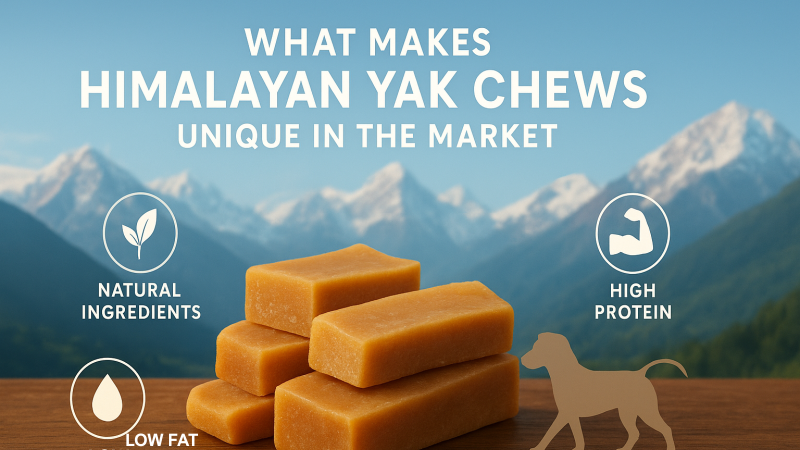
Himalayan yak chews are traditional, long-lasting dog chews originating from the Himalayan regions of Nepal, Tibet, and Bhutan, produced through an ancient dairy preservation method known as Chhurpi. Crafted from a simple four-ingredient base-yak milk, cow milk, lime juice, and salt-these chews are smoke-dried and air-cured into a dense casein structure that delivers exceptional hardness, extended chew time, and complete digestibility without the use of rawhide, artificial preservatives, or synthetic binders.
The defining value of Himalayan yak chews lies in the combination of cultural authenticity, nutritional density, and functional performance. Naturally rich in casein protein, calcium, and beneficial fatty acids derived from high-altitude yak grazing, they support canine dental health through mechanical plaque abrasion while providing sustained enrichment for both light and aggressive chewers. Their slow breakdown, clean ingredient profile, and safety advantages over rawhide and synthetic alternatives position them as a high-performance, whole-food chew designed for modern dog health and behavior needs.
What Are Himalayan Yak Chews Made From?
Himalayan yak chews are made from 4 ingredients: yak milk, cow milk, salt, and lime juice. No preservatives, no artificial colors, no grain fillers, and no synthetic flavor enhancers are added. The final product is a hard, smoke-dried block that dogs chew down gradually over days or weeks.
This minimal ingredient profile is not accidental. It reflects a food tradition practiced for centuries across Nepal, Tibet, and Bhutan, where mountain communities preserved yak dairy through natural dehydration and acidification rather than chemical processes. The result is a chew that is as close to a whole-food treat as the pet industry currently offers.
How Is Yak Milk Used in Himalayan Yak Chews?
Yak milk is the primary structural ingredient in Himalayan yak chews. It contains 7–8% fat and 6–7% protein by volume, roughly 3 times the protein concentration of standard cow milk. When yak milk is heated, mixed with lime juice to acidify and curdle it, and then pressed and dried, it forms a dense casein matrix that gives the chew its characteristic hardness.
Yak milk is sourced from high-altitude Himalayan yaks (Bos grunniens) that graze above 3,000 meters. At that elevation, pastures are free from pesticide exposure, and the animals are not administered growth hormones. Yak milk produced at high altitude contains elevated concentrations of conjugated linoleic acid (CLA, 2.5–5.0 g/100g fat) and polyunsaturated fatty acids, with a fatty acid profile high in monounsaturated fats and low in saturated fats compared to lowland bovine milk, as documented in a 2024 peer-reviewed nutritional analysis (International Journal of Food Science and Agriculture).
Why Are Natural Ingredients Important in Yak Dog Chews?
Natural ingredients eliminate 3 categories of risk present in synthetic chews: allergenic artificial additives, digestive chemical load, and undisclosed filler content.
Dogs with food sensitivities react most commonly to artificial preservatives such as BHA, BHT, and ethoxyquin, none of which appear in authentic Himalayan yak chews. A 4-ingredient formulation also makes ingredient tracing straightforward. Owners know exactly what their dog consumes, which is a critical advantage for dogs managing elimination diets or chronic gastrointestinal conditions.
How Are Traditional Himalayan Recipes Used for Dog Chews?
The traditional Himalayan recipe known as Chhurpi, considered one of the world’s hardest cheeses, has been produced in Nepal and Tibet from yak, cow, chauri, and buffalo milk for generations, with Nepal’s chhurpi export sector now recording 10–11% average annual growth, according to a 2023 peer-reviewed trade analysis (Panta et al.). Its application as a dog chew originated in the early 2000s when Himalayan immigrants in the United States recognized that the same density and durability that made it a long-lasting human snack also made it ideal for aggressive canine chewers.
The production method follows 5 distinct steps: boiling the milk, adding lime juice to separate curds, pressing the curds into molds, smoking and drying the blocks for 4–6 weeks, and then packaging them. Each step is preserved from the original food tradition, which is why authentic yak chews carry a genuinely traceable cultural provenance, not just a marketing label.
How Are Himalayan Yak Chews Different From Other Dog Treats?
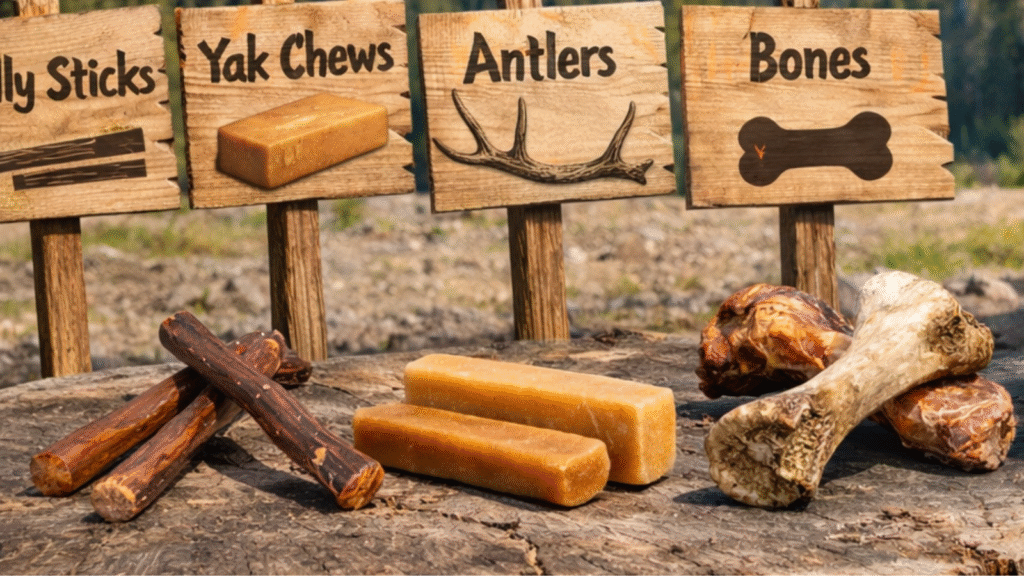
Himalayan yak chews differ from other dog treats in 3 measurable ways: ingredient composition, chew duration, and digestibility. Most commercial treats are consumed in under 5 minutes. A medium-sized Himalayan yak chew lasts an average dog 1–4 weeks, depending on chewing intensity.
What Sets Yak Chews Apart From Rawhide Treats?
Yak chews and rawhide treats differ fundamentally in origin, processing, and safety profile. Rawhide chew safety concerns are not theoretical: the FDA documented a voluntary recall of multiple major rawhide brands, including American Beefhide, Digest-eeze, and Healthy Hide, after manufacturing facilities in Mexico, Colombia, and Brazil were found using a quaternary ammonium compound not approved for rawhide production, with diarrhea and vomiting reported in affected dogs (FDA Recall Notice). Yak chews undergo no chemical processing, only heat, acid, and dehydration.
The 3 documented risks of rawhide are obstruction, bacterial contamination, and chemical residue ingestion. Yak chews, by contrast, are fully digestible because they are made from dairy protein. Fragments that break off dissolve in stomach acid rather than forming a gelatinous plug that can obstruct the gastrointestinal tract. For a detailed scientific breakdown of how the casein matrix is processed at each stage of digestion, our guide on yak chew digestibility for dogs explains the full gastric process.
Why Do Dog Owners Prefer Long-Lasting Yak Chews?
Dog owners prefer long-lasting yak chews for 2 primary reasons: cost-per-hour value and reduced frequency of treat replacement. A single medium yak chew priced at $10–$15 lasts 7–28 days for a 40-pound dog. That equates to $0.36–$2.14 per day, a lower cost than most premium treat categories.
Long chew duration also delivers sustained behavioral engagement. A 2023 peer-reviewed crossover study published in Animals found that dogs experienced the most positive and calm emotional states when given long-lasting chews during social isolation, compared to treat-dispensing toys or smart devices — supporting the behavioral enrichment value of extended chewing sessions.
How Do Himalayan Yak Chews Compare to Synthetic Chews?
Himalayan yak chews outperform synthetic chews across 4 criteria: ingredient safety, digestibility, nutritional value, and absence of plastic or rubber components. Synthetic chews, such as nylon bones and rubber toys, are not digestible. Ingested fragments accumulate in the digestive tract and require veterinary intervention in some cases.
Yak chews are 100% edible. When the chew reaches a small enough size to become a choking hazard, the remaining piece can be microwaved for 45–60 seconds. The residual piece puffs into a crunchy, puffy snack that dogs consume safely. No synthetic chew offers this end-of-life conversion feature. For a full side-by-side breakdown, our guide on yak chews vs other dog chews details how Chhurpi, rawhide, nylon, and bully sticks differ across 6 key safety and performance criteria.
Why Are Himalayan Yak Chews Considered Healthy for Dogs?
Himalayan yak chews are considered healthy because they deliver 3 measurable nutritional benefits: high-quality protein, low fat content, and zero grain or gluten inclusion. A 1-ounce serving contains approximately 9 grams of protein and 1 gram of fat, a macro profile that supports muscle maintenance without contributing to weight gain.
What Nutrients Are Found in Himalayan Yak Chews?
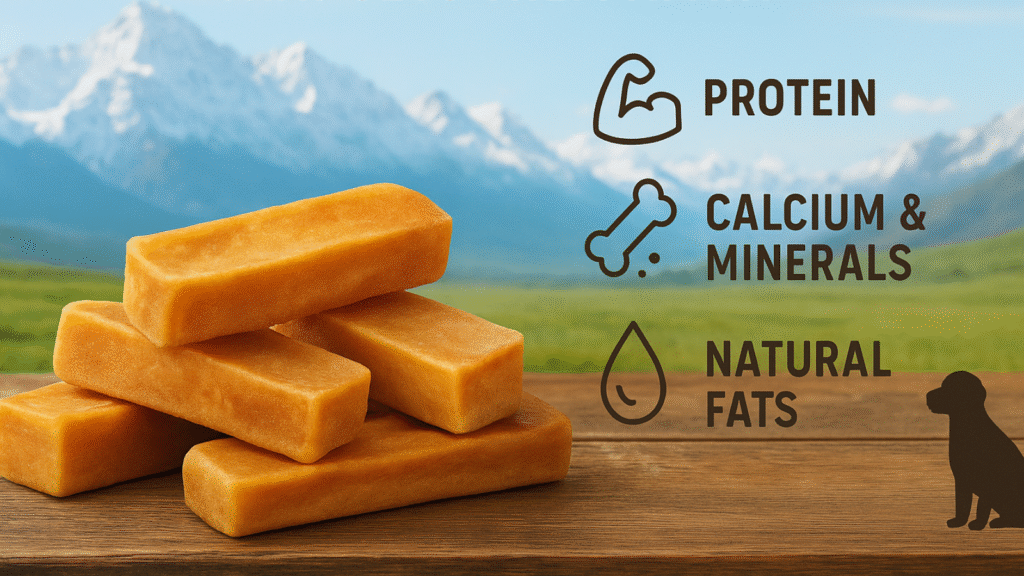
Himalayan yak chews contain 5 primary nutrients: protein (casein), calcium, phosphorus, omega-3 fatty acids, and conjugated linoleic acid (CLA). Casein protein digests slowly, providing sustained amino acid availability. Yak chews contain calcium and phosphorus in a ratio that falls within the 1:1 to 2:1 range specified as optimal for canine nutrition by the Association of American Feed Control Officials (AAFCO) Dog Food Nutrient Profiles.
Omega-3 fatty acids in yak milk originate from the high-altitude grazing diet of yaks, which is rich in wild grasses and alpine herbs. These fatty acids support skin barrier integrity and reduce systemic inflammation, a benefit especially relevant for dogs with atopic dermatitis.
How Can Yak Chews Support Dental Health in Dogs?
Yak chews support dental health through 3 mechanical mechanisms: abrasive surface action, gingival stimulation, and biofilm disruption. As a dog scrapes its teeth against the hard chew surface, the friction physically removes plaque and tartar deposits from the tooth enamel, the same principle behind veterinarian-recommended dental chews, but without artificial enzymes or added chemicals. Our comprehensive breakdown of Himalayan yak chew dental benefits covers all 10 ways this mechanical chewing action contributes to long-term canine oral health.
The Veterinary Oral Health Council (VOHC) recognizes mechanical abrasion as a primary method for reducing periodontal disease in dogs; products that meet VOHC protocol effectiveness standards receive the VOHC Seal of Acceptance, as detailed in the VOHC Accepted Products for Dogs (November 2025. Periodontal disease affects an estimated 86.3% of adult dogs (cross-sectional study, PMC5773197), making mechanical plaque abrasion through hard chewing surfaces a clinically meaningful dental health intervention. Yak chews deliver this abrasion naturally, without added enzymes or chemical whitening agents.
Why Are Yak Chews Suitable for Sensitive Dogs?
Yak chews are suitable for sensitive dogs because they contain no grain, gluten, soy, corn, artificial preservatives, or common protein allergens such as chicken or beef. Dogs with diagnosed food hypersensitivity to poultry or red meat proteins tolerate yak milk casein well, as cross-reactive antibody responses between dairy casein and meat proteins are clinically rare.
Dogs with inflammatory bowel disease (IBD), irritable bowel syndrome (IBS), or chronic loose stools benefit from the low-residue nature of yak chews. The dense protein matrix digests slowly and completely, producing minimal fermentable residue in the colon.
How Are Himalayan Yak Chews Produced?
Himalayan yak chews are produced through a 5-stage process: milk collection, curdling with lime juice, pressing into molds, smoking over low heat, and extended air-drying for 4–6 weeks. No industrial machinery is required for authentic production. The process is entirely artisanal and relies on time, heat, and pressure rather than chemical intervention. Buyers seeking this standard of craft consistently look to a dog chew manufacturer that sources directly from Nepal’s high-altitude herding communities and preserves every step of the traditional Chhurpi method.
What Traditional Drying Methods Are Used for Yak Chews?
Traditional drying methods for yak chews use 2 combined techniques:low-temperature smoking and high-altitude air exposure. Smoking over hardwood at 30–50°C for 7–10 days reduces surface moisture and creates the characteristic golden-brown exterior. Subsequent air-drying at altitudes above 3,500 meters, where humidity is below 30% and UV radiation is high, completes the preservation process.
High-altitude drying is not replicable at lower elevations without humidity control equipment. This is why authentic Himalayan yak chews produced in Nepal and Tibet carry a drying advantage that factory-produced imitations cannot replicate without artificial dehydration chambers.
How Does the Production Process Affect Chew Durability?
The production process directly determines chew durability through 2 variables: moisture content and casein crosslinking density. Authentic yak chews reach a final moisture content of 10–14%. At that level, the casein proteins form tight molecular crosslinks that resist mechanical fracturing under normal chewing forces.
Poorly dried chews with moisture content above 18% fracture into large, sharp chunks rather than breaking down into fine powder. Experienced buyers identify under-dried chews by pressing a fingernail into the surface; a high-quality chew leaves no indentation, while an under-dried chew compresses slightly.
Why Is Small-Batch Production Important for Quality?
Small-batch production preserves 3 quality attributes that industrial scaling eliminates: artisanal drying consistency, ingredient traceability, and hand-pressing uniformity. In large-scale facilities, chews are pressed by machine into uniform molds and dried in industrial dehydrators. The result is a structurally consistent product, but one that lacks the density variation and natural surface texture that high-altitude, hand-pressed chews produce.
Small-batch producers in Nepal and Bhutan typically process 200–500 chews per cycle. Each batch is inspected visually and manually before packaging, a quality step that automated lines cannot replicate at volume.
Why Are Himalayan Yak Chews Popular Among Dog Owners?
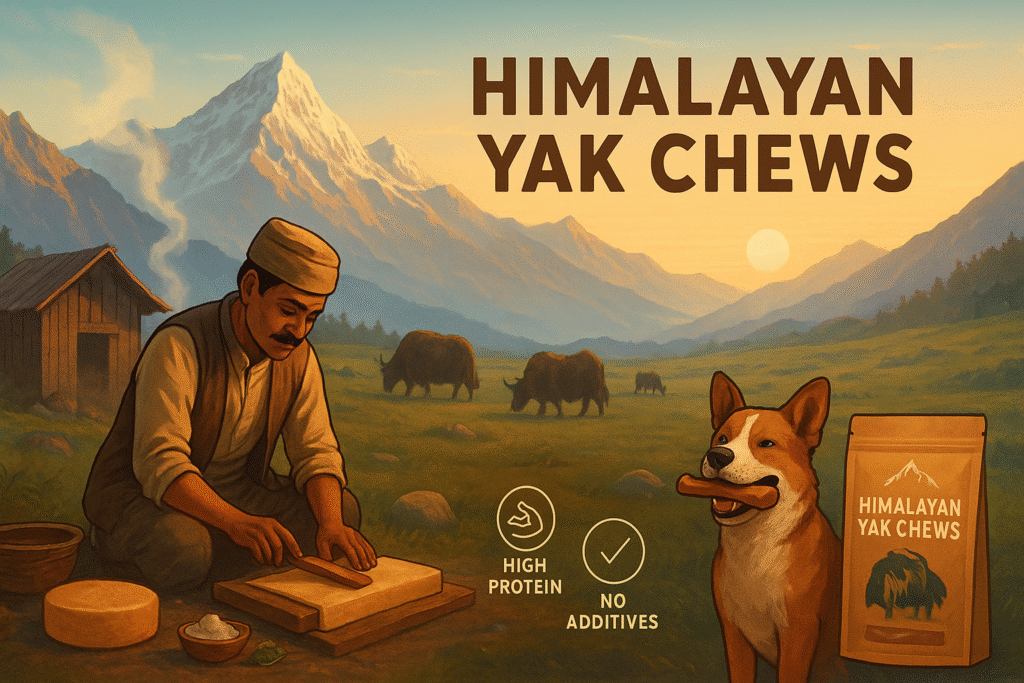
Himalayan yak chews are popular among dog owners for 4 documented reasons: long chew duration, clean ingredient list, digestive safety, and suitability for aggressive chewers. The global pet yak cheese chews market was valued at USD 257.88 million in 2024 and is projected to reach USD 360.56 million by 2030, growing at a CAGR of 5.74%, according to the Pet Yak Cheese Chews Market Size & Share 2025–2030 report by 360iResearch.
What Makes Yak Chews Appealing for Aggressive Chewers?
Yak chews appeal to aggressive chewers because the casein matrix withstands sustained high-force chewing without splintering, fracturing into sharp shards, or disintegrating into large ingestible pieces. Dogs classified as power chewers, including Labrador Retrievers, American Pit Bull Terriers, German Shepherds, and Rottweilers, destroy most commercially available treats within minutes. A large yak chew typically lasts these breeds 5–14 days. Owners managing power breeds will find size-specific density comparisons and brand recommendations in our dedicated guide to the best yak chews for aggressive chewers.
The density of yak chews also activates the jaw musculature more completely than soft treats. Sustained jaw engagement triggers endorphin release in dogs, producing a calming effect that owners of high-drive breeds observe consistently.
How Do Yak Chews Help Reduce Boredom in Dogs?
Long-lasting chews like Himalayan yak chews provide sustained behavioral engagement that research confirms is valued by dog owners: a 2024 peer-reviewed review in Frontiers in Animal Science found that dental and functional treat categories registered the highest pet food market growth rate at +10.3% in value, driven by owner demand for treats with naturalistic, health-supporting chewing interactions.
Boredom in dogs manifests as destructive chewing, excessive barking, and compulsive behaviors. Providing an appropriate outlet, one that occupies the dog’s attention for extended durations, interrupts these behavioral loops.
Dogs working through a yak chew demonstrate focused, repetitive behavior that activates the same reward pathways as problem-solving tasks. Canine behaviorists classify extended chewing as a natural, species-appropriate enrichment activity that reduces overall arousal levels in the 2–4 hours following a chewing session.
Why Are Natural Dog Treats Growing in Popularity?
Consumer demand for functional, health-oriented pet treats is accelerating: the USDA Foreign Agricultural Service Pet Food Market Update 2025 confirms that dog owners are increasingly prioritizing dental treats and health-benefit products, with prescription pet food sales rising 66% on online channels, reflecting the same clean-label, ingredient-transparent preferences driving yak chew adoption.
Himalayan yak chews occupy the highest tier of this natural treat movement because they satisfy 4 consumer requirements simultaneously: short ingredient list, no artificial additives, traceable geographic origin, and single-ingredient categorization.
What Sizes and Types of Himalayan Yak Chews Are Available?
Himalayan yak chews are available in 5 standard sizes, XS, S, M, L, and XL, corresponding to dog weight ranges from under 15 pounds to over 70 pounds. Each size designation reflects both the physical dimensions of the chew and the chewing force required to work through it safely.
Which Yak Chew Sizes Are Best for Different Dog Breeds?
The correct yak chew size matches the dog’s weight range to the chew’s density rating. The size-to-weight guide below applies across authentic Himalayan yak chew products:
- XS (under 15 lbs): Chihuahuas, Toy Poodles, Yorkshire Terriers
- S (15–35 lbs): Beagles, Cocker Spaniels, French Bulldogs
- M (35–55 lbs): Border Collies, Bulldogs, Australian Shepherds
- L (55–75 lbs): Labrador Retrievers, Golden Retrievers, Siberian Huskies
- XL (75+ lbs): German Shepherds, Rottweilers, Bernese Mountain Dogs
Size selection is critical not just for physical fit but for safety. A chew that is too small for a large dog’s jaw becomes a choking hazard faster than expected. A chew that is too large for a small dog creates jaw fatigue and discourages engagement. For additional guidance that goes beyond weight ranges, our resource on the right yak chew size by breed covers jaw development, dental wear patterns, and age-specific recommendations.
What Flavored Himalayan Yak Chews Are Available?
Flavored Himalayan yak chews are available in 4 common variants: original (unflavored), turmeric, bacon, and peanut butter. Original yak chews appeal to dogs that respond well to natural dairy scent. Turmeric-infused chews carry the additional benefit of curcumin, which has documented anti-inflammatory properties in canine research. Bacon and peanut butter flavors are added through natural smoking or flavoring techniques to attract picky eaters.
Owners with dogs on elimination diets select original unflavored yak chews to avoid introducing secondary food variables during the diagnostic period.
How Should Dog Owners Choose the Right Yak Chew?
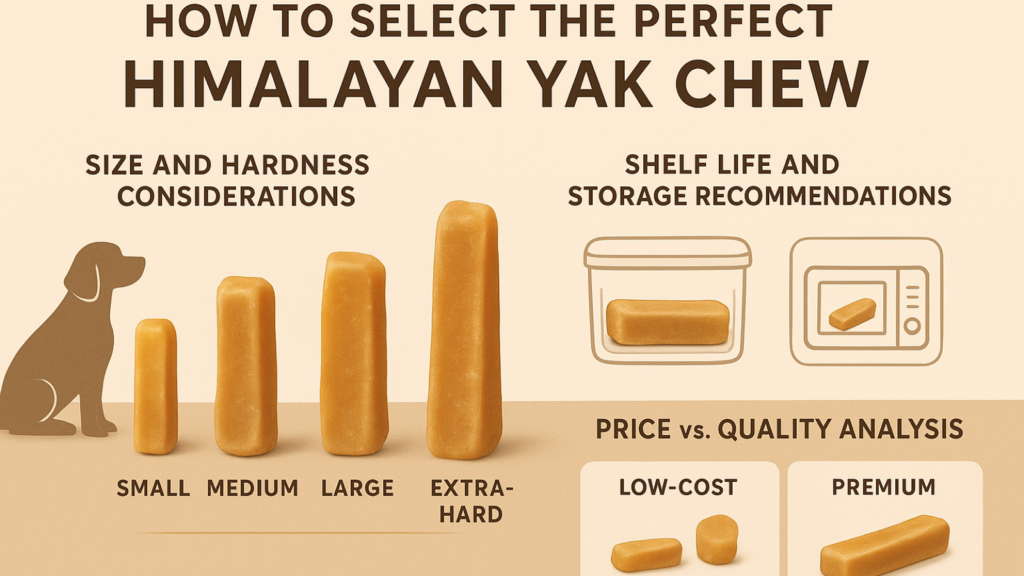
Dog owners select the right yak chew by evaluating 3 criteria: the dog’s body weight, chewing intensity classification (light, moderate, or aggressive), and any known dietary restrictions. Aggressive chewers in a given weight class often benefit from selecting one size up; for example, a 50-pound aggressive chewer may work through a medium chew too quickly and is better served by a large.
Dogs new to yak chews are introduced with supervised sessions of 20–30 minutes for the first 3 days to allow the digestive system to adapt to the high casein content without triggering loose stools.
Are Himalayan Yak Chews Safe for Dogs?
Himalayan yak chews are safe for dogs when matched to the correct size, monitored during initial sessions, and replaced when the remaining piece becomes small enough to swallow whole. No ASPCA toxicity flag exists for yak milk, lime juice, or salt at the concentrations present in authentic yak chews. The 4-ingredient formula presents no documented chemical risk.
What Safety Tips Should Dog Owners Follow With Yak Chews?
Dog owners follow 4 safety protocols when giving yak chews:
- Select the correct size: the chew diameter exceeds the width of the dog’s throat.
- Supervise initial sessions: monitor for aggressive gulping or attempts to swallow large pieces.
- Microwave small remainders: when the chew reaches thumb-size, microwave it for 45–60 seconds at 850W to puff it into a digestible snack rather than discarding it or risking choking.
- Limit daily duration: 30–60 minutes of chewing per session prevents jaw fatigue and excessive protein intake in smaller breeds.
Dogs with a history of pancreatitis are given yak chews in shorter 15-minute sessions, as the moderate fat content, while low compared to many treats, activates pancreatic enzyme secretion at higher volumes over extended chewing periods.
How Can You Tell if a Yak Chew Is High Quality?
A high-quality yak chew demonstrates 5 physical characteristics: uniform golden-brown coloration, hard surface resistance to fingernail pressure, natural dairy aroma without chemical smell, dense weight relative to size, and clean fracture pattern without crumbling.
Low-quality yak chews show gray or pale patches (indicating under-smoking), soft spots (indicating under-drying), or an artificially smoky chemical odor indicating liquid smoke flavoring rather than authentic wood-smoke processing. The weight-to-size ratio is the single most reliable quality indicator; authentic high-altitude chews are noticeably heavier than import imitations of the same dimensions.
When Should a Yak Chew Be Replaced?
A yak chew is replaced when it reaches a length shorter than the dog’s muzzle width, approximately 2–3 inches for medium-sized dogs. At that point, the remaining piece presents a swallowing risk. Owners either microwave the remnant piece or discard it rather than allowing the dog to continue chewing unsupervised.
Chews are also replaced if they develop surface mold, a white or green fuzzy growth indicating moisture contamination from improper storage. Authentic yak chews stored in a cool, dry location remain shelf-stable for 4 years from the production date.
What Should Buyers Look for When Purchasing Himalayan Yak Chews?
Buyers evaluate Himalayan yak chews across 4 purchasing criteria: ingredient transparency, geographic origin verification, production method disclosure, and certifications held by the manufacturer. The growth of the market has introduced a significant number of imitation products that use the “Himalayan” label without authentic sourcing.
Why Does Sourcing Matter for Authentic Yak Chews?
Sourcing matters because only yak milk from high-altitude Himalayan regions, specifically Nepal, Bhutan, and Tibet above 3,000 meters, produces the casein density and fatty acid profile that defines an authentic Himalayan yak chew. Lowland yak milk or substituted cow milk lacks the CLA concentration and produces a softer chew that degrades faster.
Authentic sourcing also carries an ethical dimension. Legitimate Himalayan yak chew brands source from small-scale yak herding communities, providing a direct income stream to pastoral families whose traditional livelihoods are otherwise economically marginalized. Buyers who verify origin support this supply chain.
How Can You Identify Premium Himalayan Yak Chews?
Premium Himalayan yak chews are identified by 5 label indicators:
- Country of origin listed as Nepal, Bhutan, or Tibet: not “Himalayan region” without specificity.
- 4-ingredient declaration: yak milk, cow milk, salt, lime juice; no additional ingredients.
- No artificial preservatives listed: no BHA, BHT, ethoxyquin, or sodium nitrate.
- NASC (National Animal Supplement Council) quality seal: indicates third-party manufacturing oversight, but NASC is voluntary, not mandatory.
- Batch-traceable production codes: allow the buyer to verify production date and facility.
The absence of any 1 of these 5 indicators does not automatically disqualify a product, but the absence of 3 or more warrants buyer caution.
What Packaging and Storage Features Matter Most?
The 3 packaging features that protect yak chew quality are moisture-barrier packaging, resealable closure, and opaque outer material. Moisture ingress is the primary quality threat for yak chews in transit and retail storage. A moisture-barrier pouch with a desiccant packet maintains the 10–14% moisture target from production to opening.
Resealable packaging allows buyers to store unused chews between sessions without transferring them to secondary containers. Opaque packaging protects the natural fat content from light oxidation, which degrades the omega-3 fatty acids that represent a key nutritional differentiator.
How Should You Choose Himalayan Yak Chews From a Trusted Brand?
A trusted Himalayan yak chew brand demonstrates 4 verifiable qualities: transparent supply chain documentation, third-party safety testing, clear size-matching guidance for dog weight ranges, and responsive customer support for dietary and safety questions.
Trusted brands publish their sourcing partnerships, including the names of cooperatives or farming communities they purchase from. They provide certificates of analysis (COA) for each batch, documents that confirm protein content, moisture levels, and absence of pathogenic bacteria such as Salmonella and E. coli.
Can a Premium Dog Treat Brand Help You Find Better Yak Chews?
A premium dog treat brand simplifies yak chew selection by pre-vetting sourcing standards, testing for quality benchmarks, and providing size guidance calibrated to specific breeds rather than generic weight ranges. Buyers who purchase through established premium pet treat brands avoid the authentication burden of evaluating every product independently.
Premium brands also provide post-purchase support, including guidance on introducing yak chews to sensitive dogs, managing the puffed-chew microwave method, and advising on appropriate daily duration for specific breeds and health conditions. This educational layer is absent from generic retail suppliers. Buyers who want to evaluate every authenticity and quality factor before purchasing can use our Himalayan dog chews buying guide as a complete reference covering sourcing verification, certifications, and breed-specific sizing.
What Are the Key Takeaways About Himalayan Yak Chews?
Himalayan yak chews stand apart in the dog treat market because they combine 5 attributes that no other single treat category delivers simultaneously: natural 4-ingredient formulation, centuries-proven production method, high-protein, low-fat nutritional profile, extreme chew durability, and full digestibility.
The 6 facts every dog owner retains from understanding Himalayan yak chews:
- Ingredient simplicity: yak milk, cow milk, salt, and lime juice; nothing else in authentic products.
- Production authenticity: a 2,000-year-old Himalayan dairy preservation method adapted for canine use.
- Nutritional density: approximately 9 grams of protein and 1 gram of fat per ounce, with CLA and omega-3 fatty acids from high-altitude yak grazing.
- Dental benefit: mechanical plaque reduction through abrasive surface chewing, without chemical additives.
- Safety profile: fully digestible, no splinter risk, microwave-puffable remnants eliminate the end-of-chew choking hazard.
- Purchasing intelligence: 5-point label evaluation (origin, ingredients, preservatives, certifications, batch codes) separates authentic from imitation products.
Dog owners who understand these 6 points make faster, more confident purchasing decisions and avoid the growing number of imitation products that use Himalayan branding without authentic sourcing, production integrity, or nutritional equivalence.
Choosing an authentic Himalayan yak chew is not merely a treat selection; it is a health decision grounded in ingredient science, production tradition, and breed-appropriate enrichment. The market rewards buyers who look past packaging and verify the 4-ingredient truth that defines every genuine Himalayan yak chew.