
Himalayan yak chews are not recommended for puppies under 6 months old. Their extreme density poses a genuine risk of tooth fractures and choking in puppies whose teeth and jaws are still developing. Veterinary dentists universally advise waiting until a puppy has a full set of settled adult teeth, typically at 6 months or older, before introducing any hard chew, including yak chews.
Even after 6 months, yak chews are not automatically safe for every puppy. The right decision depends on your individual puppy’s dental development, breed size, and chewing behavior. Before offering any hard chew, ask your veterinarian to confirm your puppy is ready, choose a size that cannot be swallowed whole, and supervise every session closely. This vet-reviewed guide covers the specific risks, age milestones, size guidelines, and safer alternatives to help you make that decision with confidence.
What Are Himalayan Yak Chews?
Himalayan yak chews, also known as yak cheese chews, are traditional long-lasting treats from the Himalayan regions of Nepal, Tibet, and Bhutan. Made primarily from yak or a blend of yak and cow milk, lime juice, and salt, the mixture is boiled, curdled, strained, compressed, and dried over weeks to months, resulting in a rock-hard, shelf-stable chew. They boast:
- High protein content: 60–70%
- Low fat: ~1–2%
- Rich in calcium and phosphorus
- Low lactose (due to fermentation and drying), making them mostly digestible for many dogs.
Despite these appealing nutritional benefits, which are covered in detail in our guide on Himalayan yak dog chew benefits, their extreme hardness introduces risks for puppies, especially those with more fragile, developing teeth.
Do Veterinarians recommend Hard Yak Chews for Puppies?
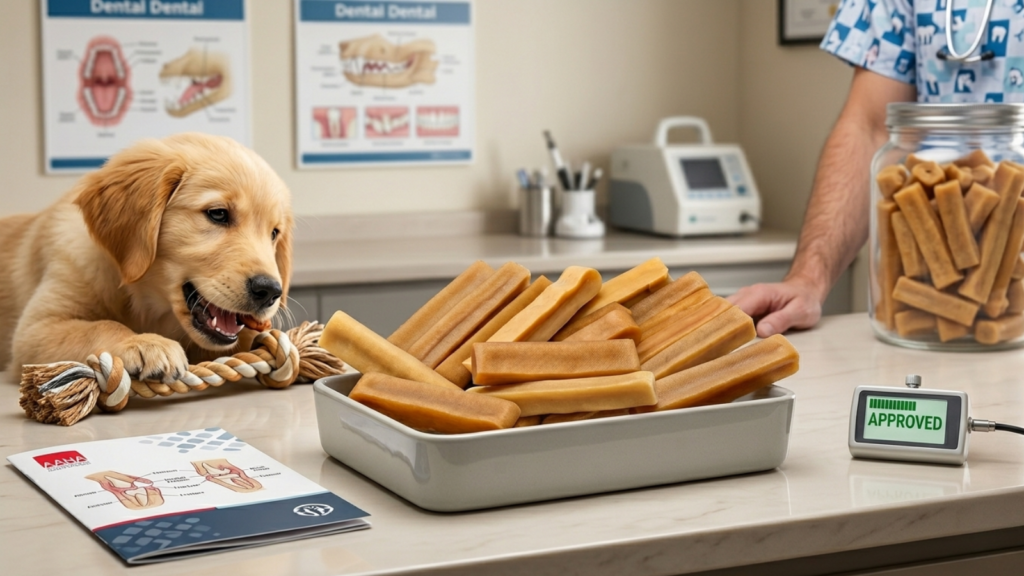
Vets often apply simple hardness tests you can try at home:
- Thumbnail test: If you can’t dent it with your thumbnail, it’s too hard.
- Bend test: If it won’t bend under pressure, it’s risky.
- Kneecap rule (or Knee test): If it hurts when you gently hit your kneecap with the chew, it is too hard and can fracture your dog’s teeth.
Most Himalayan yak chews fail these tests, highlighting their potential for dental injury. Authorities like the American Animal Hospital Association (AAHA) warn that “fractured teeth can often be prevented by appropriate selection of dental chews and toys,” and A VOHC-aligned veterinary dental guide specifically calls out “dried yak milk” alongside antlers and bones as products “so hard that chewing can result in tooth fracture with pulp exposure”.
When can a puppy safely have yak chews?
The earliest safe age for a hard yak chew is 6 months, and only once your veterinarian confirms that all adult teeth have fully erupted and settled. Here is what is happening at each developmental stage and why the timing matters:
- 0–8 weeks: Nursing stage, no chews of any kind are appropriate or necessary.
- 8–16 weeks: Only fragile deciduous (baby) teeth are present. Hard chews risk immediate pain, tooth breakage, and damage to the adult tooth buds forming underneath.
- 4–6 months: Adult teeth begin breaking through but are not yet fully set. This is the highest-risk window; avoid all hard yak chews entirely during this phase. The combination of erupting adult teeth and remaining baby teeth makes the mouth exceptionally vulnerable to fractures.
- 6 months and older: Adult teeth are typically fully erupted, and the jaw is significantly stronger. This is the earliest point at which a hard yak chew may be appropriate, subject to veterinary confirmation and correct size selection.
Introducing yak chews before 6 months significantly increases the risk of painful dental trauma, including fractures that can expose the pulp and require veterinary treatment. For a detailed breakdown by breed size and developmental stage, see our full guide on when puppies can have yak chews. For a detailed breakdown by breed and developmental stage, see our guide on when puppies can have yak chews.
Best Yak Chews for Puppies
The best yak chews for puppies combine three qualities: minimal ingredients, the right hardness rating for a growing dog, and a size that matches the puppy’s jaw width and breed weight. Not every product marketed as a “Himalayan yak chew” is equal in quality or safety. Manufacturing standards, ingredient sourcing, and size calibration vary considerably between brands, and those differences matter when you’re buying for a puppy rather than a fully developed adult dog.
How to Choose Safe Yak Chews for Puppies
Start with the ingredient list. Authentic Himalayan yak chews should contain no more than three or four ingredients: yak milk (or a yak-cow milk blend), lime juice, and salt. Some manufacturers add black pepper to mimic traditional human recipes, but these should be strictly avoided. Black pepper can severely irritate a puppy’s sensitive digestive tract and respiratory airways, leading to gastrointestinal upset, vomiting, or sneezing. Any chew containing artificial preservatives, binding agents, synthetic flavorings, or chemical hardeners should be set aside; these additives aren’t necessary in a properly made yak chew and add zero nutritional value.
Next, verify the manufacturing process. Legitimate yak chews are produced through a slow, traditional method: the milk is boiled, curdled with lime juice, strained, pressed into molds, and dried for several weeks. This extended drying process is what removes most of the lactose, makes the chew shelf-stable without preservatives, and creates the dense, even texture that softens predictably under a dog’s saliva. Brands that rush this process with chemical drying agents often produce an inconsistently hard chew or one that crumbles unpredictably.
For puppies specifically, look for these three markers when evaluating a brand:
- A dedicated puppy or small-dog size, not just a generic “small” version of an adult chew
- A stated hardness rating or a vet endorsement. Be aware that traditional solid yak chews naturally rate a 4 or 5 in hardness. For a safer, softer alternative for younger dogs, look for brands that provide instructions on how to microwave the chew into an airy, crunchy puff (rating a 1 or 2).
- A clear puffing instruction on the packaging, reputable brands tell you how to microwave small leftover nubs into a safe, airy snack, which signals the manufacturer has thought about the full chewing lifecycle.
Aggressive chewers need extra attention. If your puppy tends to bite off large chunks rather than gnaw gradually, a yak chew may not be the right fit until they develop better chewing discipline. In that case, a frozen rubber Kong or a supervised bully stick is a lower-risk starting point.
Best Size Based on Age and Breed
Size is the single most important safety variable when giving a yak chew to a puppy. A chew that’s too small becomes a swallowing hazard; one that’s too large is frustrating and may discourage healthy gnawing habits.
The general rule is that the chew should be larger than the widest part of your puppy’s jaw opening. A puppy should never be able to fit the entire chew into their mouth at once.
Use this reference as a starting guide. Always verify against your puppy’s actual jaw width:
| Puppy Age | Breed Size | Recommended Chew Size | Approximate Weight Range |
| 6+ months | Toy/small breeds | XS (10–30g) | Under 5 kg |
| 6+ months | Medium breeds | S (30–50g) | 5–15 kg |
| 6+ months | Medium breeds | S–M (30–60g) | 10–20 kg |
| 6+ months | Large breeds | M–L (60–100g) | 20–40 kg |
| 6+ months | Giant breeds | L–XL (100g+) | 40 kg+ |
Toy breeds like Chihuahuas, Pomeranians, and Yorkshire Terriers deserve special consideration because their jaws and teeth are much more fragile. Because solid yak chews are rock-hard and will never pass the standard veterinary ‘thumbnail test,’ many vets advise skipping solid chews entirely for toy breeds. Instead, consider only giving them the microwaved, ‘puffed’ version of the chew, which is airy, crunchy, and safe for delicate teeth.
Puppies grow quickly, so reassess chew size every 4–6 weeks. A chew that was appropriately large at 4 months may become a choking hazard by 5.5 months as the puppy’s bite strength increases and the chew wears smaller.
What to Look For When Buying a Yak Chew for Your Puppy
Not every product marketed as a “Himalayan yak chew” is manufactured to the same standard, and those differences matter significantly when buying for a puppy rather than a fully developed adult dog. Before selecting a brand, use these three criteria as a purchasing filter:
1. Ingredient Transparency
A genuinely puppy-appropriate yak chew should contain three to four ingredients at most: yak milk or a yak-cow milk blend, lime juice, and salt. No artificial preservatives, binding agents, chemical hardeners, or flavor additives. If a brand cannot provide a clear, complete ingredient list, or if the list contains anything beyond those core inputs, move on. Puppies have more reactive digestive systems than adult dogs, and ingredient purity matters more at this life stage, not less.
3. Dedicated Puppy Sizing With Clear Puffing Instructions
A reputable brand selling to puppy owners will offer a dedicated small or puppy size, not simply a smaller version of their adult product, and will include explicit microwave puffing instructions on the packaging. The ability to puff the leftover nub into a lighter, airy snack is not a bonus feature; it is a safety signal. It tells you the manufacturer has thought through the full chewing lifecycle and designed the product with supervision in mind, not just the initial sale.
A note on “vet-approved” labeling: A generic badge claiming veterinary approval carries limited weight. Look instead for a named, licensed veterinarian endorsement, ideally from a veterinary dentist, or for published third-party lab results confirming heavy metal testing, bacterial safety screening, and moisture content consistency. These are the markers that separate a product designed for a puppy’s safety from one designed for a puppy parent’s peace of mind.
Before purchasing any hard chew for your puppy, confirm with your veterinarian that your puppy is developmentally ready, ideally 6 months or older, with fully settled adult teeth. No purchasing decision replaces that conversation.
What Makes a Yak Chew Puppy Safe
A yak chew that’s safe for an adult dog isn’t automatically safe for a puppy. Four specific characteristics separate a genuinely puppy-appropriate chew from a standard adult product:
1. Ingredient purity. The fermentation and drying process in a high-quality yak chew removes most of the lactose, typically reducing it to under 1%. This matters for puppies because their digestive systems are more reactive to lactose than those of adult dogs. A chew using whole, unfermented milk powder as a filler won’t have the same low-lactose profile, even if it looks identical.
2. Consistent hardness throughout. Cheap yak chews sometimes have harder cores and softer outer layers, or vice versa. When the hardness is inconsistent, a puppy may gnaw through a softer section and then suddenly encounter a region far harder than their teeth can safely handle. Quality manufacturers test hardness consistency across the full chew, not just the outer surface.
3. Absence of chemical processing aids. Sodium hydroxide (lye) and similar chemicals are sometimes used to speed up the curing process in lower-cost manufacturing. These compounds can irritate a puppy’s sensitive gastrointestinal lining. The safest chews are those made through the traditional slow-dry method with no pH-altering additives.
4. Third-party safety verification. While no yak chew currently holds a VOHC (Veterinary Oral Health Council) seal, some brands undergo independent lab testing for heavy metals, bacterial contamination, and moisture content. Choosing a brand that publishes its lab results or carries a veterinary endorsement from a named, licensed veterinarian, rather than a generic “vet-approved” badge, provides a meaningful additional layer of confidence when buying for a puppy.
When all four criteria are met, and the puppy is developmentally ready (6 months or older as a baseline), a properly sized yak chew can be a nutritious, long-lasting chew that supports dental health and channels natural gnawing instincts productively. As always, the first few sessions should be closely supervised, kept to 10–15 minutes, and followed by a check of the puppy’s gums and teeth for any signs of sensitivity or micro-fracture.
What are the Safety Considerations for Puppies?
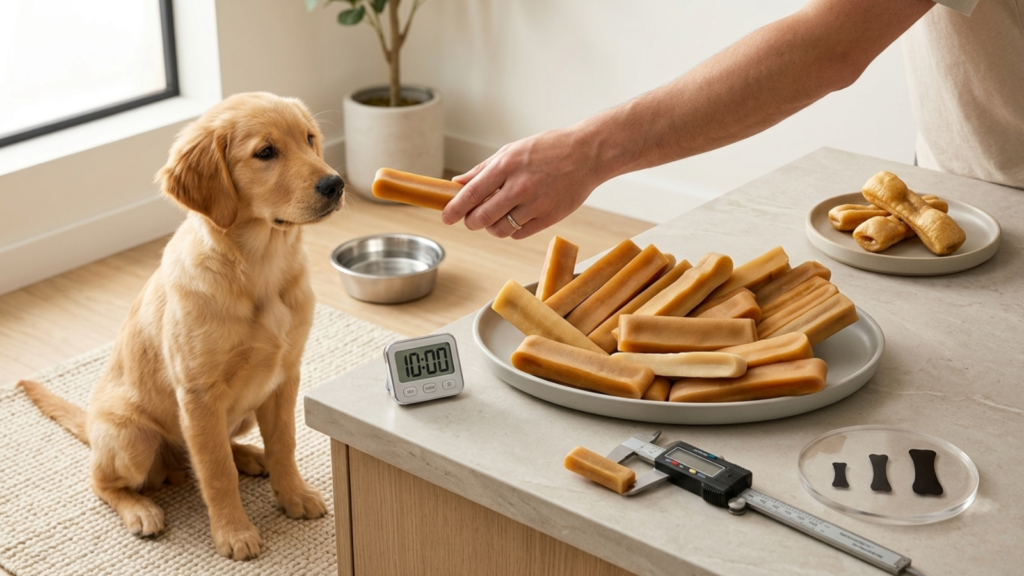
While Himalayan yak chews can be a healthy and enjoyable treat, puppies have unique needs and vulnerabilities that require careful attention. Ensuring safety is crucial to prevent dental injuries, choking, or digestive issues.
1. Hardness of Yak Chews
Himalayan yak chews are extremely hard, which can pose a risk to a puppy’s developing teeth and jaws. Puppies’ teeth are softer and more fragile than adult dogs’, so it’s important to introduce these chews gradually and monitor for any signs of discomfort or damage.
2. Recommended Age for Introduction
Veterinary dentists universally recommend waiting until a puppy is at least 6 months old, and ideally after all adult teeth have fully erupted and settled, before offering Himalayan yak chews. Between 4 and 6 months, a puppy’s mouth is highly vulnerable as baby teeth fall out and adult teeth erupt; giving a hard chew during this window significantly increases the risk of painful dental fractures.
3. Size Selection Based on Breed and Weight
Choosing the right size chew is critical. A chew that’s too small can become a choking hazard, while one that’s too large may be difficult for the puppy to manage. Use our yak chew size guide by breed and age to match the right chew to your puppy’s weight and jaw strength.
4. Choking Hazards and Digestive Concerns
Puppies can break off small, hard pieces that may become lodged in the throat or cause intestinal blockage. Always supervise chewing sessions and remove any small fragments that could be swallowed accidentally. Avoid giving yak chews to aggressive chewers who may bite off large chunks.
5. Supervision Tips
- Limit chewing sessions to 10–15 minutes for young puppies.
- Observe signs of frustration, choking, or difficulty chewing.
- Always provide fresh water nearby to help with swallowing and digestion.
6. Signs of Chewing Problems
Watch for warning signs such as:
- Broken or chipped teeth
- Excessive drooling or pawing at the mouth
- Vomiting, diarrhea, or constipation
- Reluctance to chew or sudden aggression with the chew
By following these safety guidelines, Himalayan yak chews can be a safe and enjoyable treat that supports a puppy’s dental health and natural chewing instincts.
What risks do yak chews pose to puppies?
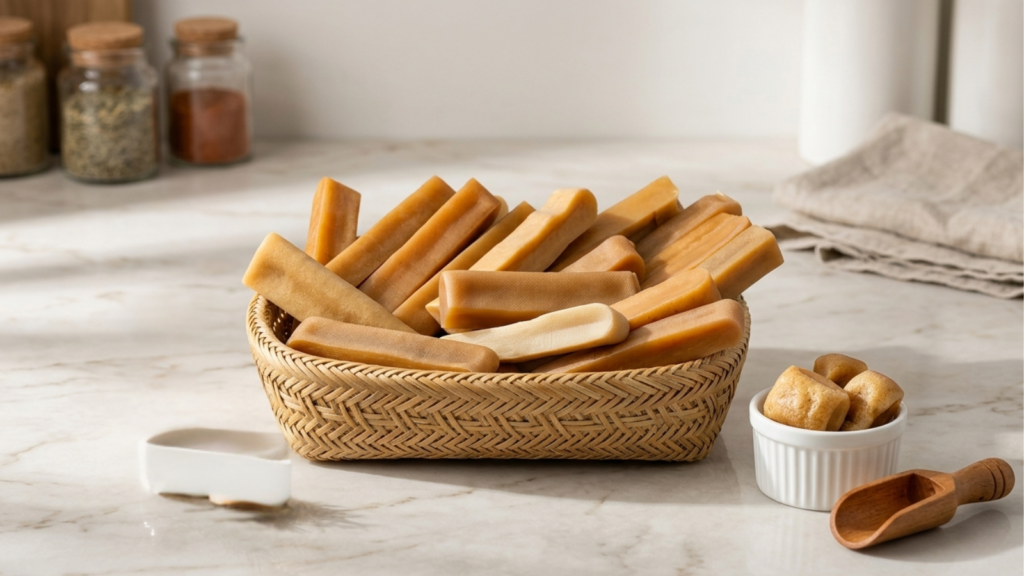
The risks of Himalayan Yak Chews for Puppies are Given Below:
- Dental Fractures: Young dogs frequently fracture teeth while chewing very hard objects.
- Choking Hazard: Small, broken-off pieces can lodge in the throat or cause gagging; watch for signs like excessive drooling, coughing, pawing at the mouth, or reluctance to chew.
- Gastrointestinal Blockage: Large indigestible chunks may block the intestines, a medical emergency.
- Digestive Upset & Allergies: Despite low lactose, some puppies have dairy protein sensitivities or allergies that cause vomiting, diarrhea, or stomach discomfort.
- Bacterial Contamination: Natural chews left moist can harbor bacteria; always discard old or soggy chews.
How to Safely Introduce Yak Chews for Puppies?
If your veterinarian approves and your puppy is 6 months or older (after their adult teeth are fully set), sourcing from a quality manufacturer matters. YforYak, the manufacturer of Himalayan Dog Chews, offers vet-safe, naturally made Himalayan chews sized for different dog breeds and ages. When introducing:
- Choose a chew size larger than your puppy’s mouth width to prevent swallowing whole.
- Limit chewing sessions to 10–15 minutes to reduce injury and digestive risk.
- Supervise every chew session closely and immediately remove small pieces or nubs.
- Soak the leftover nub in warm water for about 5 minutes, remove it from the water, and microwave it on a microwave-safe plate for 30–60 seconds. It will puff up into a lighter, crunchier treat that is safe for puppies to chew and digest. Always let it cool completely before serving.
What are the Benefits of Himalayan Yak Chews for Puppies?

The Benefits of Himalayan Yak Chews for Puppies are supported by Dental Health, Long-Lasting Entertainment, Natural, single-ingredient treats, Low Odor, Easy Digestibility, and encouraging positive chewing habits. Himalayan yak chews offer several advantages for puppies when introduced safely and appropriately. While puppies have more sensitive teeth and jaws than adult dogs, these chews can still provide both physical and mental benefits under supervision.
1. Supports Dental Health
Chewing is essential for a puppy’s developing teeth and gums. Chewing can provide enrichment and mechanical contact with the teeth, but a hard yak chew should not be treated as a substitute for regular veterinary dental care or an evidence-based dental product. Because excessive hardness can also contribute to tooth damage, dental benefits should be weighed against the potential risk.
2. Long-Lasting Entertainment
Puppies are naturally energetic and curious, and chewing can help satisfy their instinctual need to gnaw. Himalayan yak chews are slow-to-consume treats that keep puppies occupied, reducing boredom-related behaviors like chewing on furniture or shoes.
3. Natural, Single-Ingredient Treat
Made primarily from yak and cow milk, Himalayan yak chews are free from artificial preservatives, colors, and flavors. Puppies can enjoy a wholesome, natural snack that aligns with a healthy diet, making them a safer alternative to heavily processed treats.
4. Low Odor and Easy Digestibility
Unlike some other chews, Himalayan yak chews are low in odor and easily digestible, which makes them puppy-friendly for both indoor use and multi-pet households. Their lactose is reduced during the making process, minimizing the risk of digestive upset for sensitive puppies.
5. Encourages Positive Chewing Habits
Introducing a puppy to an appropriate chew early helps teach them what’s safe to chew. Himalayan yak chews can train puppies to chew on designated items rather than household objects, establishing healthy lifelong habits.
Ensure a Safe Chewing Environment
Provide a quiet, distraction-free area to help your puppy focus on safe chewing behavior, minimizing the risks of gulping or accidental choking caused by sudden excitement or interruptions.
Safer Puppy Chew Alternatives
| Chew Type | Age Suitability | Hardness | VOHC Approved? | Notes |
| Puppy Kong (frozen) | 8 weeks+ | Soft rubber | No | Excellent for teething relief |
| Frozen carrot | 8 weeks+ | Medium | No | Natural, affordable |
| VOHC puppy dental chew | 12 weeks+ | Soft-medium | Yes | Specifically designed for dental health |
| Nylon puppy bone | 8 weeks+ | Medium | No | Softer than adult nylon bones |
Pro Tip: Rotate between soft and moderately hard chews during teething phases to keep puppies engaged, reduce boredom, and protect teeth. For a full roundup of vet-friendly options, see our guide on the best natural chew toys for puppies.
Can 8-week-old puppies have yak chews?
No, it is generally not recommended to give Himalayan yak chews. Experts and veterinary dentists universally recommend waiting until a puppy is at least 6 months of age before introducing hard yak chews, when the puppy’s adult teeth are stronger and better suited for safely handling hard chews. Yak chews may ease teething discomfort and support dental health, but their hardness can damage teeth or cause choking in young puppies whose teeth are still developing. Never give a solid yak chew to an 8-week-old puppy. At this stage, they only have fragile baby teeth. Hard chews will cause severe pain and dental fractures. Stick to soft, puppy-specific rubber toys. You can safely soften small leftover pieces by soaking them in warm water for 5 minutes and then briefly microwaving them on a safe plate for 30–60 seconds. Consult your vet before giving yak chews to a young puppy so they can assess your puppy’s dental development, chewing strength, and risk of injury.
Are yak chews digestible?
Yes, Yak chews are generally considered digestible for dogs. They are made from natural ingredients, often through a fermentation process that reduces lactose, which makes them gentle on dogs’ digestive systems. Unlike some commercial treats, yak chews do not contain fillers or artificial additives, which contribute to their high digestibility and lower the risk of gastrointestinal upset. Many veterinarians recommend yak chews as safe and beneficial, especially for dogs with sensitive stomachs, since they minimize digestive discomfort. However, it is still important to introduce them gradually and supervise your dog while chewing to ensure they tolerate them well and avoid any potential issues.
Do yak chews clean teeth?
Yes, Yak chews can help clean a dog’s teeth. The abrasive action of gnawing on a hard yak chew can help scrape superficial plaque and tartar off the crowns of the teeth. This abrasive process promotes healthier teeth and gums, supports better oral hygiene, and can reduce bad breath. Additionally, chewing stimulates saliva production, which further helps cleanse the mouth and reduce bacteria. While yak chews soften slightly on the surface with saliva, they remain extremely dense. They do not envelop the tooth like a pliable dental chew, meaning they do not provide a ‘flossing effect’ or clean beneath the gumline. Their plaque-scraping benefits must always be weighed against the risk of enamel wear or tooth fractures. Overall, yak chews are considered beneficial for maintaining dental health in dogs through mechanical cleaning and natural ingredients. For a deeper look, our article on the 10 dental benefits of Himalayan yak chews covers the science behind each benefit.
How long should my puppy chew on one?
The recommended chewing time for your puppy on a yak chew is generally around 10 to 15 minutes to start, with close supervision to ensure they chew safely and don’t ingest large pieces. For older puppies or adult dogs, chew sessions can be extended to about 30 to 40 minutes per session. If your puppy is chewing off big bits and swallowing them, it’s best to limit the chew time to prevent digestive issues or choking hazards. Yak chews are designed to soften gradually as your dog chews, providing a long-lasting chewing experience that supports dental health without splintering, but moderation and supervision are key to keeping it safe for your puppy. Always provide fresh water during and after chewing sessions, and consult your vet if you’re unsure about how long your puppy should chew based on their size and chewing habits.
10–15 minutes per session under strict supervision.
What about small leftover pieces?
Small leftover pieces of yak chews can pose a choking hazard to dogs and are generally not considered safe to leave for your dog to chew on. Once a yak chew has been gnawed down to small fragments, these pieces become risky because dogs might accidentally swallow them whole, leading to choking or digestive issues. To keep your dog safe, it is important to remove any small leftover pieces promptly. Owners should safely puff small pieces to prevent choking. To do this, soak the nub in warm water, then microwave it to ‘puff’ it up into a safer, airy, crunchy snack that is easy for puppies to digest. Always let it cool completely before giving it to your dog. Always supervise your dog while chewing and replace the yak chew when it has worn down to small bits to avoid any hazards. This cautious approach helps provide a safe and enjoyable chewing experience while protecting your pet from possible choking or digestive discomfort.
What signs mean I should stop immediately?
You should stop giving your dog a yak chew immediately if you observe signs of choking or distress, such as coughing, gagging, difficulty breathing, or pawing at the mouth. Additionally, stop if your dog is swallowing large or sharp pieces that could cause choking or digestive blockage. Other warning signs include sudden vomiting, diarrhea, signs of allergic reaction like itching or skin rashes, and any indication of oral pain, such as reluctance to chew or excessive drooling. Close supervision during chewing is essential to catch these signs early. If any of these symptoms appear, remove the yak chew right away and consult your veterinarian to ensure your dog’s safety. These precautions help prevent choking hazards, digestive issues, and dental injuries associated with yak chews.
Do vets recommend yak chews?
Most veterinary dentists do not recommend hard yak chews for puppies, and many apply the same caution to adult dogs who are aggressive chewers or have a history of dental fractures. The concern is not the ingredients; it is the hardness. Authorities, including the American Animal Hospital Association (AAHA) and VOHC-aligned veterinary dental guidelines, specifically identify dried yak milk chews alongside antlers and raw bones as products hard enough to cause tooth fractures with pulp exposure.
That said, some general practice veterinarians do recommend yak chews for adult dogs who are moderate chewers, particularly as a lower-odor, natural alternative to rawhide. The key is to ask your own veterinarian, not to rely on a blanket “vet-approved” badge on product packaging. A named veterinary endorsement from a licensed professional who has examined your dog carries far more weight than a generic label claim.
For puppies specifically: no veterinary dental authority currently recommends hard yak chews before 6 months of age, and many advise skipping solid chews entirely for toy breeds regardless of age. You can see our article about whether our yak chews are safe for dogs.
Are Yak Bones Safe for Puppies?
No, yak bones are not safe for puppies and should be avoided entirely. Unlike Himalayan yak chews, which are made from compressed dried milk, yak bones are actual skeletal bones from yak cattle. They behave very differently in a puppy’s mouth, posing a far greater risk of splintering, internal injury, and life-threatening blockage. Even adult dogs can be harmed by real bones; for puppies, the danger is considerably greater.
Pet parents sometimes confuse the two products because both carry the “yak” label. Understanding the distinction isn’t just semantic; it could prevent a serious vet visit.
Final Recommendation
Himalayan yak chews should be approached cautiously in puppies because their extreme hardness can create dental and swallowing risks. Rather than relying on a single age cutoff, consider the puppy’s dental development, chewing behavior, size, and the specific chew’s hardness.
For very young or actively teething puppies, softer puppy-appropriate alternatives are a more conservative choice. If you are considering a yak chew for an older puppy, ask your veterinarian whether it is appropriate for that individual dog, choose a size that cannot be swallowed whole, supervise every session, and remove the chew once it becomes small or begins breaking into pieces.
Important: This article is general educational information and is not a substitute for an examination or individualized advice from a veterinarian.