

Puffed and regular yak chews are made from the same traditional Himalayan yak cheese, but they differ in texture, hardness, chewing time, and the dogs they are best suited for. Regular yak chews are dense, long-lasting cheese bars designed for extended chewing sessions, while puffed yak chews are heat-expanded into a light, crunchy texture that is easier to chew and consume. Although both formats contain the same natural ingredients and provide similar nutritional value, they offer different benefits depending on a dog’s age, jaw strength, dental health, chewing habits, and enrichment needs.
Choosing between puffed and regular yak chews involves more than deciding which one lasts longer. Factors such as chewing intensity, breed size, life stage, tooth condition, digestibility, safety, and feeding purpose all influence which format is the better option for an individual dog. This guide explains how puffed and regular yak chews compare across texture, durability, nutrition, dental benefits, choking risk, serving methods, and storage, helping you select the safest and most appropriate Himalayan yak chew for your dog’s daily routine.
Key Takeaways
- Puffed and regular yak chews share the same 4-ingredient recipe. Puffing is a physical change, heat expanding trapped moisture, not a change in ingredients or protein per gram.
- Regular chews last for days of gnawing. A puffed piece is usually gone in one sitting.
- Puffed chews suit puppies (from about 3 to 4 months), seniors, and small dogs. Regular chews suit healthy adults and heavy chewers.
- Supervise every session, and remove any chew once it fits fully inside your dog’s mouth.
What Are Puffed Yak Chews?
A puffed yak chew is a regular hard yak chew heated until it expands into a light, airy, crunchy piece, similar in texture to a rice cake or a cheese puff. The heat, usually from a microwave, oven, or air fryer, turns the small amount of moisture still trapped inside the dense cheese into steam. That steam has nowhere to go, so it pushes outward and puffs the chew to roughly two to four times its original size. The result keeps the same yak-and-cow-milk cheese but trades density for crunch.
How Are Puffed Chews Made?
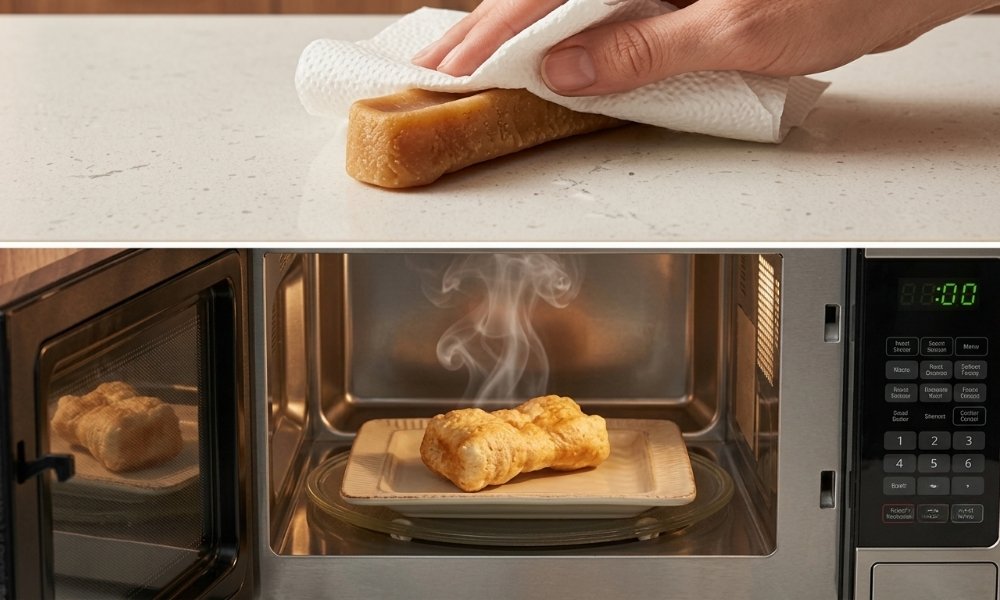
Puffed chews usually start as leftover pieces of a regular chew, typically the last inch or two a dog has already gnawed down. Soaking a small leftover end briefly (commonly 5–10 minutes) is a common home method to help surface moisture encourage puffing, but it must be handled carefully—fully cook and dry the puffed piece, cool it fully, and discard if it shows spoilage.
The piece then goes onto a microwave-safe plate, uncovered, and heats on high for 30 to 90 seconds, depending on size and microwave wattage. It’s finished puffing once it stops expanding and any sizzling sound slows down, and it needs at least five minutes to cool completely before serving, since the interior holds steam and heat well after the outside feels safe to touch. Manufacturers also produce puffed nuggets and bars directly, using the same heat-expansion principle at scale instead of a home microwave.
Which Dogs Prefer Them?
Puffed chews suit dogs that need a softer bite: puppies still growing into their adult teeth, seniors with worn enamel or fewer teeth, small breeds with narrow jaws, and any dog recovering from dental work. They also work well as a high-value training treat, since a puffed piece breaks into smaller crumbs a handler can portion out during a session.
Dogs that gulp rather than chew still need supervision with puffed pieces. The lighter texture doesn’t remove the discipline every chew requires; it shifts the risk from tooth fracture toward swallowing too much, too fast.
What Are Regular Yak Chews?
A regular yak chew is the traditional, unpuffed Himalayan cheese bar, sometimes called a hard chew or classic bar, and known across Nepal, Tibet, and Bhutan by its original name, chhurpi. It is made from yak milk, cow milk, lime juice, and salt, cured and dried until nearly all the moisture is gone. What’s left is a dense block dogs gnaw at gradually rather than consume in one sitting. This is the format that built the category’s reputation for lasting days instead of minutes, and it remains the default choice for owners looking for a long-lasting alternative to rawhide or bully sticks.
How Are Regular Chews Made?
Production starts with raw yak and cow milk, boiled and churned to separate fat and reduce lactose. Lime juice curdles the remaining protein into solid curds, which are then drained of whey. The curds go into rectangular molds and are pressed under weight for one to two days to force out residual liquid.
From there, the pressed blocks hang and alternate between smoke-drying and sun-drying for 8 to 12 weeks. Curing during this stretch cuts the original lactose content by roughly 95 percent, which is a big part of why most dogs tolerate yak chews better than fresh dairy. Properly cured and dried yak chews have low water activity, which greatly reduces microbial spoilage and makes unopened bars shelf-stable under dry, cool conditions for many months to years, depending on packaging and manufacturer testing; always follow the producer’s expiry guidance.
Which Dogs Need Them?
Regular chews earn their keep with dogs that need real chewing time: aggressive chewers who destroy soft toys in minutes, large and giant breeds with strong jaws, and owners who want a chew that survives more than one sitting. A properly sized extra-large bar can occupy a large or giant breed for three to seven days of supervised sessions.
Regular chews also make sense for healthy adult dogs with no history of dental fractures. The density that gives them their staying power is the same density that puts weaker or developing teeth at risk, so skip the hardest bars for dogs with dental disease, recent extractions, or a history of cracked teeth.
How Do They Compare?
Puffed and regular yak chews come from identical raw ingredients, so the differences that matter come down to texture, time, and physical risk rather than nutrition. The table below summarizes the main trade-offs; the sections that follow go into each one in more depth.
| Factor | Puffed Yak Chews | Regular Yak Chews |
| Texture | Light, airy, crunchy | Dense, rock-hard |
| Typical session | Gone in one sitting | Spread across days |
| Hardness test | Crushes under light finger pressure | Often fails the thumbnail and kneecap tests |
| Best starting point | Puppies, seniors, small breeds | Healthy adults, heavy chewers |
| Dental contact time | Short, minimal scraping | Longer, more scraping, still not VOHC-rated |
| Protein per gram | Same as the source chew | Same as the source chew |
| Typical role | Treat, training reward, safe nub finisher | Primary long-lasting chew |
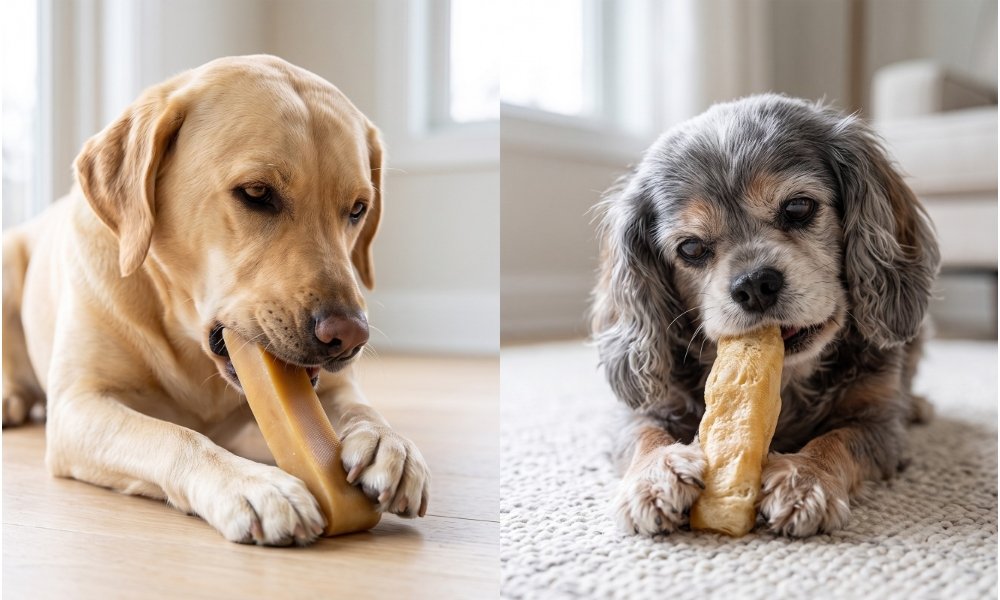
No single row decides the winner on its own. A dog’s age, size, chewing style, and dental history matter more than any generic ranking, which is why the sections below break the comparison down by exactly those factors.
Which Lasts Longer?
Regular chews last longer by a wide margin, though how long a yak chew lasts also depends on your dog’s size and chewing style. A large or extra-large bar can occupy a big dog for three to seven days of supervised fifteen- to thirty-minute sessions before it reduces to a nub. A puffed piece doesn’t work the same way.
Because it’s already broken down into a light, crumbly structure, most dogs finish a puffed piece in a single sitting, often within a few minutes. That makes puffed chews a poor substitute for long-lasting enrichment, but a strong option for a quick, satisfying treat or a way to use up a chew’s last inch without waste.
Which Is Softer?
Puffed chews are dramatically softer. Many pieces fail the thumbnail test, and a University of Pennsylvania cadaveric fracture-force study found it takes an average of 1,281 newtons of force to fracture a dog’s fourth premolar, which is roughly the resistance a very hard, unpuffed yak chew can offer. Firm pressure from a thumbnail should leave at least a slight indent, and a chew that resists completely may be too hard for dogs to chew safely. A puffed piece, by contrast, crushes easily between two fingers and gives immediately under a dog’s back teeth.
That softness is the entire point of puffing. Heat converts a chew that could otherwise crack a tooth into one that breaks apart before it reaches that kind of pressure. The trade-off is less resistance, which is part of why puffed pieces disappear so quickly.
Which Is Easier to Digest?
Both formats digest similarly well, since curing removes most of the lactose from the milk before drying or puffing ever begins. The practical difference shows up in how the food reaches the stomach.
A regular chew gets gnawed down gradually, so a dog swallows small amounts of softened cheese at a time over an extended session. A puffed piece breaks apart with far less chewing effort, so it’s usually swallowed as smaller, already-crumbled fragments. That makes puffed chews a reasonable option for dogs recovering from dental procedures or with sensitive jaws. Introduce either format gradually to a dog with a known dairy sensitivity.
Which Helps Teeth More?
Regular chews provide more mechanical scraping simply because dogs spend more time gnawing on them. As of the VOHC’s November 2025 accepted-products list, no plain hard-cheese yak chew appears in any VOHC category, so chewing on one shouldn’t be counted as a substitute for toothbrushing or professional dental care.
Puffed chews are consumed too quickly to deliver much dental benefit at all. Their value sits in safety and texture, not tooth cleaning. The honest trade-off: regular chews scrape more but carry real fracture risk for the wrong dog, while puffed chews protect fragile teeth but do very little for plaque.
Which Is Better by Age?
Age changes which format makes sense more than almost any other factor here. Puppy teeth and jaws are still developing; adult teeth reach full density and bite strength, and senior teeth often carry years of wear or missing pieces. Matching the chew to the life stage in front of you prevents most of the injuries associated with yak chews.
Are Puffed Chews Better for Puppies?
Yes, for most puppies. Veterinary guidance varies, but a 2023 Waltham Petcare Science Institute dentition study found permanent canine teeth erupt around 23.8 weeks at median body weight, with smaller puppies (under 3 kg) reaching that milestone later and running a higher risk of retained baby teeth. Puffed chews fit that window well, since their soft, crumbly texture removes the tooth-fracture risk that comes with a full-hardness regular bar. A regular chew, by comparison, generally waits until 6 months or later, and even then only for individual puppies whose adult teeth have come in and whose owner tests hardness before every session. When in doubt, start soft, watch the first few sessions closely, and size up gradually.
Are Regular Chews Better for Adults?
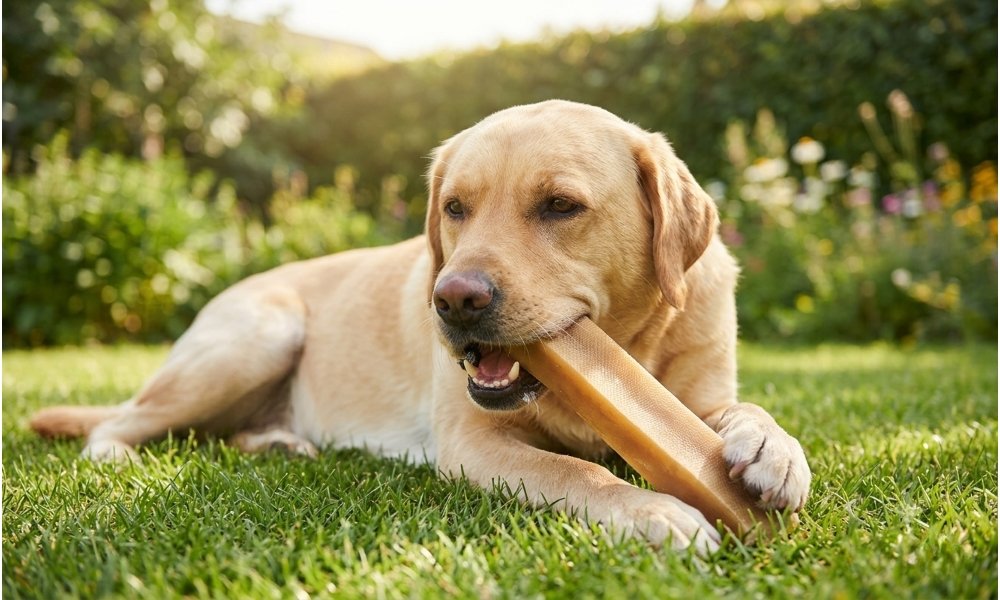
For healthy adult dogs with no history of dental fractures, regular chews are usually the better long-term value. Adult teeth have reached full density, jaw strength has plateaued, and a properly sized bar delivers days of chewing time instead of one quick sitting.
That said, “adult” doesn’t mean “every adult.” A dog with existing dental disease, a prior slab fracture, or a habit of crushing rather than gnawing is a poor candidate for the hardest bars regardless of age. Running a quick thumbnail or kneecap test before every new chew, not just the first one, catches the batches that turn out harder than expected.
Which Is Best for Seniors?
Puffed chews are generally the safer choice for seniors. Enamel thins with age, teeth get lost or weakened, and jaw strength typically declines, all of which raise the odds that a dense regular bar causes more harm than good. A puffed piece delivers the same protein and the same milky flavor without asking aging teeth to resist real pressure.
Seniors with confirmed healthy teeth and a gentle chewing style can sometimes continue with softened or smaller regular chews, but that call belongs to whoever has actually examined the dog’s mouth. A veterinary dental check before introducing either format is worth the appointment.
Which Is Better by Size?
Size determines how much resistance a chew needs to provide and how fast a dog works through it. A chew sized for a Labrador does nothing useful for a Chihuahua, and a chew sized for a Chihuahua disappears in seconds for a Mastiff. Matching diameter and weight to the dog closes most of the size-related safety gaps.
Which Fits Small Dogs?
Dogs under about 10 kilograms (22 pounds) do best with chews no wider than 1.5 to 2 centimeters (roughly 0.6 to 0.8 inches) in diameter, a size that forces gnawing instead of an aggressive crunch. Puffed yak nuggets work especially well here: they’re already sized for small mouths, break apart predictably, and produce softer debris than a hard bar of the same size.
Small hard bars under about 40 grams (1.4 ounces) work as an alternative for owners who want longer supervised sessions, but remove any piece under about 3.5 centimeters (1.4 inches) immediately, regardless of format, since it’s close to swallowable at that size.
Which Fits Large Dogs?
Large and giant breeds, think German Shepherds, Labrador Retrievers, Rottweilers, and Mastiffs, get the most practical value from extra-large regular bars, which last three to seven days of supervised chewing before reducing to a nub. This size class is generally the starting point when shopping for yak chews for large dogs.
A puffed chew isn’t a realistic primary option for a large dog. The same low density and quick breakdown that make puffed pieces safe for small mouths also mean a big dog finishes one in seconds. Puffed pieces still have a place for large dogs, just as a training reward or a way to use up the final nub of a regular bar once it’s chewed down.
Which Fits Heavy Chewers?
Heavy or “power” chewers need the density of a properly sized regular chew, not the crunch of a puffed one. A puffed piece offers no real resistance and gets destroyed almost instantly by a dog capable of cracking bones. The safer path pairs a chew wide enough that the dog can’t get a full back-molar bite around it with close supervision and an early swap to puffing once the chew reaches nub size.
For a fuller breakdown of which format and size suit different chewing styles, dogs that have already fractured a tooth on a hard chew, or that consistently try to crush rather than gnaw, do better with a softer alternative entirely, puffed yak chews included.
Do They Offer the Same Nutrition?
Puffed and regular yak chews come from the same base cheese, so the nutrition question comes down to what puffing actually changes physically and what it leaves alone. The short answer: puffing changes texture and serving size, not the underlying protein, fat, or mineral content per gram of cheese.
Do They Use the Same Ingredients?
Yes. Both formats start from the identical four-ingredient recipe: yak milk, cow milk, lime juice as a coagulant, and a small amount of salt. Every reliable Himalayan yak chew manufacturer varies the ratio of yak milk to cow milk, and a higher yak-milk percentage produces a harder, denser, richer-tasting chew before either format exists. That ratio, set at the curd stage, is what mainly separates one brand’s hardness and flavor from another’s, not whether the finished piece later gets puffed. Nothing gets added, and nothing gets removed during puffing itself.
Does Puffing Change Nutrition?
No, not in any way that matters nutritionally. Puffing is a physical transformation, not a chemical one: heat turns the small amount of moisture still trapped in the dried cheese into steam, and the steam’s expansion creates the airy structure. No protein breaks down, no fat gets removed, and no ingredient gets added along the way.
Gram for gram, a puffed piece delivers the same protein, fat, and calcium as the regular chew it came from. What changes is density and volume, since a puffed piece is bulkier and lighter for its size, now full of air pockets, worth knowing before assuming a bigger-looking puffed piece is a bigger meal.
Which Has More Protein?
By weight, neither. A gram of puffed cheese and a gram of regular cheese from the same chew contain the same protein, since puffing only removes trapped moisture as steam.
Where the answer changes is by piece or by serving. Because puffed cheese is aerated, a puffed piece that looks similar in size to a small hard chew actually weighs less and carries less total protein, simply because much of its volume is now air rather than cheese. Commercial yak chews are protein-dense: a Tribhuvan University chhurpi composition analysis measured 74.17% protein on a dry-weight basis, alongside just 3.18% lactose, and finished moisture content is typically low; however, exact protein and moisture levels vary by manufacturer, so compare nutrition labels by weight rather than by visual volume.
Are Both Safe for Dogs?
Both formats are safe for most dogs when sized and supervised correctly, but they carry different risks. Regular chews carry more tooth-fracture risk because of their hardness. Veterinary dental sources describe a simple kneecap test: an object that would hurt if it struck your kneecap is too hard for a dog’s teeth, and yak chews frequently fail that test by design, which is exactly why some are too hard for certain dogs.
Puffed chews carry less fracture risk but a different consideration around choking, since their light structure can break into pieces a dog swallows quickly instead of chewing thoroughly.
How Can You Prevent Choking?
Supervise every chewing session: in a 2025 Kasetsart University endoscopy study of 261 dogs, dried dog snacks were the second most common object removed from the esophagus, and small dogs under 12 kg accounted for 92.79% of esophageal obstruction cases. For regular chews, the main risk window opens once the bar wears down to a piece that fits entirely inside a dog’s mouth, roughly 3.5 centimeters (1.4 inches) or smaller. Remove it at that point rather than letting the dog keep working it down.
For puffed chews, the risk shifts toward gulping. Because the texture takes so little effort to break apart, a dog that swallows rather than chews can take in a larger piece than intended, so break a fresh puffed piece into smaller portions for small dogs or known gulpers before serving. In both cases, keep fresh water available during and after the session, and remove the chew immediately if a dog gags, paws at its mouth, or shows any blood on the surface. Knowing what to do if your dog swallows a chew ahead of time makes it easier to stay calm and act quickly.
When Should You Replace a Chew?
Replace a regular chew once it reaches roughly 3.5 to 5 centimeters (1.4 to 2 inches), the point where it fits fully inside a dog’s mouth rather than being held and gnawed. At that size, puffing the piece instead of letting the dog keep chewing it turns a choking risk into a safe, edible treat instead of waste.
Replace a puffed piece the moment it shows dark brown or black scorch spots, a bitter or smoky smell, or a texture gone from crunchy back to hard, all signs it either overcooked or absorbed enough moisture to lose its safe, crumbly structure.
How Should You Serve Them?
Serving either format safely comes down to timing and temperature: the right session length and never handing a dog a chew still hot from puffing. The two questions dog owners ask most, whether a regular chew can go in the microwave and how to store what’s left over, cover most of the practical serving decisions.
Can You Microwave Regular Chews?
Yes, and this is the standard way to turn a leftover regular chew into a puffed one instead of throwing it away. Soak the end piece in water for five to ten minutes, place it on a microwave-safe plate uncovered, and microwave on high for 30 to 60 seconds in an 800- to 1,000-watt microwave, checking at the shorter end first since overcooking is easier to cause than to reverse.
The piece is done once it stops expanding and any sizzling sound slows down. Let it cool for at least five minutes before serving; the interior holds steam well after the surface feels safe to touch, and a warm puff can burn a dog’s mouth. If a piece hasn’t puffed at all after 90 seconds of total microwave time across a few short bursts, discard it rather than continuing to heat it, since an overcooked piece turns brittle and sharp instead of soft. For wattage-specific timing and troubleshooting a piece that shrinks or scorches instead of expanding, our full walkthrough on puffing yak chews in the microwave covers each scenario step by step.
How Should You Store Them?
Store unopened regular chews in a cool, dry spot out of direct sunlight. Properly sealed, they hold their quality for a year or more, with many manufacturers rating them for up to two years or beyond, thanks to the low moisture content that made them shelf-stable in the first place. Once opened or partially chewed, keep the piece somewhere breathable rather than sealed in an airtight bag between sessions, since trapped saliva moisture invites mold, and let it air-dry fully before putting it away.
Puffed pieces don’t keep nearly as long. Store them in an airtight container at room temperature and plan to use them within three to five days, since the same airy structure that makes them easy to chew also makes them quick to go stale or soft.
Which Yak Chew Should You Choose?
Start with the dog, not the format. A ten-week-old puppy, a senior with a few missing molars, or a small breed with a narrow jaw is almost always better served by a puffed chew, at least to start. A healthy adult dog with strong teeth and no fracture history, especially a heavy chewer, gets more practical value from a properly sized regular bar.
Many households end up using both: a regular chew for supervised long-form sessions, and puffed pieces as training rewards or the safe, final use for every chew’s last inch. Run a quick hardness check before any new chew, regardless of format, and let your dog’s age, size, and chewing style make the final call.
Can YforYak Help You Decide?
YforYak makes both formats from the same Himalayan recipe: traditional Dog Chew Bars for dogs that need long, supervised chewing sessions, and Puffed Dog Chew Nuggets and Bars for puppies, seniors, small breeds, or any dog that needs a softer bite. Every batch comes from an FDA-registered facility that also holds HACCP and GMP certification, so hardness, moisture content, and ingredients stay consistent from one order to the next.
If you’re not sure which format fits your dog, the age and size breakdowns above are a reasonable place to start. Matching hardness to your dog’s mouth matters more than matching to a general recommendation.
What Are the Main Takeaways?
Puffed and regular yak chews start from the same yak-and-cow-milk cheese, and the choice between them comes down to your dog rather than any universal ranking. Regular chews are dense, hard, and built for days of supervised gnawing, best suited to healthy adults and heavy chewers with no history of dental fractures. Puffed chews are the same cheese, heat-expanded into a light, crunchy piece that suits puppies, seniors, small breeds, and any dog that needs a gentler bite, though they disappear in a single sitting rather than lasting for days.
Puffing changes texture and volume, not protein content per gram, so nutrition isn’t the deciding factor either way. What matters most: run a quick hardness check before every new chew, size the piece to the dog in front of you, supervise every session without exception, and remove or puff any piece once it fits fully inside your dog’s mouth. Get those habits right, and either format, puffed or regular, becomes a safer part of your dog’s routine.