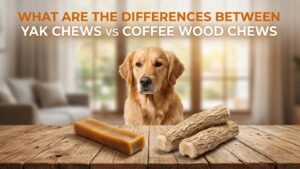
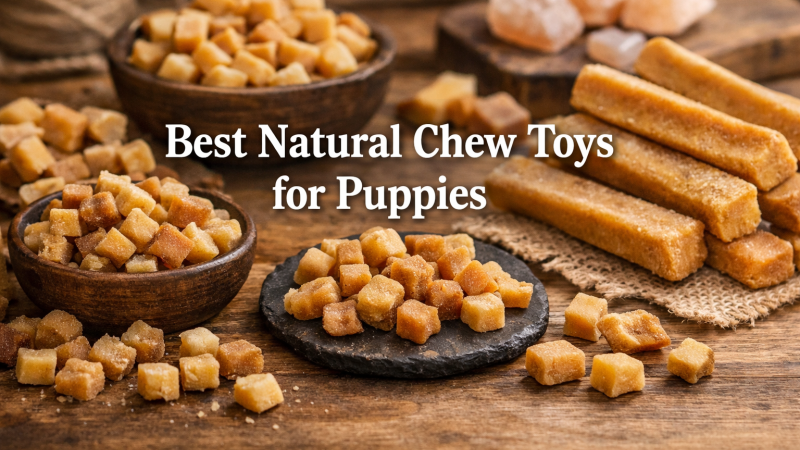
Choosing the right natural chew toy for a puppy is one of the most impactful decisions a dog owner makes in the first year. The chew a puppy uses daily shapes dental health, digestive comfort, behavioral patterns, and even anxiety levels. This guide breaks down every major natural chew option, with a detailed focus on yak chews versus bully sticks, rawhide, antlers, sweet potato chews, and coffee wood, so you can make a confident, informed choice for your specific puppy.
What Are the Best Natural Chew Toys for Puppies?
The 5 best natural chew toys for puppies are yak chews, bully sticks, fish skin chews, sweet potato chews, and coffee wood chews. Selecting the correct chew depends on 4 puppy-specific variables: age in weeks, chewing intensity, dietary tolerances, and dental development stage.
Yak chews rank first for the majority of puppies. They deliver the longest duration (1 to 3 weeks per chew), the highest protein content (65 to 70 grams per 100 grams), and the lowest odor of any natural protein chew available.
The 5 best natural chew toys for puppies, ranked from most to least versatile, are:
- Yak chews: best overall natural chew toy for puppies aged 16 weeks and older; single-ingredient dairy-based chew with minimal odor, high dental abrasion, and 1 to 3 weeks of duration per piece
- Bully sticks: best natural chew toy for puppies with dairy sensitivities or those needing a soft protein chew after training; each 6-inch stick delivers 15 to 30 minutes of chewing activity
- Fish skin chews: best natural chew for puppies with sensitive stomachs; safe from 8 weeks; made from dehydrated salmon, cod, or pollock skin and delivers omega-3 fatty acids in 5 to 15 minute sessions
- Sweet potato chews: best plant-based natural chew for puppies as young as 8 weeks and for those with confirmed beef or dairy protein allergies; single-ingredient and fully hypoallergenic
- Coffee wood chews: best middle-ground natural chew for light-to-moderate chewers aged 10 weeks and older; harvested from Coffea arabica branches and splinters into soft, digestible cellulose strands rather than sharp shards
The following table compares all 6 natural chew toy types across 6 dimensions: duration, minimum age, odor, sensitive stomach compatibility, and dental abrasion level, to match the correct chew to each puppy’s profile.
| Chew type | Best for | Duration | Minimum age | Odor | Sensitive stomach safe | Dental abrasion |
| Yak chews | Moderate to aggressive chewers | 1–3 weeks total | 16 weeks (4 months) | Minimal | Dairy-tolerant puppies only | High |
| Bully sticks | Dairy-sensitive puppies; post-training reward | 15–30 minutes | 12 weeks | High | Yes, zero lactose | Moderate |
| Fish skin chews | Sensitive stomachs; omega-3 support | 5–15 minutes | 8 weeks | Low to moderate | Yes | Low |
| Sweet potato chews | Very young puppies; confirmed protein allergy | 5–10 minutes | 8 weeks | None | Yes | Minimal |
| Coffee wood chews | Light to moderate chewers | 30–60 minutes | 10 weeks | Minimal | Yes | Low to moderate |
| Antlers | Not recommended for puppies under 9 months | N/A | 9 months minimum | None | Variable | Extreme, slab fracture risk |
Rawhide is excluded from this comparison. Rawhide manufacturing uses alkaline and oxidizing chemical agents for whitening and sanitation. The resulting collagen structure resists stomach acid digestion and expands when wet, creating a documented gastrointestinal obstruction risk. The American Kennel Club and board-certified veterinary internists formally advise against rawhide for puppies.
The same 6 natural chew categories and selection principles apply to adult dogs past 12 months of age. Duration expectations, dental benefit mechanisms, and digestibility remain consistent across all life stages; chew size scales with the adult dog’s body weight using the standard weight-to-size framework.
Why Do Puppies Need Natural Chew Toys?
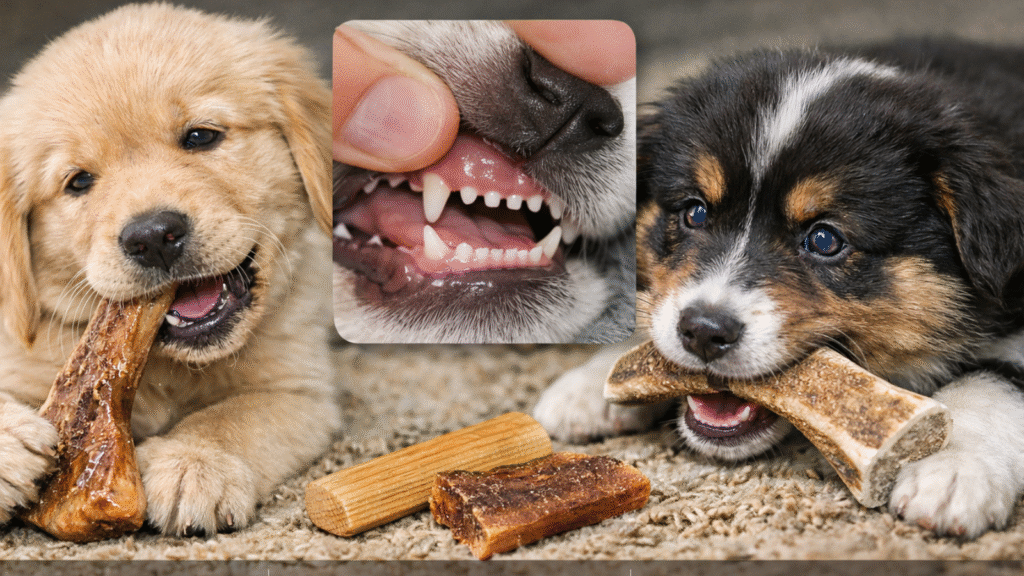
Puppies need natural chew toys because chewing is a biological drive, not a behavioral problem. Between 3 and 6 months, a puppy’s 28 deciduous (baby) teeth are progressively replaced by 42 permanent adult teeth, a transition documented in the USDA APHIS 2023 puppy dental eruption guide. During this transition, the gums become inflamed, sensitive, and actively uncomfortable. Natural chews address that discomfort while simultaneously building jaw strength and mental focus.
How Do Chew Toys Support Puppy Teething?
Chewing during the teething phase reduces gum inflammation through counter-pressure. When a puppy gnaws on a firm but yielding surface, like a yak chew or a bully stick, the mechanical action stimulates blood flow to the gum tissue and accelerates the shedding of baby teeth. Veterinary dentists classify this as functional chewing, distinct from destructive chewing, because it has a clear physiological purpose.
Specifically, natural chews deliver 3 direct teething benefits:
- Gum pressure relief: reduces swelling and sensitivity during tooth eruption
- Tooth loosening: helps baby teeth shed on schedule, reducing the risk of retained deciduous teeth
- Jaw muscle development: builds the masseter and temporalis muscles needed for adult biting force
Puppies with consistent chew access may be less likely to develop retained deciduous teeth, a condition affecting 69% of Yorkshire terrier puppies in a 2023 study, and one that frequently requires surgical extraction when it occurs in small breeds.
What Behavioral Problems Can Chewing Prevent?
Appropriate chewing prevents 4 common behavioral problems: destructive chewing, separation anxiety, hyperactivity, and attention-seeking behaviors. Appropriate chewing is one of the most accessible preventive tools for puppy behavioral problems. A 2024 Royal Veterinary College longitudinal study found that 96.7% of puppies exhibited at least one problem behaviour by 21 months, with separation-related behaviours among the most common, reinforcing the case for consistent, early chew provision.
Chewing also triggers the release of endorphins in dogs. Experienced trainers recommend offering a long-lasting chew 10 minutes before departure, and that recommendation is now backed by science. A 2023 crossover study from the Waltham Petcare Science Institute found that dogs given long-lasting chews during 20-minute separations showed significantly lower arousal and more positive emotional states than those given any other enrichment.
What most puppy owners overlook: chewing is also a self-regulation tool. A puppy that chews consistently is practicing focused, calm behavior, a skill that transfers to other contexts like leash walking and greeting visitors.
Why Are Natural Chews Safer Than Synthetic Options?
‘Natural chews are physiologically appropriate because chewing is a functional biological behavior, not merely a habit. A 2025 comprehensive review from the University of Sydney’s School of Veterinary Science found that chewing promotes dental hygiene, digestive health, and psychological well-being in dogs through mechanisms consistent with their evolutionary telos. Synthetic chews, including nylon bones, rubber-coated plastics, and pressed artificial treats, do not break down in the stomach. Fragments that enter the GI tract either pass through slowly, creating a risk, or remain in the stomach for days.
Natural protein-based chews like yak chews and bully sticks are composed of collagen, keratin, and casein, proteins that stomach acid and digestive enzymes actively process. The key distinction: a natural chew that breaks into pieces becomes digestible material; a synthetic chew that breaks into pieces becomes a foreign body hazard.
What Makes Yak Chews Popular for Puppies?
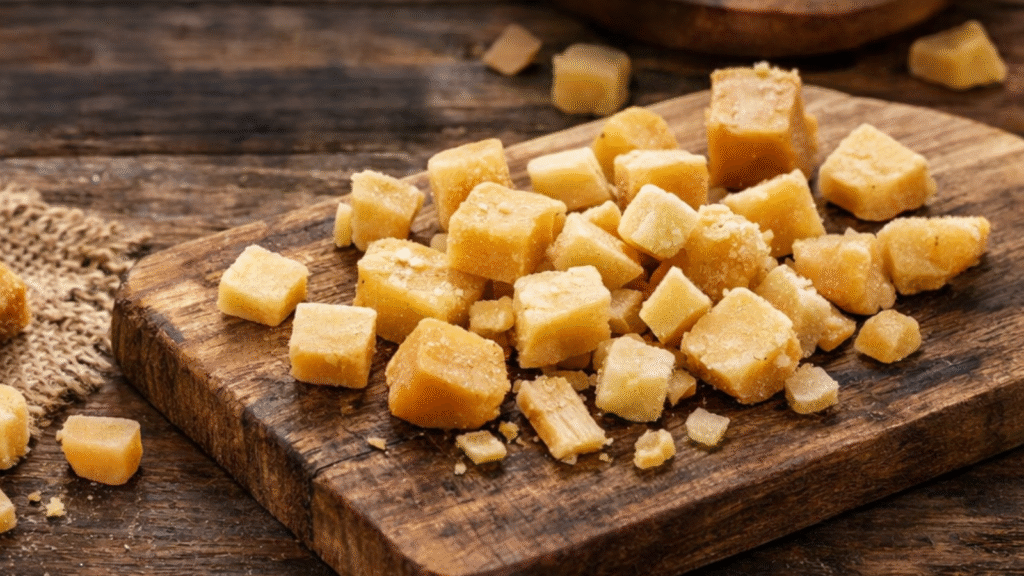
Yak chews are popular for puppies because they combine long-lasting hardness, single-ingredient composition, low odor, and high digestibility in a format that works for most breeds and chewing styles. Originally consumed as a traditional food in the Himalayan regions of Nepal and Tibet, yak chews entered the Western pet market around 2007 and became one of the fastest-growing natural chew categories within a decade.
What Are Yak Chews Made From?
Yak chews are made from 4 primary ingredients: yak milk, cow milk, lime juice, and salt. The production process involves boiling the milk, curdling it with lime, pressing the curd into dense blocks, and then sun-drying or smoking the blocks for weeks until they reach their final hardness.
The result is a high-protein, low-fat chew with a composition that resembles hard cheese. A 100-gram yak chew typically contains approximately 65 to 70 grams of protein, 5 to 8 grams of fat, and minimal carbohydrates. The lime juice lowers the pH during processing, which acts as a natural preservative and contributes to the chew’s shelf stability without artificial additives.
High-quality yak chews carry a single-ingredient label and are sourced from free-range yaks raised above 15,000 feet in elevation, where the animals graze on wild grasses rather than processed feed. Sourcing from a trusted yak chew manufacturer with FDA registration, ISO 9001 certification, and traceable Himalayan milk supply chains ensures the finished chew meets that standard consistently.
How Long Do Yak Chews Last for Puppies?
A medium-sized yak chew lasts between 1 and 3 weeks for the average puppy, depending on chewing intensity and breed size. For light chewers in small breeds, a single chew can last 3 to 4 weeks. For moderate chewers in medium breeds like Labrador puppies, expect 5 to 10 days of use before the chew reaches replacement size.
The longevity advantage comes from density. Yak chews are among the hardest natural chews available. A puppy cannot swallow large chunks; it must scrape and grind material off the surface, which naturally extends the chewing session and limits consumption rate.
One practical tip experienced dog owners use: when the yak chew wears down to a small nub (roughly 1 inch), microwave it on high for 30 to 45 seconds. The remaining cheese puffs into a light, crispy treat that is safe to consume entirely and eliminates the choking risk from small fragments. The complete yak chew puffing guide walks through exact timing by nub size and how to avoid overheating.
Are Yak Chews Digestible for Young Dogs?
Yak chews are digestible for puppies aged 4 months and older because their protein composition, primarily casein and whey, is broken down by standard digestive enzymes in a healthy canine GI tract. The chew’s hardness means puppies consume it slowly over multiple sessions, giving the digestive system time to process each small amount.
The important caveat: puppies under 12 weeks of age have underdeveloped digestive systems and should not be given yak chews. For a full breakdown by developmental stage and chew hardness level, the dedicated guide on the safe age for yak chews covers every age window from 8 weeks through 12 months. Puppies with lactose sensitivity may also experience soft stools or mild gas when first introduced to yak chews, since the milk base retains trace lactose despite the drying process.
Which Puppy Breeds Benefit Most From Yak Chews?
5 puppy breed categories benefit most from yak chews: medium-to-large breed puppies, aggressive chewers, breeds with anxiety tendencies, puppies with food sensitivities, and breeds prone to dental issues.
- Medium and large breeds (Labrador, Golden Retriever, German Shepherd) receive the right resistance level, challenging enough to occupy but not so hard as to crack developing teeth.
- Aggressive chewers (Rottweiler, Pit Bull, Malinois puppies) consume yak chews more slowly than softer chews, giving longer engagement.
- Anxious breeds (Border Collie, Australian Shepherd, Vizsla) use the extended chewing session as a stress outlet.
- Puppies with chicken or beef sensitivities benefit because yak chews contain no common allergens beyond dairy.
- Flat-faced breeds (French Bulldog, English Bulldog) need chews they can hold without jaw fatigue. The rectangular block shape of yak chews suits their bite angle.
Small breed puppies under 10 pounds (Chihuahua, Toy Poodle, Yorkshire Terrier) require an XS-sized yak chew specifically. Standard-sized yak chews are too wide for small mouths to grip comfortably and increase the risk of dental fracture.
How Do Yak Chews Compare to Bully Sticks?
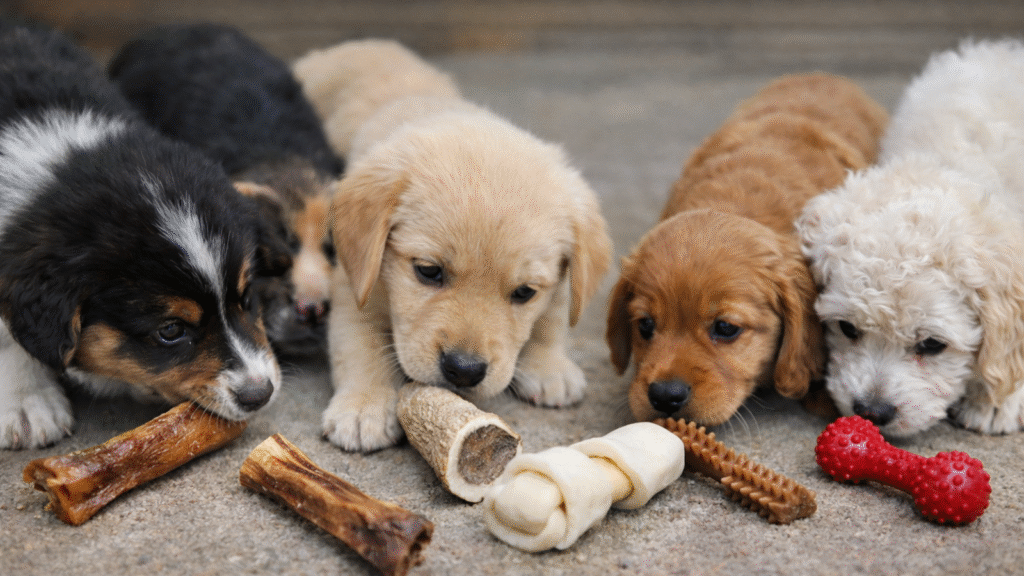
Yak chews and bully sticks are both single-ingredient natural protein chews, but they differ in 5 key areas: longevity, digestibility, odor, dental benefit, and caloric density. Understanding each difference helps puppy owners choose the right option for their specific situation.
Which Option Lasts Longer for Aggressive Chewers?
Yak chews last significantly longer than bully sticks for aggressive chewers, typically 3 to 5 times longer per session. Bully sticks are made from dried bull pizzle, which is a fibrous but relatively soft protein. An aggressive medium-breed puppy can consume a 6-inch bully stick in 15 to 30 minutes. The same puppy takes 20 to 40 minutes per session over multiple days with a yak chew.
For owners managing puppy energy and seeking extended calm engagement, yak chews provide a measurably longer activity window. For owners who want a quick, rewarding chew after a training session, bully sticks are the more appropriate choice. For a complete side-by-side analysis, the detailed guide on yak chews vs bully sticks breaks down protein content, duration, and digestibility across breed types.
Which Chew Is Easier for Puppies to Digest?
Both yak chews and bully sticks are digestible, but bully sticks digest faster and are gentler on sensitive stomachs. The fibrous protein matrix of bully sticks breaks down more rapidly than the dense casein block of yak chews. Puppies with known dairy sensitivities tolerate bully sticks better because bully sticks contain zero lactose.
Conversely, puppies with beef protein sensitivities react to bully sticks but tolerate yak chews well, since yak milk protein has a different amino acid profile from beef muscle protein.
Which Option Creates Less Mess and Odor?
Yak chews create significantly less mess and odor than bully sticks. Bully sticks are notoriously malodorous, particularly low-quality options that are not fully dried. The smell comes from residual biological material in the pizzle that activates when moisture from the puppy’s mouth contacts the chew.
Yak chews produce minimal odor and leave no greasy residue on surfaces. Puppies who chew on sofas, beds, or car seats are better matched with yak chews from a hygiene standpoint.
Are Bully Sticks or Yak Chews Better for Dental Health?
Yak chews provide superior dental health benefits compared to bully sticks because their hardness creates more sustained mechanical abrasion against tooth surfaces. The scraping action required to consume a yak chew removes plaque and tartar from the back molars, the most difficult teeth to clean with a toothbrush. The full breakdown of yak chew dental benefits documents exactly how each benefit works at the enamel and gum level.
Bully sticks also clean teeth through abrasion, but their softer texture produces less abrasive force. Both chews are recognized as beneficial for oral hygiene by veterinary dental professionals. The Veterinary Oral Health Council (VOHC) maintains an official list of accepted products that have passed independent controlled trials for plaque and tartar reduction. Check the VOHC 2026 accepted products list to verify any chew you are considering.
How Do Yak Chews Compare to Rawhide Chews?
Yak chews are safer and more nutritionally transparent than rawhide chews across every relevant metric: digestibility, ingredient quality, choking risk, and processing standards. Rawhide was the dominant natural chew for decades, primarily due to cost and availability, not because it was the optimal choice for puppy health.
Why Do Some Pet Owners Avoid Rawhide?
Pet owners avoid rawhide for 3 primary reasons: chemical processing, poor digestibility, and high choking risk. Rawhide is the inner layer of cattle or horse hides. Rawhide manufacturing typically involves treating hides with alkaline and oxidizing agents for whitening and sanitation. A 2024 clinical guide in Today’s Veterinary Practice recommends that veterinarians evaluate rawhide risk-benefit profiles individually, noting choking and GI obstruction as the most serious concerns. Artificial flavoring and dyes are added to improve palatability.
The digestive concern is substantial. Unlike protein-based chews, rawhide is composed of collagen that does not break down efficiently in stomach acid. Large pieces of rawhide that are swallowed can swell in the GI tract and form obstructions requiring emergency surgery. The American Kennel Club and numerous board-certified veterinary internists formally advise against rawhide for puppies for this reason.
Are Yak Chews Safer Than Rawhide for Puppies?
Yak chews are definitely safer than rawhide for puppies. The comparison is direct: yak chews are composed of dried milk protein that the digestive system processes through standard enzyme activity. Rawhide is composed of processed animal hide that resists digestion and expands when wet. For puppy owners who want the complete picture before making the switch, the vet-reviewed guide on yak chews safe for puppies covers age-by-age safety thresholds and supervision protocols.
From a practical standpoint, a puppy that swallows a fragment of yak chew the size of a marble faces no medical risk. A puppy that swallows a rawhide fragment the same size risks esophageal irritation and potential GI obstruction.
Which Option Has Fewer Artificial Ingredients?
Yak chews contain 4 natural ingredients; rawhide chews routinely contain chemical bleaching agents, artificial flavors, synthetic colorants, and preservatives. For puppy owners prioritizing clean-label feeding, yak chews have a clear advantage. Owners who read ingredient labels on dog food but accept rawhide without scrutiny are applying an inconsistent standard.
Which Chew Carries a Lower Choking Risk?
Yak chews carry a substantially lower choking risk than rawhide because they wear down through surface abrasion rather than softening into large swallowable pieces. Rawhide becomes soft and pliable as it is chewed, allowing puppies to tear off and swallow large chunks. Yak chews remain hard throughout and only release small, gradually scraped particles.
The end-of-life management of each chew reinforces this point: rawhide should be discarded before it becomes small enough to swallow whole (a judgment call with no clear guideline), while yak chew nubs can be safely microwaved into a digestible puff.
What Are the Other Best Natural Chew Toys for Puppies?
Beyond yak chews and bully sticks, 4 additional natural chew categories are worth evaluating for puppies: antlers, sweet potato chews, coffee wood chews, and species-appropriate raw bones. Each carries distinct benefits, limitations, and ideal use cases.
Are Antlers Safe for Puppies?
Antlers carry a genuine fracture risk for developing teeth. A 2025 veterinary dental homecare guide identifies antlers, along with cow hooves and nylon bones, as hard enough to cause tooth fracture with pulp exposure. The fingernail test is a reliable rule: if a chew does not yield under fingernail pressure, it is too hard for a puppy.
Split antlers expose the softer marrow center and are slightly gentler than whole antlers, but still carry fracture risk for puppies with baby teeth or newly erupted adult teeth under 9 months.
The practical rule: a chew that does not yield slightly when pressed with a fingernail is too hard for a puppy. Antlers fail this test universally.
How Do Sweet Potato Chews Compare to Yak Chews?
Sweet potato chews are softer, lower-protein, and more suitable for puppies with dairy sensitivities or sensitive stomachs, while yak chews are harder, higher-protein, and more suitable for puppies that need extended chewing engagement. The two chews serve different functions rather than competing directly.
Sweet potato chews are dehydrated slices of sweet potato, a single-ingredient, plant-based chew with high fiber content, beta-carotene, and vitamin A. They are safe for puppies as young as 8 weeks, fully digestible, and gentle on sensitive GI systems. The limitation: they last 5 to 10 minutes for most puppies, delivering minimal dental abrasion.
For owners managing a puppy with a food elimination diet or a confirmed protein allergy, sweet potato chews are one of the few truly hypoallergenic chew options available.
Are Coffee Wood Chews Good for Teething Puppies?
Coffee wood chews are a suitable teething option for puppies aged 10 weeks and older because the wood fiber splinters into tiny, soft, fully digestible cellulose strands rather than hard, sharp shards. Coffee wood is harvested from the pruned branches of Coffea arabica plants. It contains no caffeine residue after processing and no added chemicals.
The texture of coffee wood sits between the softness of sweet potato chews and the hardness of yak chews, making it a useful middle-ground option for light-to-moderate chewers. The natural wood scent also provides novel olfactory stimulation that many puppies find highly engaging.
The key difference from rawhide or synthetic wood alternatives: coffee wood does not splinter into sharp points. The fiber breaks along the grain into soft, rounded strands that pass through the digestive tract safely.
Which Natural Chews Work Best for Sensitive Stomachs?
The 3 best natural chews for puppies with sensitive stomachs are sweet potato chews, single-ingredient fish skin chews, and limited-ingredient yak chews. For puppies with known food sensitivities, the 3 most common chew allergens to avoid are beef (bully sticks, beef tendons), chicken (most flavored chews), and pork (pig ears, pork skin).
Fish skin chews, made from dehydrated salmon, cod, or pollock skin, provide omega-3 fatty acids alongside chewing satisfaction and are among the lowest-allergen protein chews available. They are soft, digestible, and suitable for puppies as young as 8 weeks. The limitation: they last 5 to 15 minutes and are not appropriate for extended engagement.
How Can You Choose the Right Natural Chew Toy?
Choosing the right natural chew requires matching 4 variables to the individual puppy: body weight, chewing style, ingredient tolerances, and developmental age. No single chew is universally correct; the right chew changes as the puppy grows and as you learn its chewing intensity.
What Size Chew Should a Puppy Use?
A chew should be sized so the puppy cannot fit the entire piece in its mouth at once. The standard sizing guideline used by veterinary professionals:
- Puppies under 10 lbs → XS chews (under 1 oz starting weight)
- Puppies 10–25 lbs → Small chews (1–2 oz starting weight)
- Puppies 25–50 lbs → Medium chews (2–4 oz starting weight)
- Puppies 50–75 lbs → Large chews (4–6 oz starting weight)
- Puppies over 75 lbs → XL chews (6+ oz starting weight)
Undersizing a chew creates a swallowing risk. Oversizing creates frustration and disinterest. When in doubt, size up rather than down. Use the complete guide to yak chew size by breed and age to match the right chew weight, thickness, and hardness to your specific puppy’s profile.
How Does Chewing Style Affect the Best Choice?
A puppy’s chewing style, gentle nibbler, moderate chewer, or aggressive power chewer, determines which chew delivers safe, sustained engagement without fracture or overconsumption risk.
- Gentle nibblers benefit from softer chews like sweet potato, fish skin, or soft bully sticks. Hard chews frustrate light chewers and go unused.
- Moderate chewers are the best match for yak chews and standard bully sticks; the resistance level is appropriate for their effort level.
- Aggressive power chewers require yak chews, beef tendons, or water buffalo horns. Softer chews disappear too quickly and may be swallowed in large pieces before fully chewed.
The most common mistake first-time puppy owners make: buying a chew based on marketing rather than observed chewing behavior. Spend one week watching how your puppy approaches different textures before committing to a regular chew.
Which Ingredients Should Puppy Owners Avoid?
Puppy owners avoid 6 specific ingredients in natural chews: artificial colorants, chemical preservatives (BHA, BHT, ethoxyquin), added sugars, smoke flavoring on low-quality products, undisclosed hide ingredients, and irradiated imports without clear sourcing.
Read every chew’s label before purchase. Ingredients to look for as positives: a single named protein source, country of origin disclosure, no artificial preservatives, and USDA or equivalent regulatory compliance marking.
How Often Should Puppies Use Natural Chews?
Puppies benefit from 1 natural chewing session per day, lasting 15 to 30 minutes. Daily chewing supports consistent dental hygiene, stable behavioral outlets, and predictable digestive load. More than one session per day increases caloric intake (relevant for weight management) and may cause loose stools in puppies with sensitive digestion.
Natural chews are calorie-dense. A 6-inch bully stick contains approximately 80 to 110 calories. A medium yak chew delivers roughly 40 to 60 calories per chewing session at an average consumption rate. Factor these calories into the puppy’s daily total, particularly for breeds prone to rapid weight gain.
What Safety Tips Should Puppy Owners Follow?
5 core safety practices reduce chew-related risk to near zero: always supervise, match size correctly, replace at the right time, introduce gradually, and store chews properly. None of these practices is complex; together, they form a consistent routine that keeps chewing safe and beneficial.
When Should a Puppy Be Supervised While Chewing?
A puppy requires full supervision during every chewing session until the owner has observed 4 to 6 sessions and confirmed that the puppy chews at an appropriate pace and does not attempt to swallow large pieces. New chews, new brands, and new sizes all require fresh supervised observation.
Supervision means being physically present and attentive, not in the same room while scrolling on a phone. The critical moments are when the chew is brand new (size and shape are unfamiliar to the puppy) and when the chew approaches end-of-life size (swallowing risk peaks as pieces become small).
How Can You Prevent Choking Hazards?
Choking hazards are prevented through 3 active practices: correct sizing, consistent monitoring, and proactive removal. Remove the chew when it reaches a size that the puppy can fit entirely in its mouth. This threshold varies by breed and jaw size, but is typically around 2 inches for medium breeds.
Establish a “trade” habit from day one: offer a small, high-value treat in exchange for the chew when it needs to be removed. This prevents resource guarding and makes chew removal routine rather than confrontational.
What Signs Show a Chew Toy Should Be Replaced?
A natural chew requires replacement when it displays 4 specific changes: it reaches mouth-fitting size, it develops soft spots from excessive moisture, it shows signs of mold or discoloration, or the puppy begins chewing more aggressively than usual (indicating the chew has softened to an unsafe texture).
Yak chews specifically should be replaced or microwaved to puff form when they reach approximately 1 inch in length. Bully sticks should be discarded when they become thin enough to bend easily or when they begin to separate into strands.
How Can You Introduce New Chews Safely?
Introduce a new chew type over 5 days using a graduated exposure protocol: offer the chew for 5 minutes on day one, 10 minutes on day two, 15 minutes on day three, and full sessions from day four onward. This gradual introduction allows the digestive system to adapt to the new protein source and gives the owner time to observe for adverse reactions.
Monitor stool consistency for 48 hours after each new chew introduction. Loose stools or vomiting indicate either a digestive sensitivity or an introduction that was too rapid. Solid stools and normal energy levels confirm the chew is well-tolerated.
How Should You Choose Natural Puppy Chews for Long-Term Health?
Selecting natural puppy chews with long-term health in mind requires evaluating 3 compounding factors: dental health trajectory, digestive compatibility over time, and behavioral pattern reinforcement. A chew that solves today’s teething discomfort but creates a 3-year-old dog with tartar buildup and anxiety hasn’t served the puppy’s long-term interest.
Can High-Quality Natural Chews Improve Puppy Wellness?
High-quality natural chews improve puppy wellness across 4 measurable dimensions: oral health, stress management, cognitive stimulation, and gastrointestinal microbiome diversity. The stakes are high: a survey study from the Swedish University of Agricultural Sciences found that periodontal disease affects 80–89% of dogs over three years of age. Regular chewing from puppyhood is one of the most practical ways to reduce a dog’s lifetime risk of joining that majority.
The behavioral component is equally significant. Puppies that have consistent, appropriate chewing outlets during the first year develop into calmer, more self-sufficient adult dogs. The chewing habit established in puppyhood tends to persist, meaning the investment in appropriate chews compounds over the dog’s lifetime.
From a nutritional standpoint, high-quality protein chews like yak chews and bully sticks contribute digestible amino acids that support muscle development in growing puppies. These are not empty-calorie treats; they deliver functional nutrition alongside behavioral benefit.
What Are the Key Takeaways About Natural Puppy Chews?
Natural chewing is a biological need that, when properly supported, pays dividends across every dimension of puppy health. The following 7 takeaways summarize the evidence-based guidance in this guide:
- Yak chews are the best all-around natural chew for most puppies aged 4 months and older. They combine superior longevity, minimal odor, strong dental benefits, and clean-label ingredients.
- Bully sticks are the better choice for puppies with dairy sensitivities or those who need a quicker, softer reward chew.
- Rawhide carries documented risks that make it unsuitable for puppies, regardless of price or availability.
- Antlers are not appropriate for puppies; their hardness creates a slab fracture risk in developing dentition.
- Sweet potato and fish skin chews are the safest options for sensitive stomachs and very young puppies under 12 weeks.
- Correct sizing is the single most important safety variable; a correctly sized chew eliminates the majority of choking and obstruction risk.
- One supervised 15-to-30-minute session per day delivers optimal dental, behavioral, and nutritional benefit without digestive overload.
The right natural chew matches the individual puppy, its size, its chewing style, its dietary sensitivities, and its developmental stage. Use the comparisons, safety guidelines, and breed-specific guidance in this article to make that match with confidence. Your puppy’s teeth, behavior, and long-term wellness will reflect that decision clearly.