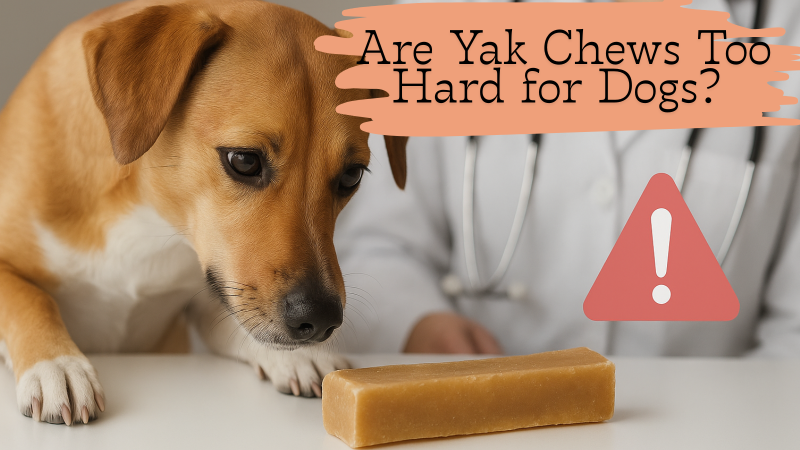
Yak milk chews originated in the Himalayas and have quickly been embraced as the perfect treat for dogs everywhere. However, are yak chews too hard for dogs? This question deserves serious consideration from every responsible pet owner.
Despite their popularity, veterinarians have raised concerns about these dense treats. Yak cheese chews, also known as Himalayan Dog Chews or Yak Milk Chews, undergo a unique process of boiling, shaping, and drying to create a dense, long-lasting treat. Unfortunately, many hard cheese chews, including yak chews, can be too hard for regular chewing and may lead to broken teeth. When given the vet-recommended ‘fingernail test’, these treats sadly do not pass.
In this article, we’ll examine both sides of the debate. On one hand, yak chews offer a unique option combining dental health benefits with a self-soothing chewing action and a milky cheese taste dogs love. On the other hand, if the chew is harder than the teeth, there’s a probability of causing tooth injuries. We’ll explore who should avoid these treats, how to use them more safely, and what alternatives might be better for your dog’s dental health.
Key Takeaways
While yak chews offer long-lasting entertainment and dental benefits, their extreme hardness poses legitimate tooth fracture risks that require careful consideration from pet owners.
- Pre-soften yak chews in hot water for 5-10 minutes to reduce hardness and minimize dental damage risks.
- Avoid yak chews for puppies, seniors, and dogs with dental issues – these groups face higher fracture risks.
- Limit supervised chewing sessions to 15-30 minutes to prevent jaw fatigue and potential injuries.
- Consider safer alternatives like Kong toys or VOHC-approved dental chews that provide benefits without tooth damage risks.
- Transform leftover pieces into safe “yak puffs” by microwaving soaked endpieces for 45-60 seconds.
The key to yak chew safety lies in proper preparation, appropriate dog selection, and vigilant supervision. When in doubt, veterinarian-approved alternatives offer similar benefits with significantly lower dental risks.
Are yak chews too hard for dogs?
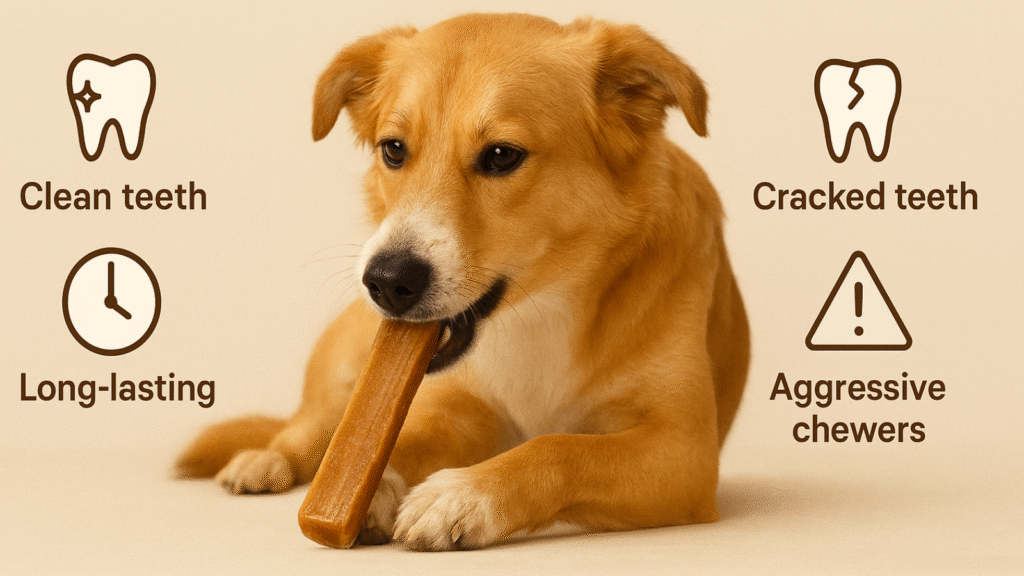
Yak chews rank among the hardest edible dog chews available today, presenting both benefits and potential hazards for our canine companions.
Understanding the hardness factor
Yak milk bones are exceptionally durable treats that last significantly longer than many alternatives. While dogs might finish a bully stick in minutes, a yak chew can keep them occupied for hours or even days. This hardness serves a purpose – these chews are specifically designed to be firm enough to provide extended enrichment sessions while helping clean teeth and reduce tartar.
What makes yak chews unique is their gradual softening mechanism. As your dog chews, their saliva interacts with the natural ingredients, making the chew more pliable over time. This creates a self-limiting process that prevents rapid consumption while providing a flossing-like action for dental health benefits.
Can yak chews break teeth?
The primary concern with hard chews is dental damage. Veterinarians warn that cheese blocks processed into rock-hard “bones,” including yak cheese treats, can be too rigid for regular chewing and may lead to broken teeth. Veterinary dental professionals have formally flagged this risk: a 2025 clinical handout from Veterinary Physicians and Surgeons, Inc. explicitly lists dried yak milk alongside deer antlers and bones as products ‘so hard that chewing can result in tooth fracture with pulp exposure’ (2025 Veterinary Dental Home Health Care Guide).
Aggressive chewers face the highest risk. Dogs that bite down forcefully rather than gnaw gradually might chip or fracture their teeth. Although the risk is considered relatively small compared to true bones or thicker objects, it remains a legitimate concern, especially for puppies, seniors, and dogs with pre-existing dental issues.
What is the right yak cheese hardness for my dog?
The ideal yak chew should pass the fingernail test — press your thumbnail firmly into the chew. If it leaves a slight indent, the hardness is acceptable. If it feels like pressing into a rock with zero give, the chew is too hard.
Veterinary dental professionals recommend chews that have a degree of flex or “give” under pressure. A chew harder than your dog’s tooth enamel creates fracture risk. As a general rule:
- Soft give = suitable for most dogs
- Minimal give = acceptable only for moderate chewers with healthy teeth
- No give / rock hard = avoid entirely, especially for puppies and seniors
Always size up when in doubt, a larger chew encourages gnawing rather than aggressive biting, reducing fracture risk.
How to soften yak chews safely
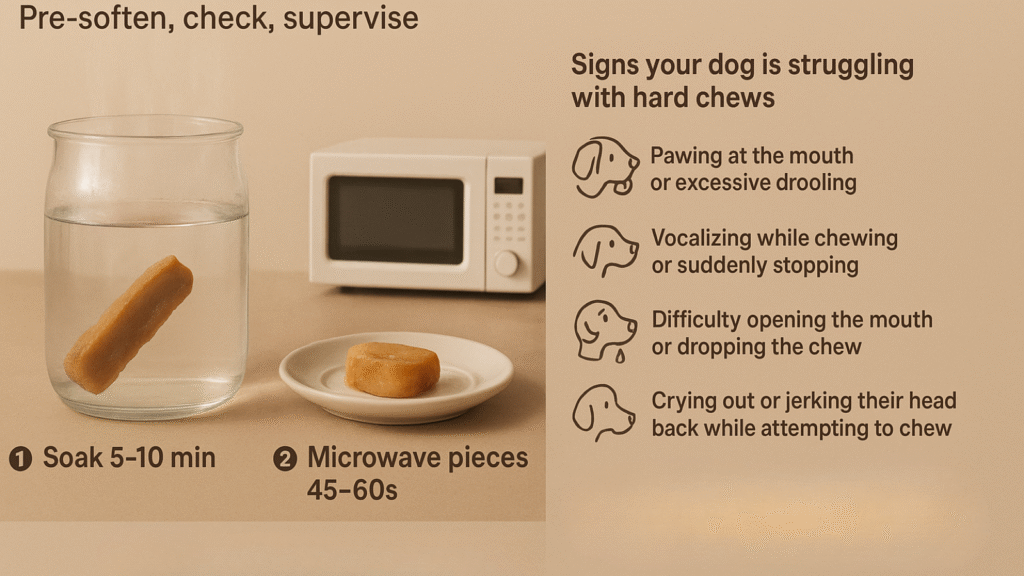
Fortunately, you can pre-soften these yak chews to make them safer. Simply place the yak chew in a glass of hot water for 5-10 minutes until it reaches an appropriate softness level. This pre-softening gives your dog a head start on the natural softening process that would typically occur through chewing and saliva.
Another technique involves microwaving small end pieces (that would otherwise be choking hazards) for 45-60 seconds after soaking in water. This creates puffy, crunchy treats your dog can safely enjoy.
Signs your dog is struggling with hard chews
Watch for these warning signals during chew sessions:
- Pawing at the mouth or excessive drooling
- Vocalizing while chewing or suddenly stopping
- Difficulty opening the mouth or dropping the chew
- Crying out or jerking their head back while attempting to chew
To maximize safety, limit chewing sessions to 15-30 minutes, choose appropriately sized chews (always size up when in doubt), and never leave your dog unsupervised with any chew. Furthermore, remove the chew once it becomes small enough that your dog no longer needs to hold it with their paws.
Are yak cheese chews safe for all dogs?
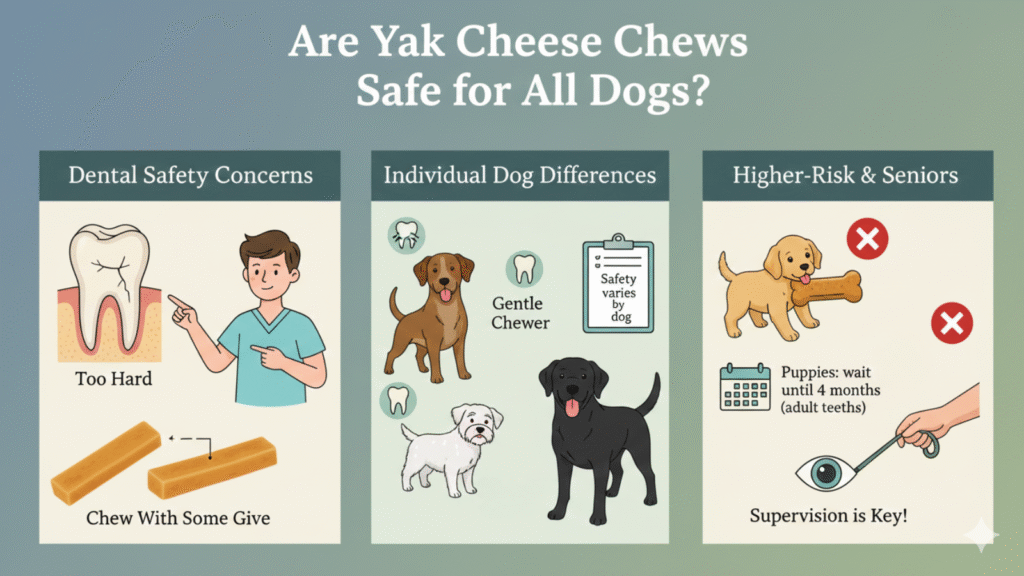
The safety of yak cheese chews varies greatly depending on your dog’s individual characteristics and chewing habits. As a vet, I’ve seen both success stories and unfortunate dental injuries from these popular treats.
Are yak chews safe for a dog’s teeth?
Not all yak chews meet dental safety standards. Quality matters enormously, as many veterinarians worry about potential dental fractures from chews that are too rigid. In reality, most vets don’t recommend yak chews precisely because of this dental fracture risk. Dr. Irish suggests choosing chews with some “give” to them – if the yak chews can be quite hard, your dog could chip or break a tooth.
Risks for puppies and senior dogs
Puppies, small breeds, and senior dogs face increased risks with yak chews. These groups have more vulnerable teeth and are more likely to suffer fractures. For puppies specifically, wait until they have their adult teeth (around 4 months) before introducing yak chews. Even then, supervision remains essential as puppies might bite off pieces too large to swallow safely.
Aggressive chewers vs. light chewers
Chewing style dramatically affects safety and longevity:
- Aggressive chewers: May finish a large chew in 30 minutes to a few hours
- Moderate chewers: Typically enjoy the same chew for several days
- Light chewers: Might make a single chew last over a week
Breeds known for aggressive chewing (like Bulldogs, Bullmastiffs, and Rottweilers) benefit from yak chews’ durability but require closer monitoring.
Are yak bones good for dogs with dental issues?
Primarily, dogs with existing dental problems should avoid hard yak chews. According to the American Kennel Club, senior dogs encounter more dental issues and need softer alternatives. Instead, look for products recommended by the Veterinary Oral Health Council (VOHC) that support oral hygiene without risking further damage.
How To Keep Your Dog Safe Chewing Yak Chews?
The way to make yak chews safer for your dog involves simple modifications that maintain their benefits yet minimize risks. Let me show you proven techniques to create a more secure chewing experience.
How to pre-soften yak chews
Even quality yak chews can be initially too hard for some dogs. Consequently, pre-softening creates a head start on the natural saliva-softening process. Simply place the entire chew or just one end in hot water for 5-10 minutes until it reaches your desired softness level. This technique works particularly well for senior dogs or those with dental concerns.
Turning endpieces into yak puffs
Small leftover pieces pose choking hazards but can be transformed into safer treats through “puffing.” Here’s how:
- Soak the endpiece in warm water for 5-10 minutes
- Place on a microwave-safe dish
- Microwave for 45-60 seconds until fully puffed
- Allow to cool completely before serving
This creates a crunchy, cheese puff treat that expands to approximately three times its original size. Moreover, this technique prevents waste by making every last bit usable.
Limiting chew time to prevent injury
To avoid jaw fatigue and overexertion, restrict chewing sessions to 15-30 minutes. Additionally, always supervise your dog during chew time to monitor for any signs of struggle. This vigilance helps prevent both dental damage and potential choking incidents that might otherwise occur.
Best alternatives to yak chews
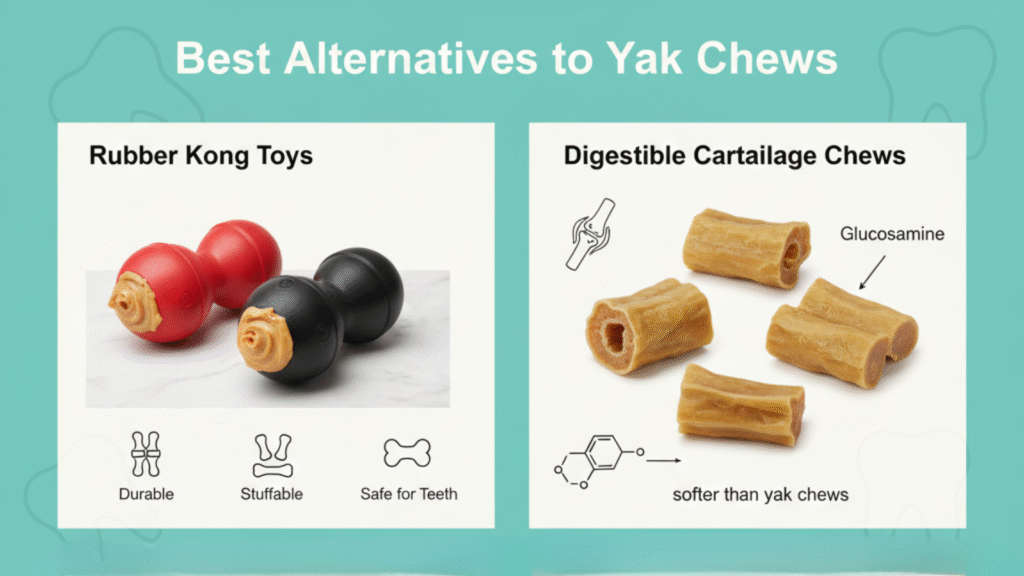
Looking for safer options than rock-hard yak chews? I often recommend these alternatives that balance enjoyment with safety in my veterinary practice.
Rubber Kong toys
First and foremost, Kong toys stand out as durable, versatile alternatives to hard chews. Available in four different rubber strengths, they cater to every chewing style from gentle seniors to powerful power-chewers. What makes Kongs truly exceptional is their stuffability, filling them with peanut butter and freezing them overnight for extended mental stimulation. These toys provide the chewing satisfaction dogs crave without risking tooth damage. The Classic Kong suits moderate chewers, while the Extreme Kong handles intense chewing pressure.
Digestible cartilage chews
Beef cartilage offers a nutritious alternative that’s naturally softer than yak chews. These chews contain glucosamine and chondroitin that support joint health, maintain cartilage integrity, and reduce inflammation. Rich in collagen, proteins, and minerals, they contribute to overall health while providing a satisfying chew experience. Unlike yak chews, cartilage has appropriate “give” that minimizes dental fracture risks.
Vet-approved dental chews
For proven dental benefits, Look for products with the VOHC seal, the Veterinary Oral Health Council publishes its full list of clinically tested, seal-approved chews and treats in the VOHC 2025 Accepted Products Table for Dogs, which is updated regularly and currently lists over 80 approved options.. Greenies, recognized by VOHC, effectively reduce tartar while being more digestible than yak chews. Purina DentaLife freshens breath and reduces tartar without artificial colors or flavors. For dogs with sensitive digestion, C.E.T. Veggiedent offers plant-based dental care plus prebiotic support.
Rope toys for safe chewing
Solid braid cotton rope toys provide gentle yet effective dental cleaning. They’re naturally soft on teeth and gums yet durable enough for play. Remarkably washable, simply toss in the machine when dirty. Smaller dogs benefit from solid braid varieties, whereas larger dogs might prefer twisted cotton rope designs. Unlike hard chews, rope toys flex with pressure, preventing sudden tooth fractures.
Conclusion
Yak chews certainly offer many benefits for dogs, including long-lasting entertainment and potential dental cleaning. However, their exceptional hardness presents legitimate concerns about tooth damage that we shouldn’t overlook. Though these Himalayan treats have gained popularity, they aren’t suitable for every dog.
After considering both sides, it’s clear that yak chews require careful management rather than casual offering. Pre-softening techniques and microwaving end pieces significantly reduce risks while maintaining benefits. Additionally, limiting chew sessions to 15-30 minutes under supervision creates a safer experience for your furry friend.
For puppies still developing their adult teeth, senior dogs with weakened dental structures, or dogs with existing dental issues, safer alternatives deserve consideration. Specifically, Kong toys offer customizable difficulty levels without risking dental fractures. Cartilage chews provide nutritional benefits with appropriate “give,” while VOHC-approved dental treats ensure proven oral health benefits.
Ultimately, your dog’s individual chewing style and dental health should guide your decision. While some dogs may safely enjoy properly prepared yak chews, others face unnecessary risks. Therefore, I encourage you to assess your dog’s specific needs, consider the safer usage techniques described, and perhaps try the recommended alternatives before committing to these particularly hard treats. Your dog’s dental health remains worth protecting, regardless of how trendy or long-lasting a particular chew might be.
Are yak chews safe for dogs?
Yak chews are not safe for dogs. They can be too hard for puppies, senior dogs, and those with dental issues. It’s best to consider your dog’s age, size, and chewing habits before offering yak chews. See our article about yak chew safe or not.
How can I make yak chews safer for my dog?
You can make yak chews safer by pre-softening them in hot water for 5-10 minutes before giving them to your dog. Also, limit chewing sessions to 15-30 minutes and always supervise your dog while they’re enjoying the chew.
What are the signs that a yak chew is too hard for my dog?
Watch for signs like excessive drooling, pawing at the mouth, difficulty chewing, or suddenly stopping chewing. If you notice any of these, remove the chew immediately and consider softer alternatives.
Can yak chews cause dental damage?
Yes, yak chews can potentially cause dental damage, especially in aggressive chewers. They may lead to chipped or fractured teeth due to their extreme hardness. It’s important to monitor your dog closely and consider softer alternatives if you’re concerned.
What are some safer alternatives to yak chews?
Safer alternatives include rubber Kong toys, which come in different strengths for various chewing styles, digestible cartilage chews, vet-approved dental chews with the VOHC seal, and rope toys for gentle cleaning. These options provide chewing satisfaction with a lower risk of dental damage.