
Large dogs need durable chews that can withstand powerful bite force, support healthy chewing behavior, and reduce the risks associated with rawhide, brittle bones, and low-quality synthetic treats. Himalayan yak chews have become one of the most trusted natural chew options for large breeds because they combine dense smoke-dried cheese protein, minimal ingredients, extended chew duration, and safer digestibility in a single long-lasting dog chew. Breeds such as German Shepherds, Labrador Retrievers, Golden Retrievers, Rottweilers, Mastiffs, and Great Danes require extra-large or jumbo yak chews that resist aggressive chewing pressure while helping reduce boredom, destructive behavior, and plaque buildup during daily chewing sessions.
The best yak chews for large dogs balance hardness, ingredient purity, chew longevity, and safety without relying on rawhide, artificial preservatives, fillers, or synthetic binders. Premium Himalayan yak chews made from yak milk, cow milk, salt, and lime juice provide high casein protein content, slow surface erosion, low odor, and controlled digestibility that suits power chewers better than many traditional dog chews. This guide explains how to choose safe and long-lasting yak chews for aggressive large dogs, including the right chew size, hardness level, ingredient quality, dental benefits, digestive considerations, and the most serious mistakes dog owners should avoid when buying yak chews for large breeds.
Why Are Yak Chews Popular for Large Dogs?
Yak chews are popular for large dogs because they combine exceptional durability, clean ingredients, and digestible nutrition in a single product. Unlike synthetic chews, yak chews originate from a centuries-old food preservation tradition practiced in Nepal and Tibet.
Large dog owners specifically choose yak chews for 4 primary reasons:
- Longevity: A quality extra-large yak chew lasts 3–7 days for most large breeds, compared to bully sticks that disappear in 20–40 minutes.
- Clean composition: Authentic yak chews contain 3 ingredients or fewer: yak milk, cow milk, salt, and lime juice.
- Low odor: Unlike bully sticks or pork-based chews, yak chews produce minimal smell during chewing sessions.
- Mental stimulation: Extended chewing reduces cortisol levels and decreases destructive behaviors in high-energy breeds.
Veterinary behaviorists confirm that dogs consuming appropriate chews for 30–60 minutes daily display measurably lower anxiety scores than non-chewing counterparts.
What Makes Yak Chews Different From Other Dog Chews?
Yak chews differ from other dog chews in production method, ingredient sourcing, hardness profile, and digestibility. Traditional Himalayan chews are boiled, compressed, and smoke-dried for weeks, a process that creates dense, slow-releasing protein structures.
The 4 key differences that set Yak Chews apart:
- Origin and processing: Himalayan cheese chews undergo a 3–4 week smoke-drying process that naturally hardens the protein matrix. Rawhide is chemically processed. Bully sticks are air-dried muscle tissue.
- Digestibility rate: Yak chews break down at a controlled pace during digestion. Unlike yak chews, which digest via controlled casein breakdown, rawhide poses documented GI risks. A 2024 Today’s Veterinary Practice review of dog treats and chews confirmed lower rawhide gastric digestibility compared with dairy-based chews and noted that rawhide production commonly involves hydrogen peroxide, bleaching agents, and sodium bicarbonates, substances absent from authentic Himalayan yak chews.
- Ingredient transparency: Authentic yak chews carry 2–4 ingredients, all food-grade. Rawhide frequently contains bleaching agents and chemical preservatives.
- Protein type: Yak chews deliver casein protein, the same slow-digesting protein found in dairy, rather than collagen-dominant protein from hide-based chews.
Why Do Large Dogs Need Durable Chews?
Large dogs need durable chews because their jaw muscle density and bite force levels destroy standard chews within minutes, creating a swallowing hazard rather than a sustained chewing experience.
Large dogs apply extraordinary chewing pressure. A UC Davis study on canine bite force published in Frontiers in Veterinary Science confirms that bite forces can exceed 1,394 Newtons in large mesocephalic breeds, with body weight and skull shape serving as the primary determinants. These forces help explain why some medium-density chews can break more quickly under large-breed chewing pressure. When a chew fractures into large pieces, dogs may swallow fragments before they have been adequately softened by saliva, potentially increasing the risk of choking or gastrointestinal obstruction.
Durable chews serve 3 critical functions for large breeds:
- Jaw muscle maintenance: Sustained chewing activates the masseter and temporalis muscles, reducing jaw atrophy common in senior large breeds.
- Behavioral regulation: Power chewers redirect destructive energy toward appropriate objects when given suitable outlet chews.
- Dental plaque reduction: The mechanical abrasion from extended hard chewing removes plaque from molar surfaces, an area where toothbrushes rarely reach effectively.
Are Yak Chews Safe for Aggressive Chewers?
Yak chews are safe for aggressive chewers when sized correctly and monitored during the first 3 chewing sessions. A chew that is too small for the dog’s jaw size presents the primary safety risk, not the chew material itself. For a curated list of top-rated options across size tiers, see our dedicated guide to the best yak chews for aggressive chewers.
Aggressive chewers break down yak chews at the surface layer progressively. The dense compressed structure resists fracturing into sharp shards, unlike cooked bones or antlers. The Veterinary Oral Health Council (VOHC) requires products to demonstrate no tooth fracture risk before receiving their seal, as confirmed in the VOHC Accepted Products for Dogs, 2025 Official List PDF, positioning chew activity as a primary behavioral tool for plaque management.
3 safety criteria confirm a yak chew is appropriate for an aggressive, large dog:
- The chew is larger than the dog’s mouth opening at full gape
- The chew does not bend or flex under firm hand pressure (indicating sufficient density)
- The chew shows surface wear rather than fracturing after the first 15-minute session
How Do You Choose the Right Yak Chew for a Large Dog?
What Size Yak Chew Works Best for Large Breeds?
The correct yak chew size for large breeds is extra-large (XL) for dogs 55–85 lbs and jumbo or XXL for dogs over 85 lbs. Most manufacturers categorize sizes by weight range, but jaw width matters equally.
A practical selection framework:
| Dog Weight | Recommended Chew Size | Typical Chew Weight |
| 50–70 lbs | Large (L) | 3.5–4.5 oz |
| 70–100 lbs | Extra-Large (XL) | 4.5–6 oz |
| 100+ lbs | Jumbo / XXL | 6–9 oz |
Large breed dogs with wide, powerful jaws, such as Mastiffs, Great Danes, and Bernese Mountain Dogs, require the jumbo tier regardless of body weight. A narrow but heavy dog, like a Greyhound, performs adequately with standard XL sizing. For a full sizing reference across all breeds and life stages, see our guide on choosing the right yak chew size by breed and age.
How Does Chew Hardness Affect Large Dogs?
Chew hardness directly affects tooth fracture risk, chewing duration, and digestive load. Yak chews fall between 68–72 on the Shore D hardness scale, firm enough to resist power chewing but below the fracture threshold of antler (80+ Shore D).
The “thumbnail test” provides a reliable field assessment: press your thumbnail firmly into the chew surface. A quality yak chew resists the thumbnail without leaving a deep impression. Chews that show no indentation at all may be too hard for large dog teeth. Chews that compress easily will not last.
Senior large dogs (7+ years) benefit from slightly softer yak variants, often labeled “soft chews” or “puppy formula” at a lower density, because enamel thickness decreases with age.
Which Ingredients Should You Look for in Yak Chews?
The 4 ingredients in authentic yak chews are yak milk, cow milk, salt, and lime juice. No additional preservatives, artificial flavors, or binding agents appear in high-quality formulations.
Ingredient flags that indicate lower quality:
- Wheat flour or rice starch (fillers reducing protein density)
- Artificial smoke flavoring (replaces the authentic smoke-drying process)
- Added sugar or molasses (increases caloric load without nutritional benefit)
- Unnamed “natural flavors” (a broad term covering dozens of unspecified compounds)
Single-source yak milk chews contain a higher casein-to-whey ratio, producing a denser texture and slower surface erosion during chewing. These production and sourcing distinctions are central to what makes authentic Himalayan yak chews unique in the market compared to mass-produced alternatives.
How Long Should a Yak Chew Last for a Large Dog?
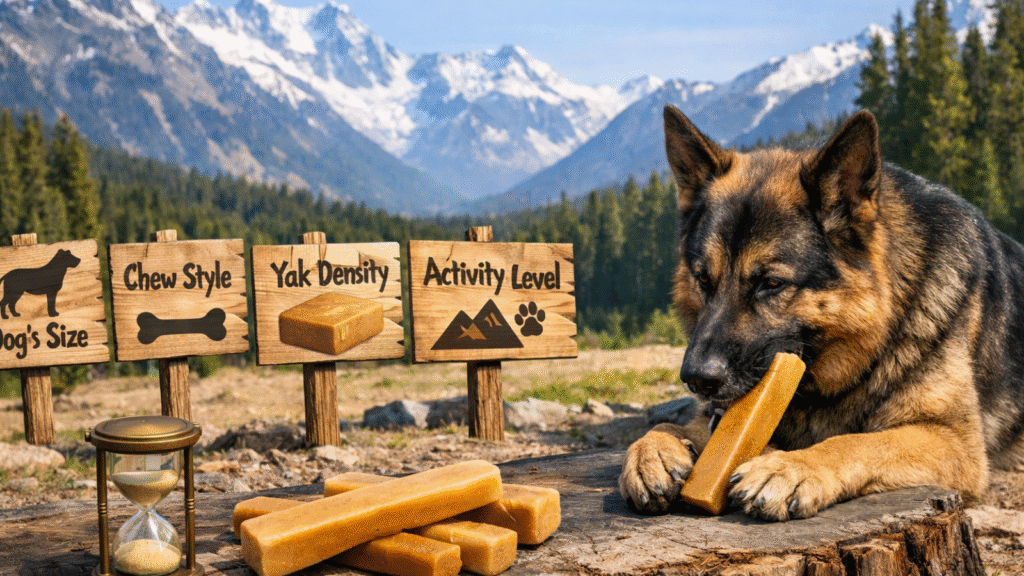
A high-quality extra-large yak chew lasts 3–7 days for most large dogs in daily 20–40 minute sessions. Aggressive chewers consume the same chew in 1–3 days. Light chewers extend use to 10–14 days.
Session management extends chew life significantly. Rotating between 2 yak chews, one active, one air-drying between sessions, doubles total lifespan because compressed yak protein re-hardens partially when allowed to dry between uses.
What Are the Best Yak Chews for Aggressive Large Dogs?
Which Yak Chews Last the Longest?
The longest-lasting yak chews for large dogs share 3 structural characteristics: maximum compression density, single-source yak milk base, and smoke-dried finishing rather than oven-dried processing.
Look for chews described as “traditional Himalayan process” or “hand-pressed,” ideally sourced from a certified Himalayan yak chew manufacturer & supplier with documented highland milk sourcing. Industrial yak chews pressed by machine at lower temperatures produce a porous interior structure that breaks down 40–60% faster than hand-pressed variants.
Chews exceeding 6 oz in weight consistently outlast lighter options in independent duration testing. Thicker rectangular profiles (not round tubes) also provide a greater surface-area-to-volume ratio, slowing the erosion rate.
Which Yak Chews Have the Fewest Ingredients?
The purest yak chews contain 2 ingredients: yak milk and salt. These minimalist formulas exist but are rarer than the standard 4-ingredient version. The lime juice component acts as a natural coagulant, not a flavoring agent, so its presence does not indicate lower purity.
Reading the ingredient panel on yak chews: ingredients list by weight. Yak milk appearing first confirms it is the dominant component. Any chew listing “yak and cow milk blend” with cow milk first contains proportionally more cow dairy and a softer, less dense final product.
Which Yak Chews Are Best for Sensitive Stomachs?
Yak chews for dogs with sensitive stomachs perform best when they contain no added salt beyond 1–2% total composition and zero artificial flavoring agents. Reduced-sodium yak chews exist specifically for dogs with kidney concerns or salt-sensitivity profiles.
Dogs with known dairy intolerance react to the lactose content in lower-quality yak chews. Authentic smoke-dried Himalayan chews undergo a natural fermentation process that reduces residual lactose to trace levels, typically below 1% of total composition. Dogs with confirmed lactose intolerance tolerate authentic fermented yak chews at a higher rate than processed dairy treats.
Are Yak Chews Healthy for Large Dogs?
Do Yak Chews Help Support Dental Health?
Yak chews support dental health by mechanically reducing plaque and tartar through sustained abrasive contact with molar and premolar surfaces. The VOHC recognizes chewing activity as a primary behavioral tool for plaque management in dogs.
A 2024 study published in the Journal of Veterinary Dentistry found that dogs fed daily dental chews for 60 consecutive days experienced a 26.6% reduction in calculus, a 14.2% reduction in plaque, and a 46.71% reduction in breath odor. Yak chews deliver this abrasive benefit through extended sessions covering molar surfaces that toothbrushes typically miss.
Yak chews deliver this abrasive benefit over extended sessions, 20+ minutes per sitting, covering tooth surfaces that standard daily brushing misses.
Yak chews do not replace toothbrushing. They reduce plaque formation rate. Combined with twice-weekly brushing, yak chews meaningfully extend intervals between professional dental cleanings. For a full evidence-based rundown of every oral health advantage, explore our article on the 10 dental benefits of Himalayan yak chews.
Are Yak Chews High in Protein?
Yak chews are high in protein, delivering between 6.5–9.2 grams of protein per ounce, depending on yak milk concentration and processing method. The protein type is predominantly casein, a slow-digesting micellar protein that releases amino acids over 5–7 hours.
Protein breakdown per standard extra-large chew (5 oz):
- Total protein: 32–46 grams
- Fat: 8–14 grams
- Calcium: 540–720 mg
- Sodium: 150–280 mg (varies by formula)
- Calories: 90–130 kcal per oz
This protein density exceeds bully sticks (approximately 5–6 g protein per oz) and rawhide (approximately 1–2 g protein per oz, primarily structural collagen).
Can Yak Chews Cause Digestive Problems?
Yak chews cause digestive problems in 3 specific scenarios: overconsumption, pre-existing dairy sensitivity, and swallowing of excessively large fragments. Outside these scenarios, yak chews are digested at a controlled rate without complications in the majority of large dogs.
Overconsumption looks like this: a large dog consuming more than one full yak chew within 24 hours receives approximately 180–260 kcal in chew calories alone. Adding this to daily food intake creates a caloric surplus and potential GI upset from accelerated fat loading.
Loose stool following the first 1–2 yak chew sessions is common and normalizes within 3–4 days as the digestive system adapts to the new protein and fat profile. For a symptom-by-symptom guide and owner advice, read our detailed page on how yak chews can affect your dog’s stomach.
How Often Should Large Dogs Have Yak Chews?
Large dogs tolerate yak chews 3–4 times per week in 20–40 minute supervised sessions. Daily yak chew use is acceptable for dogs without dairy sensitivity, kidney disease, or obesity concerns, provided total daily caloric intake accounts for chew calories.
A practical weekly schedule for large breeds:
- Monday / Wednesday / Friday / Sunday: 30-minute yak chew session
- Tuesday / Thursday / Saturday: Alternate chew type (rubber chew toy, frozen Kong) or rest day
Dogs under calorically restricted feeding plans (weight management protocols) reduce yak chew frequency to 2 sessions per week and select lower-fat formulations.
How Should You Safely Give Yak Chews to Large Dogs?
When Should You Take a Yak Chew Away?
Take a yak chew away when it reaches a size smaller than the dog’s muzzle width, the point at which the remaining piece can be swallowed whole without chewing. For most large breeds, this threshold is approximately 2.5–3 inches in length.
3 additional removal triggers apply regardless of size:
- The chew develops sharp edges or visible fracture points along the surface
- The dog begins gulping and swallowing pieces rapidly rather than chewing
- The chew softens significantly after extended moisture exposure and begins bending
How Can You Prevent Choking Hazards With Yak Chews?
Preventing choking hazards with yak chews involves 3 active practices: selecting the correct size, monitoring the first 3 sessions with any new chew, and removing the chew at the small-piece threshold. Passive supervision, checking on the dog every 10 minutes, provides insufficient protection for power chewers.
Positioning also matters. Dogs chewing while lying down on their side are at lower choking risk than dogs chewing while standing or holding the chew upright between their paws, as the latter position allows fragment acceleration toward the throat.
What Should You Do With Small Leftover Yak Chew Pieces?
Small leftover yak chew pieces (under 2.5 inches) have a safe and useful second purpose: microwave them for 45–60 seconds to create a puffy, popcorn-like yak cheese puff. The protein matrix expands under heat, transforming the hard, dense nub into a light, easily digestible treat that carries no choking risk.
The microwave method works for any piece that has become too small to safely chew. Place the piece on a microwave-safe plate, heat in 15-second increments, allow to cool for 3–5 minutes, and offer as a soft treat. Most large dogs consume this within 2–3 minutes. For detailed timing, troubleshooting tips, and what to watch for, see the step-by-step guide on how to puff yak chews in the microwave.
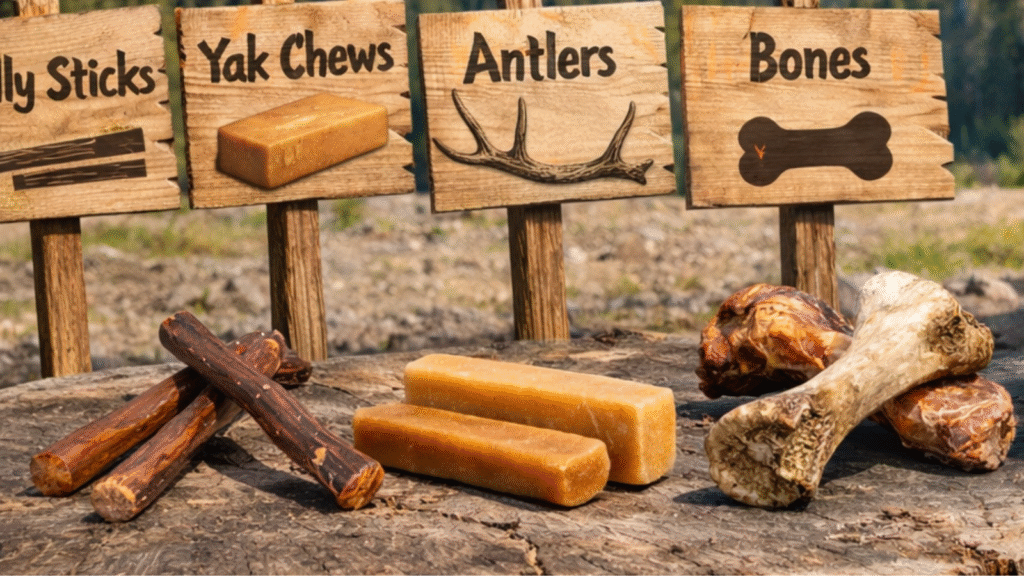
How Do Yak Chews Compare to Other Dog Chews?
Are Yak Chews Better Than Rawhide for Large Dogs?
Yak chews are demonstrably safer and more nutritious than rawhide for large dogs across 5 measurable criteria: digestibility, ingredient purity, choking risk, protein content, and processing transparency.
| Criteria | Yak Chew | Rawhide |
| Primary ingredient | Yak/cow milk | Cattle hide |
| Processing chemicals | None | Hydrogen peroxide, bleach (common) |
| Digestibility | High (casein protein) | Low (structural collagen) |
| Protein per oz | 6.5–9.2 g | 1–2 g |
| Choking risk | Low (controlled erosion) | High (swells and expands) |
| Lactose content | Trace (fermented) | None |
The FDA has documented real-world rawhide safety failures on record: multiple rawhide brands were recalled following the FDA rawhide chew product recall notice after facilities in Mexico, Colombia, and Brazil were found using quaternary ammonium compounds, industrial cleaning chemicals not approved for rawhide food production, causing vomiting and GI irritation in dogs.
How Do Yak Chews Compare to Bully Sticks?
Yak chews and bully sticks serve different chewing profiles. Bully sticks suit moderate chewers who need a 20–40 minute session. Yak chews suit power chewers who require 60+ minute sessions. For a side-by-side analysis covering nutrition, cost per chewing hour, and which dog type benefits most from each, see the full breakdown of yak chews vs bully sticks.
The 4 key differences:
- Duration: XL bully sticks last 20–45 minutes for large dogs. XL yak chews last 3–7 days across multiple sessions.
- Odor: Bully sticks produce a strong smell rated objectionable by most owners. Yak chews produce minimal odor.
- Protein source: Bully sticks are 100% bull pizzle (muscle tissue). Yak chews are dairy-derived casein.
- Cost per hour of chewing: Bully sticks cost approximately $2.50–$4.00 per hour of chewing activity. Yak chews cost approximately $0.60–$1.20 per hour when calculated across the full chew lifespan.
Which Chews Keep Large Dogs Occupied the Longest?
Ranked by average engagement duration for large breed dogs, yak chews consistently rank among the top 3 longest-lasting natural chews available:
- Yak chews (XL/Jumbo): 3–7 days across multiple 30-minute sessions
- Antlers (split or whole): 2–5 days, but higher tooth fracture risk
- Compressed rawhide rolls: 1–3 days, but lower digestibility
- Bully sticks (thick): 30–60 minutes per session
- Standard rawhide: 15–40 minutes per session
Yak chews provide the best combination of duration, safety, and digestibility in this ranking.
What Mistakes Should Owners Avoid With Yak Chews?
Can the Wrong Yak Chew Size Damage Teeth?
The wrong yak chew size damages teeth in 2 specific ways: oversized chews force unnatural jaw positioning during gripping, and undersized chews reach the molar crushing zone where fracture pressure concentrates.
Slab fractures, where a vertical piece of tooth cracks off, occur most frequently when dogs attempt to crush a chew between rear molars at excessive force angles. This happens when the chew width forces the dog to bite at the side of the molar rather than the crown center.
The correct chew width for large breeds allows the dog to grip the chew between front incisors and gnaw progressively forward, not crush with the back molars.
Should Puppies Eat Yak Chews Made for Large Dogs?
Puppies under 6 months should not receive adult large-breed yak chews. Puppy teeth begin erupting permanent dentition between 3–7 months, and adult-grade chew hardness creates fracture risk during this transition period.
Large breed puppies between 6–12 months tolerate softer yak chew variants labeled specifically for puppies, lower compression density, and smaller sizing. Standard adult yak chews become appropriate at 12 months when permanent dentition is fully established, and jaw bone density reaches adult levels.
Are Flavored Yak Chews Worth Buying?
Flavored yak chews, variants coated with bacon, chicken, or peanut butter, are generally not worth the additional cost for large dogs because authentic yak milk already carries a naturally appealing savory scent profile that motivates most large breeds without enhancement.
Flavored coatings create 2 practical problems: the coating wears off within the first 5 minutes of chewing, removing the primary motivational scent before the session sustains, and flavoring agents frequently include the artificial compounds that high-quality unflavored versions specifically avoid.
Dogs that initially reject plain yak chews respond to warming the chew to room temperature (never microwave to soften, only for spent small pieces) and rubbing the surface lightly with a small amount of the dog’s usual kibble or food.
How Should You Approach Yak Chews for Large Dogs?
Can Premium Dog Chews Help Large Dogs Chew Safely?
Premium yak chews help large dogs chew safely by delivering consistent density, standardized sizing, and verified single-source ingredients, 3 quality indicators absent from budget-tier products.
The price difference between premium and budget yak chews reflects 3 real manufacturing distinctions:
- Milk source verification: Premium manufacturers publish sourcing documentation confirming Himalayan highland yak milk at 40–60% of total composition.
- Density testing: Quality-controlled products undergo hardness testing per batch. Budget products do not.
- Freshness dating: Premium yak chews carry accurate best-by dates based on measured moisture content. Budget chews frequently carry conservative generic dates.
A $14–$18 extra-large premium yak chew costs approximately $0.80–$1.00 per hour of chewing engagement. A $7 budget equivalent lasting 1–2 days costs $1.40–$3.50 per hour. Premium chews deliver better value per chewing hour in addition to better safety outcomes.
What Are the Key Takeaways About the Best Yak Chews for Large Dogs?
The best yak chews for large dogs deliver on 6 non-negotiable criteria: correct size (XL or larger), appropriate hardness (Shore D 68–72), minimal ingredients (4 or fewer), verified yak milk sourcing, smoke-dried processing, and supervised use with a removal threshold at 2.5–3 inches.
The 7 most actionable takeaways from this guide:
- Size by jaw width, not just body weight. Wide-jawed breeds like Mastiffs and Rottweilers require jumbo-tier chews regardless of weight category.
- Apply the thumbnail test before purchasing. A chew that shows zero indentation may be too hard for tooth safety.
- Monitor the first 3 sessions with any new chew brand, regardless of stated quality level.
- Remove the chew at 2.5–3 inches remaining length; never allow a large dog to reach the final nub unsupervised.
- Use the microwave method for all small leftover pieces to eliminate choking risk while preserving treat value.
- Account for chew calories in daily food intake; each ounce of yak chew delivers 90–130 kcal.
- Select unflavored, authentic Himalayan chews over flavored budget alternatives for the best combination of safety, nutrition, and longevity.
Large dogs deserve chews built for their jaw strength, nutritional needs, and behavioral drive. Yak chews, selected correctly and used responsibly, meet all 3 requirements more reliably than any other natural chew category currently available.