

You should give your dog a chew 3 to 5 times per week as a starting baseline, with each session lasting 15 to 30 minutes under supervision. This frequency keeps dental and enrichment benefits consistent without overloading your dog’s calorie budget or digestive system. Adjust from this foundation based on your dog’s age, chewing style, the type of chew you offer, and how their body responds.
The “right” frequency is not a one-size-fits-all number. It shifts depending on whether you hand your dog a fast-finish dental stick or a rock-hard Himalayan yak chew that lasts for days. It changes if your puppy is teething versus your senior dog nursing sensitive gums. It also depends on whether your dog is a gentle nibbler or an aggressive gulper who treats every chew like a race.
This guide walks you through the practical rules, personalization factors, and safety boundaries that determine how often your dog should enjoy a chew, without guesswork.
The Safest “How Often” Starting Point
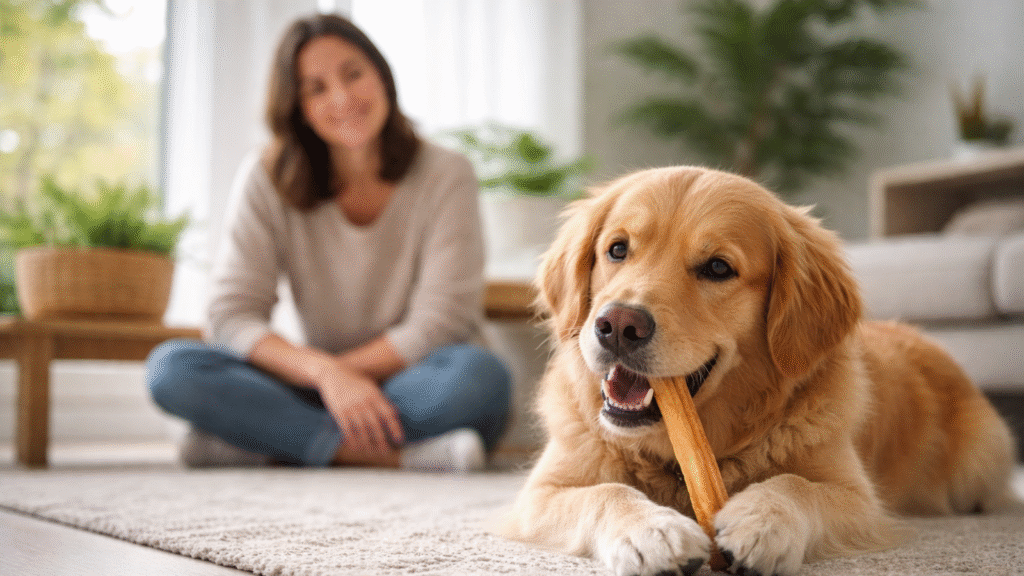
Most dogs do best with chew sessions a few times per week, while some dogs can handle a short daily chew if calories and stomach tolerance allow. A simple, safe starting point is 10–15 minutes per session, then adjust based on stool quality, weight, and how fast your dog breaks off chunks. Because chews are still “treat calories,” keep them within the treat budget (often around 10% of daily intake) and reduce meal portions on heavier chew days.
Rule-of-Thumb Frequency for Most Dogs (Daily vs Weekly Baseline)
Most healthy adult dogs can safely enjoy a chew 3 to 5 times per week. This schedule provides regular enrichment and dental activity without tipping into overconsumption. Daily chewing is acceptable for low-calorie options like certain chew toys or thin dental sticks, but becomes risky with calorie-dense or ultra-hard chews that stress teeth or digestion.
You reduce risk when you treat chews as scheduled enrichment rather than an all-day buffet. Dogs thrive on routine, and a predictable chew schedule prevents overconsumption while maintaining the behavioral and dental benefits you are aiming for.
The 10% Calories Rule: How to Fit Chews Into Your Dog’s Diet
Treats and chews combined should account for no more than 10% of your dog’s daily caloric intake-a recommendation endorsed by both the World Small Animal Veterinary Association (WSAVA) and the American Animal Hospital Association (AAHA) and validated in a 2025 University of São Paulo study on treat calorie recommendations for dogs. The remaining 90% comes from balanced meals. This rule prevents weight gain, nutritional imbalance, and digestive upset that occur when chews displace proper nutrition.
A 50-pound (22.7-kilogram) dog eating 1,000 calories per day can safely consume 100 calories from chews and treats. A typical 3-ounce (85-gram) bully stick contains roughly 90 calories, which uses nearly your entire treat budget for the day. A Himalayan yak chew of similar weight may contain 70 to 80 calories because of lower fat content. Track these numbers when planning frequency, especially if your dog also receives training treats or food toppers.
Calculate your dog’s daily calorie needs based on weight, activity level, and life stage, then reserve 10% for chews. Adjust meal portions slightly downward on chew days to maintain balance. Overfeeding treats is one of the most common mistakes we see in otherwise attentive owners.
How Long a Chew Session Should Last for Real Benefit
A productive chew session lasts 15 to 30 minutes. This window gives your dog enough time to engage their jaw muscles, scrape plaque from teeth, and satisfy their natural urge to gnaw, without overworking their jaw or consuming excessive calories in one sitting.
Shorter sessions (5 to 10 minutes) are appropriate for puppies with developing teeth or for dogs trying a new chew type for the first time. Longer sessions (45 to 60 minutes) are acceptable for very durable chews like yak chews, but only if your dog is an experienced chewer and you remain nearby to monitor. Extended unsupervised chewing increases the risk of choking, tooth fractures, and digestive blockages from swallowing large pieces.
Set a timer during the first few sessions to build awareness of how long your dog typically chews before losing interest. Remove the chew when your dog stops actively gnawing or when the recommended time window closes, whichever comes first.
Signs You’re Giving Chews Too Often (Stool, Appetite, Behavior, Weight)
Four warning signs indicate you have crossed into overuse territory.
- Firstly, loose stool or diarrhea appearing within 12 to 24 hours of a chew session signals digestive overload or sensitivity to an ingredient.
- Secondly, reduced appetite at mealtimes suggests your dog is filling up on chews instead of balanced food.
- Thirdly, behavioral changes such as increased restlessness, pacing, or mild aggression can point to gastrointestinal discomfort or even nausea.
- Lastly, unexplained weight gain despite consistent meal portions means chew calories are tipping your dog into caloric surplus.
You should also watch for excessive drooling, bad breath that worsens after chewing, or visible gum irritation. These symptoms often precede more serious issues like pancreatitis or dental damage. Pull back on chew frequency immediately if any of these signs appear, and consult your veterinarian if symptoms persist beyond 48 hours.
What Counts as a “Dog Chew” and Why Frequency Depends on the Type
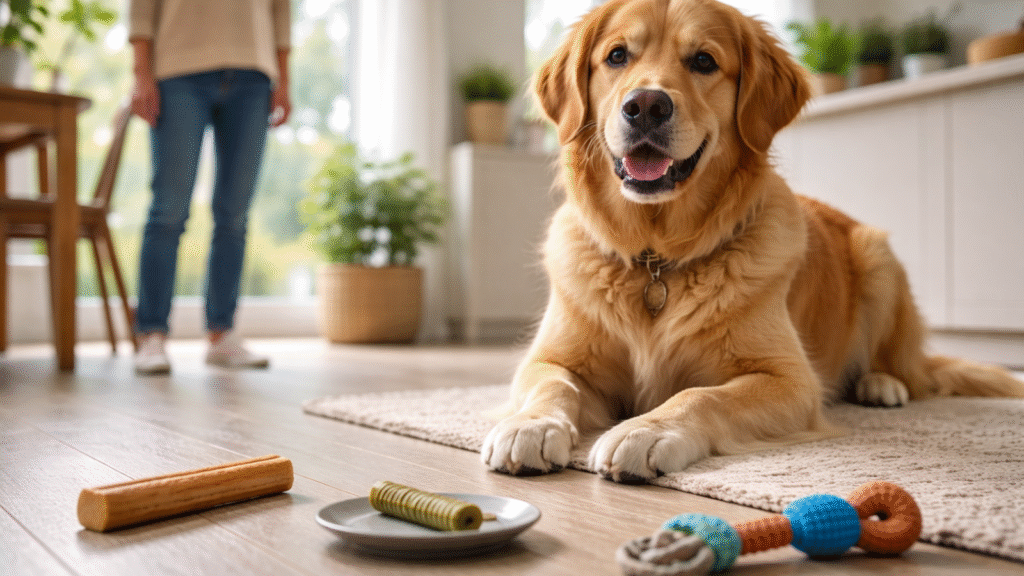
Not all chews behave the same in the body, so “how often” depends on whether it’s an edible chew, a dental chew, or a non-edible chew toy. Long-lasting edible chews typically need less frequent use than soft dental chews because they add more calories and can upset sensitive stomachs if overused. A good rule is: harder/longer-lasting chews are fewer sessions; softer/shorter chews are easier to schedule more often, always with supervision.
Edible Chews vs Chew Toys: Which Can Be Given More Often
Chew toys made from rubber, nylon, or woven fabric can be offered daily without calorie or digestive concerns because they are not consumed. These items provide mental stimulation and jaw exercise without adding to your dog’s daily intake. Edible chews, by contrast, contribute calories, protein, and fat to your dog’s diet, which means they must be rationed within the 10% treat allowance.
Edible chews include bully sticks, yak chews, rawhide alternatives, jerky strips, and dental sticks. These products break down over time and enter your dog’s digestive system. Offer them 3 to 5 times per week as enrichment, not as a dietary staple. Chew toys can remain accessible throughout the day, though rotating them weekly prevents boredom and keeps engagement high.
Do not assume all “natural” chews are low-calorie. A single pig ear can contain 130 calories or more, while a large rawhide bone may exceed 200 calories when fully consumed. Read labels and weigh products to understand their nutritional impact.
Long-Lasting vs Fast-Finish Chews: Why Duration Changes the Schedule
- Fast-finish chews (consumed in 5 to 15 minutes) can be given more frequently than long-lasting chews because they deliver a controlled calorie dose and a clear digestive timeline. Dental sticks, small jerky strips, and thin bully sticks fall into this category. These chews work well as daily supplements if they fit within your calorie budget.
- Long-lasting chews such as thick yak chews, large bully sticks, or dense collagen rolls may occupy your dog for hours or even days. These products should be offered 2 to 3 times per week to prevent overconsumption and give your dog’s digestive system time to process the previous chew. Dogs who gnaw on the same yak chew for 3 consecutive days are effectively receiving a single extended chew session, not 3 separate treats.
Store partially consumed long-lasting chews in a sealed container or refrigerator between sessions. Discard any chew that develops mold, an off smell, or visible cracks that could splinter into sharp pieces.
Dental Chews vs Enrichment Chews: Different Goals, Different Frequency
- Dental chews are formulated specifically to reduce plaque and tartar buildup through mechanical abrasion and sometimes include enzymes or additives that target oral bacteria. These chews are designed for daily use and typically dissolve quickly to minimize choking risk. Follow the manufacturer’s recommended frequency, which is often once per day for dogs over a certain weight threshold.
- Enrichment chews prioritize mental stimulation and jaw exercise over dental benefits. Yak chews, bully sticks, and antler pieces fall into this category. These chews are harder, longer-lasting, and not optimized for plaque removal. Offer them 3 to 5 times per week to satisfy your dog’s instinct to chew without replacing the daily dental chew.
Combining both types creates a balanced routine: a dental chew each morning after breakfast, and an enrichment chew 3 evenings per week during your wind-down routine. This approach addresses oral health and behavioral needs without doubling your treatment budget.
What “Dental Benefit” Really Means (and the Role of Veterinary Oral Health Council)
Not every chew that touches your dog’s teeth delivers a measurable dental benefit. The Veterinary Oral Health Council (VOHC) is an independent body that evaluates products through controlled clinical trials; check the VOHC Accepted Products for Dogs (November 2025 official PDF) before assuming any chew’s label claims are verified. Products earning the VOHC seal have demonstrated measurable improvement in oral health when used as directed. If you want a deeper breakdown, the dental benefits of Himalayan yak chews go well beyond surface-level abrasion and are worth understanding before choosing a chew type.
Many chews marketed as “dental” lack VOHC approval because they have not undergone testing or have failed to meet efficacy standards. These products may still provide enrichment and light abrasion, but they should not replace daily tooth brushing or professional cleanings. Check for the VOHC seal on packaging or visit the VOHC website to verify claims before assuming a chew will improve your dog’s oral health.
Mechanical action matters more than marketing language. Chews must be firm enough to create friction against tooth surfaces but not so hard that they crack enamel. Texture, shape, and chewing time all influence effectiveness. A chew that your dog swallows whole delivers zero dental benefit regardless of what the label promises.
Personalize Chew Frequency to Your Dog’s Profile

Puppies, seniors, and sensitive dogs usually need less frequent, gentler chew sessions than healthy adult dogs with steady digestion. Your dog’s chewing style matters as much as age; power chewers and “gulpers” should chew less often or only with safer sizes and chew-holders to prevent swallowing chunks. The best plan is to start low, observe for 3–7 days, and increase only if your dog stays comfortable, maintains a healthy stool, and doesn’t rush through the chew.
1. Puppies: Teething, Softer Options, and Safer Time Limits
Puppies from 3 to 8 months old experience teething discomfort and have an intense urge to chew. Offer softer chews such as rubber teething toys, frozen carrots, or puppy-specific dental sticks daily to soothe sore gums without damaging developing teeth. Edible chews should be limited to 2 to 3 times per week and kept under 10 minutes per session because puppies have smaller stomachs and less developed digestive systems.
Avoid ultra-hard chews like antlers, bones, or thick yak chews until your puppy’s adult teeth fully emerge (around 7 to 8 months). Puppy teeth are softer and more prone to fractures, which can lead to painful infections or require extraction. Choose chews labeled for puppies or those you can indent with your thumbnail. For a detailed age-by-age breakdown, see our guide on whether yak chews are safe for puppies before introducing them to younger dogs.
Supervise every chew session closely. Puppies are more likely to bite off large chunks and attempt to swallow them whole because they have not yet learned to pace themselves. Remove any chew that becomes small enough to fit entirely in your puppy’s mouth, even if it seems like there is more to gnaw.
2. Adult Dogs: Activity Level, Feeding Routine, and Boredom Prevention
Healthy adult dogs (1 to 7 years old) benefit from chews 3 to 5 times per week, adjusted for activity level and feeding routine. High-energy dogs such as working breeds or those in regular training programs may need chews 5 to 7 times per week to prevent destructive chewing of furniture or belongings. Low-energy or sedentary dogs should stick to the lower end (3 times per week) to avoid weight gain.
Incorporate chews into your dog’s daily rhythm. Offer a chew after morning exercise to encourage calm settling, or provide one during your work-from-home hours to prevent boredom-driven behaviors. Dogs left alone for extended periods benefit from long-lasting chews during the first hour of separation, when anxiety-driven destruction is most common. A 2023 controlled study by the Waltham Petcare Science Institute found that long-lasting chews produced significantly more positive and calm emotional states in dogs during isolation than treat-dispensing toys or automated devices.
Rotate chew types weekly to maintain novelty. Alternating between yak chews, bully sticks, and collagen-based chews prevents habituation and keeps your dog engaged. Dogs who lose interest in a chew after 5 minutes often need variety, not more frequency.
3. Senior Dogs: Sensitive Teeth, Digestion, and Gentler Chew Choices
Senior dogs (7+ years, depending on breed size) often have weakened teeth, receding gums, or slower digestion. Offer softer chews 2 to 4 times per week and monitor for signs of discomfort such as dropping the chew repeatedly, pawing at the mouth, or reluctance to engage. Dental disease is the most common clinical condition in adult dogs, and the American Veterinary Dental College notes it is almost entirely preventable — yet it progresses silently below the gumline (AVDC: periodontal disease is the most common clinical condition in adult dogs, 2025). Severity increases with age, making senior dogs especially vulnerable.
Choose chews designed for seniors or those that you can easily break by hand. Softer yak chews, thin bully sticks, or dehydrated sweet potato slices work well. Avoid rawhide, antlers, and hard nylon bones, which can crack already fragile teeth. Many senior dogs prefer shorter chew sessions (10 to 15 minutes) because their jaw muscles fatigue more quickly.
Senior dogs with kidney disease, diabetes, or pancreatitis require veterinary guidance on chew selection. High-protein or high-fat chews can exacerbate these conditions. Your veterinarian may recommend low-protein dental chews or prescribe therapeutic options designed for compromised health.
Power Chewers, Gulpers, and Sensitive Stomachs: The 3 Styles That Need Special Rules
- Power chewers destroy standard chews in minutes and are at high risk for tooth fractures, choking, and blockages. Offer ultra-durable chews like thick yak chews or heavy-duty rubber toys 3 to 4 times per week, and size up to the next weight class to extend chew time. Matching chew type to chewing style makes a significant difference in safety and session length. Our yak chews guide by chewing style covers the right options for each type. Monitor for cracked teeth by checking your dog’s mouth weekly and watching for signs of pain such as head shaking, drooling, or reluctance to eat hard kibble.
- Gulpers swallow large pieces without chewing thoroughly, which increases choking and blockage risk. Offer these dogs only large, dense chews that cannot be bitten into swallowable chunks, and remove the chew when it shrinks to fist-sized. Limit sessions to 15 to 20 minutes and stay within arm’s reach. Some gulpers benefit from chews frozen in a puzzle toy, which forces slower consumption.
- Dogs with sensitive stomachs experience vomiting, diarrhea, or gas after certain chews. Start with single-ingredient options like plain yak chews or dehydrated chicken strips, and introduce new chews one at a time over a 7 to 10-day period. Limit frequency to 2 to 3 times per week initially, then increase gradually if no symptoms appear. Keep a food diary to track which chews trigger reactions.
How Often to Give Himalayan Yak Chews Safely
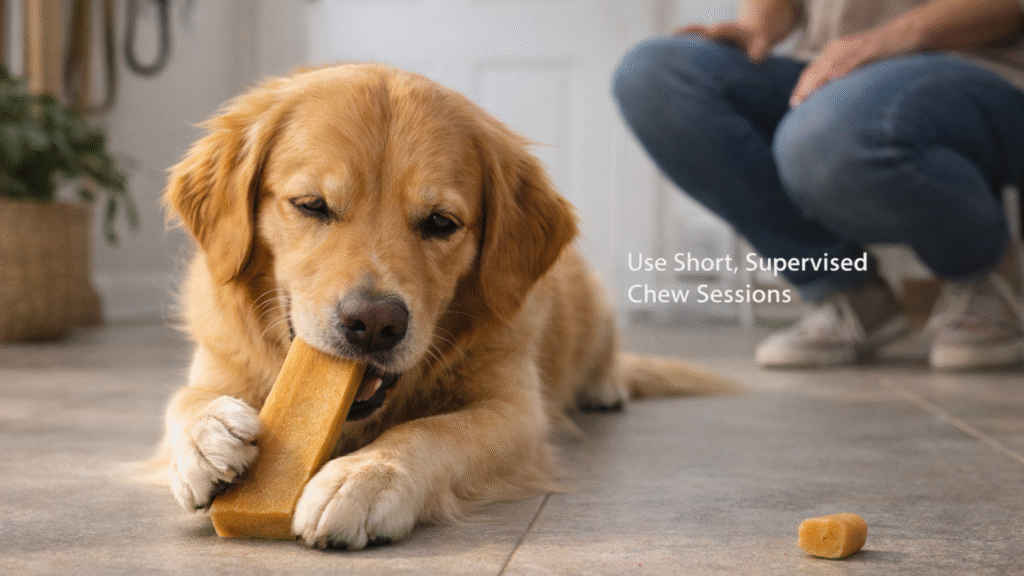
Yak chews can fit into many dogs’ routines, but frequency should be guided by your dog’s bite strength, digestion, and how quickly the chew gets small. For many dogs, a controlled schedule (short sessions a few times per week) works better than leaving a yak chew out daily, especially for strong chewers who try to crunch instead of gnaw. Size selection and end-piece management are critical. Choose a chew larger than your dog’s mouth and remove it once it becomes small enough to swallow.
Yak Chews Frequency Range: When “Daily” Is Too Much and When It’s Fine
Himalayan yak chews can be offered 3 to 5 times per week for most adult dogs. Daily use becomes problematic if your dog consumes large portions quickly, which can lead to gastrointestinal upset from the high protein and lactose (even though most lactose evaporates during traditional curing, trace amounts remain). Dogs new to yak chews should start with 2 sessions per week and increase gradually over 2 to 3 weeks.
Small dogs (under 20 pounds or 9 kilograms) should receive yak chews no more than 3 times per week because these chews are calorie-dense relative to their daily intake. Large dogs (over 60 pounds or 27 kilograms) tolerate more frequent sessions (4 to 6 times per week) because the chew represents a smaller percentage of their diet.
Daily yak chew sessions are acceptable only if you select a very large size that your dog gnaws over multiple days without consuming significant mass in one sitting. Track how much your dog actually ingests, not just how long they chew. A dog who reduces a 3-ounce (85-gram) yak chew by half in one session has consumed roughly 35 to 40 calories and a substantial protein load.
Choosing the Right Yak Chew Size and Thickness for Your Dog (Not Just Weight)
Size selection depends on your dog’s jaw strength, chewing style, and swallowing habits, not just body weight. A 40-pound (18-kilogram) power chewer needs a larger, thicker chew than a 60-pound (27-kilogram) gentle nibbler. Choose a chew that your dog cannot fit entirely in their mouth, even when turned sideways.
Yak chews come in small (under 3 inches or 7.6 centimeters), medium (3 to 5 inches or 7.6 to 12.7 centimeters), large (5 to 7 inches or 12.7 to 17.8 centimeters), and extra-large (over 7 inches or 17.8 centimeters) sizes. Thickness matters as much as length. A thin 6-inch (15.2-centimeter) chew may last only 20 minutes for an aggressive chewer, while a thick 4-inch (10.2-centimeter) chew could last days.
Gulpers and dogs with a history of blockages should receive the largest size available, even if it seems oversized. These dogs must work harder to gnaw off pieces, which slows consumption and reduces choking risk. Replace the chew when it shrinks to a size your dog could swallow whole.
Making Yak Chews Safer: Supervision Rules and End-Piece Handling (Including Puffing/Softening Options)
Never leave your dog unsupervised with a yak chew, especially during the first 3 sessions. Watch for signs of aggressive gnawing, attempting to swallow large pieces, or frustration that could lead to cracked teeth. Remove the chew when it becomes small enough to fit entirely in your dog’s mouth (typically when 2 to 3 inches or 5 to 7.6 centimeters remain).
End-pieces pose the highest choking risk because dogs often try to swallow them whole after gnawing for days. Collect end-pieces and microwave them for 30 to 60 seconds until they puff into a light, crunchy treat. This technique softens the chew and expands it to a safer size. For exact timing and step-by-step instructions, our guide to puffing yak chews in the microwave walks through the full process. Allow puffed pieces to cool completely before offering them back to your dog.
Some owners soak end-pieces in warm water for 10 to 15 minutes to soften them further, though this reduces shelf life and can introduce bacterial growth if not used immediately. Discard any chew that develops an off smell, slimy texture, or visible mold. Store partially consumed yak chews in a breathable container (not airtight) in a cool, dry place to prevent moisture buildup.
Quality Checklist: Ingredients, Sourcing, Drying/Processing, Freshness, and Storage
High-quality yak chews contain 4 ingredients or fewer: yak milk, cow milk, lime juice, and salt. Avoid products listing additives, preservatives, artificial flavors, or unspecified “natural flavoring.” These ingredients often mask poor-quality milk or attempt to extend shelf life beyond safe limits.
Sourcing matters. Chews produced in Nepal or Bhutan using traditional Himalayan methods (slow sun-drying or smoke-drying for weeks) retain better texture and safety than factory-accelerated versions. Working with a trusted yak chew manufacturer that sources directly from Himalayan herder communities and uses traditional curing methods to evaporate most lactose makes a measurable difference in digestive tolerance and chew quality for sensitive dogs. This process also creates the dense, long-lasting texture that defines authentic yak chews.
Check for drying quality by pressing your thumbnail into the chew. It should resist indentation but not feel brittle or rock-hard. Brittleness indicates over-drying or age, both of which increase tooth fracture risk. Fresh yak chews have a mild, slightly tangy smell (from the lime juice) but no ammonia, sour milk, or chemical odors.
Store yak chews in a cool, dry place away from direct sunlight. Rotate stock every 6 months, using older chews first. Humidity causes chews to soften and mold, while excessive heat can cause fat bloom (white, powdery residue) that is harmless but unappealing. For a full breakdown of packaging and shelf-life best practices, the yak chew storage guide covers everything you need to keep chews fresh between sessions.
Safety Rules That Control Frequency More Than Any Calendar
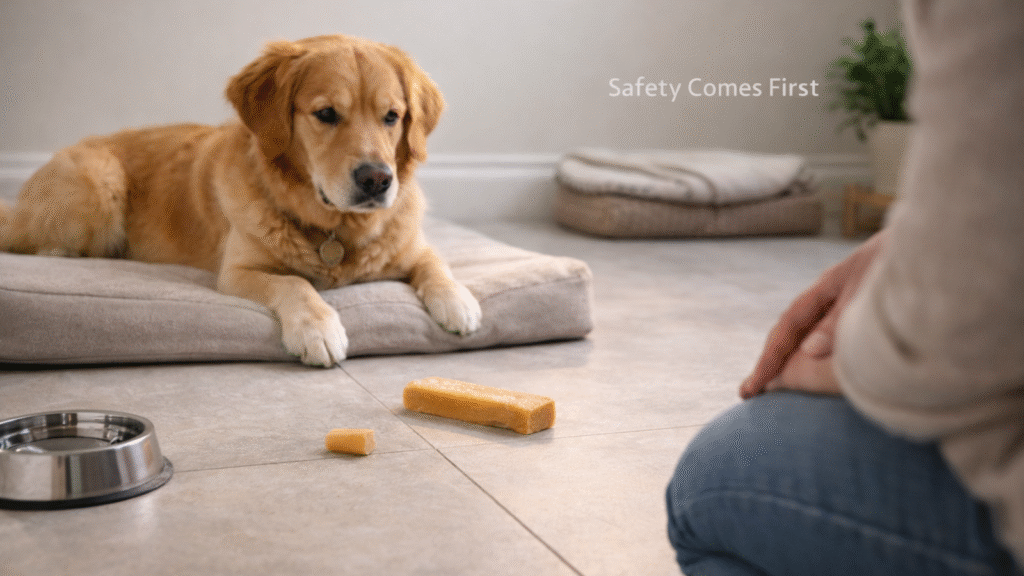
Chew frequency should always be limited by safety first: tooth fracture risk, choking risk, and digestive tolerance. If your dog can crack or splinter a chew quickly, the chew is too hard, or the dog is chewing too aggressively, so reduce frequency and switch to a safer texture. Any signs like gagging, repeated vomiting, abdominal pain, or sudden refusal to chew normally are “stop now” signals and a reason to contact your vet.
Tooth Safety: How to Avoid Cracked Teeth (Hardness Checks and Safer Swaps)
Cracked or fractured teeth are the most common serious injury from inappropriate chews. Perform the thumbnail test before offering any new chew: press your thumbnail firmly into the surface. You should be able to leave a slight indent. Chews that resist all pressure (antlers, nylon bones, large weight-bearing bones) are too hard for safe chewing and should be avoided entirely. If you are unsure whether yak chews fall within safe hardness limits for your dog, are yak chews too hard for dogs in the context of size and breed?
Dogs with pre-existing dental disease, weakened enamel, or a history of tooth fractures should not receive hard chews. Offer softer alternatives such as rubber toys, dehydrated sweet potato, or thin bully sticks. Watch for signs of dental pain, including head shaking, pawing at the mouth, reluctance to chew on one side, or suddenly dropping the chew mid-session.
Broken teeth rarely heal on their own and usually require extraction or root canal treatment. Prevention is the only reliable strategy. Rotate chew types to avoid repetitive stress on the same teeth, and inspect your dog’s mouth monthly for chips, cracks, or discoloration that could indicate hidden damage.
Choking and Blockage Prevention: Size, Shape, and “Take It Away” Timing
Choking occurs when a piece becomes lodged in your dog’s throat, while blockages happen when swallowed pieces obstruct the esophagus, stomach, or intestines. Size chews so your dog cannot fit them entirely in their mouth. Round or ball-shaped chews pose a higher choking risk than flat or irregular shapes because they can seal the airway completely.
Remove the chew when it shrinks to a size your dog could swallow whole. For most dogs, this threshold is 2 to 3 inches (5 to 7.6 centimeters) in length or diameter. Gulpers need even stricter limits. Teach a reliable “drop it” or “give” command before introducing chews, and practice regularly with low-value items so your dog complies even when they are engaged with a high-value chew.
Signs of choking include pawing at the mouth, gagging, drooling excessively, or making choking sounds without producing anything. Signs of blockage develop more slowly and include vomiting, loss of appetite, lethargy, or inability to defecate. Both situations require immediate veterinary attention. Do not attempt to remove a lodged object yourself unless you have been trained in animal first aid.
Rawhide, Bones, Antlers, and Ultra-Hard Chews: When to Avoid vs When It May Be Acceptable
- Rawhide carries a high risk for choking and blockages because it softens into gummy pieces that dogs often swallow whole. Traditional rawhide also undergoes chemical processing (bleaching, flavoring, gluing) that introduces digestive irritants. Avoid rawhide entirely if safer alternatives like yak chews, bully sticks, or collagen rolls are available.
- Cooked bones splinter into sharp shards that can pierce the digestive tract, causing life-threatening internal bleeding or peritonitis. Never offer cooked bones of any kind, including those from your dinner plate. Raw bones are less brittle but still pose fracture and blockage risks. Offer raw bones only under veterinary guidance and strict supervision, and remove them after 15 to 20 minutes.
- Antlers and nylon bones are harder than your dog’s teeth. These products cause more tooth fractures than any other chew type. The American Veterinary Dental College and most veterinary dentists recommend avoiding them completely. Dogs attracted to ultra-hard chews often respond well to thick yak chews or heavy-duty rubber toys designed for aggressive chewers.
- When ultra-hard chews may be acceptable: Never. The risk of permanent dental damage outweighs any benefit. Choose durable but tooth-safe alternatives instead.
Red Flags That Mean “Stop Chews and Contact a Vet” (Vomiting, Pain, Gagging, Lethargy)
Four symptoms require immediate cessation of chews and veterinary consultation.
- Firstly, vomiting within 12 hours of a chew session, especially if repeated or accompanied by lethargy.
- Secondly, visible pain such as whining, reluctance to move, hunched posture, or guarding of the abdomen.
- Thirdly, gagging, retching, or coughing without producing anything, which may indicate a partial blockage or a lodged piece.
- Lastly, sudden lethargy, loss of appetite, or refusal to drink water lasting more than 24 hours.
Other concerning signs include bloody or black stool (indicating gastrointestinal bleeding), straining to defecate without success (possible blockage), swelling around the jaw or face (tooth infection or allergic reaction), and difficulty breathing or pale gums (choking or shock). Do not wait to see if symptoms resolve on their own. Early veterinary intervention prevents complications and improves outcomes.
If you suspect choking, check your dog’s mouth only if you can do so safely without being bitten. Do not attempt to pull out a lodged object unless it is clearly visible and loose. Transport your dog to an emergency clinic immediately while keeping them as calm as possible.
Practical Chew Schedules and Rotation Plans You Can
A smart chew routine uses rotation, mixing different chew types across the week so your dog gets enrichment without overloading calories or irritating the stomach. Most dogs do best with planned sessions (for example, 10–15 minutes per session) rather than unlimited access, especially with edible chews. The most reliable approach is “track and adjust”: monitor stool, appetite, and weight weekly, then increase or decrease chew days based on what your dog handles well.
Sample Weekly Chew Schedules for Small, Medium, and Large Dogs
Small dogs (under 20 pounds or 9 kilograms):
- Monday: 10-minute session with a small yak chew
- Wednesday: 15-minute session with a thin bully stick
- Friday: 10-minute session with a small yak chew
- Sunday: 15-minute session with a dental stick
Medium dogs (20 to 60 pounds or 9 to 27 kilograms):
- Monday: 20-minute session with a medium yak chew
- Tuesday: Daily dental chew after breakfast
- Thursday: 25-minute session with a bully stick
- Saturday: 20-minute session with a collagen roll
- Sunday: 15-minute session with medium yak chew
Large dogs (over 60 pounds or 27 kilograms):
- Monday: 30-minute session with a large yak chew
- Tuesday: Daily dental chew after breakfast
- Wednesday: 30-minute session with a thick bully stick
- Friday: 30-minute session with large yak chew
- Saturday: 25-minute session with a large collagen roll
- Sunday: Free access to a durable rubber chew toy
Adjust these schedules based on your dog’s response. Increase frequency by one session per week if your dog shows no digestive upset and maintains a healthy weight. Decrease frequency if any warning signs appear.
A Chew Rotation Table by Type (Yak, Bully, Collagen, Dental, Toys) With Frequency and Watch-Outs
| Chew Type | Recommended Frequency | Session Length | Primary Watch-Outs |
| Yak chews | 3 to 5 times per week | 20 to 30 minutes | End-piece choking; aggressive gnawing causing tooth stress |
| Bully sticks | 3 to 5 times per week | 15 to 25 minutes | High calorie/fat; odor; last 2 inches pose choking risk |
| Collagen rolls | 3 to 4 times per week | 20 to 30 minutes | Softens quickly; gulpers may swallow large pieces |
| Dental chews (VOHC-approved) | Daily (per label) | 5 to 15 minutes | Usually dissolve quickly; verify calorie content fits 10% budget |
| Rubber/nylon toys | Daily, unlimited | Supervised play | Inspect weekly for cracks, tears, or loose pieces |
Rotate through this table weekly to maintain variety. Week one might emphasize yak chews and dental sticks, while week two shifts to bully sticks and collagen rolls. This rotation prevents habituation and spreads wear across different tooth surfaces. If you are deciding between the two most popular edible options, our head-to-head comparison of yak chews vs bully sticks can help you weigh calorie content, durability, and digestive impact side by side.
Transition Plan: How to Increase Chew Frequency Without GI Upset
Sudden increases in chew frequency overwhelm your dog’s digestive system and cause diarrhea, gas, or vomiting. Transition gradually over 2 to 3 weeks using this plan:
- Week 1: Add one additional chew session per week (baseline 3 sessions becomes 4 sessions). Monitor stool consistency and appetite closely. If no negative signs appear, proceed to week 2.
- Week 2: Add a second session (baseline becomes 5 sessions per week). Continue monitoring. Allow your dog’s system to adjust for 7 full days before proceeding.
- Week 3: Add a third session if needed (baseline becomes 6 to 7 sessions per week). This frequency is only appropriate for high-energy dogs or those using very low-calorie chews.
Reverse the plan if any digestive symptoms appear. Drop back to the previous week’s frequency and hold for an additional 7 days before attempting to increase again. Some dogs plateau at 3 to 4 sessions per week and should not be pushed beyond their tolerance.
How often should I give my dog an edible chew?
Most dogs do well with edible chews 2–4 times per week. Monitor for firm stool, stable weight, and signs of digestive upset. Adjust frequency based on your dog’s chewing speed, stomach sensitivity, or weight gain.
Can I give my dog a chew every day?
Daily chews are safe for some dogs only if they fit within treat calorie limits and don’t cause soft stool. Use gentler chews and supervise sessions. If your dog breaks chunks or eats too fast, reduce frequency.
How long should my dog chew per session?
Limit chew sessions to 10–15 minutes, especially with new chews or strong chewers. Stop the session when the chew becomes small, sharp, or easy to swallow to prevent choking.
How do I know if I’m giving chews too often?
Signs of overuse include soft stool, vomiting, gas, reduced appetite, weight gain, or obsessive chewing. If these appear, reduce frequency and try a gentler or lower-calorie option.
Are yak chews safe to give every day?
Yak chews are safe for occasional use but not ideal daily due to their hardness and calorie density. Strong chewers may risk tooth damage. Limit use to a few short sessions per week with supervision.
How often can puppies have chews?
Puppies should have soft, supervised chews a few times per week. Avoid hard chews during teething and stop use if your puppy gulps or swallows large pieces.
What’s the best chew frequency for senior dogs?
Senior dogs benefit from gentler chews given a few times per week. Monitor for worn teeth, discomfort, or digestive sensitivity. Avoid hard chews if your dog has dental issues.
Can chews replace tooth brushing?
Chews help support dental health, but don’t replace brushing. Brushing cleans the gumline better. Combine chews with regular brushing and vet dental checks for complete care.
Should I rotate different chews during the week?
Rotate chews to reduce boredom and digestive issues. Mix rich chews with lighter options or toys. Introduce new chews slowly and keep the schedule predictable to avoid overexcitement or guarding.
What dogs should get chews less often or only with vet advice?
Dogs with pancreatitis, obesity, diabetes, GI issues, food allergies, or cracked teeth need restricted chew use. Always consult a vet if your dog has a medical condition or is on a special diet.
Final Guidance
The frequency question has no universal answer because every dog brings a unique combination of age, health, chewing style, and daily routine. Start with the baseline recommendation of 3 to 5 sessions per week, adjust based on your dog’s individual response, and prioritize safety over maximizing chew time.
Watch your dog closely. Their body will signal when frequency is right (consistent energy, healthy stool, maintained weight, enthusiastic chewing) or when you need to pull back (digestive upset, dental pain, loss of interest). The best chew schedule is the one your dog thrives on, not the one a chart prescribes.
Quality matters more than quantity. A well-chosen yak chew from a reputable source like YforYak, offered 3 times per week under supervision, delivers more value than daily low-quality chews that pose safety risks or fail to engage your dog. Build your chew routine on safety, moderation, and attention to your individual dog’s needs.