
Yak chews are long-lasting Himalayan dog chews made from yak milk, cow milk, lime juice, and salt that support canine dental hygiene, mental stimulation, and high-protein nutrition. Dog owners commonly use yak chews as a natural alternative to rawhide because they are fully digestible, minimally processed, and free from artificial preservatives or chemical softeners. The dense texture helps reduce plaque buildup through prolonged chewing action while also satisfying a dog’s natural chewing instinct, which plays an important role in stress reduction, boredom prevention, and behavioral enrichment.
Despite their benefits, yak chews are not suitable for every dog. Size selection, chewing intensity, dental condition, age, digestive sensitivity, and underlying health issues all determine whether a yak chew is safe or potentially harmful. Dogs with pancreatitis, tooth fractures, chronic kidney disease, or dairy sensitivity may require veterinary guidance before introduction. Understanding how yak chews are made, how they compare to bully sticks and rawhide, how often dogs should chew them, and what safety precautions owners should follow helps create a safer and more effective chewing routine for long-term canine health.
What Are Yak Chews Made From?
Yak chews are made from a 4-ingredient base of yak milk, cow milk, lime juice, and salt, hardened through a traditional Himalayan preservation process into a dense, long-lasting chew. No synthetic binders, bleaching agents, or artificial preservatives are used in authentic versions.
How Are Yak Chews Traditionally Prepared?
Traditional yak chew preparation originates in the Himalayan regions of Nepal, Tibet, and Bhutan, where dairy preservation techniques developed over centuries as a practical solution to limited refrigeration. Local communities boil yak and cow milk together, then curdle it using lime juice. The curds are pressed into dense blocks, wrapped tightly in yak hide or cloth, and hung to air-dry for 35 to 60 days at high altitude. The result is a rock-hard block with very low moisture content, typically under 10%, which prevents bacterial growth and extends shelf life naturally.
This drying-and-pressing method concentrates the protein while removing the majority of lactose. Dogs with mild dairy sensitivity tolerate finished yak chews better than raw dairy products for exactly this reason.
What Ingredients Are Commonly Used in Yak Chews?

Authentic yak chews contain 4 primary ingredients:
- Yak milk: primary protein and fat source, typically comprising 50–70% of the formula
- Cow milk: a secondary dairy component that adjusts texture and caloric density
- Lime juice: a natural acidifying agent used to curdle the milk proteins
- Salt: preservative and flavor enhancer, present in small controlled quantities
Low-quality or heavily commercialized versions introduce additional ingredients, including artificial flavorings, sugar coatings, glycerin for texture softening, and binding agents. These additives change the nutritional profile and introduce unnecessary processing.
Why Are Yak Chews Different From Other Dog Chews?
Yak chews differ from rawhide, bully sticks, and synthetic chews across 3 distinct dimensions: ingredient origin, digestibility, and chewing duration.
Rawhide is a byproduct of the leather industry, chemically treated during processing. Bully sticks are single-ingredient beef products that digest quickly but carry high caloric loads. Synthetic rubber chews offer zero nutritional value. Yak chews, by contrast, are a whole-food dairy product that digests fully, delivers protein, and lasts 3 to 5 times longer than bully sticks of equivalent size. This combination of nutritional value and durability is what separates them from nearly every competing product. For a detailed breakdown of what makes Himalayan yak chews unique in the market, the full comparison covers ingredient transparency, processing standards, and durability benchmarks side by side.
What Health Benefits Can Yak Chews Provide for Dogs?
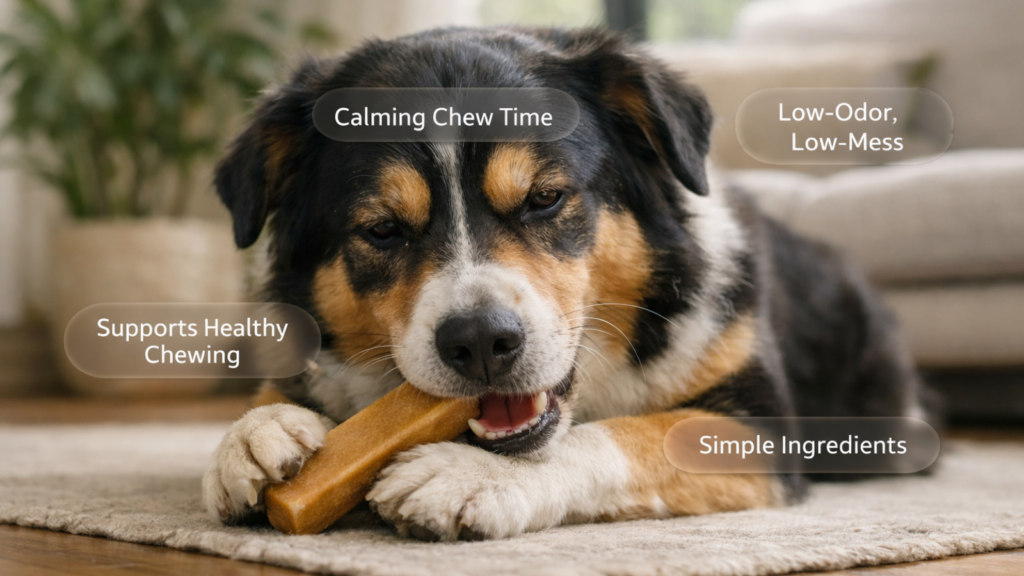
Yak chews provide dogs with 4 documented health benefits: mechanical plaque reduction through abrasive chewing action, high-bioavailability protein intake, mental stimulation through sustained chewing engagement, and anxiety reduction by activating the parasympathetic nervous response.
How Do Yak Chews Support Dental Health?
Dental disease affects approximately 80% of dogs by two years of age, according to the WSAVA Global Dental Guidelines, a finding reinforced by the 2019 AAHA Dental Care Guidelines for Dogs and Cats, which identify periodontal disease as the most common preventable condition in small animal veterinary practice and the primary justification for regular at-home and professional dental care. Yak chews address this problem through physical abrasion. As a dog chews the hard surface, the friction scrapes against tooth enamel and the gum line, disrupting plaque biofilm before it mineralizes into tartar.
The dense texture of yak chews requires sustained lateral jaw movement rather than simple biting and swallowing. This extended chewing motion engages the back molars, the teeth most frequently affected by periodontal disease, more effectively than softer chews that a dog swallows within minutes. For a complete breakdown of the 10 dental benefits of Himalayan yak chew churpi, including which specific chewing mechanics target different tooth surfaces, the guide provides additional clinical context behind each benefit.
Can Yak Chews Help Reduce Plaque and Tartar?
Yes, yak chews reduce plaque and early-stage tartar through mechanical debridement, the same principle used in dental-grade veterinary chews. The abrasive surface texture physically disrupts plaque at the tooth surface during active chewing.
The key distinction: yak chews remove developing plaque more effectively than they remove established tartar. Mineralized tartar requires professional dental scaling. Yak chews work best as a preventive maintenance tool used 3 to 4 times per week, not as a replacement for annual veterinary dental cleanings.
Do Yak Chews Provide Nutritional Benefits for Dogs?
Yak chews deliver measurable macronutrient value. A standard 50-gram yak chew contains approximately 30 to 35 grams of protein, 8 to 12 grams of fat, and under 1 gram of lactose, making it one of the most protein-dense chew options available.
The protein in yak chews comes from casein and whey fractions, both of which contain complete amino acid profiles with all 10 essential amino acids dogs require. For dogs on low-fat diets or with weight management goals, yak chews offer a satisfying chew experience with a more controlled fat content than bully sticks, which average 15 to 20 grams of fat per 50-gram serving. Pet owners who want to understand how the dairy base behaves in a dog’s gut can review the full guide on whether yak chews are digestible for dogs before introducing them to a sensitive animal.
Calcium from the dairy base also contributes to bone density maintenance, which is particularly relevant for large breeds and senior dogs showing early signs of skeletal wear.
How Many Calories Are in a Yak Chew?
A 50-gram yak chew contains approximately 180–210 calories, derived primarily from protein (56–62.4% crude protein) with minimal fat content (0.9–2% crude fat). Total caloric content scales proportionally with chew weight, making size selection directly relevant to caloric management for weight-sensitive dogs.
Accurate Nutritional Breakdown for 50g Yak Chew
| Nutrient | Amount | Calories |
| Protein | 28–31.2 g (56–62.4%) | 112–125 kcal |
| Fat | 0.45–1 g (0.9–2%) | 4–9 kcal |
| Total Calories | — | 180–210 kcal |
How Can Yak Chews Help With Mental Stimulation?
Dogs engage in repetitive chewing as a naturally self-reinforcing behavior. The act of chewing triggers measurably positive emotional states in dogs. A 2023 peer-reviewed study in Animals (MDPI) found that dogs given long-lasting chews during 20-minute social isolation displayed the most positive and calm behaviors of all enrichment conditions tested, outperforming treat-dispensing toys and automated smart devices on both time engaged and emotional valence scoring, directly supporting the use of long-lasting chews before anticipated absence periods. Yak chews, because of their hardness and slow rate of consumption, extend this neurochemical response over 20 to 45 minutes per session.
Dogs left with insufficient mental engagement exhibit 5 common destructive behaviors: furniture chewing, excessive barking, digging, house soiling, and separation anxiety episodes. Providing a yak chew before anticipated absence periods addresses the root behavioral drive rather than the symptom. This is particularly effective for working dog breeds, including Border Collies, German Shepherds, and Belgian Malinois, who require significantly higher levels of cognitive engagement than companion breeds.
Are Yak Chews Safe for All Dogs?
Yak chews are not safe for all dogs. They are appropriate for healthy adult dogs weighing over 10 pounds with no history of pancreatitis, dairy sensitivity, or tooth fractures, but 4 specific groups require careful evaluation or exclusion before introduction. The dedicated guide on whether yak chews are safe for dogs covers these contraindications in greater clinical depth, including breed-specific considerations and the signs to watch for during first introduction.
What Age Is Appropriate for Dogs to Start Yak Chews?
Dogs 6 months and older with fully erupted adult dentition tolerate yak chews well. The permanent adult teeth in dogs are fully erupted by 6 to 7 months of age, and the enamel hardens progressively over the following 6 months. Starting yak chews at 6 months reduces the risk of enamel micro-fractures that occur when immature teeth contact very hard surfaces under sustained pressure.
Can Puppies Safely Eat Yak Chews?
Puppies under 6 months of age have 28 deciduous (baby) teeth with thinner enamel and shallower root anchorage than permanent teeth. Yak chews at this stage create a genuine fracture risk and a risk of premature tooth loss. Puppies also have immature digestive systems that process the concentrated dairy protein in yak chews less efficiently, increasing the likelihood of loose stool and gastrointestinal upset. For a clear developmental timeline of at what age puppies can have yak chews, and which softer alternatives are appropriate before that threshold, the dedicated puppy guide covers breed-by-breed differences.
Puppy-specific chews, softer rubber toys, or purpose-formulated puppy chews are the appropriate option until permanent dentition is fully established at 7 months.
Are Yak Chews Suitable for Senior Dogs?
Senior dogs, generally defined as dogs over 7 years for large breeds and over 10 years for small breeds, present two primary concerns: reduced enamel thickness and compromised kidney function in some individuals. Enamel wear accumulates over a lifetime, and older dogs often show a 20 to 40% reduction in enamel thickness compared to young adults. Yak chews’ hardness may exceed the structural tolerance of worn senior teeth.
A veterinary dental examination before introducing yak chews to senior dogs identifies existing cracks, worn cusps, or root exposure. Senior dogs cleared by a veterinarian can use yak chews with supervision, though softer chew alternatives, such as collagen chews, present lower fracture risk.
Which Dogs Should Avoid Yak Chews?
4 categories of dogs require avoidance or veterinary clearance before using yak chews:
- Dogs with a pancreatitis history: the fat content, even at moderate levels, can trigger inflammatory episodes
- Dogs with confirmed dairy or casein sensitivity: symptoms include chronic loose stool, flatulence, and skin inflammation
- Dogs with existing tooth fractures or root exposure: the hardness amplifies structural stress at compromised points
- Dogs with chronic kidney disease: elevated dietary protein requires careful management in CKD patients
What Risks or Side Effects Can Yak Chews Cause?
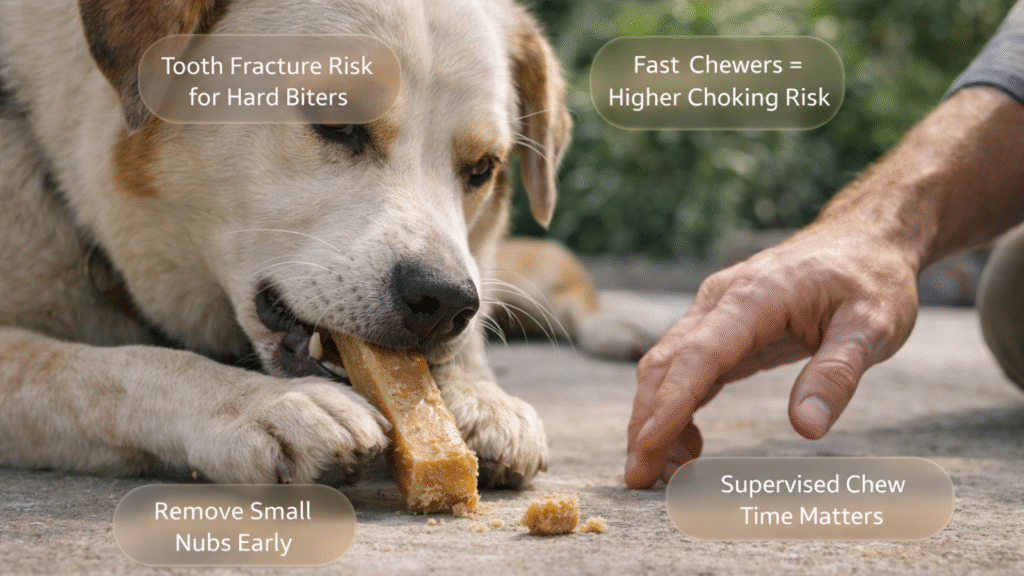
Yak chews carry 4 primary risk categories: choking hazard from small broken pieces, digestive upset from overconsumption, tooth fracture in aggressive chewers, and mild allergic response in dairy-sensitive individuals.
Can Yak Chews Become a Choking Hazard?
Yes, the most documented safety risk with yak chews occurs at the end-of-chew stage. As a yak chew reduces to a small nub, typically a piece smaller than 2 inches in length, the dog can attempt to swallow it whole, creating an acute choking risk or intestinal obstruction.
The solution is straightforward: remove the chew when it reaches a size your dog’s mouth can fit around entirely. Alternatively, microwave the remaining nub for 45 to 60 seconds, which causes it to puff into a light, crispy treat your dog can safely consume without swallowing risk. The full technique for how to puff yak chews in the microwave, including timing adjustments by chew size, wattage, and the visual cues that signal it’s done safely, is covered step by step in a dedicated guide.
Do Yak Chews Cause Digestive Problems in Dogs?
Yak chews cause digestive issues in 2 specific scenarios: overconsumption in a single session and introduction in dairy-sensitive dogs. A dog that chews through a full, large yak chew in one session ingests a concentrated load of dairy protein that an unaccustomed digestive system processes slowly. The result is typically 24 to 48 hours of soft stool. For a thorough look at how yak chews can upset a dog’s stomach, including how to distinguish genuine dairy intolerance from a normal digestive adjustment period, this guide helps owners know when to be concerned and when to continue introducing.
Dogs introduced to yak chews for the first time demonstrate digestive adjustment over 7 to 10 days. Start with 15-minute supervised sessions every other day, then increase frequency based on stool consistency as a primary indicator.
Can Yak Chews Cause Diarrhea or Blockage?
Yes, Yak chews cause diarrhea in dairy-sensitive dogs and in dogs that consume too large a portion in a single session. Intestinal blockage occurs when a nub-sized or broken fragment is swallowed whole rather than chewed down. Both outcomes are preventable, diarrhea through gradual introduction and portion limits, and blockage through supervision and proper nub disposal.
Can Aggressive Chewers Damage Their Teeth on Yak Chews?
Veterinary dentists use the “thumbnail test” as a field assessment: press your thumbnail firmly into the surface of the chew. A surface that does not yield even slightly is too hard for safe use. Authentic yak chews pass this test in most formulations, but extreme-hardness variants marketed to “power chewers” frequently fail it, meaning they are harder than tooth enamel and create slab fracture risk. To see how specific products measure up against this threshold, the guide on whether yak chews are too hard for dogs explains safe hardness ranges by breed size, jaw strength, and chewing intensity.
Veterinary dentists use the thumbnail test because the fracture risk of hard chews is biomechanically documented. Peer-reviewed biomechanical research from Frontiers in Veterinary Science found that maxillary fourth premolar teeth, the carnassial teeth most frequently involved in slab fractures, fractured under a mean compressive force of 1,281 N, with complicated crown fractures as the most common result. Objects harder than tooth enamel, including antlers, nylon chews, and ultra-dense power-chewer variants, generate forces that exceed this mechanical threshold. Select yak chews that show surface compression under firm thumb pressure.
What Warning Signs Should Dog Owners Watch For?
Watch for 6 warning signs during and after yak chew sessions:
- Pawing at the mouth: indicates a lodged piece or throat discomfort
- Excessive drooling beyond normal chewing levels: suggests nausea or a stuck fragment
- Gagging or retching: signals a partial airway obstruction
- Blood on the chewing surface: indicates gum injury or tooth fracture
- Swollen gums the following day: points to gum trauma from sharp-edge contact
- Vomiting 1 to 4 hours post-chew: confirms digestive intolerance
Any of these 6 signs warrants immediate removal of the chew and veterinary consultation if symptoms persist beyond 2 hours.
How Should Dog Owners Choose the Best Yak Chews?
The best yak chew for a specific dog is determined by 4 selection criteria: appropriate size relative to the dog’s body weight, a clean ingredient list with no artificial additives, verifiable source transparency, and texture hardness compatible with the dog’s chewing style. Sourcing from a reliable Himalayan yak chew manufacturer & supplier simplifies this checklist significantly, as established producers provide full ingredient disclosure, standardized size charts, country-of-origin certification, and third-party testing documentation as a baseline rather than an exception.
What Size Yak Chew Is Best for Different Dog Breeds?
Yak chew manufacturers size their products by weight category. The standard sizing framework aligns as follows:
- Small (under 25 lbs): Extra-small and small yak chews (30–50 grams)
- Medium (25–50 lbs): Medium yak chews (60–90 grams)
- Large (50–90 lbs): Large yak chews (100–150 grams)
- Extra-large (over 90 lbs): XL and jumbo formats (160–220 grams)
Undersizing creates the most acute safety risk. A chew a medium dog can fit entirely in its mouth, which becomes a swallowing hazard within the first 5 minutes of chewing. Always select one size category larger if your dog is at the upper limit of a weight range. For a complete breakdown of what size yak chew is right for your dog’s breed and age, including additional variables like jaw strength, chew aggressiveness, and senior-specific size adjustments, the full size guide covers every scenario the weight chart alone cannot address.
Which Ingredients Should Owners Avoid in Yak Chews?
Avoid yak chews containing these 5 ingredient categories:
- Artificial preservatives: including BHA, BHT, and ethoxyquin
- Added sugars or maltodextrin: increase caloric density without nutritional benefit
- Artificial flavorings: mask inferior raw ingredient quality
- Glycerin: alters texture and is unnecessary in authentically prepared chews
- Unnamed “meat derivatives”: indicate undisclosed byproduct content
A clean label reads: yak milk, cow milk, lime juice, salt. Any deviation from this 4-ingredient base warrants scrutiny.
How Can You Identify High-Quality Yak Chews?
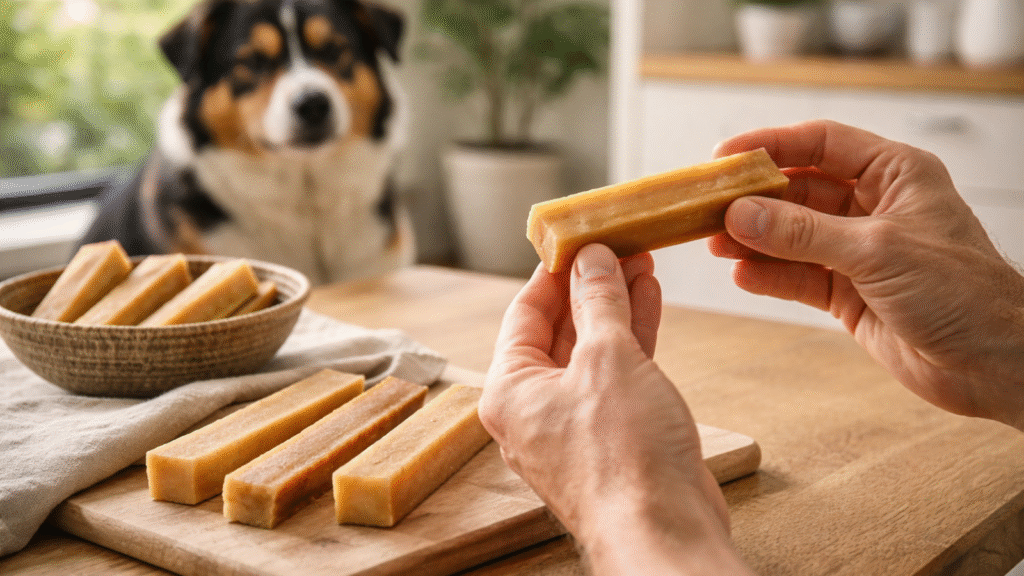
4 quality indicators distinguish authentic yak chews from inferior commercial versions:
- Country of origin transparency: authentic chews specify Nepal, Tibet, or Bhutan
- USDA or third-party lab testing: confirms absence of heavy metals and pathogens
- Uniform dense color: genuine chews are pale yellow to golden; white powdery coatings suggest surface treatment
- Hard, dry surface texture: soft or waxy surfaces indicate preservative addition or improper drying
Are Natural Yak Chews Better Than Flavored Options?
Natural, unflavored yak chews are the superior option for 3 reasons. First, artificial flavorings in flavored varieties mask the natural palatability that authentic dairy products provide. Second, flavoring agents introduce the highest concentration of additional ingredients in otherwise simple recipes. Third, dogs already find genuine yak milk highly palatable; flavoring is unnecessary and serves the manufacturer’s marketing goals rather than canine preference.
Flavored options are appropriate only for dogs with unusually low chew drive who require additional olfactory stimulation to engage with the chew.
How Often Should Dogs Have Yak Chews?
Dogs benefit from yak chews 3 to 4 times per week, with each session lasting 20 to 30 minutes under supervision. Daily chewing introduces caloric excess and increases fracture risk through cumulative mechanical stress on the dentition. For a fuller framework on how often to give your dog a dog chew, including how to adjust frequency based on breed size, caloric goals, and rotation across different chew types, the dedicated guide provides a practical weekly schedule owners can adapt directly.
How Long Should a Dog Chew on a Yak Chew Each Day?
20 to 30 minutes per session delivers the full dental and behavioral benefit of yak chews without exposing teeth to excessive wear. Dogs that chew for longer than 45 continuous minutes per session generate cumulative pressure that stresses the periodontal ligament and increases micro-fracture risk in enamel.
Use a consistent termination method, a verbal cue followed by a high-value food treat, to teach the dog to release the chew predictably. This also prevents resource guarding behavior from developing around high-value chew items.
Can Dogs Eat Too Many Yak Chews?
Yes. Overconsumption of yak chews creates 3 compounding problems. Caloric excess from daily chewing adds 80 to 150 calories per session, depending on chew size, enough to create measurable weight gain in small and medium breeds within 4 to 6 weeks. Daily mechanical loading on teeth accelerates enamel wear. Repeated high-protein loads stress kidney filtration, particularly in dogs with subclinical renal conditions.
The 3-to-4-times-per-week guideline balances the genuine benefits against these accumulation risks.
How Should Leftover Yak Chews Be Stored?
Store partially consumed yak chews in a cool, dry location with airflow. A breathable mesh bag or an open container works better than an airtight plastic, which traps moisture and encourages mold growth. Yak chews stored correctly remain safe and appealing for 3 to 5 years. Signs of spoilage include visible mold (green, black, or white fuzzy growth), ammonia-like odor, or softening of the previously hard surface. Discard any chew showing these signs immediately. The complete yak chews storage guide goes further, covering container material comparisons, humidity thresholds by climate, and whether storage recommendations change for flavored or multi-ingredient variants.
How Do Yak Chews Compare to Other Dog Chews?
Yak chews outperform rawhide and synthetic chews in terms of safety and digestibility, match bully sticks in protein content while delivering a 3-to-5x longer chewing duration, and represent one of the most complete chew options across the combined criteria of nutrition, dental benefit, and mental engagement.
Are Yak Chews Better Than Rawhide for Dogs?
Yak chews are the demonstrably safer choice compared to rawhide across every measurable category. Rawhide is processed using chemical agents, including hydrogen peroxide and bleach solutions, during the tanning process, none of which are fully removed before the product reaches the consumer. Rawhide is poorly digestible, swells in stomach acid into large gel-like masses that cause gastrointestinal obstruction, and splinters into sharp shards under chewing pressure.
Yak chews are fully digested, are produced without chemical treatment, and do not create sharp splinter fragments. The ASPCA Position Statement on Dog Chews/Treats identifies gastrointestinal obstruction and choking as documented risks of rawhide when large pieces are consumed and advises pet owners to limit the amount consumed per session. The FDA-documented rawhide recall linked an unapproved antimicrobial compound used in rawhide manufacturing facilities across Mexico, Colombia, and Brazil to products that reached U.S. retail shelves. No equivalent institutional risk documentation exists for minimally processed, dairy-based yak chews produced under traditional Himalayan methods.
How Do Yak Chews Compare With Bully Sticks?
The comparison between yak chews and bully sticks breaks down across 4 measurable dimensions:
| Attribute | Yak Chews | Bully Sticks |
| Primary ingredient | Dairy (yak/cow milk) | Beef pizzle |
| Protein per 50g | 30–35g | 28–32g |
| Fat per 50g | 8–12g | 15–20g |
| Average chew duration | 45–90 minutes | 15–30 minutes |
Bully sticks are appropriate for dogs with confirmed dairy sensitivity who cannot tolerate yak chews. For dogs without this restriction, yak chews deliver comparable protein at lower fat content and last significantly longer per serving, making them more cost-effective over time despite a higher per-unit price. For a full side-by-side evaluation of yak chews vs. bully sticks, including cost-per-session breakdowns, palatability findings, and breed-specific recommendations, the detailed comparison covers every variable owners weigh before making a switch.
Which Dog Chews Last the Longest?
Among edible chews, yak chews consistently rank first in chewing duration across comparative reviews. A large yak chew (100–150 grams) lasts an average adult medium-breed dog 3 to 7 sessions across multiple days. By comparison, a same-weight bully stick lasts 1 to 2 sessions. Elk antlers and nylon chews last longer but are inedible and carry fracture risk exceeding safe thresholds for most dogs. Among fully edible, digestible, nutritionally complete options, yak chews provide the longest engagement duration available.
How Can Pet Owners Use Yak Chews Responsibly?
Responsible yak chew use requires 5 consistent practices: size-appropriate selection, supervised chewing sessions, removal at the nub stage, frequency limits of 3 to 4 times per week, and baseline veterinary dental screening before introduction.
Supervision is the single most impactful practice. Most adverse events, such as choking, tooth fractures, and intestinal obstruction, occur in unsupervised settings. A 20-minute supervised chewing session where an owner monitors the chew’s size reduction and the dog’s behavior eliminates the majority of risk.
Keep fresh water accessible during chewing sessions. The high-protein, low-moisture nature of yak chews creates transient thirst in most dogs, and hydration supports the renal processing of concentrated dietary protein.
Introduce yak chews as a rotation item rather than the sole chew option. A rotation including yak chews, collagen sticks, and dental-specific chews diversifies the texture and nutrient exposure while preventing any single risk profile from accumulating through daily repetition.
Can Veterinarians Help Choose the Right Yak Chew?
Veterinarians provide 3 specific forms of guidance that owner research cannot replicate: dental health screening, breed-specific risk assessment, and dietary integration advice. A pre-introduction dental exam identifies existing enamel wear, micro-fractures, or gum recession that changes the safe hardness threshold for that individual dog.
Veterinary dentists specifically trained in canine oral health offer the most targeted guidance. Veterinary dentists specifically trained in canine oral health offer the most targeted guidance for dogs with complex or pre-existing dental concerns. The American Veterinary Dental College maintains the AVDC Find-a-Diplomate directory, a publicly searchable tool allowing pet owners to locate board-certified veterinary dental specialists by geographic location. For otherwise healthy adult dogs, a standard annual wellness visit provides sufficient baseline clearance before introducing yak chews. For otherwise healthy adult dogs, a standard wellness visit provides sufficient baseline clearance.
What Are the Key Takeaways About Yak Chews for Dogs?
Yak chews are a high-value, minimally processed chew option that delivers genuine dental, nutritional, and behavioral benefits for healthy adult dogs when used within appropriate guidelines. The following 7 key facts define their evidence-based role in a dog’s care routine:
- Ingredient simplicity: authentic yak chews contain 4 ingredients: yak milk, cow milk, lime juice, and salt
- Dental benefit is mechanical: plaque removal occurs through abrasive chewing action, not chemical agents
- Protein delivery: 30 to 35 grams of complete-profile protein per 50-gram serving
- Frequency guideline: 3 to 4 sessions per week, 20 to 30 minutes each
- Age threshold: appropriate for dogs 6 months and older with fully erupted permanent dentition
- 4 contraindicated groups: dogs with pancreatitis, dairy sensitivity, existing tooth fractures, or chronic kidney disease
- End-of-chew safety: remove or microwave the nub when the remaining piece fits entirely in the dog’s mouth
Yak chews represent a legitimate wellness tool, not a treatment, not a substitute for veterinary dental care, and not universally appropriate. Used with the right size, the right frequency, and the right supervision, they occupy a valuable position in a thoughtful dog care routine.
For dogs with specific health conditions, introducing any new chew type with your veterinarian’s input ensures the benefit is real and the risk is appropriately managed.