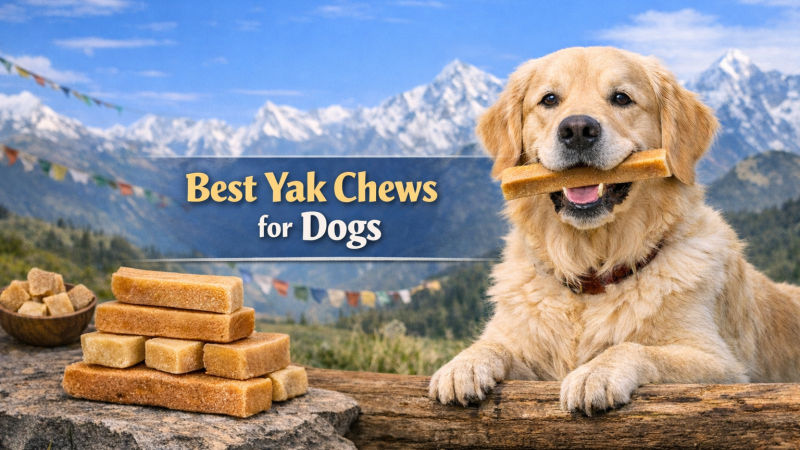
Yak chews (often sold as Himalayan yak cheese chews) are one of the most popular long-lasting natural dog chews, but “best” depends on your dog’s size, chewing strength, and safety needs. In this guide, you’ll learn how to choose the best yak chews for dogs, how to match the right size and type to your pup, and what quality markers separate a clean, durable chew from a risky one.
Because yak chews are dense and hard, smart buying is really about fit, safety, and quality control. We’ll break down quick picks by dog type, a simple buyer checklist, the most important safety rules (teeth, choking, digestion), and how to use yak chews properly, including what to do with the end piece. If you’re a beginner or intermediate buyer (or a manufacturer wanting to meet global expectations), this structure helps you cover the full topic with real information gain.
Best Yak Chews for Dogs: Quick Picks by Dog Type
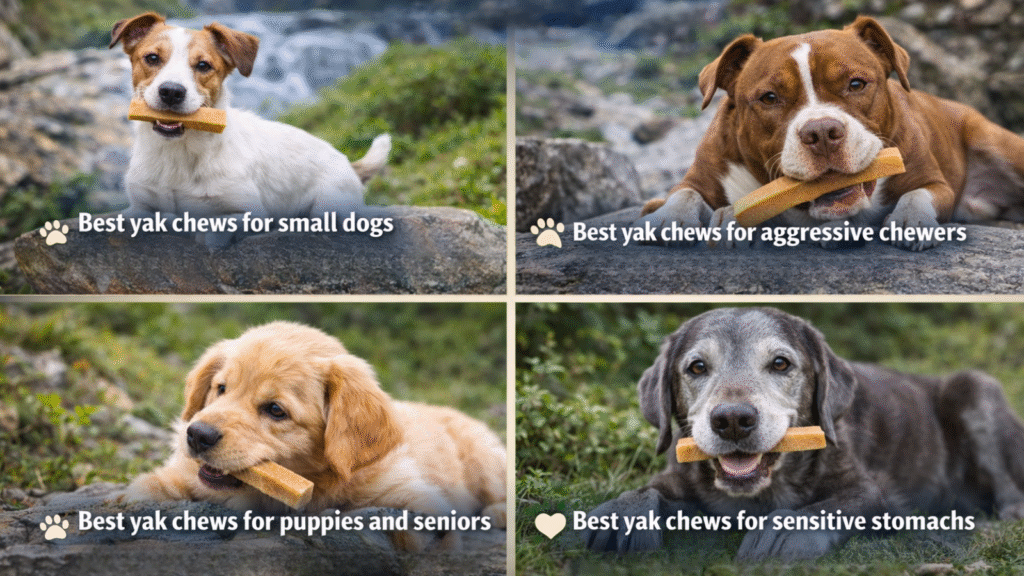
The best yak chew is the one that matches your dog’s chewing style and reduces common risks like gulping, tooth strain, and stomach upset. Small dogs typically need shorter chews with safer thickness, while aggressive chewers do better with denser, longer-lasting pieces that don’t crumble quickly. Puppies, seniors, and sensitive dogs often need a gentler approach, either softer use methods or alternative chew types when hardness is a concern.
1. Best yak chews for small dogs (safe sizing and thickness that reduces gulping)
Small dogs need yak chews sized below 50g (1.8 oz) with a diameter that prevents them from attempting to swallow large pieces whole. The most common mistake small-dog owners make is buying based on a “small breed” label without checking thickness. Thickness matters more than weight alone.
For dogs under 10 kg (22 lbs), the ideal yak chew measures 1.5 cm to 2 cm (0.6 to 0.8 inches) in diameter. This geometry forces the dog to gnaw rather than crunch aggressively, reducing the risk of chunk ingestion. Puffed yak chews work especially well in this category; they are softer, dissolve more predictably, and produce smaller debris with less physical risk.
The best formats for small dogs are: firstly, puffed yak nuggets for daily supervised sessions; secondly, small hard bars under 40g (1.4 oz) for longer supervised chewing; thirdly, softened hard chews for dogs that gulp rather than gnaw. Remove any piece shorter than 3.5 cm (1.4 inches) immediately to prevent swallowing.
2. Best yak chews for aggressive chewers (dense, long-lasting, less crumbling)
Aggressive chewers need the densest, lowest-moisture yak chews available, not the cheapest option on the shelf. Low-quality chews crumble quickly under high bite pressure, producing larger swallowable pieces and reducing session safety entirely.
Look for chews with consistent hardness throughout the bar, not just on the outer crust. Poorly dried chews carry a soft interior that fractures in large pieces under hard biting. High-quality hard yak chews are dry throughout, with moisture content below 10%. For large aggressive chewers at 20 kg (44 lbs) and above, the right chew weighs 100g to 200g (3.5 oz to 7 oz) and lasts a minimum of 30 to 60 minutes under active chewing. A chew that disappears in under 10 minutes is either undersized, too low-density, or both.
The traditional low-heat drying method used in authentic Himalayan production, the method applied at YforYak Dog Chews, produces consistent density from one end of the bar to the other. This matters most for aggressive chewers, where internal softness translates directly into elevated session risk.
3. Best yak chews for puppies and seniors (safer ways to use, and when to skip hard chews)
Hard yak chews are not automatically safe for every life stage, puppies and senior dogs both need modified approaches, though for different reasons. Puppies have developing teeth. Hard chews apply excessive stress on enamel that has not fully hardened. Most veterinary dentists recommend waiting until a puppy reaches 6 months of age before introducing hard chews. Before that point, use yak chews softened in warm water for 10 minutes, or puffed yak treats that dissolve more gently and carry no fracture risk.
Senior dogs frequently develop dental disease that weakens teeth below the gumline. A tooth that looks structurally sound from the outside can fracture under hard-chew pressure. The thumbnail test, described in full detail in Section 3.2, is the most practical at-home screening method before every chew session for dogs over 7 years.
For both life stages, puffed yak chews or yak cheese powder mixed into meals deliver the protein benefit of yak milk nutrition without the dental load. Treat hard chews as a supplemental enrichment tool for puppies and seniors, not a daily staple.
4. Best yak chews for sensitive stomachs (simple ingredients and gentle frequency)
Dogs with sensitive stomachs do better on yak chews that list 4 ingredients or fewer: yak milk, cow milk, lime juice, and salt. Any chew with added flavoring, coatings, preservatives, or artificial coloring introduces unnecessary digestive variables that make it harder to identify the source of a reaction.
The traditional Himalayan recipe used at YforYak contains exactly these 4 ingredients. The curing process significantly reduces the lactose content of the finished chew, making it tolerable for many lactose-sensitive dogs. That said, every dog responds differently. Introduce yak chews at 10 to 15 minute sessions twice per week before moving to daily use.
Watch for loose stool, vomiting, or excessive gas in the 24 hours following a new chew session. These are signals that frequency or session length needs adjustment, not necessarily that yak chews are incompatible with the dog. Reducing sessions to 5 to 10 minutes, 3 times per week, resolves the issue in most cases.
How to Choose the Best Yak Chew
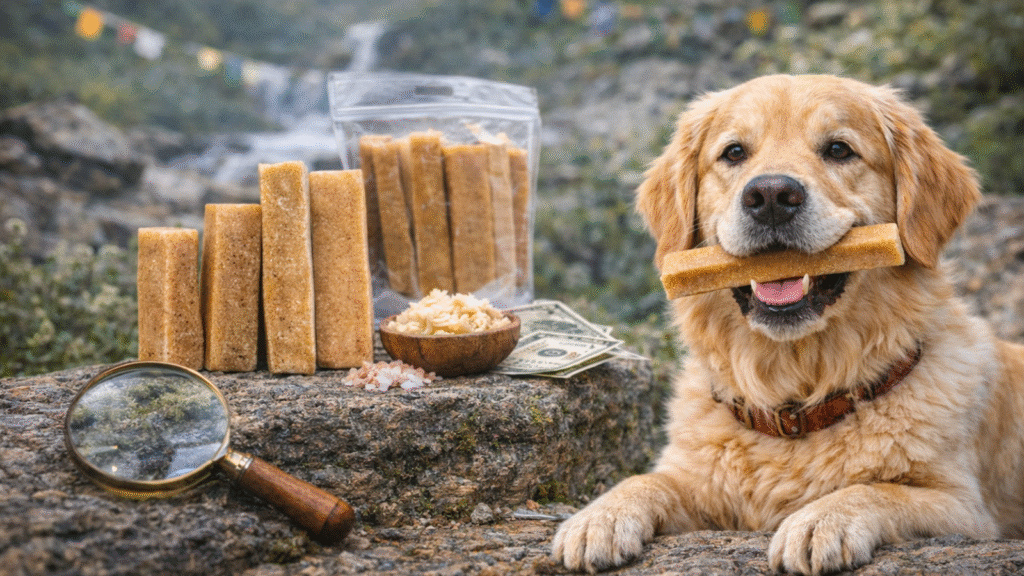
Start with size and thickness first, because even a “premium” yak chew can be unsafe if it’s too small for your dog’s mouth and chewing behavior. Next, check ingredients and processing clues, clean labels, consistent texture, and minimal additives generally signal better digestibility and fewer surprises. Finally, compare value by durability (chew time) rather than price alone, since denser chews can last longer and reduce replacement frequency.
How we choose “best” yak chews (durability, ingredients, size/shape, safety, value)
We evaluate yak chews across 5 criteria: durability, ingredients, size and shape, safety record, and cost-per-session value. This framework prevents over-reliance on marketing language and redirects attention to what matters inside the package.
Durability testing measures how long a chew lasts under consistent chewing pressure from the intended dog size. A 100g (3.5 oz) hard yak chew lasting 45 minutes for a 20 kg (44 lb) medium-breed dog scores well. The same chew lasting 8 minutes is too small, too soft, or both. Ingredients get evaluated on composition and sourcing clarity. Clean yak chews list 4 core ingredients, carry a traceable origin declaration, and show no additives or preservatives on the label. Value is always calculated per session, chew duration divided by unit cost, not per unit weight alone.
Yak chew size chart and fit rules (when to size up, snout-length, thickness logic)
| Dog Weight | Recommended Chew Weight | Ideal Diameter | Session Target |
| Under 5 kg (11 lbs) | 20g to 40g (0.7 oz to 1.4 oz) | 1 cm to 1.5 cm | 10 to 20 min |
| 5 kg to 15 kg (11 to 33 lbs) | 40g to 70g (1.4 oz to 2.5 oz) | 1.5 cm to 2.5 cm | 20 to 40 min |
| 15 kg to 30 kg (33 to 66 lbs) | 70g to 120g (2.5 oz to 4.2 oz) | 2.5 cm to 3.5 cm | 30 to 60 min |
| Over 30 kg (66 lbs) | 120g to 200g (4.2 oz to 7 oz) | 3.5 cm+ | 45 to 90 min |
Size up, not down, when the dog finishes a chew in under 15 minutes. Sizing down to extend value is a common error that increases gulping risk. The snout length of the dog matters too: brachycephalic breeds (flat-faced dogs such as Bulldogs and Pugs) grip differently and perform better with wider, shorter chews rather than long narrow bars. A chew that a flat-faced dog cannot grip securely at both ends creates frustration, aggressive biting, and larger piece ingestion.
Ingredient & label checklist (what “clean” looks like, red flags to avoid)
A clean yak chew label shows the country of origin, a short ingredient list, and declared protein and moisture values. Green flags include yak milk and cow milk listed as the primary ingredients, lime juice as a natural acidifier, salt as the only preservative, a Nepal origin declaration, protein content above 50%, moisture content below 12%, and a manufacturer contact address on the packaging.
Red flags include artificial flavoring or coloring in the ingredient list, no country-of-origin declaration, no manufacturer contact details, moisture content above 15%, and vague origin language such as “Himalayan-inspired” without a verifiable Nepal production claim. The “lactose-free” claim that appears on many yak chew packages is accurate in practical terms, the curing and drying process breaks down the majority of lactose, but it does not mean zero lactose. Dogs with severe dairy sensitivity still need a monitored 2-week introduction period before regular use.
Quick comparison table
| Type | Hardness | Best For | Safety Note | Value Per Session |
| Classic hard bar | Very hard | Adult medium-large dogs | Thumbnail test required | High |
| Puffed bar | Soft | Puppies, seniors, small dogs | Low fracture risk | Medium |
| Puffed nugget | Soft | Small dogs, sensitive stomachs | Easy to portion | Medium |
| Flavored hard chew | Hard | Low-interest chewers needing motivation | Check flavoring agents | Medium |
| Yak cheese powder | None | Food toppers, seniors, training | No chew risk | High |
Yak Chew Safety: Tooth, Choking, and Digestion Risks
Yak chews are hard, so dogs with dental issues, very powerful bites, or a history of cracked teeth may need softer chew options or strict supervision. Choking risk increases when chews get small, so the “end-piece rule” matters: remove it early and convert it into a safer treat rather than letting your dog swallow it. Digestive upset usually comes from chewing too long, swallowing chunks, or giving chews too frequently, so introduce slowly and monitor stool changes.
Can yak chews break teeth? Who should avoid hard chews
Yes, yak chews can fracture teeth under specific conditions. Hard yak chews rank among the harder natural chew options available, comparable to antlers in density. Slab fractures, which are the most common dental injury associated with hard chews, typically affect the upper fourth premolar, that which veterinary dentists call the carnassial tooth.
The dogs most at risk of tooth fracture from hard chews include dogs over 7 years of age with existing dental disease, brachycephalic breeds with compressed jaw structure, dogs recovering from dental procedures, and dogs with enamel hypoplasia (underdeveloped enamel). Hard chews are best avoided entirely for these groups. Puffed yak chews or yak cheese powder deliver the same enrichment benefit without the dental stress.
Hardness checks at home (thumbnail test and practical “too hard” signs)
The thumbnail test is the fastest at-home hardness screening method for any dog chew. Press your thumbnail firmly into the surface of the chew. The chew is too hard for that dog if your nail leaves no indentation at all. A chew that gives slightly, leaving a shallow nail mark, sits within the safe range for most healthy adult dogs.
Beyond the thumbnail test, watch for 3 behavioral signals during a chew session: the dog flinching or stopping chewing repeatedly, visible chips or splits appearing on the surface of the chew, or the dog shifting to chewing on one side only. Any of these signals indicates the chew is harder than the dog’s teeth tolerate safely. Hardness is not static. A yak chew stored in a dry environment for 6 months becomes noticeably harder than when freshly opened. Lightly soaking the chew surface in warm water for 5 minutes before each session reduces the surface hardness and protects teeth during the initial bite engagement phase.
Choking prevention and the end-piece rule (when to remove it)
The end-piece rule is straightforward: remove any piece shorter than 3.5 cm (approximately 1.4 inches) before the dog reaches that size during a session. At this length, the remaining piece becomes small enough for the dog to attempt swallowing whole, which is the leading cause of gastrointestinal obstruction from yak chews.
Monitor the chew length throughout every session. Mark the 3.5 cm threshold with a rubber band before handing the chew to the dog, this keeps the removal point visible rather than relying on mid-session estimation. The removed end piece is not waste. Microwaving it produces a safe, puffed treat. The full step-by-step process for puffing the end piece appears in Section 5.3.
If your dog swallowed a chunk: what to watch for vs when to call a vet
A swallowed yak chunk does not always require emergency intervention, the appropriate response depends on the size of the piece relative to the size of the dog. Small pieces under 1.5 cm (0.6 inches) pass safely through most adult dogs. The high protein and low fat composition of yak chews digests more cleanly than rawhide or bone fragments, which is a significant safety advantage in accidental ingestion scenarios.
Watch for the following in the 24 to 48 hours after ingestion: retching or repeated unproductive swallowing, loss of appetite lasting more than 12 hours, lethargy that falls outside the normal pattern for the dog, or visible bloating and abdominal distension. These signs warrant immediate veterinary contact. Call the veterinarian immediately, not after waiting, for a large piece ingested by a small dog, or for any ingestion accompanied by visible distress within the first 30 minutes.
Calories, salt, and sensitivities (how often to give yak chews safely)
High-quality yak chews average 340 to 360 calories per 100g (3.5 oz), meaning that session length and frequency directly affect the daily caloric balance of the dog. A 30-minute chew session for a medium dog typically results in 10g to 20g (0.35 oz to 0.7 oz) of actual consumption, contributing 34 to 72 calories to daily intake. For a 15 kg (33 lb) dog on a 750-calorie daily diet, even a conservative session represents 5% to 10% of daily energy intake.
The salt content in traditionally made yak chews runs low, approximately 1% to 2% of total weight, but accumulates across multiple sessions per day. Limit chew sessions to 1 per day for healthy adult dogs. Reduce to 3 to 4 sessions per week for dogs on sodium-restricted diets or dogs with kidney or cardiac conditions.
Types of Yak Chews (and When to Choose Each)
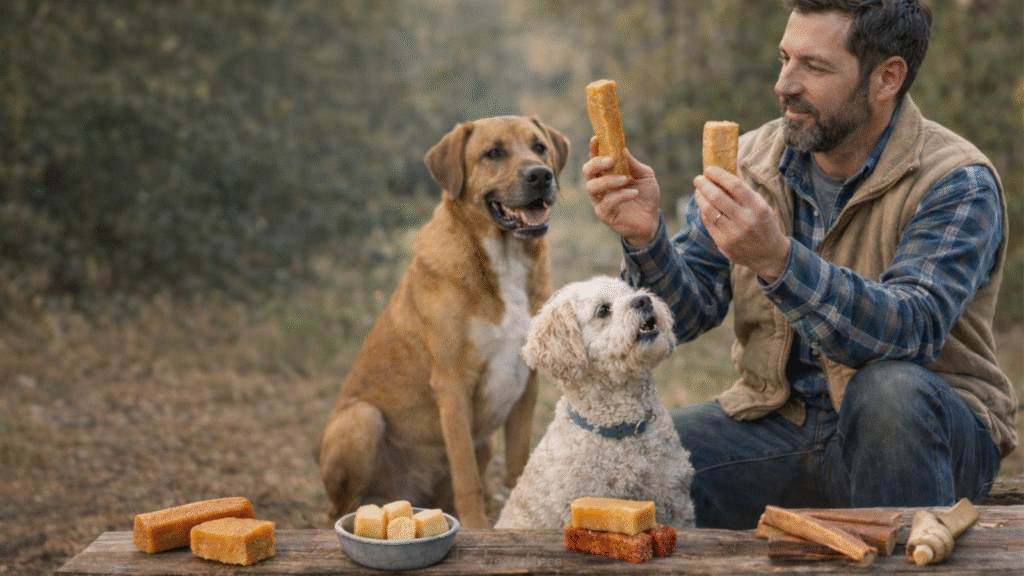
Classic hard yak chews are best for steady chewers who enjoy long sessions, while puffed yak treats are often better for smaller dogs, seniors, and safer “finish” options. Flavored versions can increase interest but may add ingredients that trigger sensitivities, so unflavored is usually the safest baseline for beginners. Comparing yak chews to bully sticks, antlers, and rawhide helps owners pick the right chew by goal, durability, digestibility, odor, and dental risk.
Classic hard yak chews: best for steady chewers and long sessions
The classic hard yak chew is the traditional format, the original churpi block that Himalayan herders consumed and that became the foundation of the modern pet chew category. The format delivers long session times, high durability, and predictable consumption rates for steady, methodical chewers. Steady chewers, dogs that gnaw consistently rather than bite aggressively, extract the highest value from classic hard bars. The chew lasts longest in this use pattern, minimizing cost-per-session while maximizing dental stimulation time and mental enrichment. Classic hard yak chews are the highest-value format in the lineup for medium-to-large adult dogs without dental concerns.
Puffed yak treats: best for smaller dogs, seniors, and safer “end-piece” use
Puffed yak chews are hard yak chews processed through heat expansion, which creates a lighter, crispier texture. The same 4-ingredient composition applies, the puffing process changes texture, not nutrition. Protein and calcium content remain comparable to the base hard chew.
The softer structure makes puffed chews the right default for 3 groups: firstly, small dogs and toy breeds that cannot safely handle dense hard bars; secondly, senior dogs with dental fragility or known dental disease; thirdly, any dog new to the yak chew category that needs a lower-risk introduction point. Puffed chews eliminate the tooth fracture risk entirely and digest faster than hard bars, making them a genuinely safer format for high-risk profiles rather than just a marketing variant.
Flavored vs unflavored: when flavor helps, and when it triggers sensitivity
Unflavored yak chews are the correct starting point for any dog, particularly those with unknown sensitivities. Flavor additives introduce additional ingredients that complicate the process of isolating the source of a digestive reaction. Flavored options, bacon, chicken, and turmeric varieties are the most common, are appropriate in 2 situations: for dogs that show no engagement with unflavored chews after 3 to 5 sessions, or for dogs with high stimulation needs that require novelty to stay engaged.
Use flavored chews only after confirming that the dog tolerates the unflavored base product without reaction. Read the flavor agent on the label. Natural flavoring from whole-food sources such as turmeric or coconut carries less risk than synthetic flavor compounds that lack specific ingredient disclosure. “Natural flavor” as a standalone label term requires follow-up verification with the manufacturer.
Yak chews vs bully sticks vs antlers vs rawhide (best choice by goal and risk)
| Chew Type | Protein Level | Hardness | Digestibility | Risk Profile | Best For |
| Yak chew | High (50%+) | Hard to very hard | High | Low to medium | Most adult dogs |
| Bully stick | High | Soft to medium | High | Low | Sensitive stomachs, puppies |
| Antler | Low | Extremely hard | Low | High (tooth fracture) | Power chewers only |
| Rawhide | Low | Variable | Very low | High (obstruction) | Not recommended |
Rawhide scores worst across all practical safety metrics. The processing of rawhide involves chemical treatments, digestibility of rawhide is poor, and the swelling-when-wet characteristic creates obstruction risk that makes it the most concerning common chew format. Yak chews consistently outperform rawhide across digestibility, ingredient transparency, and session safety profile. For dog owners choosing between natural chew formats for the first time, yak chews represent the most balanced combination of protein value, session duration, and digestive safety.
How to Use Yak Chews Correctly (Make Them Last and Reduce Risk)
Introduce yak chews in short, supervised sessions so your dog learns to chew instead of gulp, especially in the first few tries. If a chew seems too hard for your dog, controlled softening (like brief soaking) can reduce intensity without turning it into a choking hazard. When the chew becomes small, puff the end piece into a crunchy treat and discard any sharp or cracking fragments.
How to introduce yak chews to a beginner dog (chew-time, supervision, pacing)
New yak chew users need a 3-session introduction phase before unsupervised sessions are considered appropriate. Start with a 10-minute supervised session on day 1. Observe the chewing style, whether the dog gnaws steadily or bites aggressively. Adjust chew size and hardness based on what you observe, not solely on the weight range listed on the packaging.
Session 2 extends to 15 to 20 minutes with the same level of supervision. By session 3, the chewing pattern has stabilized and you have baseline data on consumption rate, debris behavior, and digestive response in the 24 hours following each session. Introduce yak chews on a hard floor surface rather than carpet. This makes it easier to spot and collect chewed debris, which gives a more accurate picture of actual consumption per session.
How to make yak chews safer for gentler chewing (soaking and controlled softening)
Soaking a hard yak chew in warm water for 10 minutes (600 seconds) softens the outer layer by approximately 30% to 40%, reducing the peak bite pressure required for initial engagement. This method benefits 3 groups: senior dogs with dental fragility, post-dental-procedure dogs, and dogs being introduced during colder months when chews become harder at lower ambient temperatures.
Use water between 40°C to 50°C (104°F to 122°F). Water above 55°C (131°F) degrades the surface texture too aggressively, producing a mushy exterior rather than controlled softening. Pat the chew dry after soaking before handing it to the dog; wet surfaces create more mess and reduce grip. Do not soak the same chew multiple times. Each soak introduces moisture that increases the risk of mold development between sessions.
How to puff the leftover end piece step-by-step (safer finish and less waste)
The end-piece puffing method is the most practical way to extend the value of every yak chew and eliminate the choking risk from small remnants entirely. Here is the process step by step:
- Remove the end piece when it measures 3.5 cm (1.4 inches) or shorter.
- Place it on a microwave-safe plate, not wrapped or covered.
- Microwave on high for 30 to 60 seconds depending on the size of the piece and the wattage of the microwave. Standard 800W to 1000W microwaves work well at 45 seconds.
- Watch for the piece to expand and puff into a light, crispy treat.
- Allow it to cool fully for at least 2 minutes before giving it to the dog. The interior retains heat longer than the exterior suggests.
The puffed result digests easily, delivers the same nutritional profile as the base chew, and eliminates the physical obstruction risk entirely. Zero waste.
Storage and hygiene (preventing mold, smell, and contamination)
Store yak chews in a cool, dry location with good airflow, not in airtight sealed containers or plastic bags. Sealed containers trap residual moisture from the saliva of the dog on a partially used chew, creating the conditions for mold growth within 48 to 72 hours. Between sessions, allow the chew to air-dry fully on a clean elevated surface. A small wire rack works well. Wipe off excess saliva before storing. The usable storage life of a partially used yak chew stored correctly is 2 to 4 weeks at room temperature.
Never store used yak chews in the refrigerator. Cold temperatures harden the chew significantly and introduce condensation during the warming phase that accelerates surface mold development. Freezing is appropriate only for unused, factory-sealed chews in long-term inventory storage.
What Makes a “High-Quality” Yak Chew
High-quality yak chews are defined by consistent moisture control, predictable hardness, clean ingredient transparency, and reliable batch-to-batch results. From a manufacturer standpoint, buyers increasingly expect traceability, hygiene standards, and documentation that supports food-safety handling and quality checks. For consumers, the practical takeaway is simple: choose chews that look uniform, smell clean, don’t splinter easily, and come from brands that clearly explain sourcing and process controls.
How yak chews are made (traditional vs modern drying, what affects quality)
High-quality yak chews originate from a traditional Himalayan process that compresses and slow-dries fermented yak and cow milk into a dense protein bar. The process begins with fresh yak and cow milk, separated through the addition of lime juice, the natural acid that causes milk proteins to coagulate. The resulting curd gets compressed, shaped, and slow-dried at low temperatures for weeks. Traditional drying produces consistent density throughout the bar, which is the primary quality differentiator between authentic Himalayan chews and faster-produced alternatives.
Modern shortcuts that compromise quality include accelerated drying at high temperatures (which creates a hard exterior crust over a soft internal core), the use of added binding agents to compensate for low milk protein concentration, and bulk blending from mixed or undisclosed milk sources. At YforYak Dog Chews, the production process maintains the low-temperature traditional drying method across all product formats, bars, nuggets, puffed formats, and yak cheese powder, ensuring uniform density and consistent chewing performance across batches.
Quality control that matters (moisture, hardness consistency, microbial safety)
The 3 quality control factors that most directly affect the safety and durability of a yak chew are: moisture content, hardness consistency, and microbial load.
- Moisture content above 12% accelerates mold development during transit and storage.
- Hardness inconsistency between production batches creates unpredictable chewing behavior, a dog sized correctly for one batch may encounter a dangerously hard chew in the next.
- Microbial safety is the most critical and least visible quality factor. Raw milk products carry inherent contamination risks from Salmonella, Listeria, and Staphylococcus strains that require effective pathogen-reduction steps during production.
Facilities operating under Hazard Analysis and Critical Control Points (HACCP) protocols, including the YforYak production facility, apply specific intervention steps at identified critical control points throughout the manufacturing line. International Organization for Standardization (ISO) 9001 certification and U.S. Food and Drug Administration (FDA) facility registration are the minimum compliance benchmarks that responsible importers and retailers request documentation for before committing to any supplier. Ask for the certificate number, the issuing body, and the most recent audit date.
Traceability and documentation buyers can ask for (sourcing, batch checks, compliance)
Importers and private-label buyers sourcing yak chews at volume need batch-level traceability documentation, not just brand-level certifications. The 6 documents that responsible manufacturers provide on request include: the Certificate of Origin (CoO), the Veterinary Health Certificate, the Phytosanitary Certificate where applicable, batch-specific laboratory results for protein and moisture content and microbial counts, the FDA facility registration number, and HACCP compliance documentation from an authorized auditor.
YforYak Dog Chews maintains ISO 9001 certification and HACCP compliance verified by the Department of Food Technology and Quality Control (DFTQC) of Nepal. The facility holds FDA registration and provides full export documentation support for U.S. and European Union (EU) market entry, including Certificate of Origin paperwork, sanitary certificates, and veterinary certificates. Buyers importing above 100 kg (220 lbs) per shipment request batch-specific lab results as a standard intake step. This protects the importing brand, the retail partner, and the end consumer. Any manufacturer unable or unwilling to provide this documentation presents a supply chain risk regardless of marketing claims. For pet retailers, distributors, and private-label buyers looking to source directly from a verified Nepal manufacturer with full export documentation support, explore the YforYak bulk export and private label programme at Yforyak Yak Chew Manufacturer.
Are yak chews safe for all dogs?
Yak chews are not safe for all dogs due to their hardness. Dogs with dental issues, fragile teeth, or a history of fractures should avoid them. Supervise all chewing sessions, especially with strong chewers or gulpers. Consult your vet to assess suitability based on your dog’s teeth and chewing habits.
What size yak chew should I buy for my dog?
Choose a yak chew longer than your dog’s mouth and thick enough to prevent full chewing with back teeth. Aggressive chewers and gulpers should use oversized chews. Weight-based charts help, but chewing style and mouth size matter more. When uncertain, pick the larger size and supervise closely.
Can yak chews break a dog’s teeth?
Yes, yak chews can break a dog’s teeth, especially in aggressive or powerful chewers. Dogs with dental wear or prolonged chewing habits are at higher risk. Cracking often occurs when dogs try to crush instead of gnaw. Switch to softer chews if signs of dental stress appear.
How long should I let my dog chew on a yak chew?
Start with 10–20 minute sessions to see how your dog responds. Long chewing increases the risk of stomach issues or swallowing large chunks. Rotate chews and avoid leaving them out all day. Always take away small leftover pieces to prevent choking.
What do I do with the yak chew end piece?
Remove the end piece before it becomes a choking hazard. You can microwave it into a puffed, crunchy treat. Let it cool fully to avoid burns. Discard it if it breaks into sharp fragments.
Are flavored yak chews better than unflavored?
Flavored yak chews attract picky dogs but may cause allergies or stomach issues. Unflavored versions are safer for sensitive dogs. Added flavors can hide spoilage odors. Choose products with clear labeling and minimal additives.
Do yak chews upset a dog’s stomach?
Yak chews can upset your dog’s stomach, especially if swallowed in chunks or chewed for too long. Some dogs react to dairy-based treats. Start slowly and watch for signs like gas, loose stool, or vomiting. Limit use to occasional sessions.
How can I tell if a yak chew is high quality?
A high-quality yak chew feels dense, smells clean, and looks consistent. It shouldn’t crack easily or crumble into sharp pieces. Avoid chews with vague labels or chemical odors. Transparent sourcing and uniform texture signal better quality.
Are yak chews good for puppies?
Yak chews can be too hard for developing puppy teeth. Only use them briefly and with supervision. Softer alternatives are usually better until adult teeth grow in. Remove small pieces to prevent swallowing.
How often can I give my dog a yak chew?
Yak chews should be an occasional treat, not a daily routine. Most dogs do well with a few sessions per week. Monitor chewing intensity and digestion. Rotate chew types to avoid calorie overload or stomach upset.