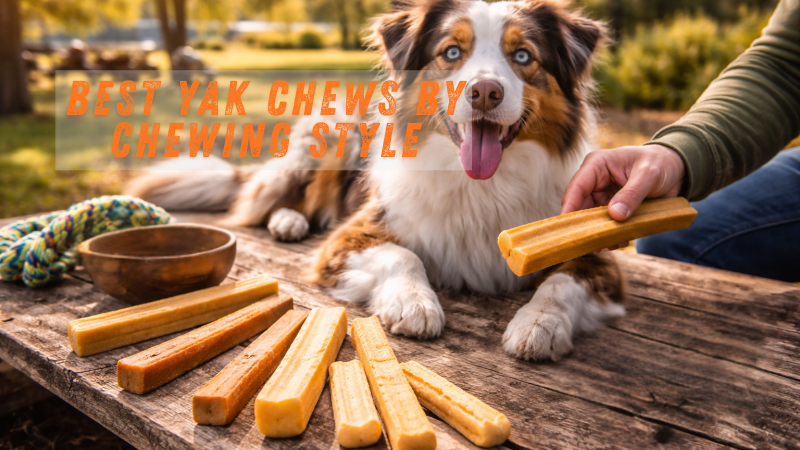
Yak chews are long-lasting Himalayan dog chews made from yak milk, cow milk, lime, and salt that are smoke-dried into dense, fully digestible chews for dental support, teething relief, and behavioral enrichment. Unlike rawhide and synthetic bones, authentic yak chews provide natural chewing engagement without sharp splintering risks. The best yak chew depends on your dog’s chewing style, bite pressure, jaw strength, and chewing duration. Aggressive chewers need extra-hard, high-density yak chews for durability, while moderate, gentle, puppy, and senior dogs benefit from softer or medium-grade options that balance safety, comfort, and longevity.
Choosing the right yak chew involves more than matching size to body weight alone. Breed type, tooth sensitivity, chewing habits, and jaw width all affect chew lifespan, dental safety, and choking risk. Large breeds such as Labradors, German Shepherds, and Rottweilers require thick XL yak chews designed for powerful chewing, while small dogs and puppies perform better with thinner, softer formats. This guide explains how to choose the best yak chews for aggressive chewers, moderate chewers, gentle dogs, puppies, senior dogs, small breeds, and large breeds using chew hardness, ingredient quality, compression density, and chewing behavior as the primary selection factors.
Which Yak Chews Are Best for Aggressive Chewers?
The best yak chews for aggressive chewers are extra-hard, large-format blocks with a high milk-solid density, typically weighing 3.5 oz or more. These chews resist rapid consumption because of their compressed structure, which forces powerful chewers to work slowly from the outside in rather than bite through the center.
Aggressive chewers account for the majority of yak chew complaints online, most of which stem from giving the wrong size or wrong hardness grade. Understanding what makes a chew durable, which sizes work, and how to slow consumption gives aggressive chewers a safe, satisfying option.
What Makes a Yak Chew Durable for Heavy Chewing?
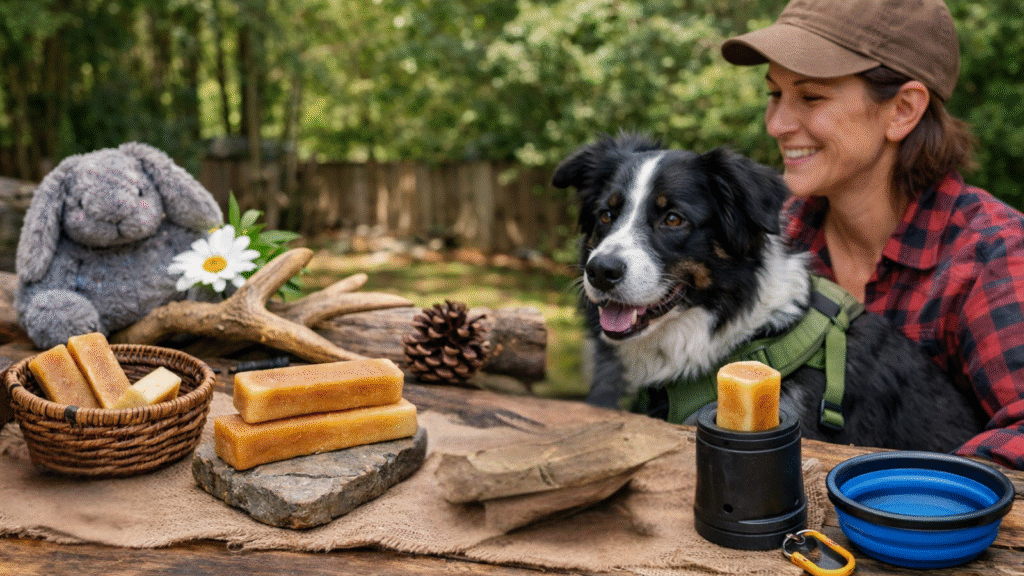
A yak chew’s durability for heavy chewing depends on 3 structural factors: milk-solid compression density, moisture content at the time of purchase, and block geometry. Higher compression means fewer air pockets inside the chew, which prevents aggressive biters from fracturing the center on first contact.
The drying and smoking process used by Himalayan Yak chews producers directly controls moisture content. Chews with moisture below 10% are significantly harder than those dried for shorter periods. Geometry matters too; a wide, flat chew offers more surface area for lateral chewing, which distributes bite force better than a thin, narrow stick that can snap under a powerful jaw.
Look for these 4 features when selecting a durable yak chew for aggressive chewers:
- High compression, low moisture: labeled “extra hard” or “XH grade.”
- Rectangular block shape: resists snapping compared to cylindrical sticks
- Weight of 3.5 oz to 6 oz: for medium-to-large dogs
- Single-ingredient certification: no fillers that soften the core prematurely
One commonly overlooked factor is storage. A yak chew exposed to humidity softens within days, even if it was hard when purchased. Following a proper yak chew storage routine, keeping chews sealed in an airtight container at room temperature, is the simplest way to maintain maximum density between sessions.
Which Yak Chew Sizes Work Best for Power Chewers?
Power chewers perform best with yak chews sized at 1 to 1.5 times the width of their lower jaw. A chew that fits entirely in the mouth becomes a swallowing hazard. A chew that is too narrow gets bitten through rather than gnawed.
The table below outlines size-to-weight pairings for power chewers by dog weight:
| Dog Weight | Recommended Chew Size | Minimum Weight |
| 15–30 lbs | Medium | 2.5 oz |
| 30–60 lbs | Large | 3.5 oz |
| 60–90 lbs | XL | 5 oz |
| 90+ lbs | XXL | 6+ oz |
Avoid “value packs” that bundle multiple small chews for aggressive chewers. Small pieces consumed quickly increase the risk of a dog swallowing a large, softened chunk. One large, correctly sized chew is safer and more cost-effective per session than three small ones. For product-level recommendations by weight class, see our dedicated guide to the best yak chews for aggressive chewers.
How Can You Prevent Fast Chew Consumption?
To prevent fast chew consumption, introduce the chew with supervision and rotate sessions to 15–20 minutes per day. Restricting access does 3 things: it prevents your dog from ingesting too much at once, it extends the chew’s lifespan across multiple sessions, and it maintains the novelty that keeps an aggressive chewer engaged.
4 practical strategies that slow consumption in aggressive chewers:
- Wet the surface slightly before each session; a damp exterior is harder to break apart than a dry, brittle one
- Use a chew holder or lick mat anchor to prevent the dog from flipping the chew for weaker-point attacks
- Chill the chew in the refrigerator for 30 minutes before each session, as cold density slows bite pressure penetration
- Rotate between 2 chews, alternating, allowing each to re-harden slightly between sessions
The most common mistake aggressive chewer owners make is leaving their dog unsupervised with a chew. Once a yak chew reaches a size small enough to fit entirely in the dog’s mouth, roughly the size of a large marble, remove it immediately. Microwave the remnant for 45–60 seconds, allow it to cool, and puff it into a safe, digestible chew treat, a step-by-step process covered in full in our microwave puffing guide.
Which Yak Chews Are Best for Moderate Chewers?
The best yak chews for moderate chewers are medium-density blocks with a balanced hardness grade, typically labeled “medium” or “M grade,” weighing between 1.5 oz and 3.5 oz depending on breed size. Moderate chewers engage with a chew consistently but do not apply extreme force, so they benefit from chews that offer sustained flavor release alongside manageable resistance.
What Balance of Hardness and Flavor Works Best?
The optimal hardness-to-flavor balance for moderate chewers is a medium-compression chew with natural yak milk saltiness throughout the block, not just on the surface. Chews with flavor only on the outer crust lose your dog’s interest quickly once the exterior is consumed. A well-pressed, uniform-density chew maintains consistent flavor as the dog works through it.
Moderate chewers often chew in 2 distinct phases: an initial 5–10-minute active session and a secondary 3–5-minute inspection and licking phase. Chews with layered milk-solid compression serve both phases well. The active layer provides resistance, and the inner layers release a slightly different salt and fat profile that sustains interest.
Which Medium-Density Yak Chews Last the Longest?
Medium-density yak chews last the longest when they are single-ingredient, cold-pressed blocks produced at altitude, a detail that matters because traditional Himalayan producers at high altitude use longer natural drying cycles that produce more uniform density than commercial low-altitude operations. Sourcing from a trusted dog chew manufacturer & exporter that follows altitude-based processing ensures the compression density reflects traditional Himalayan standards rather than commercial shortcuts.
Longevity indicators to check on a product label:
- Country of origin: Nepal or Bhutan, traditional processing yields more consistent compression
- Ingredient list: yak milk, cow milk, lime, salt, 4 ingredients only; any binder or preservative adds softening agents
- No artificial smoke flavoring: real smoke-dried chews maintain surface hardness longer than flavored alternatives
In real-world use, a well-made medium-density yak chew lasts a moderate chewer 3–7 days with 20–30-minute daily sessions. Chews from discount brands often last only 1–2 days because of inconsistent pressing and premature moisture in the core.
How Often Should Moderate Chewers Get Yak Chews?
Moderate chewers benefit from yak chew access 3 to 5 times per week, in sessions capped at 20–30 minutes, a frequency range we break down further in our guide on how often to give your dog a yak chew. Daily access without time limits causes 2 problems: it reduces novelty, leading to disengagement, and it increases calcium intake beyond what most balanced commercial diets account for.
According to the WSAVA Global Dental Guidelines, periodontal disease affects an estimated 80% of dogs by age two, making regular dental engagement a critical health priority. The guidelines endorse appropriately hard daily chewing as part of a passive dental home-care routine. Yak chews, when sized correctly and offered consistently, fulfill this function for moderate chewers without the risk of tooth fracture associated with antlers, bones, or ultra-hard nylon chews.
Which Yak Chews Are Best for Gentle Chewers?
The best yak chews for gentle chewers are softer-grade, smaller-format blocks or chew sticks, typically labeled “soft” or produced from cow milk only (without yak milk, which increases hardness). Gentle chewers are generally small breeds, dogs with a naturally tentative bite, or dogs that are simply not highly motivated by chewing as a behavior.
Are Softer Yak Chews Better for Light Chewers?
Yes, softer yak chews are definitely better for light chewers because harder grades do not erode under low bite pressure, leaving the dog frustrated and disengaged. A gentle chewer working on an extra-hard chew experiences no flavor release, which causes them to lose interest within minutes. If you’re still unsure whether a yak chew is too hard for your dog, that guide details the exact behavioral signs and hardness-grade thresholds to watch for.
Softer yak chews are made with a higher ratio of cow milk to yak milk, a shorter drying cycle, or slightly higher moisture retention. The result is a chew that yields more readily to moderate pressure, releases flavor sooner, and provides a rewarding experience for dogs that do not use aggressive force.
How to Soften a Hard Yak Chew Safely?
To soften a hard yak chew safely, soak in warm (comfortable-to-touch) water for about 5–20 minutes, depending on chew size and hardness, checking progress frequently; larger/denser pieces need longer soaks. Warm water mainly softens the outer surface; exact penetration depth varies with chew size and composition, and is not well quantified in public sources.
Softening will reduce surface hardness, and the exterior re-hardens as it air-dries; the extent and speed of re-hardening depend on chew size and moisture. Allow the chew to dry before reuse and repeat soaking as needed.
Which Yak Chews Are Easier on Sensitive Teeth?
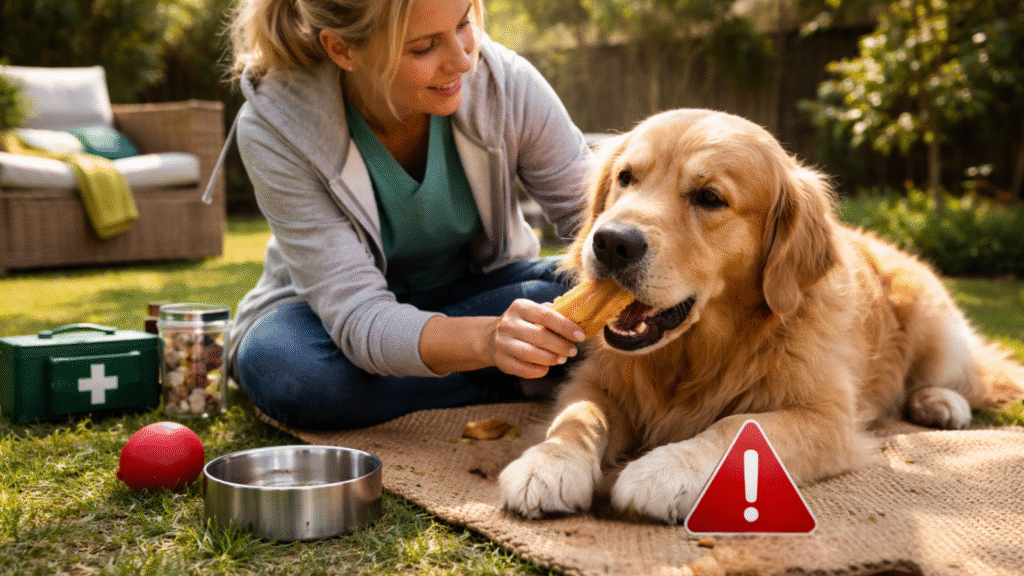
Yak chews that are softer grade, thin-format, or “puppy-style” are easiest on sensitive teeth. Dogs with sensitive teeth include those with enamel hypoplasia, dental caries, cracked teeth, or post-dental-procedure recovery stages.
3 structural characteristics that reduce dental stress in sensitive-toothed dogs:
- Thin width (under 1 cm): allows the dog to gnaw rather than bite down with full force
- Cow milk-primary composition: yields more pliable than yak-heavy blends
- Slightly moist surface: reduces initial resistance that triggers flinching in sensitive dogs
If your dog has been diagnosed with tooth resorption, fractured cusps, or worn enamel, consult your veterinarian before introducing any chew harder than a rubber toy.
How Can Gentle Chewers Safely Enjoy Yak Chews?
Gentle chewers safely enjoy yak chews when the chew is appropriately sized (not larger than their lower jaw width), offered in short 10–15-minute supervised sessions, and matched to a soft hardness grade. The 3-step introduction process below reduces hesitation and builds a positive chewing habit:
- Rub the chew lightly with warm water to soften the exterior and release the natural salt-and-fat aroma
- Offer the chew during a calm, comfortable time: not when the dog is already overstimulated or anxious
- Praise and reward engagement: for the first 3–4 sessions, to create a positive association
Gentle chewers often chew in a more lateral, molar-focused motion rather than biting down vertically. This motion is actually excellent for plaque removal along the gumline and is worth encouraging through positive reinforcement.
Which Yak Chews Are Best for Puppies?
The best yak chews for puppies are soft-grade, small-format puppy chews specifically marketed for dogs under 12 months, made primarily from cow milk with minimal added salt. Puppies have deciduous (baby) teeth that are smaller, thinner, and more fragile than adult teeth, which makes hardness grade the primary safety variable.
At what age can puppies start yak chews?
Puppies begin yak chews safely at 12 weeks of age and older, provided the chew is a puppy-specific soft grade and appropriately sized for their jaw. Our dedicated page on when puppies can safely start yak chews covers breed-size variations in detail. Before 12 weeks, puppies lack the motor control and jaw development needed to chew safely without risk of inhalation.
The 12-week milestone also aligns with the period when teething discomfort begins to intensify. The USDA APHIS veterinary developmental guide confirms that permanent teeth begin replacing deciduous teeth from approximately 12 weeks, with the full 42-tooth adult set typically in place by 6 months. Introducing a soft-grade yak chew at 12 weeks channels teething discomfort into a safe, purposeful outlet during this peak oral development window.
Which Yak Chew Sizes Are Safest for Small Puppies?
The safest yak chew size for small puppies is 1 oz to 1.5 oz, no wider than 1 cm, and no longer than 10 cm. Chews larger than this exceed a small puppy’s ability to position correctly in their mouth, leading to inhalation attempts.
For toy breeds and teacup-sized puppies (under 5 lbs at 12 weeks), choose chews on the smallest end of puppy-labeled products. For medium-breed puppies (15–30 lbs at 3 months), a 1.5 oz soft chew is appropriate and provides enough material for multiple sessions.
Always supervise puppy chew sessions for the first 8–10 sessions until you understand your individual puppy’s chewing style and pace.
How Do Puppy Yak Chews Support Teething?
Puppy yak chews support teething by providing counter-pressure against erupting teeth, which reduces gum inflammation and speeds the loosening of retained deciduous teeth. The firm but yielding surface of a soft yak chew mimics the natural pressure puppies apply when mouthing solid objects.
Teething puppies between 4 and 6 months often chew aggressively despite having fragile teeth; the drive is behavioral and neurological, not strength-based. A soft yak chew channels this destructive energy into a safe, single-purpose object, which protects furniture, shoes, and baseboards during this phase.
Unlike frozen teething rings, yak chews provide digestible material and dental abrasion simultaneously. The mild saltiness also encourages salivation, which has a natural anti-inflammatory effect on irritated gum tissue. For a curated list of safe, appropriately sized options, see our guide to the best yak chews for puppies.
Which Yak Chews Are Best for Senior Dogs?
The best yak chews for senior dogs are soft-grade, thin-format chews with no added artificial flavors or sodium, designed to provide gentle dental engagement without stressing aging dentition. Senior dog age thresholds vary by breed size. According to 2025 peer-reviewed veterinary research on senior dog thresholds by breed size, giant-breed dogs enter the senior life stage as early as 5 years, large breeds at 7–9 years, medium breeds at 8–10 years, and small breeds at 9–13 years. Regardless of the specific threshold, aging dentition benefits from softer-grade chews that reduce fracture risk.
What Features Should Senior-Friendly Yak Chews Have?
Senior-friendly yak chews have 4 key features: soft hardness grade, minimal added salt, thin cross-section, and a single-ingredient or short-ingredient profile. These features collectively reduce tooth fracture risk, support kidney function (by limiting sodium load), and ensure digestibility in dogs with slower gastrointestinal motility.
Many senior dogs also experience a reduced sense of smell and taste. Yak chews with a natural, pronounced milk aroma motivate engagement in seniors who would ignore odorless synthetic alternatives. The natural fat content in quality yak milk chews provides an additional olfactory cue.
Are Softer Yak Chews Better for Older Dogs?
Yes, softer yak chews are consistently better for older dogs because aging teeth have reduced enamel thickness and decreased pulp vitality, making them more vulnerable to fracture under high bite-force loads. Slab fractures, where the carnassial fourth upper premolar shears horizontally under extreme bite force, are among the most common serious dental injuries in large-breed dogs. A veterinary practice guide to slab fractures notes that the injury often goes undetected by owners until an abscess develops. This risk is precisely why matching chew hardness to the dog’s chewing profile matters.
A soft-grade yak chew yields under bite pressure rather than requiring the dog to apply sustained force. This difference is significant for dogs with arthritis in the temporomandibular joint (jaw joint), which causes pain with prolonged high-force chewing.
How Can Senior Dogs Chew More Comfortably?
Senior dogs chew more comfortably when the chew is warmed slightly to body temperature, offered on a non-slip surface, and limited to 10–15-minute sessions. Cold chews increase jaw stiffness in dogs with arthritis. A non-slip mat prevents the dog from repositioning repeatedly, which reduces frustration and conserves energy.
3 additional comfort measures for senior chewing sessions:
- Trim sharp edges: from new chews with a knife before offering, fresh yak chews occasionally have brittle corners that can cut gum tissue
- Offer water immediately after sessions: older dogs are more prone to dehydration, and salty chews increase water needs
- Monitor for excessive drooling or pawing at the mouth: these are signs of dental pain that warrant a veterinary dental examination.
Which Yak Chews Are Best for Small Dogs?
The best yak chews for small dogs are small-format, soft-to-medium grade chews weighing 1 oz to 2 oz, proportioned to their jaw anatomy. Small dogs are not simply scaled-down versions of large dogs; they have proportionally larger teeth relative to their jaw size and frequently experience more dental crowding, which makes dental hygiene chews more important, not less.
How Do You Choose the Right Yak Chew Size?
Choose the right yak chew size for small dogs by using jaw width as the primary measurement, not body weight alone, a sizing principle detailed extensively in our guide to the right yak chew size by breed and age. A 10-lb Chihuahua and a 10-lb Pug have different jaw widths, different bite forces, and different chewing styles. The correct yak chew size cannot fit entirely in the dog’s mouth and requires the dog to grip and gnaw from one end.
A practical sizing test: place the chew in front of the dog. The dog’s lower jaw, when open, should be narrower than the chew’s widest dimension. If the dog can close their mouth entirely around the chew, it is too small.
Which Yak Chews Last the Longest for Small Breeds?
Yak chews last the longest for small breeds when they are medium-grade hardness in a stick or flat-bar format, rather than a round or oval block. Round blocks concentrate bite force at a single contact point, which small dogs, despite their lower overall bite force, often fracture along the grain.
Flat-bar geometry distributes the bite across a longer surface, slowing wear. In documented user feedback across multiple small-breed communities, flat-format yak chews lasted 2 to 3 times longer than round-format chews of equivalent weight for dogs under 20 lbs.
Which Yak Chews Are Best for Large Dogs?
The best yak chews for large dogs are XL or XXL extra-hard blocks weighing 5 oz or more, with a compressed rectangular shape that resists fracture under high bite-force impact. Large breeds apply chewing forces that can exceed the fracture threshold of standard chew products. For specific product picks organized by large-breed weight class, our best yak chews for large dogs guide covers each category in detail. A cadaveric study from the University of Pennsylvania School of Veterinary Medicine found that canine carnassial teeth fracture at a mean force of 1,281 Newtons, a force well within the chewing capability of large breeds like Rottweilers and Mastiffs [peer-reviewed biomechanics research on canine bite force and tooth fracture risk].
What Thickness Works Best for Bigger Breeds?
The optimal thickness for large-breed yak chews is 2.5 cm to 4 cm at the widest cross-section. Chews thinner than 2.5 cm snap under the lateral jaw pressure of large breeds. Chews thicker than 4 cm become difficult for the dog to position effectively, reducing engagement.
Thickness also determines the internal surface-area-to-volume ratio, which governs how quickly flavor compounds reach the dog’s taste receptors during chewing. A 3 cm-thick chew maintains consistent flavor intensity across a longer session than a 5 cm block, which keeps the outer layer intact for too long without reward.
Which Yak Chews Reduce Choking Risks for Large Dogs?
Yak chews reduce choking risks for large dogs when they are large enough to prevent whole-ingestion, made from uniform-density compressed milk solids, and monitored for the transition point when the chew drops below 5 cm in length. At or below 5 cm, most chews become whole-swallowing candidates for large breeds.
The 2 most common choking situations with large-breed yak chews are:
- A chew that starts too small: a large dog bypasses gnawing entirely and attempts to swallow
- An unmonitored end piece: a chew gnawed down to the last 4 cm that the dog swallows as a bolus
Remove the chew remnant when it reaches 5 cm in length. Follow the correct timing in our guide on how long to microwave a yak chew remnant, 45–60 seconds, then cool completely and serve it as a puffed chew treat. This eliminates waste and removes the choking risk entirely.
How Do You Choose Yak Chews by Chewing Habits?
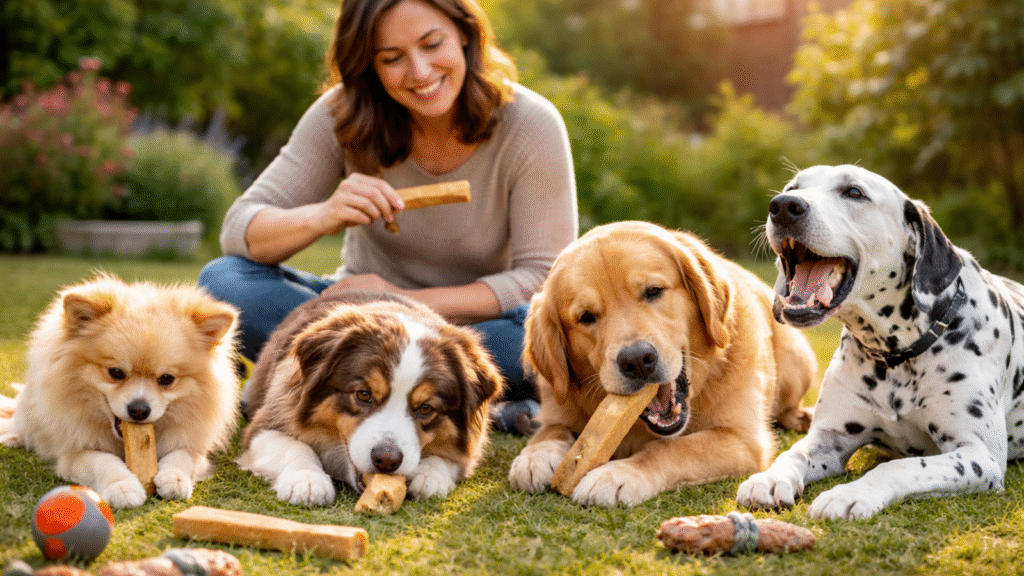
To choose yak chews by chewing habits, observe your dog during 3 consecutive chewing sessions with an appropriate test chew and evaluate bite frequency, session duration, and consumption rate. These 3 metrics classify your dog into one of the 5 primary chewing profiles with high accuracy.
What Signs Show Your Dog’s Chewing Style?
Your dog’s chewing style is identified by 4 observable behavioral markers: bite pressure (does the chew indent or fracture?), session length (does the dog stay engaged or lose interest?), consumption rate (how much disappears per 15-minute session?), and lateral vs. vertical jaw motion (molars vs. incisors).
| Behavior | Chewing Style |
| Fractures hard chews within 10 minutes | Aggressive |
| Consistent 15–25-minute sessions, gradual wear | Moderate |
| Loses interest within 5 minutes, surface scratching only | Gentle |
| Mouthing, lateral chewing, drooling | Puppy/Teething |
| Short sessions, hesitation, pawing at the mouth | Senior/Sensitive |
One behavior most owners overlook is gulping behavior, when a dog swallows large, soft pieces rather than chewing them through. Gulping indicates the chew is either too soft or the dog is too large for the selected format. Upgrade to a harder, larger format immediately.
How Does Chewing Style Affect Yak Chew Lifespan?
Chewing style affects yak chew lifespan by a factor of 3 to 8 times between the gentlest and most aggressive chewers, given the same chew. An aggressive 60-lb chewer consumes a medium-grade yak chew in 1–2 days. A gentle 60-lb chewer on the same chew takes 1–2 weeks.
This relationship between chewing style and lifespan is the reason weight-based sizing charts alone are insufficient. A 40-lb Pit Bull and a 40-lb Basset Hound require completely different yak chew grades. Matching grade to chewing style rather than weight produces more accurate longevity predictions and better safety outcomes.
What Ingredients Should You Look for in Yak Chews?
The 4 core ingredients in authentic, high-quality yak chews are yak milk, cow milk, lime (calcium hydroxide), and salt. These 4 ingredients, and only these 4, form the complete ingredient profile of a traditional Himalayan chew. Any additional ingredient (maltodextrin, natural flavors, smoke flavoring, vegetable glycerin, or preservatives) indicates either a non-traditional formulation or a quality-grade reduction. Verifying this 4-ingredient standard is simplest when ordering directly from a certified Himalayan yak chew manufacturer and supplier that publicly discloses its full ingredient specification.
Yak milk contributes to the dense protein matrix that gives the chew its hardness. Cow milk moderates the density and introduces a milder fat profile. Lime is added during processing to reduce pH, which inhibits microbial growth without refrigeration. Salt acts as both a preservative and a palatability enhancer.
3 red-flag ingredients to avoid:
- Rawhide blends: Some budget products blend processed rawhide into the yak milk matrix, which introduces the splintering risk that yak chews are supposed to eliminate
- Artificial smoke flavor: masks a shorter or lower-quality drying process; genuine smoke-dried chews have a subtle, consistent smoke aroma throughout the block
- Added sugars or syrups: contribute to dental plaque and glycemic instability in diabetic or metabolically sensitive dogs
When evaluating yak chew brands, look for products that comply with AAFCO Model Regulations for Pet Food and Specialty Pet Food (2024). The 2024 edition defines treat standards for palatability, labeling, and ingredient integrity. Prioritize brands that publish batch-level heavy metal testing results, as Himalayan dairy products from certain production regions have shown elevated lead levels in peer-reviewed studies. A 2024 PLOS ONE systematic review on heavy metal contamination in dairy milk found that lead (Pb) exceeded WHO permissible levels in multiple countries’ dairy products, driven by soil and water contamination near grazing land. When purchasing Himalayan yak chews, prioritize suppliers that publish batch-level independent heavy metal test results.
How Should You Approach Yak Chews With Premium Dog Treats?
Yak chews occupy a distinct functional role in a dog’s treat portfolio; they are long-duration, dental-engagement tools rather than reward-delivery mechanisms. Premium dog treats (freeze-dried proteins, dehydrated meats, training treats) serve a different purpose: rapid reinforcement, high-value motivation, and nutritional supplementation.
Can Premium Dog Treats Improve Your Dog’s Chewing Experience?
Yes, premium dog treats improve the chewing experience when used to enhance yak chew engagement, not replace it. 3 practical applications where premium treats and yak chews work together:
- Initial introduction: Rub a small amount of high-value freeze-dried treat (salmon or chicken) on the surface of a new yak chew to create an immediate positive association for picky chewers
- Session termination reward: offer a small premium treat when you remove the chew at the end of a session, reinforcing calm compliance when the chew is taken away
- Chew rotation reinforcement: alternate yak chew sessions with lick mats loaded with wet food or premium spreads to maintain overall enrichment variety.
What most people overlook is that a dog’s willingness to engage with a yak chew is partly learned behavior. Dogs that experience a positive end-of-session routine (treat + praise) learn to return to the chew eagerly in subsequent sessions rather than guarding or showing resource anxiety.
What Are the Key Takeaways About Yak Chews by Chewing Style?
The 7 core principles that determine yak chew success by chewing style are:
- Match hardness grade to chewing style first, size to body weight second, the inverse of how most buyers shop
- Aggressive chewers require extra-hard, large-format, rectangular blocks with session limits of 15–20 minutes
- Moderate chewers perform best with medium-density, single-ingredient blocks from traditional Himalayan producers
- Gentle chewers need soft-grade, thin-format chews introduced with surface moisture and positive reinforcement
- Puppies start at 12 weeks on puppy-specific soft grades, sized to jaw width, not body weight
- Senior dogs benefit from soft-grade, low-sodium, thin chews offered warm on a non-slip surface
- The 4-ingredient rule eliminates 90% of low-quality products. Authentic yak chews contain only yak milk, cow milk, lime, and salt.
Yak chews are among the safest, most nutritionally appropriate long-duration chews available when matched correctly to the individual dog’s profile. The decision tree is straightforward: identify chewing style through observation, match hardness grade to that profile, confirm size using jaw width, and verify ingredient quality before purchasing.
Every dog benefits from appropriate daily dental engagement. Yak chews, when selected, sized, and supervised correctly, deliver that benefit reliably across all chewing profiles, from the most destructive aggressive chewer to the most tentative gentle nibbler. And avoid heavy coatings or binders. Reliable suppliers maintain consistent sizing across batches. Replace the product if multiple chews crack sharply or splinter.”