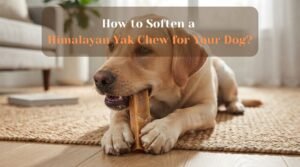
Himalayan yak chews have become one of the most sought-after natural dog treats in the global pet market. These traditional chews, crafted from yak and cow milk using an ancient Himalayan recipe, offer dog owners a premium, long-lasting alternative to synthetic treats and rawhide, a difference explored in depth in our yak chews vs. other chews comparison. Made with just three simple ingredients like milk, salt, and lime juice, these chews are 100% natural, high in protein, and beloved by dogs for their rich flavor and satisfying texture.
Nepal stands as the authentic home of Himalayan dog chews, where local communities have perfected the art of making churpi (the traditional name for yak cheese) for centuries. As demand for these natural yak milk dog treats continues to surge worldwide, businesses face a critical challenge: not all suppliers deliver consistent quality or authentic products. Many exporters rely on third-party brokers, leading to inconsistent batches that can damage your reputation with customers.
This comprehensive guide will help you navigate the process of finding a trustworthy Himalayan yak chews supplier in Nepal. Whether you’re a U.S. pet retailer, an Amazon seller seeking private label opportunities, or an international distributor looking for wholesale Himalayan dog chews, you’ll learn how to identify reliable partners, verify their credentials, and establish a sustainable supply chain for this fast-growing product category.
Why Source Himalayan Yak Chews from Nepal?
Authenticity and Quality
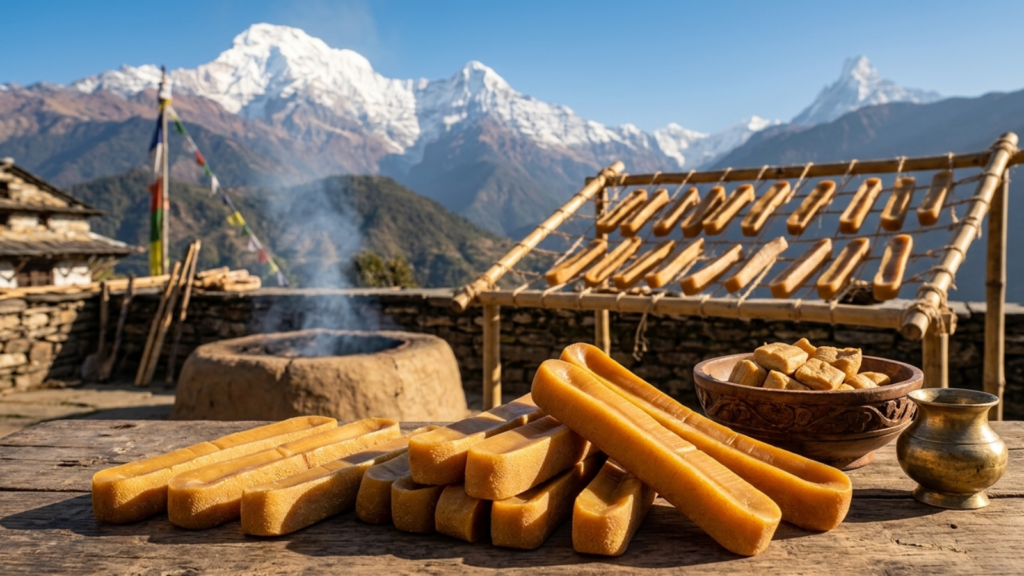
Nepal represents the birthplace of authentic Himalayan dog chews, where the traditional recipe and production methods have been preserved for generations. The genuine churpi chews produced in Nepal follow ancient techniques: yak and cow milk are boiled, curdled with lime juice and salt, then pressed, smoked, and sun-dried over several weeks to achieve the perfect hardness and flavor profile.
Nepalese manufacturers possess deep expertise in this craft, understanding the precise balance needed to create chews that are hard enough to last but won’t splinter or damage dogs’ teeth, a key reason yak chews are considered safe for dogs when sourced from reputable producers. This traditional knowledge, passed down through families, ensures a superior product compared to mass-produced alternatives that may cut corners on ingredients or processing time.
Supporting Local Communities
Sourcing from Nepal means partnering with suppliers who work directly with yak herding communities in remote Himalayan regions. Many Nepalese yak chew exporters have transformed local farmers into micro-entrepreneurs, providing them with fair prices for their milk and creating sustainable income streams in areas where economic opportunities are limited.
This direct relationship between suppliers and farmers often translates to better quality control and ethical sourcing practices. By choosing a Nepal dog chew exporter, you’re not just securing a quality product; you’re supporting communities that have stewarded these traditions for centuries.
Higher Quality Control Standards
Reputable Himalayan dog chew manufacturers in Nepal adhere to strict quality standards and refuse to compromise on the traditional recipe. Top suppliers implement rigorous quality control measures throughout production, often discarding up to 25% of chews that don’t meet export-grade specifications. These rejected pieces are sold locally rather than being mixed into export shipments, demonstrating a commitment to consistency that protects your brand reputation.
Many well-known Western pet brands source their yak cheese dog chews from Nepalese manufacturers, a testament to Nepal’s reputation for quality in this specialized market.
Established Export Expertise
Nepal has developed a robust infrastructure for exporting pet chews, with experienced suppliers who understand international compliance requirements. Leading yak chews wholesale Nepal suppliers maintain FDA registration for U.S. markets, hold ISO certifications, and can provide all necessary documentation, including health certificates, certificates of origin, and regulatory compliance paperwork.
This export experience reduces your risk as an importer, as these suppliers guide you through customs requirements and ensure shipments clear without delays or rejections.
Challenges in Finding a Reliable Supplier
Inconsistent Quality
Not every Himalayan yak chew supplier maintains direct control over their production process. Many exporters act as middlemen, sourcing chews from multiple small producers or brokers, which leads to significant quality variations between batches. Importers frequently report frustration when one shipment delivers excellent chews while the next contains products that are too soft, too hard, have irregular shapes, or show signs of poor drying.
This inconsistency can devastate customer trust. When retailers sell premium natural dog treats, customers expect uniform quality. A single bad batch can result in negative reviews, returns, and lost business.
Varying Ingredients and Production Practices
Lower-tier suppliers may compromise on ingredients to reduce costs. Some use milk of poor quality, add fillers, or incorporate preservatives that contradict the “all-natural” promise of authentic yak chews. Without proper vetting, you risk receiving products that aren’t 100% natural or that have quality issues like mold, unpleasant odors, or improper texture.
The traditional smoking and drying process takes weeks—shortcuts in this timeframe result in chews that are either too soft (and may mold) or improperly hardened.
Regulatory Compliance Challenges
Animal-based pet products face stringent import regulations in most countries. Suppliers unfamiliar with FDA requirements for the U.S., EU food safety standards, or other international regulations can cause serious problems. Shipments may be detained at customs, rejected entirely, or require expensive remediation.
Working with an inexperienced Nepal dog chew exporter who lacks proper certifications or doesn’t understand USDA permit requirements can turn what should be a straightforward import into a costly nightmare.
Communication and Trust Issues
International sourcing inherently involves challenges: time zone differences, language barriers, and the difficulty of assessing trustworthiness from thousands of miles away. While most Nepalese exporters are legitimate, the B2B landscape does include bad actors. Without proper due diligence, businesses risk sending deposits to unverified entities that may not deliver as promised—or at all.
These challenges underscore why thorough vetting is essential. The following sections provide a framework for identifying reliable partners and avoiding common pitfalls.
Qualities of a Reliable Himalayan Yak Chew Supplier
1. Consistent Product Quality
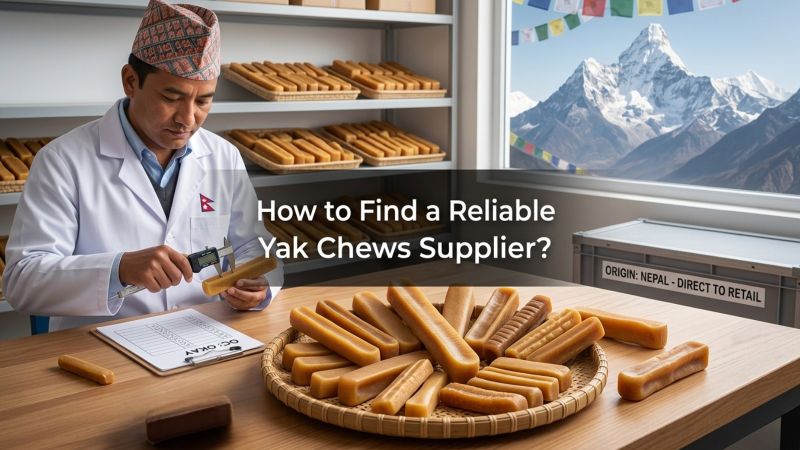
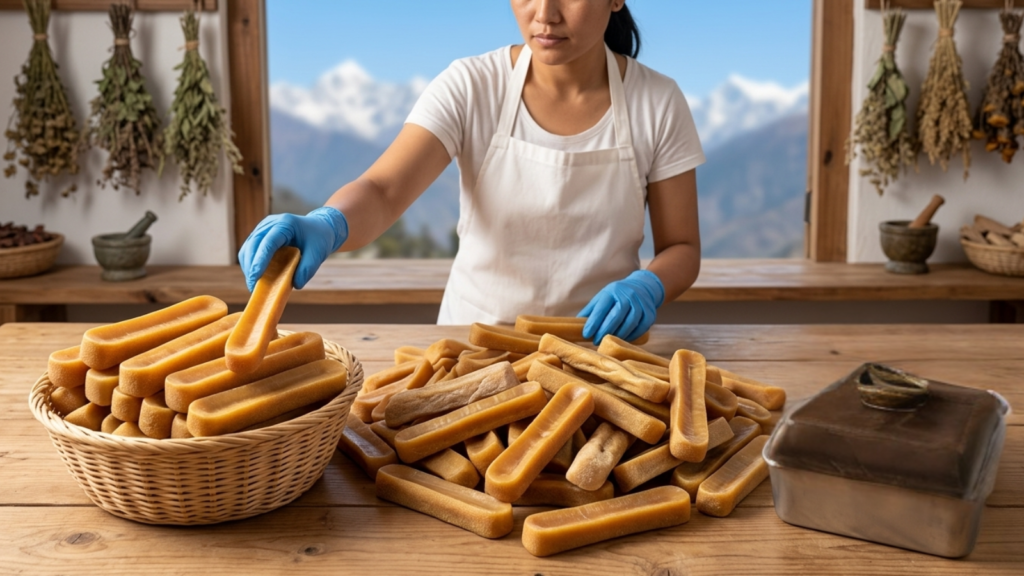
The hallmark of a trustworthy Himalayan dog chew wholesale supplier is unwavering consistency. Every batch should meet the same standards for size, hardness, color, and overall quality. Partnering with a direct yak chew manufacturer, one that uses the authentic three-ingredient recipe without additives or fillers and implements systematic quality control throughout production, is the surest way to guarantee that consistency batch after batch.
Top suppliers establish strict specifications for export-grade chews and remove any pieces that don’t qualify. For example, premium exporters may reject chews that are too light in color (indicating insufficient yak milk content), have irregular shapes, or don’t meet hardness standards. These rejected pieces are typically sold in local markets rather than being included in international shipments.
Consistency matters because your customers will notice variations. Building a loyal customer base depends on delivering the same quality experience with every purchase.
2. Certifications and Compliance
A legitimate Himalayan yak chews supplier will possess multiple certifications demonstrating adherence to safety and quality standards:
- DFTQC Export Certification: The Department of Food Technology and Quality Control in Nepal issues mandatory health and export certificates for food products. Verify that your supplier holds a current DFTQC export certificate. The Department of Food Technology and Quality Control (DFTQC) is Nepal’s official food safety authority, established in 1961 and serving as the country’s Codex Contact Point. It operates 12 Food Import Export Quality Certification Offices across Nepal, including one at Tribhuvan International Airport, and issues mandatory health and export certificates required for international food trade.
- Food Safety Certifications: Look for ISO 22000 or HACCP (Hazard Analysis Critical Control Points) certification, international standards for food safety management. Some suppliers may also hold GMP (Good Manufacturing Practices) certification or even USDA organic certification for certain product lines.
- FDA Registration: For U.S. exports, per the FDA’s official Food Facility Registration Q&A (7th Edition), “facilities that manufacture, process, pack, or hold finished pet food must be registered as a food facility with FDA”, and food from an unregistered facility is subject to being held at the port of entry. Verify registration numbers through the FDA’s Facility Registration database before finalizing any supplier relationship.
- Additional Compliance: Importers must comply with the FDA’s Foreign Supplier Verification Program (FSVP), which requires developing and maintaining a documented FSVP for each imported food product and verifying that the foreign supplier produces food meeting U.S. preventive controls standards. The FDA’s FSVP Final Rule page provides compliance guides, the Importer Portal for submitting FSVP records, and FSPCA training materials.
A reliable supplier proactively maintains these certifications and willingly shares documentation, understanding that compliance reduces risk for both parties.
3. Direct Sourcing and Ethical Practices
Suppliers who control their entire supply chain—from farmer relationships through production to export—deliver better consistency and quality. Direct relationships with yak herding communities allow these manufacturers to ensure milk quality, maintain ethical sourcing standards, and avoid the quality variations inherent in broker-based models.
Ethical sourcing includes fair pricing for farmers, sustainable practices that don’t over-harvest milk, and humane animal treatment. Some suppliers hold social accountability certifications like SA8000, demonstrating commitment to ethical labor practices throughout their supply chain.
This direct control also means faster response to quality concerns and greater transparency about production processes—critical factors when your brand reputation is on the line.
4. Production Capacity and Reliability
Your chosen supplier must handle your current volume requirements while having the capacity to scale as your business grows. Assess their production capabilities by asking detailed questions: What is their monthly production capacity? How many international clients do they serve? Can they accommodate seasonal demand spikes, such as holiday ordering periods?
Reliable suppliers maintain consistent lead times and deliver on promised schedules. They’re transparent about production timelines rather than over-promising, and have contingency plans for potential disruptions (such as seasonal variations in milk availability or transportation challenges in Nepal’s mountainous terrain).
Established exporters often maintain buffer inventory and work with multiple yak farming communities to ensure their orders can be fulfilled even during peak demand periods.
5. Communication and Transparency
Clear, responsive communication separates professional suppliers from mediocre ones. A quality yak cheese dog chew supplier responds promptly to inquiries, communicates fluently in English (or your preferred language), and provides detailed information about their products, processes, and capabilities.
Transparency is equally important. Trustworthy suppliers readily share information about ingredients, production methods, shelf life, and any potential issues. They’re willing to provide documentation upfront, including ingredient certifications, lab test results, and facility information. Some may even offer virtual factory tours or arrange visits for serious buyers.
Pay attention to how suppliers handle questions about quality control, returns, or customization. Their responses reveal whether they’re committed to partnership or simply seeking transactions.
6. Competitive Pricing and Clear Terms
While Himalayan yak chews are premium products commanding higher prices than standard dog treats, reliable wholesale Himalayan dog treat suppliers offer fair, competitive pricing that reflects the labor-intensive production process. Be wary of prices significantly below market rates—they often indicate compromised quality, inferior ingredients, or inconsistent sourcing.
Understand typical purchasing terms before negotiating:
- Minimum Order Quantities (MOQs): Most exporters require minimum orders, often measured in kilograms or pallets. For new relationships, some suppliers may accept smaller trial orders.
- Payment Terms: New suppliers typically require deposit payments (often 30-50%) with balance due before shipping or upon delivery. Established relationships may transition to net payment terms. Consider using secure payment methods like letters of credit or escrow services for large initial orders.
- Incoterms: Clarify whether quotes are FOB (Free On Board) Nepal, CIF (Cost, Insurance, and Freight) to your port, or another arrangement. This determines who handles shipping costs and insurance.
Compare quotes from multiple suppliers, but prioritize quality and reliability over small price differences. Establish clear written contracts covering all terms to prevent misunderstandings.
Where to Find Himalayan Yak Chew Suppliers
We can find the Himalayan Yak Chew Supplier in the following Places:
1. Online B2B Marketplaces and Directories
Digital platforms offer convenient starting points for locating Nepalese suppliers. Websites like Alibaba, GlobalSources, and Made-in-Nepal feature numerous yak chew exporters. When searching these platforms, use specific keywords like “Himalayan dog chew Nepal,” “yak cheese chew wholesale,” or “Nepal churpi supplier” to find relevant listings.
However, online listings require careful vetting—not all suppliers are equally reputable. Cross-reference information from multiple sources and don’t rely solely on marketplace profiles.
Additionally, explore Nepal’s official trade resources. The Export Council of Nepal, Nepal Chamber of Commerce, and industry associations often maintain directories of verified exporters. These government-backed resources can connect you with established, legitimate businesses.
2. Trade Shows and Pet Industry Expos
International pet industry trade shows offer invaluable opportunities to meet suppliers face-to-face and evaluate products directly. Major events like SuperZoo in the United States, Interzoo in Europe, and Global Pet Expo attract Nepalese manufacturers showcasing their Himalayan dog chews.
Even if you can’t attend, review exhibitor lists from these events to identify active exporters. Many suppliers provide virtual meetings or video presentations for international buyers unable to travel.
Regional trade fairs in South Asia, particularly in Kathmandu, allow you to meet multiple producers, tour facilities, and build relationships in person. For serious buyers, the investment in travel can pay dividends through direct assessment of operations and immediate product sampling.
3. Networking and Referrals
Industry connections provide some of the most reliable supplier recommendations. Ask peers in the pet products sector, retailers, or distributors about their yak chew sources. Word-of-mouth referrals often come with honest assessments of supplier reliability, quality consistency, and customer service.
Professional networking platforms like LinkedIn host groups focused on pet products, international trade, and B2B sourcing, where members share experiences and recommendations. Amazon seller communities, Facebook groups for pet product entrepreneurs, and industry forums frequently discuss sourcing strategies and can point you toward reputable suppliers while warning about problematic ones.
4. Direct Web Research and Company Websites
Strategic internet searching remains effective for finding established suppliers. Search terms like “Himalayan yak chew manufacturer Nepal,” “yak cheese dog chew exporter,” or “Nepal dog treat supplier” will surface company websites of active exporters. For a curated starting point, our roundup of the top Himalayan yak chew suppliers profiles verified manufacturers worth evaluating.
When evaluating supplier websites, assess professionalism and transparency. Quality indicators include:
- Detailed company information and history
- Clear product specifications and descriptions
- Displayed certifications and licenses
- Factory photos and production process information
- Client testimonials or case studies
- Contact information and responsive inquiry systems
Professional websites suggest established operations, though appearances alone don’t guarantee reliability. Always verify claims through additional due diligence steps outlined in the next section.
How to Vet a Himalayan Yak Chew Supplier
Request Samples and Evaluate Quality
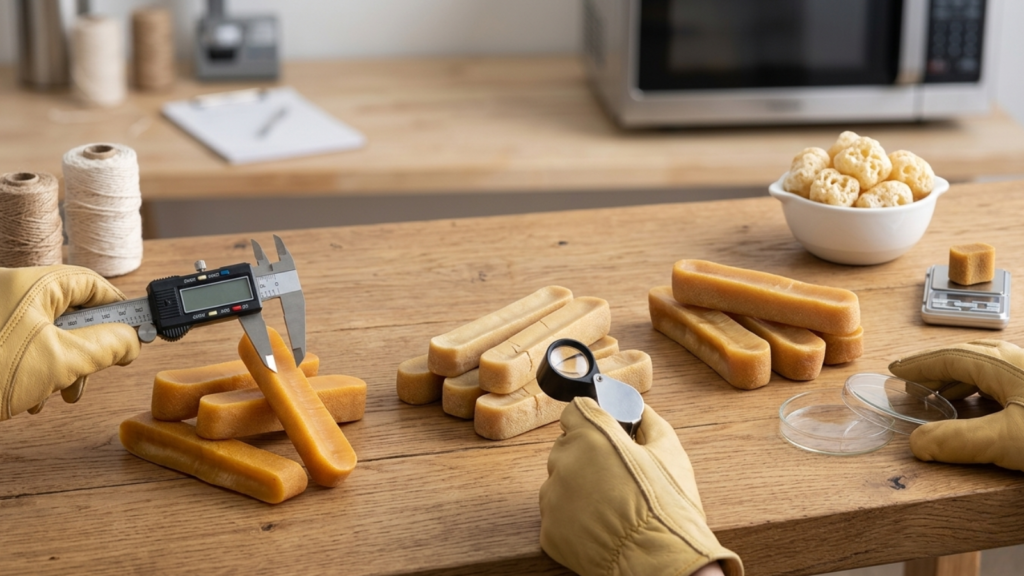
Never commit to bulk orders without thoroughly testing product samples. Request samples from each shortlisted supplier, ideally asking for multiple pieces to assess consistency within a single batch.
When samples arrive, conduct a comprehensive evaluation:
- Visual Inspection: Examine color consistency (richer colors typically indicate higher yak milk content), uniform shape and size, and absence of cracks, mold, or discoloration. Quality chews should have a clean, natural appearance.
- Texture and Hardness: Premium yak chews are very hard but not brittle. They should resist gentle pressure but not feel so hard that they might damage teeth.
- Smell: Authentic chews have a mild, pleasant cheese and smoke aroma. Off-putting or chemical odors indicate quality issues.
- Performance Test: Give samples to dogs (if possible) or conduct the popular “puffing” test; follow our guide on how to puff yak chews in the microwave to create a crunchy treat from a small sample piece. Quality chews should perform well in both long-lasting chewing and puffing.
Compare samples side-by-side from different suppliers. Quality differences become immediately apparent when viewed together, helping you identify superior products.
Verify Certifications and Documentation
Request copies of all relevant certifications and permits. Professional suppliers provide these readily, understanding that verification builds trust.
Key Documents to Request:
- ISO 22000, HACCP, or other food safety certificates
- DFTQC export license or recent health certificate
- FDA registration number (for U.S. exports)
- Recent laboratory test reports (contaminant testing, nutritional analysis)
- Certificates of origin
- Insurance documentation
Verification Steps:
Cross-check documentation authenticity where possible. FDA registrations can be verified through the FDA database. ISO certificates often include issuing body information that allows verification. Contact certification bodies directly if you have concerns about document legitimacy.
If a supplier hesitates to provide documentation, makes excuses, or produces suspicious-looking certificates, consider it a red flag requiring further investigation or elimination from consideration.
Communicate and Gauge Professionalism
Use the inquiry and sampling process as a test of supplier professionalism. Quality suppliers demonstrate their reliability through:
- Responsiveness: Prompt replies to emails, messages, or calls indicate respect for your time and organized operations.
- Communication Quality: Clear, detailed answers to questions suggest competence and transparency. Professional suppliers address concerns thoroughly rather than providing vague or evasive responses.
- Willingness to Engage: Top suppliers may offer video calls, virtual factory tours, or introductions to their team. This openness indicates confidence in their operations.
Ask detailed questions covering production processes, quality control measures, customization capabilities, handling of quality issues or returns, and their experience with your target market. Evaluate whether answers demonstrate genuine expertise or merely sales tactics.
Check References and Reviews
Background research provides crucial context about supplier reliability. Request references from existing international clients, particularly those in your target market. Speaking directly with current customers offers unfiltered insights into long-term reliability, quality consistency, and problem resolution.
Conduct independent online research by searching the company name alongside terms like “review,” “experience,” or “complaint.” While not all suppliers will have an extensive online presence, any verifiable information—positive or negative—informs your decision.
Check B2B review platforms, industry forums, and professional networking sites for mentions. Look for patterns in feedback rather than isolated comments. Consistently positive experiences or industry recognition (awards, certifications, trade publication features) are encouraging signs.
Conversely, search for warning signs by looking up the company with terms like “scam” or “fraud.” While the absence of negative information doesn’t guarantee reliability, discovering multiple complaints should raise serious concerns.
Start with a Small Trial Order
Even after thorough vetting, minimize risk by placing a smaller initial order rather than committing to large volumes immediately. This trial order tests the supplier’s reliability under real conditions:
- Delivery Performance: Did the shipment arrive on schedule? Were shipping updates provided proactively?
- Quantity Accuracy: Did you receive exactly what was ordered, or were there discrepancies?
- Quality Consistency: Does the bulk product match the sample quality, or did quality decline in larger production?
- Packaging: Are chews properly packaged in moisture-proof, airtight containers or bags? Is the packaging durable enough for international shipping?
- Documentation: Did all required import paperwork (health certificates, commercial invoices, customs declarations) arrive correctly and on time?
- Problem Resolution: If any issues arose, how did the supplier respond? Professional suppliers address concerns quickly and fairly.
Only after completing a trial order should you scale up to larger volumes. This staged approach protects your investment while building confidence in the partnership.
Logistics and Import Considerations
Customs and Regulatory Requirements
Importing yak cheese dog chews requires compliance with destination country regulations. U.S. importers face the most detailed compliance layer. For a full breakdown of every requirement, FDA prior notice, FSVP documentation, health certificates, and customs classification, see our dedicated guide on how to import Himalayan yak chews into the US. The key requirements at a glance include:
- FDA Prior Notice: All food imports, including yak chews, require advance electronic filing with the FDA before the shipment arrives. Per 21 CFR Part 1, Subpart I, this notice must be confirmed by FDA at least 4 hours before arrival for air shipments (note: 2 hours applies to road transport only) and at least 8 hours before arrival for ocean (water) shipments. File early to avoid cargo holds.
- FSVP Compliance: Importers must verify that foreign suppliers meet U.S. food safety standards. Maintain documentation demonstrating supplier verification.
- Required Documentation: Your supplier should provide a sanitary or health certificate from Nepal’s DFTQC, a commercial invoice, a packing list, and a certificate of origin. Some shipments may require USDA APHIS veterinary permits: per the USDA APHIS Animal Product Imports page, “generally, a USDA veterinary permit is needed for materials derived from animals,” with dairy products (excluding butter and cheese) specifically requiring a permit. Use APHIS’s VS Permitting Assistant tool to confirm whether your specific yak chew classification requires a VS import permit before placing orders.
- Customs Classification: Work with your customs broker to correctly classify yak chews under the Harmonized Tariff Schedule, which determines applicable duty rates.
European Union importers face different requirements, including EU-approved establishment lists for certain animal products. Research your specific market’s regulations or consult with a customs broker specializing in pet products.
Shipping Methods and Timelines
Nepal’s landlocked geography means shipments typically route through India’s seaports or depart via air freight from Kathmandu’s international airport.
Air Freight: Faster but more expensive, ideal for smaller orders, trial shipments, or urgent restocking. Typical transit time: 5-10 days door-to-door.
Sea Freight: Cost-effective for larger volumes. Chews ships by truck to Indian ports (typically Kolkata or Mumbai), then by ocean freight to destination ports. Transit time: 4-8 weeks, depending on destination and routing.
For very large shipments, some importers use refrigerated containers for optimal condition maintenance during long transits, though properly dried yak chews are shelf-stable and don’t strictly require temperature control.
Lead Times and Planning
Plan inventory considering full supply chain timelines:
- Production: Custom or large orders may require 2-4 weeks of production time, particularly for private label products with custom packaging.
- Shipping: Add air or sea freight duration.
- Customs Clearance: Allow 2-5 days for customs processing in most countries.
- Inland Distribution: Factor in time to transport goods from the arrival port to your warehouse.
Total lead time from order placement to warehouse receipt: 3-6 weeks for air freight, 6-12 weeks for sea freight. Order well ahead of anticipated demand, especially before holiday seasons.
Cost Considerations
Budget for all import-related expenses beyond product cost:
- Freight Charges: Yak chews are relatively heavy, making shipping costs significant. Request detailed freight quotes (CIF pricing includes this).
- Import Duties: Check your country’s duty rate for pet treats under the relevant HS code. U.S. duties on pet chews are typically modest but vary.
- Customs Broker Fees: Professional customs brokers charge for clearance services, typically $100-300 per shipment, depending on complexity.
- Insurance: Protect shipments with cargo insurance, typically 0.5-2% of shipment value.
- Storage and Handling: Consider costs for receiving, inspecting, and warehousing inventory upon arrival.
Experienced Nepal suppliers often guide you through documentation requirements and can recommend freight forwarders familiar with their export routes, simplifying the process considerably.
Conclusion
As the U.S. organic and natural pet food market continues its expansion, valued at USD 8.1 billion in 2024 and projected to reach USD 16.4 billion by 2033 at an 8% CAGR (IMARC Group), Himalayan yak chews occupy an ideal position within this clean-label, natural-ingredients trend, offering importers a product category backed by sustained consumer demand.
Success in this sourcing relationship depends on prioritizing quality over price, verifying certifications and compliance credentials, maintaining clear communication expectations, and testing supplier reliability through trial orders before scaling up. Nepal’s experienced yak chew exporters understand international markets and can support your business with consistent supply, proper documentation, and products that meet rigorous safety standards.
The investment in thorough supplier evaluation pays dividends through consistent product quality that builds customer loyalty, reliable inventory flow that supports business growth, and authentic partnerships that benefit both your business and Himalayan farming communities.
With these guidelines, you’re well-equipped to find a trustworthy partner in Nepal for wholesale Himalayan dog chews. Begin your search, conduct proper due diligence, and soon you’ll be delivering this sought-after natural treat to satisfied canine customers worldwide.
Frequently Asked Questions
What are Himalayan yak chews made of, and why are they popular?
Himalayan yak chews are natural hard cheese treats crafted from yak’s and cow’s milk combined with small amounts of salt and lime juice. The mixture undergoes a traditional Himalayan process involving cooking, pressing, smoking, and extensive sun-drying over several weeks to create an extremely durable chew.
Their popularity stems from being 100% natural with zero artificial ingredients, high protein content, and exceptional longevity. A single chew can entertain dogs for days or even weeks. Pet owners appreciate that yak chews support dental health, a benefit recognized by the American Animal Hospital Association (AAHA), which states that dental chews “improve the health of a dog’s teeth, gums, and breath by mechanically scraping and abrading the plaque off their teeth… the longer the chewing time, the more cleaning occurs” (AAHA Dental Home Care Guide, 2025).
Why source Himalayan yak chews from Nepal instead of other countries?
Nepal represents the authentic birthplace of yak chews, where the traditional churpi recipe originated centuries ago in Himalayan communities. Sourcing directly from Nepal ensures authenticity—you’re getting products made with the original ingredients and time-honored methods rather than imitations.
Nepalese suppliers offer superior quality due to generations of expertise in the traditional smoking and drying process that creates optimal hardness and flavor. Additionally, sourcing from Nepal supports local farmers and communities who have sustained these practices across generations, often providing crucial income to remote mountain regions.
While distributors in other countries may sell yak chews, they frequently import from Nepal anyway, meaning direct sourcing eliminates middlemen, potentially reducing costs while increasing product freshness. Experienced Nepalese exporters also understand international shipping and regulatory requirements, smoothing the import process.
How can I verify that a Himalayan yak chew supplier is trustworthy and legitimate?
Verification involves multiple steps. First, request and confirm certifications, including ISO 22000 or HACCP for food safety, DFTQC export certification from Nepal’s government authorities, and FDA registration if you’re importing to the United States. Cross-check these against official databases where possible—FDA registrations can be verified online.
Second, request documentation including recent health certificates, laboratory test results for contaminants or nutritional analysis, and business registration information. Legitimate suppliers provide these readily.
Third, conduct background research by searching for the company online, looking for reviews or mentions in industry forums, and requesting references from existing international clients. Speaking with current customers provides invaluable insights into reliability.
Fourth, evaluate their communication professionalism and transparency throughout the inquiry process. Finally, order product samples and place a small trial order to test quality and reliability before committing to large volumes. If anything feels questionable during these steps, continue searching rather than proceeding with uncertainty.
What import regulations should I be aware of when buying yak chews from Nepal?
U.S. importers must ensure FDA compliance, including prior notice filing before shipment arrival, and working with FDA-registered suppliers. The Foreign Supplier Verification Program requires importers to verify that foreign suppliers meet U.S. safety standards, so maintain documentation demonstrating your due diligence.
Essential documentation includes a sanitary or health certificate from Nepal’s DFTQC, a commercial invoice, a packing list, and a certificate of origin. Some circumstances may require USDA veterinary permits for dairy products, though fully processed, shelf-stable yak chews typically clear under standard food import procedures.
Properly classify products under the Harmonized Tariff Schedule to determine applicable duty rates. Consider hiring an experienced customs broker specializing in pet products to navigate clearance smoothly.
European Union importers face different requirements, including the potential need for EU-approved establishment verification. Regardless of destination, research your specific country’s regulations for importing animal-derived pet products or consult with trade specialists familiar with your market. Experienced Nepalese suppliers typically guide importers through the required documentation based on the destination country.
Can I get Himalayan yak chews private-labeled with my own brand?
Yes, most established Himalayan dog chew manufacturers in Nepal offer private labeling and OEM services. This is extremely common—many Western brands selling yak chews source from the same Nepalese producers, differentiated only by branding and packaging.
When arranging private labeling, discuss packaging options (suppliers may offer basic packaging that you customize, or they can arrange local printing of your branded packaging), ensure label compliance with all regulatory requirements in your target market, including ingredient lists and country of origin, confirm minimum order quantities for custom packaging runs, and clarify any additional costs and extended lead times for branded products.
Reputable suppliers experienced with international clients handle private labeling routinely and can guide you through the process. Establish clear agreements covering packaging specifications, quality standards, and any intellectual property considerations to ensure your brand is protected.
How long do Himalayan yak chews last, and how should I store them?
Properly processed Himalayan yak chews have a shelf life of approximately 2-3 years when stored correctly. Their extensive drying and smoking process creates a shelf-stable product resistant to spoilage.
For optimal longevity, store chews in cool, dry conditions away from direct sunlight. Keep them in airtight containers or packaging to prevent moisture absorption. For full guidance on preserving bulk inventory, refer to our yak chews storage guide covering humidity control, FIFO rotation, and packaging best practices. Many suppliers include silica gel packets in packaging to control humidity.
If purchasing bulk quantities, ensure proper resealing after opening or repackage into moisture-proof bags. Implement FIFO (first in, first out) inventory rotation practices.
While chews remain safe for extended periods, aim to sell inventory within 12-18 months of import for optimal quality. Well-stored chews maintain their hardness and smoky flavor throughout their shelf life. Discard any pieces showing mold, unusual odors, or other signs of degradation, though these issues are rare with properly processed products stored correctly.