Yak chews (often sold as Himalayan cheese chews or yak milk bones) are dense, long-lasting milk-based dog chews made from yak or cow milk, salt, and lime juice. An 8-week-old puppy has fragile milk teeth and a small airway, so the standard rock-hard yak bar is a high-risk chew that can crack teeth and create choking hazards.
Puffed yak nuggets or briefly softened pieces are safer yak-chew options at 8 weeks when the piece is sized too large to swallow, offered for 5–10 minute supervised sessions, and removed before it becomes a small end nub. Most brands set 4 months as the minimum for standard hard bars; the guide below shows how to choose a clean 4-ingredient chew, run the thumbnail hardness test, and avoid lookalikes such as rawhide, antlers, hard nylon, and weight-bearing bones.
Are Yak Chews Safe for an 8-Week-Old Puppy?
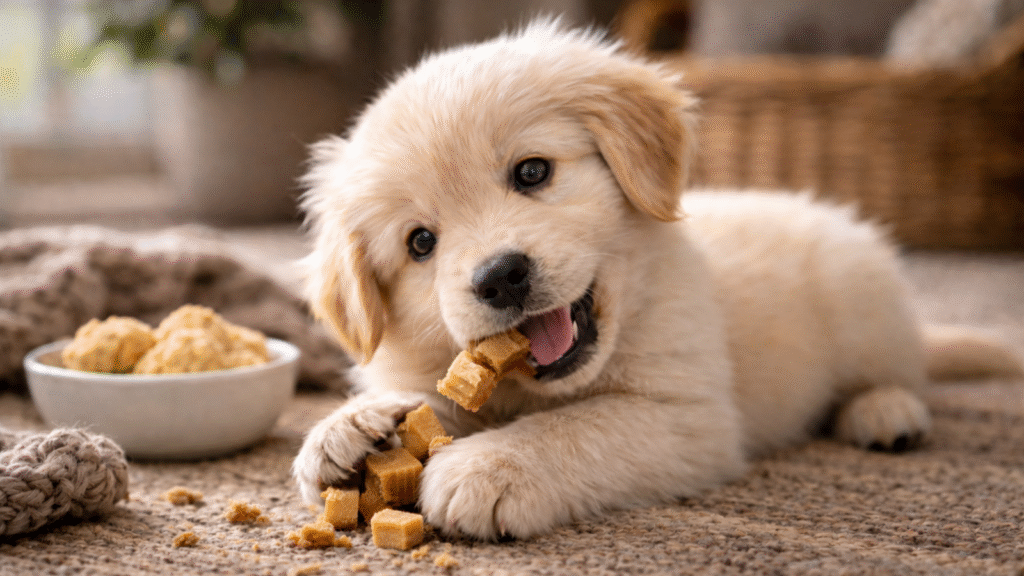
Yak chews are generally not recommended in standard hard-bar form for an 8-week-old puppy. At 8 weeks, puppy teeth are small, fragile, and still developing. Standard hard yak chew bars pose a real risk of tooth cracking and choking. Puffed or softened yak chew formats, however, offer a safer entry point at this age, with proper supervision.
Table of Yak Chew Safe for an 8-Week-Old Puppy
The table below gives a direct safety verdict for 3 common yak chew formats at 8 weeks of age.
| Chew Format | Safe at 8 Weeks? | Condition |
| Standard hard yak bar | No | Too hard for baby teeth |
| Puffed yak nuggets | Maybe | Supervision required; size matters |
| Softened yak chew pieces | Yes | Correct size; short sessions only |
The 3 factors that determine safety are:
- Firstly, the hardness of the chew;
- Secondly, the size relative to the puppy’s mouth;
- Thirdly, the chewing style of the individual dog.
Why Age Recommendations Vary
Age recommendations for yak chews vary because tooth development and jaw strength follow a predictable but individual timeline.
- At 8 weeks, puppies have their full set of 28 milk teeth — a formula confirmed by the WSAVA Global Dental Guidelines, confirming the canine deciduous dental formula of 28 teeth, which are sharp but extremely fragile because deciduous enamel is formed before eruption and is thinner and less mineralized than the adult enamel that replaces it after 4 months.
- At 12 weeks, those teeth begin to loosen as adult teeth prepare to erupt.
- At 4 to 6 months, adult teeth erupt progressively, and jaw strength increases significantly, a developmental timeline confirmed by the Texas A&M College of Veterinary Medicine puppy dental development timeline, which notes that adult dentition is fully in place by 6–7 months. This is the first stage when standard hard chews become genuinely appropriate.
Most yak chew manufacturers use 4 months as the minimum age recommendation. The 2019 AAHA Dental Care Guidelines for Dogs and Cats, confirming the thumbnail hardness test for advice selection, advise that fractured teeth “can often be prevented by appropriate selection of dental chews and toys,” with the thumbnail test serving as the recommended field standard. A chew that does not yield to a fingernail is considered too hard for any developing dentition.
When Harder Chews Become Safer (and Why)
Understanding the teething timeline helps dog owners select the right chew at each stage.
- 0 to 8 weeks: All 28 deciduous (milk) teeth are present. Gums are tender. Soft rubber or puffed chews only.
- 8 to 12 weeks: Milk teeth fully erupted. Moderate chewing begins. Puffed or semi-soft yak formats are tolerated with supervision.
- 12 to 16 weeks: Milk teeth begin falling out. Gums swell. Chewing urge intensifies. Softer natural chews provide relief.
- 4 to 6 months: Adult teeth erupt progressively. Moderate yak chew bars become safer as enamel hardens.
- 6 months and beyond: Full adult dentition in most breeds. Standard yak bars are appropriate for ongoing size-matching.
The timeline above covers the average puppy. Toy breeds develop more slowly and stay in earlier stages longer. Giant breeds, while physically larger, still follow the same dental maturation schedule. For a full breakdown of the right age to introduce yak chews, the guide on at what age puppies can have yak chews covers each stage in detail.
When Your Puppy Swallowed a Piece: What to Watch For and When to Call the Vet
A small, soft piece of puffed yak chew passing through the digestive tract is usually not an emergency. Yak chews are made from 4 ingredients: yak milk, cow milk, lime juice, and salt, and are highly digestible compared to rawhide or nylon chews. A piece small enough to swallow rarely causes obstruction in a healthy puppy.
Watch for these 4 warning signs after swallowing:
- Repeated retching or gagging within 30 minutes
- Distended or hard abdomen
- Lethargy or sudden loss of interest in food
- Straining to defecate or no bowel movement within 24 hours
Contact a veterinarian immediately if any of these signs appear. The risk rises significantly when the piece swallowed is large, larger than a golf ball relative to the puppy’s size, or when the chew format was a standard hard bar rather than a puffed piece.
Yak Chew Options: What to Choose for an 8-Week-Old Puppy
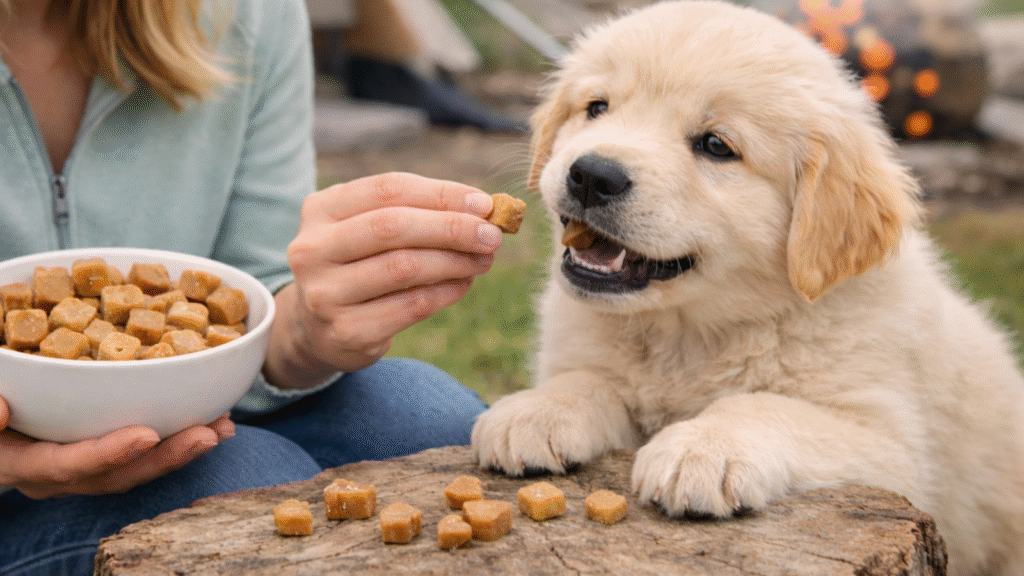
The safest “yak chew” choice at this age is usually a puffed/softened piece rather than a rock-hard bar, because it reduces tooth and choking risk. Size matters more than most people think: choose a piece that’s too large to fit fully in the mouth and thick enough not to snap into sharp chunks. Look for minimal-ingredient labels and packaging that show clear batch/lot details and traceability, since consistency is key for young puppies.
Best Yak Chew at This Age
- Puffed yak chews are the superior format for puppies 8 to 16 weeks old. The puffing process, microwaving a small end-piece until it expands, transforms a hard, dense bar into a light, airy chew that crumbles under moderate pressure. This format satisfies the chewing drive without putting stress on fragile milk teeth.
- Standard hard yak bars, which are the most widely sold format, register hardness comparable to a dried bone. The thumbnail test makes this clear: press your thumbnail firmly into the surface. A safe puppy chew leaves an indent. A standard yak bar does not. This single test eliminates most of the guesswork around hardness decisions. For a deeper look at how yak chews compare in hardness across age groups, see the full guide on “Are yak chews too hard for dogs?”
- Softened pieces are a second valid option. Boiling or soaking a piece of yak chew in warm water for 5 to 10 minutes softens the outer layer enough for young teeth to work through it safely. The downside is that this format is messier and requires preparation. Puffed nuggets are the cleaner, easier, and more consistent choice at this age.
Size-by-Weight Table: Choosing Thickness and Length to Reduce Choking Risk
Chew size relative to puppy body weight is the most overlooked safety variable for owners of 8-week-old dogs. The table below offers a practical starting guide.
| Puppy Weight | Recommended Chew Size | Maximum Thickness |
| 1 to 3 kg (2 to 6 lbs) | XS puffed nugget | 1.5 cm (0.6 inches) |
| 3 to 6 kg (6 to 13 lbs) | S puffed nugget | 2 cm (0.8 inches) |
| 6 to 10 kg (13 to 22 lbs) | S to M puffed bar | 2.5 cm (1 inch) |
A chew that fits entirely inside the puppy’s mouth is a choking hazard. The chew piece must be too large to swallow whole. A piece wider than the gap between the puppy’s back molars is the correct starting size.
Ingredient Label Checklist: What “Clean” Looks Like (and What Shouldn’t Be There)
A clean yak chew contains exactly 4 ingredients: yak milk, cow milk, salt, and lime juice. Nothing else belongs on the label. This traditional Himalayan recipe has been used for centuries and requires no additives, preservatives, or artificial binders to produce a shelf-stable product.
Red flags on a yak chew label include: artificial colors or flavorings, added sugars, propylene glycol (a common preservative), wheat or corn fillers, and unnamed “natural flavors.” The presence of any of these signals a product has moved away from the authentic formulation and likely toward one that cuts costs at the expense of quality.
Moisture content matters too. A well-made yak chew has a moisture content below 12% by weight, which accounts for its hardness and long shelf life. Products above 15% moisture are softer by nature, which is actually beneficial for puppies, but this should be stated on the label, not assumed.
Quality and Sourcing Signals
Trustworthy yak chews carry 4 verifiable quality signals: a batch or lot number, traceability to a named facility, third-party pathogen testing, and sealed tamper-evident packaging.
A batch number means the product can be traced back to a specific production run, critical if a contamination event occurs. Facilities that hold ISO 9001 certification operate documented quality management systems, which reduce the risk of inconsistent production batches. Food and Drug Administration (FDA)-registered facilities meet a baseline of US import safety standards, a meaningful marker for buyers outside Nepal.
At YforYak, a dedicated yak chew manufacturer based in Tokha, Kathmandu, production follows Hazard Analysis and Critical Control Points (HACCP) and DFTQC-compliant processes. Milk sourcing traces back to high-altitude Himalayan yak herders, a supply chain detail that matters for ingredient purity, since high-altitude yaks graze on uncontaminated natural pastures rather than intensive farming setups.
What to Avoid: Yak Chews and Situations That Aren’t Puppy-Safe
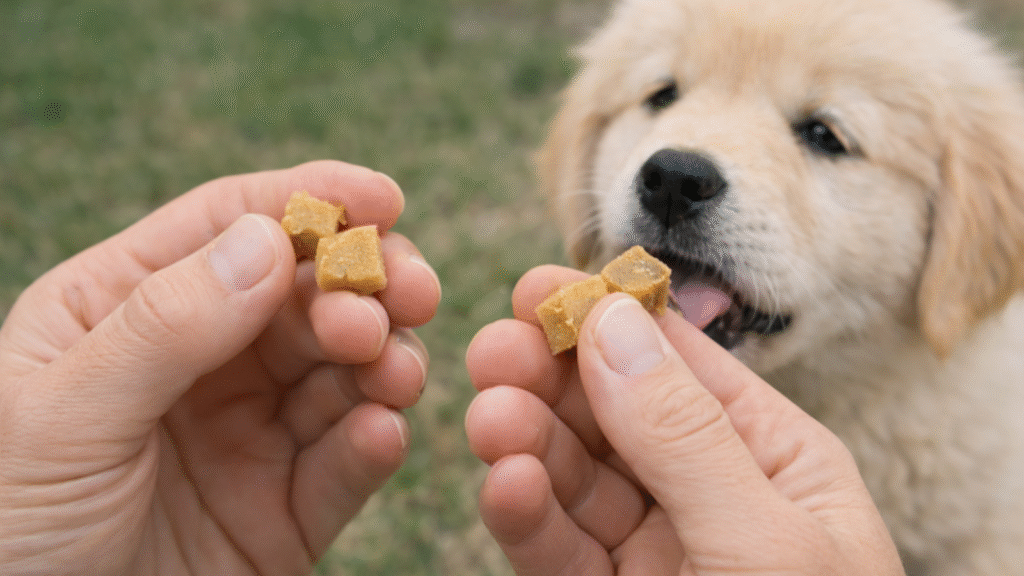
Avoid chews that feel glass-hard or fail the thumbnail test (if you can’t dent it with your nail, it may be too hard for a puppy’s teeth). Skip pieces with cracks, sharp edges, heavy splintering, or lots of powder, because they break into risky shapes. Also, avoid lookalikes like rawhide sticks, antlers, hard nylon bones, and ultra-hard smoked bones, which commonly cause chewing injuries or stomach issues in young pups.
The Thumbnail Test (and Why Teeth Can Crack)
The thumbnail test is the fastest and most reliable hardness check for any dog chew. Press your thumbnail firmly into the surface of the chew for 3 seconds. A safe chew leaves a visible indentation. A chew that leaves no mark is too hard for an 8-week-old puppy, and likely for any puppy under 4 months of age.
Tooth fractures in puppies happen faster than most owners expect. A slab fracture can expose the pulp chamber and lead to infection. According to VCA Animal Hospitals’ AVDC-authored guide to fractured tooth treatments and associated procedures, treatment ranges from vital pulp therapy for recently fractured teeth in younger dogs to root canal or extraction, with extraction often being the least expensive clinical option, underscoring why the thumbnail test is a meaningful prevention step worth taking. Veterinary dental repair on a puppy costs between $300 and $800 USD (approximately £240 to £640 GBP or NPR 40,000 to NPR 106,000) per tooth, depending on severity and location. The thumbnail test takes 3 seconds and prevents this entirely.
Physical Red Flags
Inspect every chew before giving it to a puppy, not just at purchase, but every single session. The 4 physical red flags to discard a chew immediately are: visible cracks along the length of the bar, sharp edges exposed by previous chewing, a glassy or overly polished texture (which signals excessive hardness), and heavy white powdering or splintering during use.
Splintering in yak chews is less common than in antlers or bones, but it does occur in low-moisture, over-dried batches. A chew that produces large jagged pieces rather than small crumbles is a session-ending red flag. Remove it from the puppy without fuss and discard it.
High-Risk Lookalikes to Avoid
The 4 chew types most commonly mistaken for puppy-safe alternatives, but which pose the highest risk, are rawhide sticks, antler chews, hard nylon bones, and smoked or bleached ultra-hard bones.
- Rawhide sticks swell significantly when wet, creating a choking and obstruction risk documented in a peer-reviewed 2024 Today’s Veterinary Practice chew safety analysis documenting rawhide’s obstruction and GI risks, which classifies rawhide risks as including “airway or gastrointestinal obstruction” and flags that the digestibility of rawhide chews “is often unknown or suspected to be poor.”
- Antler chews, especially whole antlers, consistently fail the thumbnail test and are associated with elevated slab fracture risk. A University of Pennsylvania Frontiers in Veterinary Science study on mechanical forces that fracture canine teeth confirmed that the average domestic dog can generate chewing forces sufficient to produce full AVDC-classified fractures, and that up to half of owners never notice when this occurs.
- Hard nylon bones do not digest at all; any piece swallowed passes through or causes obstruction.
- Ultra-hard bones, whether smoked, bleached, or weight-bearing (femur bones), combine extreme hardness with splintering risk.
When Yak Chews Are a Hard “No”: Aggressive Gulpers, Very Tiny Pups, Dental Issues, Unsupervised Time
Yak chews in any format are not appropriate for 4 specific puppy profiles. These are: aggressive gulpers who swallow large pieces rather than chewing them down, puppies under 1 kg (2.2 lbs) body weight, puppies with existing dental abnormalities or jaw malformations, and any puppy left without supervision.
Aggressive gulping is the most common risk factor that owners underestimate. Research published in the 2023 Animals journal study showing long-lasting chews elicit positive emotional states and sustained engagement in dogs confirms that dogs engage most with long-lasting chews, but the same research shows engagement time varies significantly by individual. This means a puppy who finishes a puffed nugget in under 2 minutes requires a different approach, such as puzzle feeders or lick mats.
How to Use Yak Chews Safely
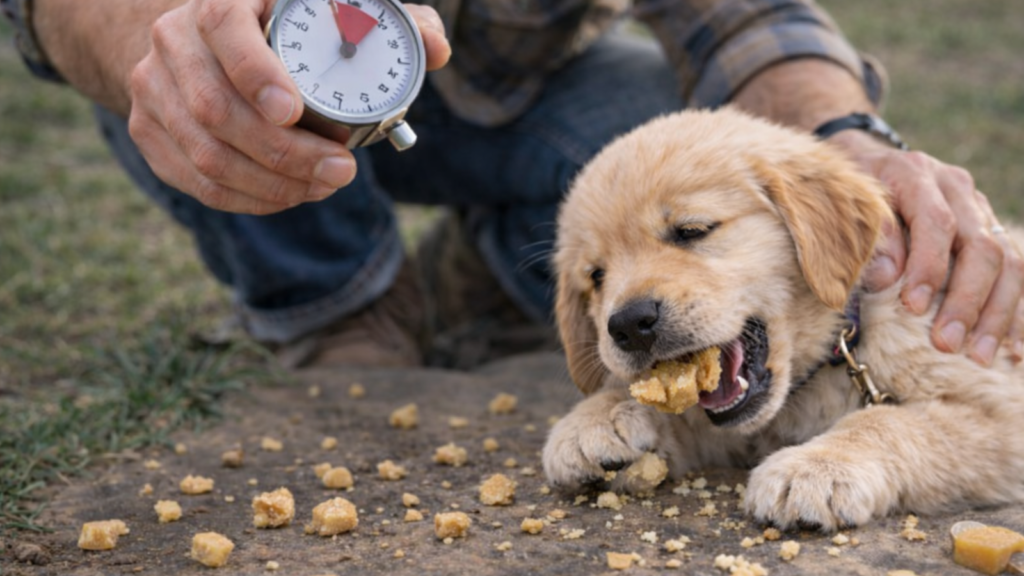
Start with a short trial session (a few minutes) after your puppy has eaten and is calm, and stay close enough to intervene immediately. Use a chew holder or a safe “anchor” method to reduce gulping, and remove the chew before it gets small enough to swallow. If your puppy tries to bite off chunks fast, loses interest quickly, or shows any distress, stop and switch to a softer chew option.
First Introduction Protocol
The first yak chew session sets the behavioral baseline. Follow this 5-step introduction protocol for an 8-week-old puppy.
- Choose a puffed yak nugget sized appropriately for the puppy’s weight using the guide above.
- Offer the chew after a meal, not when the puppy is ravenously hungry, since hunger increases gulping.
- Sit within arm’s reach for the entire first session. Do not leave the room.
- Set a 5-minute time limit for the first 3 sessions.
- End the session by swapping the chew for a high-value treat using the “drop it” cue.
A session that looks “okay” includes: the puppy chewing steadily on one end, producing small crumbles, pausing occasionally to reposition the chew, and showing calm focus. A session that needs immediate intervention includes rapid chewing and swallowing, gagging, excessive drooling, or the puppy attempting to guard the chew aggressively.
Supervision Rules
Supervision is non-negotiable for puppies under 16 weeks, no exceptions. The 3 supervision rules for this age group are: firstly, never leave the puppy alone with any chew, regardless of format; secondly, limit sessions to 10 to 15 minutes maximum; thirdly, remove the chew the moment the puppy loses calm focus or the piece becomes small enough to swallow whole.
Session frequency for 8 to 12-week-old puppies is 1 session per day at most. The digestive system at this age is still maturing, and even the cleanest natural chew introduces an additional protein load. Daily rotation with non-edible chew alternatives reduces this load while still meeting the chewing drive. For guidance on ideal chew frequency across different ages, the article on how often you should give your dog a chew provides a practical framework.
Prevent Choking
The end-piece rule is the single most important choking prevention measure for young puppies. The end piece is the final stub of a chew bar, typically the last 3 to 4 cm (1.2 to 1.6 inches). At this size, it becomes a swallowing hazard. Remove the end piece before it reaches this length. Either discard it or puff it in the microwave to transform it into a safe, airy treat.
Chew holders, rubber or silicone devices designed to grip the end of a chew, are a practical tool for puppies who work down to the end piece quickly. The holder keeps the chew stationary and prevents the puppy from angling it for whole swallowing. Not every puppy tolerates a holder initially, so introduce it in the second or third session rather than the first.
Puffing Safely at Home
Puffing a yak chew end piece at home is a straightforward process with 1 critical safety step: cooling time. Follow these steps.
- Place the end piece on a microwave-safe plate.
- Microwave on full power for 30 to 45 seconds. Larger pieces take up to 60 seconds.
- The piece expands and turns light, porous, and airy; this is correct.
- Allow the puffed piece to cool for a minimum of 5 minutes (300 seconds) before offering it.
- Check the temperature against your wrist before giving it to the puppy.
The most common burn-prevention mistake is offering the puffed piece immediately after microwaving. The internal temperature of a freshly puffed chew exceeds 80°C (176°F). At this temperature, it causes oral burns in seconds. The 5-minute cooling rule is not optional. For a step-by-step visual walkthrough, the full guide on how to puff yak chews in the microwave covers timing, power levels, and cooling in detail.
Better Alternatives and a Chew Plan for the First Months
For 8–12 weeks, many puppies do better with softer chews designed for puppy teeth and digestion, paired with teething-friendly options like chilled rubber toys. A simple rotation helps: offer one soft chew type, one rubber chew, and one lick/soothe option so your puppy doesn’t overdo any single treat. As teething progresses and your puppy’s chewing style matures, you can reassess whether a harder yak chew makes sense.
Safer Chew Alternatives for 8 to 12 Weeks
The 4 safest chew alternatives for puppies 8 to 12 weeks old are cold, wet washcloths, soft rubber puppy teethers, frozen puppy-safe food toys, and puffed yak nuggets.
Cold, wet washcloths, placed in the freezer for 20 to 30 minutes before use, provide immediate gum relief. The cold reduces inflammation, and the texture satisfies the chewing drive. They cost nothing, carry no choking risk, and are safe for fully unsupervised use. Soft rubber puppy teethers, specifically those designed for the 8 to 16-week age range, give consistent resistance without the risk. Frozen food toys stuffed with plain yogurt, mashed banana, or pureed pumpkin extend engagement for 15 to 20 minutes.
Puffed yak nuggets sit at the top of the edible chew tier for this age because of their clean ingredient list, high digestibility, and manageable hardness. They are the best bridge between “too soft to satisfy” and “too hard to be safe.” For a broader comparison of textures and formats, the guide on the best natural chew toys for puppies covers additional options worth rotating in.
A Simple 4-Week Chew Rotation Plan
A 4-week rotation plan exposes the puppy to different textures, reduces digestive stress from repetition, and builds tolerance for future chew types.
The table below outlines a rotation framework for weeks 8 to 12.
| Day | Chew Type | Duration |
| Monday | Puffed yak nugget (supervised) | 10 minutes |
| Tuesday | Frozen food toy | 15 to 20 minutes |
| Wednesday | Soft rubber teether | Free access |
| Thursday | Puffed yak nugget (supervised) | 10 minutes |
| Friday | Cold wet washcloth | 10 minutes |
| Saturday | Frozen food toy | 15 to 20 minutes |
| Sunday | Rest day, no chews | — |
The rest day matters. It prevents the puppy from developing a possessive attachment to chew sessions and resets the digestive load. Owners who skip rest days report a higher incidence of resource guarding behavior around chews in puppies as young as 10 weeks.
Hygiene and Storage
Proper storage extends chew life and eliminates the bacterial load that builds up on moist chew surfaces. The 3 storage rules are: firstly, store unused chews in a cool, dry location away from direct sunlight; secondly, dry partially used chews on a clean rack for 30 to 60 minutes after each session before storing; thirdly, discard any chew that shows mold, unusual smell, or surface slime.
Mold develops on yak chews when they are stored in sealed plastic bags while still moist. The moisture creates an anaerobic environment that accelerates fungal growth. Use breathable storage, a paper bag, an open container, or a mesh bag, rather than sealed plastic. Chews stored correctly last 3 to 5 years unopened and 4 to 8 weeks after the first use. The complete yak chews storage guide covers container types, humidity control, and signs of spoilage in more detail.
Discard a chew immediately under 3 conditions: visible mold of any color, a sour or fermented odor that differs from the normal mild dairy smell, or significant surface cracking that exposes sharp internal edges.
Training for Safer Chew Time
Teaching “leave it” and “drop it” before introducing chews is the most effective management tool available to puppy owners. These 2 cues give the owner full control over every chew session from day one. A puppy that reliably drops a chew on cue is a puppy that will never become dangerously possessive over chew resources.
The “leave it” cue is trained in 3 stages:
- Firstly, reward the puppy for ignoring a low-value item in the owner’s closed hand;
- Secondly, practice with the item on the floor;
- Thirdly, generalize to chews specifically. The entire process takes 3 to 5 days of 2-minute sessions for most 8-week-old puppies.
Calm chewing routines reduce resource guarding before it starts. Offer chews in a consistent location, a mat or a specific room corner, so the puppy learns that chew time has a place and an end. Approach the puppy calmly during sessions and occasionally offer a high-value treat exchange to prevent guarding. A puppy that expects trades during chew sessions never escalates to growling when approached.
Final Thoughts on Yak Chews and 8-Week-Old Puppies
The core answer is this: standard hard yak bars are not appropriate at 8 weeks, but puffed yak formats with proper supervision are among the cleanest and safest options available at this age. The 4-ingredient formulation, yak milk, cow milk, lime juice, and salt, makes properly sourced Himalayan yak chews one of the most digestible natural chews on the market for developing puppies.
Sourcing matters as much as format. Yak chews from facilities with verifiable ISO 9001 certification, FDA facility registration, HACCP protocols, and traceable batch numbering deliver a consistent product. Nepal-based manufacturers like YforYak, operating from Tokha, Kathmandu, produce authentic Himalayan yak dog chews following traditional methods at scale, supplying pet businesses across more than 20 countries with private-label and bulk export options.
Dog owners who buy from traceable sources, choose the right format for their puppy’s age and weight, supervise every session, and follow the rotation plan above give their puppy the safest possible start with natural chews.
Are yak chews safe for puppies under 3 months?
Yak chews are not fully safe for puppies under 3 months because hard bars can fracture baby teeth and break into swallowable chunks. Softened or puffed pieces reduce risk but still require close supervision. Remove small end pieces early and choose softer puppy chews for aggressive chewers.
At what age can puppies have Yak Chews?
Puppies can have puffed yak chews from 8 weeks, semi-soft yak formats from 12 weeks, and standard hard yak bars from 16 weeks (4 months). Each threshold corresponds to a distinct stage of tooth development: puffed formats suit fragile milk teeth, semi-soft formats suit the active loosening phase, and hard bars suit early adult dentition.
What is the safest yak chew type for an 8-week-old puppy?
The safest yak chew type for an 8-week-old puppy is a puffed or softened piece. Softer texture lowers tooth fracture risk and reduces sharp chunking. Choose a chew larger than your puppy’s mouth and supervise every session. End the session before the chew becomes small.
How do I know if a yak chew is too hard?
A yak chew is too hard if your thumbnail cannot dent it. Hard chews increase tooth fracture risk in young puppies. If the chew feels glassy or makes a loud clacking sound on a surface, replace it. Choose softer puppy chews and consult your vet if unsure.
Can yak chews cause diarrhea or vomiting in puppies?
Yak chews can cause diarrhea or vomiting in puppies, especially during the first exposure. Puppies have sensitive digestion and may react to dairy-based chews or swallowed chunks. Introduce chews in short sessions and limit intake. Stop immediately and contact a vet if vomiting or persistent diarrhea occurs.
How long should I let my puppy chew a yak chew?
Limit an 8-week-old puppy’s yak chew session to 5–10 minutes. Short sessions provide enrichment without excess consumption. Longer chewing increases the risk of swallowing chunks and stomach upset. Supervise continuously and remove the chew while it remains large and safe.
What should I do with the small end piece of a yak chew?
Remove the small end piece before it becomes a swallowable nub. Small pieces sharply increase choking risk. Save end pieces to puff into a softer treat if desired. Stop the session immediately if your puppy attempts to gulp the chew.
Is puffing a yak chew safe for puppies?
Puffing a yak chew increases safety by reducing hardness, but it does not eliminate risk. Always cool the puffed piece completely before serving. Puff only small sections and supervise closely. Discontinue use if the chew breaks into sharp or large chunks.
Are Himalayan chews the same as yak chews?
Himalayan chews and yak chews are often the same style of hardened cheese chew. Manufacturers use the terms interchangeably, but ingredient lists may differ. Some products include additives or varied dairy blends. For puppies, select simple ingredient labels and a consistent texture.
Can I leave my puppy alone with a yak chew?
Do not leave an 8-week-old puppy alone with a yak chew. Unsupervised chewing increases choking and tooth fracture risk. Puppies may swallow chunks or overconsume, leading to stomach upset. Treat yak chews as supervised enrichment, not unattended entertainment.
What are the best alternatives to yak chews for 8-week-old puppies?
The best alternatives to yak chews for 8-week-old puppies are softer puppy chews, rubber teething toys, and lick-based soothing mats. These options reduce tooth fracture risk while satisfying chewing needs. Rotate 2–3 safe options weekly and consult your vet for strong chewers.