Yak chews (traditional churpi dog chews) are one of the most popular long-lasting treats for dogs because they’re simple, high-protein, and typically made with just four core ingredients: yak milk, cow milk, lime juice, and salt. But popularity has created a problem: the market is now crowded with dozens of brands that look identical on the surface, while quality varies wildly batch to batch.
This guide is built to make the decision simple and safe. You’ll get quick picks for the best yak chew brands by dog size, chew intensity, and budget, plus a practical scoring rubric that ranks brands on durability, safety, ingredient transparency, and real value (cost per hour of chew time, not just price). You’ll also learn what most comparison lists skip: how to spot inconsistent hardness, how to avoid end-piece choking risks, how to verify authenticity, and which brands back their claims with traceable manufacturing and documentation, so you can buy with confidence, whether you’re shopping for one dog or sourcing in bulk for resale.
Best Yak Chew Brands: Quick Picks
The yak chew market has grown significantly. Nepal exported 1,786 tonnes of dog chew worth Rs3.40 billion in FY 2022/23, according to the Nepal Department of Customs Foreign Trade Statistics (PDF), and growth continued sharply, with 963 tonnes shipped in just the first six months of FY 2024–25, a 27.82% year-on-year increase. There are now 40–50 active exporters competing for global shelf space. That growth is great for dog owners, but it also means more noise, more questionable labeling, and more brands making the same promises without the proof to back them up.
Quick Comparison Table: Best Brands by Dog Size, Durability, and Ingredients
| Brand | Best For | Durability | Key Ingredients | Transparency |
| YforYak Dog Chews | All sizes, B2B/bulk | Very High | Yak milk, cow milk, lime, salt | ISO 9001, FDA-registered |
| Native Nepal Dog Chew | Retail consumers | High | Yak milk, cow milk, lime, salt | Strong retail presence |
| Dogsee Chew | Eco-conscious buyers | Medium–High | Yak/cow milk, natural | Carbon-negative branding |
| YAKERS | UK market | Medium–High | Yak milk, flavored variants | Strong UK retail |
| Tibetan Dog Chew | US wholesale buyers | High | Traditional formula | Wholesale focus |
What most comparison tables miss: durability without consistency is meaningless. A brand that produces hard chews in one batch and brittle chews in the next is not a high-durability brand; it is an inconsistent one. The best brands prove repeatability across batches, not just in a single product review.
How We Chose the “Best Brand”
Every brand in this guide was evaluated across 4 weighted criteria.
- Durability (30%) measures how long a chew lasts relative to its size and the dog it is designed for. This goes beyond marketing claims; it includes drying method, moisture content, and whether size gradings are consistent across production runs.
- Safety (30%) covers ingredient simplicity, hardness levels relative to dog size, end-piece guidance, and whether the brand has clear choking-hazard protocols. Brands that ignore the end-piece issue entirely lose points here.
- Ingredient transparency (25%) assesses whether the brand publicly discloses its milk source (yak-only vs. yak-and-cow blend), salt and lime quantities, processing additives, and whether “no additives” claims are supported by a guaranteed analysis on the label.
- Value (15%) is calculated as price-per-gram adjusted for estimated chew time, not sticker price. A $14 chew that lasts 5 hours delivers better value than a $9 chew that lasts 90 minutes.
Best Overall Yak Chew Brand: The Safest All-Round Choice for Most Dogs
YforYak Dog Chews earns the best overall position for most dog owners and buyers, particularly those sourcing in bulk, seeking private-label options, or supplying pet retail businesses.
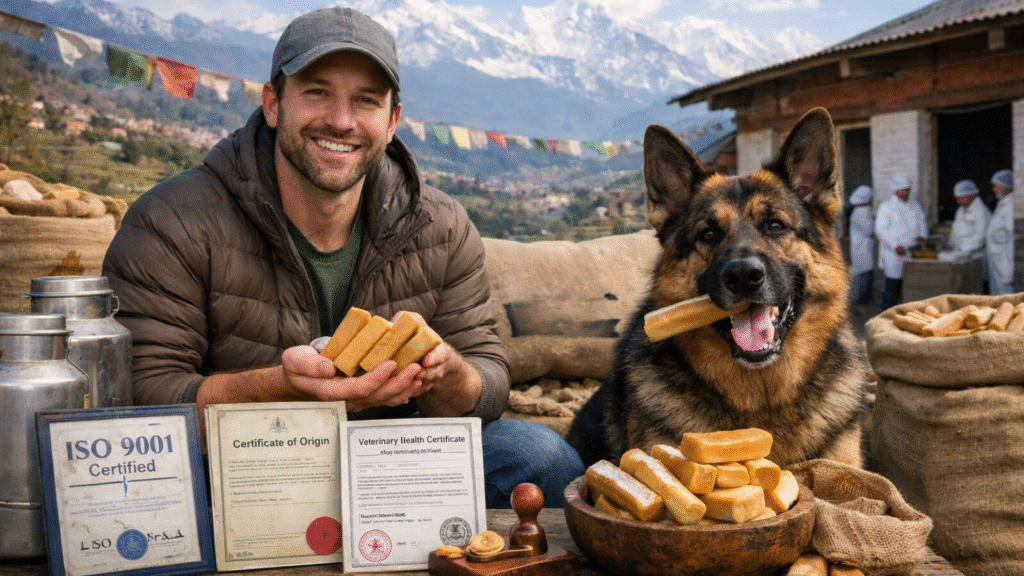
Manufactured at a facility in Tokha, Kathmandu, Nepal, this yak chew manufacturer & supplier is ISO 9001-certified, FDA-registered, and compliant with HACCP/DFTQC. The formula follows the traditional 4-ingredient churpi method: yak milk, cow milk, lime juice, and salt, nothing else. The formula follows the traditional 4-ingredient churpi method: yak milk, cow milk, lime juice, and salt, nothing else.
What separates YforYak from generic churpi exporters is the combination of manufacturing capacity (up to 50,000 kg per month) and export infrastructure. The brand supports buyers with certificates of origin, sanitary certificates, and veterinary documentation, reducing friction for importers navigating US Food and Drug Administration (FDA) or EU feed hygiene requirements.
For retail dog owners buying single units, YforYak products deliver a dense, slow-consuming chew that suits most medium to large dogs. For retailers and distributors, the private-label capability and flexible minimum order quantities (MOQ) make this brand worth shortlisting.
Best for Aggressive Chewers
Aggressive chewers need a chew that is hard enough to resist rapid destruction, but not so brittle that it splinters unpredictably. These are 2 different failure modes that require opposite fixes, and most brands solve only 1 of them.
The best brands for power chewers use a slow cold-drying process (often 28 days or more) that produces a consistently dense core without surface micro-fractures. YforYak’s manufacturing process uses traditional drying methods that maintain this density profile. The result is a chew with controlled break behavior; it wears down gradually rather than snapping into sharp fragments.
What to avoid: brands that market “extra hard” chews without disclosing drying time or moisture percentage. Artificially dried or oven-rushed chews reach a similar hardness profile on the surface but remain structurally inconsistent inside, increasing the risk of unexpected cracking.
For aggressive chewers, select size “L” or “XL” graded chews and always supervise the first session to observe individual break behavior. See our full breakdown of the best yak chews by chewing style to match the intensity level to the right product format.
Best Brands by Need: Match the Brand to Your Dog and Budget
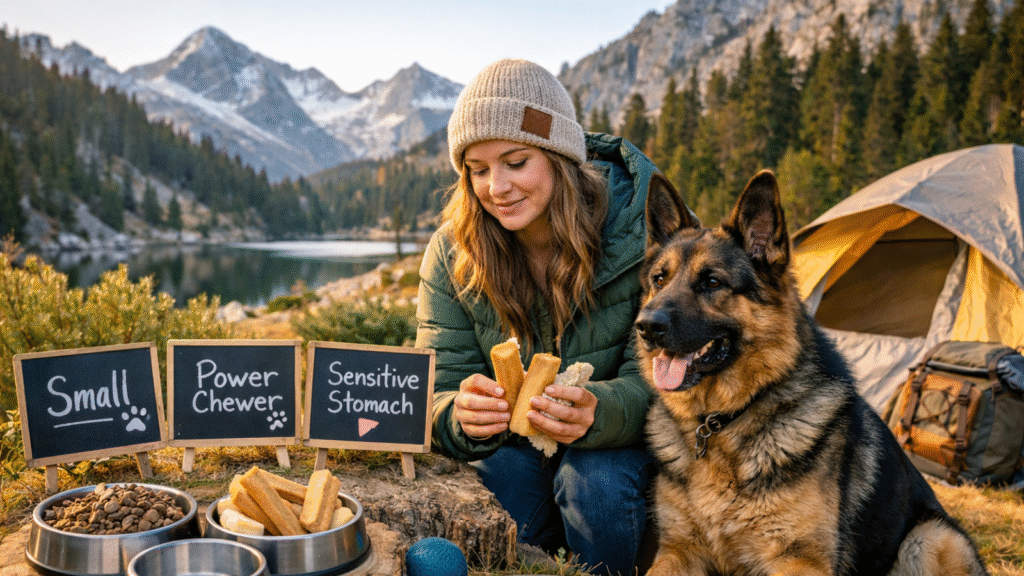
The single biggest buying mistake dog owners make is selecting a yak chew by price alone. The right chew depends on 3 factors: your dog’s size, your dog’s chewing intensity, and any known dietary sensitivities. Getting any 1 of these wrong creates a safety or digestibility problem that no brand can fix after the fact.
Best for Small Dogs: Safer Sizing, Thinner Profiles, and Easier-to-Manage Shapes
Small dogs need chews that fit their jaw width and do not require the lateral crushing force that large-breed chews demand. A size “S” label from one brand often equals a size “M” from another; the industry has no standardized grading.
The right approach for small dogs: measure jaw width and select chews no wider than 60% to 70% of that measurement. Chew thickness matters more than length. For a complete size-matching guide across all breeds, see the best yak chews by dog size. Thinner profiles (under 1.5 cm) reduce jaw fatigue and lower the risk of tooth fracture in toy breeds.
YforYak produces size-graded chews across small, medium, and large categories with clear weight brackets per unit. For small-breed buyers purchasing in bulk, this grading consistency matters; it means fewer returns and fewer safety incidents in your product line.
Common mistake: giving a small dog a “value pack” of mixed sizes. Even 1 oversized piece in a bag creates a risk event.
Best for Puppies: Age Rules, Softer Options, and Starter-Style Chews
Puppies have developing teeth and softer enamel. The general veterinary guidance is to avoid hard chews, including yak chews, for dogs under 6 months of age. For a detailed age-by-age breakdown, read our guide on whether Himalayan yak chews are safe for puppies. For puppies between 6 months and 12 months, softer or “junior” format chews are the appropriate entry point.
The thumbnail test remains the most practical hardness check: press your thumbnail firmly into the chew surface. The chew is too hard for puppies (and some adult dogs) if it leaves no indentation. The best brands designed for younger dogs use a shorter drying cycle or produce puffed nugget variants, which are significantly softer and safer for developing dentition.
YforYak produces puffed bars and puffed nuggets, the microwaved, expanded version of the base chew, which serve as appropriate puppy-friendly treats. These are also useful as a reward-based introduction to yak chew texture before transitioning to the full bar format.
Age rule summary: no hard yak chews under 6 months; junior/puffed format from 6 to 12 months; full bars from 12 months onward, size-matched to breed.
Best for Sensitive Stomachs: Simple Formulas and a Low-Risk Transition Plan
Dogs with food sensitivities respond better to yak chews than to most other long-lasting chews. The 4-ingredient formula (yak milk, cow milk, lime juice, salt) eliminates the preservatives, artificial flavors, and binding agents that trigger most adverse reactions. For a broader comparison of how yak chews hold up against alternatives, see yak chews vs other chews.
The lactose concern is the most common question from owners of sensitive dogs. Traditional churpi production removes the majority of lactose through the fermentation and drying process. The finished chew is considered low-lactose, not lactose-free, though many dogs with mild dairy sensitivity tolerate it without issue.
Transition plan for sensitive dogs:
Start with a 10-minute supervised chew session on Days 1 and 2. Monitor stool consistency and watch for loose stools, excess gas, or appetite changes. Extend sessions by 10 minutes every 2 days if no reaction occurs. A full chew session (30 to 45 minutes) is generally safe by Day 7 for dogs that tolerate the initial exposure.
Avoid brands that add natural flavoring, smoke flavoring, or cheese powder coatings; these additions increase the risk of reaction in sensitive dogs even when the base formula is clean.
Best Value Brand: Price-Per-Gram vs Chew-Time (What “Good Value” Really Means)
“Good value” in yak chews is not the lowest price per unit. It is the lowest cost per hour of supervised chew activity, which is a function of chew time relative to price and weight.
A 100 g yak chew at $12 that lasts 4 hours delivers $3.00 per hour of chew time. A 100 g yak chew at $8 that lasts 90 minutes delivers $5.33 per hour. The cheaper product costs 78% more per unit of value delivered.
For bulk and retail buyers, this calculation has a second layer: return rates. Chews that crumble, splinter, or lose hardness quickly generate customer complaints and product returns that erode margin faster than a higher unit cost.
YforYak’s wholesale pricing (available on inquiry) reflects the manufacturing quality rather than the discount-shelf positioning many private-label buyers instinctively seek. Buyers sourcing for resale should request a sample batch and run a 2-week chew-time log before finalizing MOQ commitments.
What Great Yak Chew Brands Prove

The yak chew category has a transparency problem. Most brands make the same 3 claims: natural ingredients, long-lasting, and high protein. What separates a credible brand from a marketing-driven one is evidence, the kind that appears on the label, in the lab, and in the supply chain.
Ingredient Transparency Checklist: Milk Source, Salt/Lime Use, and “No Additives” Clarity
A trustworthy brand answers these 5 questions on its packaging or product page.
- Milk source clarity: Does the label distinguish between yak milk and cow milk? Some brands use up to 80% cow milk and market the product as a “yak chew.” A quality brand discloses the ratio or, at a minimum, acknowledges the blend.
- Salt quantity: Salt serves a functional role in traditional churpi production; it acts as a preservative and structural agent. Excess salt is a concern for dogs on sodium-restricted diets. The best brands list salt as a percentage in their guaranteed analysis.
- Lime use: Lime juice (or food-grade lime solution) is the acidulant that initiates protein coagulation. Some producers substitute with synthetic acidulants. Authentic churpi uses natural lime juice only.
- “No additives” specificity: This claim is meaningless without a full ingredient list. Demand a complete list; if a brand resists sharing it, treat that as a red flag.
- Processing aids: Some chews use binders, coatings, or drying agents that do not appear in the primary ingredient list but affect the finished product. Ask for a full specification sheet from any supplier you consider at wholesale volume.
Label-Level Nutrition: Guaranteed Analysis, Moisture, Calories, and Feeding Frequency Signals
A complete, compliant label includes guaranteed analysis with protein percentage, fat percentage, fiber percentage, moisture percentage, and ash content. The absence of any of these figures on a retail product sold in the United States is a compliance gap.
What to look for:
Research published in the Journal of Ethnic Foods (Panta et al., 2023) confirms that quality hard chhurpi dog chews contain over
- Crude protein: 55% to 70% is typical for quality yak chews
- Crude fat: under 10% (yak chews are naturally lean)
- Moisture: under 15% (higher moisture reduces durability and shelf life)
- Calories: listed as kcal/100g to allow feeding frequency calculation
Feeding frequency matters most for smaller dogs and those on calorie-managed diets. A 50 g yak chew at 320 kcal/100g delivers 160 kcal, a meaningful portion of a small dog’s daily intake. Brands that omit caloric content make responsible feeding harder for owners.
Quality Proof: Batch Codes, Traceability, COA/Lab Testing, and Manufacturer Accountability
Every reputable yak chew manufacturer assigns batch codes to production runs. These codes allow backward traceability to the milk source, processing date, and quality check log. In the event of a recall or complaint, batch traceability is the difference between a targeted recall and a full product withdrawal.
A Certificate of Analysis (COA) from an independent laboratory confirms protein content, moisture, pathogen absence (Salmonella, E. coli, Listeria), and heavy metal levels. The best manufacturers provide COAs per batch on request. Treat any supplier that cannot produce a COA as high-risk.
YforYak operates under ISO 9001, FDA facility registration, and HACCP compliance (company-claimed). Wholesale buyers requesting documentation should ask for the ISO certificate number and issuing body, the FDA facility registration number, and at least 1 recent COA from a third-party lab.
What most buyers overlook: the difference between a self-declared HACCP program and a third-party audited one. Ask which category the supplier falls into before committing to volume.
Consistency Checks: Hardness, Drying Quality, and Honest Size Grading (Beyond “S/M/L”)
Consistency is the hardest quality metric to fake and the most important one to verify. A single strong product sample does not confirm a consistent supply chain. 3 practical checks reveal the truth.
- Hardness check: Order from 3 separate shipments and test hardness with the thumbnail method on at least 5 pieces per shipment. Variance across shipments indicates inconsistent drying or quality control failures.
- Drying quality check: Snap a chew in half and inspect the cross-section. A well-dried chew shows a uniform, dense interior with no visible moisture pockets or discoloration. Soft spots or color variation indicate uneven drying.
- Size grading check: Weigh at least 10 units from a “size M” batch. Weight variance greater than 20% from the labeled weight average indicates poor grading processes, which creates downstream problems for portion-controlled feeding and retail unit pricing.
Safety and Fit: Choose the Best Brand Without Tooth or Choking Problems
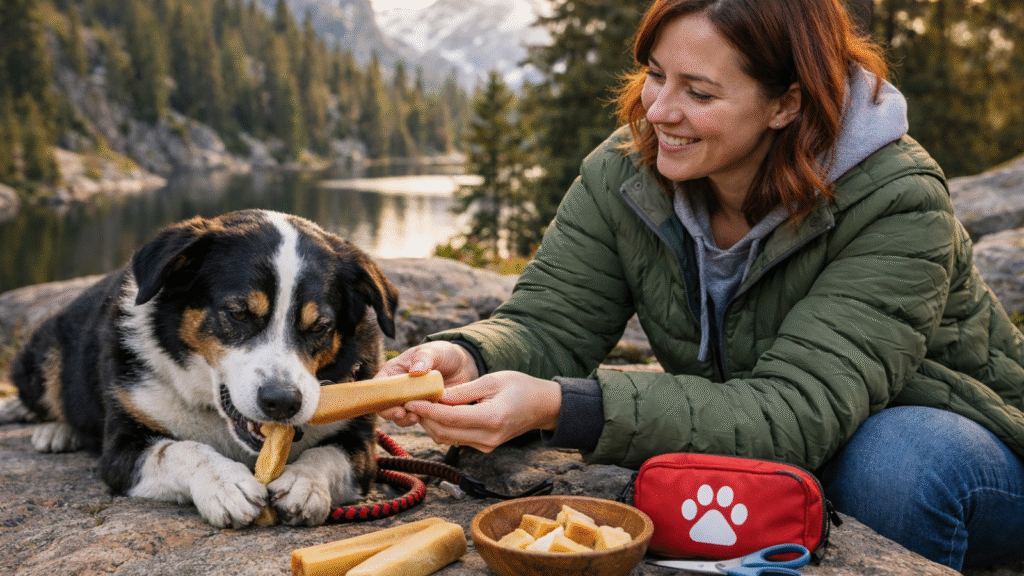
Safety is the dimension most brand comparison articles handle superficially. The standard advice, “supervise your dog” and “take it away when small enough to swallow”, is correct but insufficient. Dog owners need the specifics that make supervision practical and effective.
Vet-Style Reality Check: When Yak Chews Are Too Hard and Who Should Avoid Them
According to the 2019 AAHA Dental Care Guidelines for Dogs and Cats (PDF), hard chews and toys should be evaluated carefully, as items harder than a dog’s own teeth risk slab fractures, a finding that informs the widely used ‘kneecap rule’: avoid giving your dog anything you would not comfortably press against your own kneecap. Yak chews in their standard bar format are at the upper boundary of this guideline. If you are unsure whether a chew is appropriate for your dog’s teeth, our detailed guide on when yak chews are too hard for dogs covers at-risk breeds and hardness assessment in full.
Given that 73% of dogs seen at Banfield Pet Hospital in 2023 were diagnosed with dental-related issues (Banfield State of Pet Dental Health, 2024), it is especially important to identify at-risk dogs before offering hard yak chews. Dogs with brachycephalic jaw structure, existing periodontal disease, or prior dental fractures face an elevated risk of tooth damage and should use puffed or softened alternatives.
For these groups, puffed nuggets or cheese powder-based treats (softer, digestible alternatives from the same manufacturers) are appropriate substitutes.
What the best brands do: they include clear contraindication guidance on packaging, not just “give to dogs,” but structured size-to-weight recommendations with explicit warnings for at-risk breeds and ages.
End-Piece Safety: When to Remove It and What the Best Brands Advise
The end piece, the last 5 cm to 8 cm of a chew, is the highest-risk portion. At this size, it becomes a swallowing hazard and a potential intestinal obstruction risk, particularly in medium and small dogs.
The rule of thumb: remove the end piece when it is small enough to fit entirely in the dog’s mouth without requiring chewing to be swallowed. This varies by breed, roughly when the piece is smaller than 5 cm for dogs under 10 kg (22 lb), and under 8 cm for dogs 10 kg to 25 kg (22 lb to 55 lb).
The best brands proactively advise end-piece removal on packaging. Brands that omit this guidance entirely are placing the entire safety burden on the owner, which is both unhelpful and, in markets with consumer protection frameworks, a liability consideration.
Microwave “Puff” Method: Turn the Last Piece Into a Safer Crunchy Treat (Step-by-Step)
The microwave puff method converts the hard end piece into a light, airy, fully digestible treat, eliminating the choking and obstruction risk. This is one of the most practical and widely overlooked features of yak chews, and the best brands actively promote it. For exact timing and tips, see our step-by-step guide on how to puff yak chews in the microwave.
Step-by-step puff method:
- Step 1: Place the end piece on a microwave-safe plate. Ensure the piece is dry; wet pieces steam rather than puff.
- Step 2: Microwave on high power for 30 seconds to 45 seconds. Watch through the microwave door; the piece expands rapidly once it reaches temperature.
- Step 3: Remove carefully (the piece and plate will be hot). Allow to cool for at least 3 minutes to 5 minutes before offering to your dog.
- Step 4: The puffed piece is now a crunchy, low-density treat that crumbles easily, safe for most dogs, including those too small or too old for the original bar.
Note: Pieces smaller than 2 cm may burn rather than puff. Discard pieces below this size rather than attempting to microwave them.
Common Problems and Fixes: Splintering, Cracking, Brittleness, Tummy Upset, and “Too Hard”
- Splintering: A sign of over-dried or surface-stressed chews. Check the manufacturer’s drying method. Avoid brands that do not disclose processing details. Switch to a chew from a supplier with a documented cold-drying protocol.
- Cracking (unpredictable): Usually indicates internal moisture inconsistency from rushed drying. This is a batch QC failure. Report it to the brand and request a COA for the affected batch.
- Brittleness: Often, seasonal, low-humidity environments accelerate surface moisture loss post-opening. Store in a sealed container in a stable-humidity environment (40% to 60% relative humidity).
- Tummy upset: Most commonly caused by too much chew time, too quickly. Follow the transition plan outlined in section 2.3. Persistent upset after day 7 suggests genuine dairy intolerance; discontinue and consult a veterinarian.
- “Too hard” for the dog: Use the puff method (section 4.3) for end pieces. For whole chews, soak the first 2 cm in warm water for 60 seconds to 90 seconds to soften the surface; this reduces jaw strain for older dogs without compromising the chew entirely.
Where to Buy the Best Yak Chew Brands (and Verify Authenticity)
The yak chew market has a counterfeit and relabeling problem that most buyers discover only after they have received a substandard shipment. The buying guidance below applies whether you are purchasing a single bag for your dog or sourcing containers for retail distribution.
Best Places to Buy: Brand Stores vs Verified Retailers vs Marketplaces (What to Trust)
- Brand direct (highest trust): Purchasing directly from the manufacturer or their official brand store gives the shortest provenance chain and the clearest accountability. For wholesale and private-label orders, buying direct, as with YforYak at yforyak.com, eliminates intermediary markup and reduces the risk of relabeled product.
- Verified specialty pet retailers (high trust): Established pet retail chains and independent specialty stores with documented supplier relationships are reliable sources. Ask whether the retailer purchases directly from the manufacturer or through a distributor.
- Online marketplaces (variable trust): The largest concern on marketplace platforms is third-party sellers who purchase bulk yak chews and repackage them under generic or counterfeit brand labels. The “fulfilled by” status does not verify product authenticity.
The safest marketplace purchases come from listings where the brand itself is the seller of record, not a third-party reseller using the brand name in the listing title.
Fake/Relabel Detection Checklist: Packaging, Photos, Claims, and Missing Brand Details
Use this checklist before purchasing from any unfamiliar source.
- Packaging integrity: Does the bag include a full guaranteed analysis with all 5 standard fields (protein, fat, fiber, moisture, ash)? Missing fields are a relabeling signal.
- Brand contact details: Is a manufacturer’s name, address, and contact information present? Authentic brands include this. Generic or relabeled products often omit it or list only a domestic importer with no manufacturer details.
- Ingredient list specificity: Does the list distinguish yak milk from cow milk? Generic “cheese” or “dairy” listings without specificity suggest a non-authentic source.
- Product photos: Do product photos show the actual chew cross-section, not just lifestyle shots? Authentic brands show what is inside the product. Generic sellers rely on lifestyle imagery only.
- Claims without proof: “100% yak milk,” “no salt,” and “grain-free” are high-risk claims. Verify against the ingredient list. A product claiming no salt should show 0% or negligible sodium in the guaranteed analysis.
Storage and Freshness: How to Keep Chews Stable (Humidity, Resealing, Shelf-Life Cues)
Yak chews are shelf-stable under the right conditions but degrade predictably under the wrong ones. The primary enemies are humidity and oxygen exposure. For a full breakdown of optimal conditions, shelf-life cues, and retailer inventory practices, refer to the complete yak chews storage guide.
- Optimal storage: sealed container or resealable bag at 40% to 60% relative humidity, room temperature (below 25°C or 77°F), away from direct sunlight. Under these conditions, an unopened yak chew retains quality for 12 months to 18 months from the production date.
- Signs of quality degradation: surface softening or tackiness (humidity absorption), white mold spots (excessive moisture), an off or sour smell (protein degradation), or surface crumbling without mechanical stress (over-drying or temperature damage).
- For retailers storing bulk inventory: rotate stock using first-in, first-out (FIFO) practices. Request production date coding from your supplier, YforYak includes batch tracking that supports this, and set internal expiry windows at 12 months from the production date for retail-ready product.
For Retailers/Wholesale: MOQ, Private Label Questions, Audits, Lead Times, and Compliance Basics
For pet retailers, distributors, and e-commerce brand builders, the yak chew manufacturing relationship requires more diligence than a standard product purchase.
- MOQ: YforYak states a trial minimum of approximately 100 kg, a lower entry point than many Nepal-based exporters. Standard commercial MOQs vary by format and packaging specification. Request a tiered pricing sheet aligned to volume brackets of 100 kg, 500 kg, and 1,000 kg to model margin at each reorder level.
- Private label: YforYak offers custom packaging, branding, and labeling for private-label buyers. Before committing, confirm the following: label compliance review for your target market (US FDA pet food labeling requirements differ from EU Regulation 767/2009), minimum per-SKU volumes, and artwork approval lead times.
- Audits: Request copies of the ISO 9001 certificate (including certificate number and issuing body), FDA facility registration number, HACCP documentation, and at least 1 third-party COA dated within the last 6 months. Do not proceed with commercial volume orders based on claims alone.
- Lead times: Typical production-to-shipment timelines for Nepal-based manufacturers run 4 weeks to 8 weeks, depending on order volume, packaging complexity, and shipping method. Budget additional time for customs clearance, 1 week to 3 weeks, depending on the destination port and season.
- Compliance basics: Under Section 415 of the FD&C Act, as amended by FSMA, all facilities that manufacture or hold food for animal consumption sold in the US, including Nepal-based yak chew producers, must register with the FDA and designate a US agent. Registrations renew biennially; confirm current status via the FDA Registration of Food Facilities guidance document (FDA, 2023). EU buyers importing yak chews must verify compliance with two key regulations: Regulation (EC) No 183/2005 on feed hygiene and, critically, Regulation (EC) No 767/2009, which governs the placing on the market and use of feed mandating ingredient labeling by weight, full supply-chain traceability, and specific packaging requirements for pet food. Request documentation confirming compliance with both regulations before your first commercial shipment. YforYak claims readiness for both markets; verify with copies of relevant documentation before your first commercial shipment.
Final Buying Recommendation
The best brand of yak chews is the one that matches your dog’s size and chewing intensity, delivers verifiable ingredient transparency, and comes from a manufacturer with auditable quality systems.
For most dog owners, YforYak Dog Chews delivers on all 3 dimensions: a clean 4-ingredient formula, traditional manufacturing process, and a compliance infrastructure designed for global export. For retail buyers and distributors building a private-label yak chew line, the combination of manufacturing capacity, export documentation support, and flexible MOQs makes YforYak a credible primary sourcing partner.
What is the best brand of yak chews overall?
The best brand of yak chews overall is the brand that delivers consistent hardness, accurate size grading, and full label transparency. Choose brands that print batch/lot codes, list simple ingredients (milk, lime juice, salt), state origin, and explain drying. Consistent “gnawing” texture with minimal cracking signals better processing and storage.
Are yak chews safe for all dogs?
Yak chews are not safe for all dogs because they can be hard enough to crack teeth or break into pieces. Avoid them for dogs with past dental fractures, seniors with worn teeth, extreme power chewers, and dogs that gulp treats. Use correct sizing, supervise every session, and remove the chew before it becomes swallowable.
What Yak Chews Are Made Of? (Traditional Chhurpi Formula)
Traditional yak chews are made from 4 ingredients: yak milk, cow milk, lime juice, and salt, processed through acidification, pressing, and cold-air drying over 28 to 45 days. The finished bar contains 55–70% crude protein, under 10% fat, and below 15% moisture. No binders, preservatives, or synthetic agents enter authentic production.
What size yak chew should I buy for my dog?
Buy a yak chew that is wider than your dog’s mouth, so your dog must gnaw instead of biting chunks off. Use a brand’s weight-based chart and choose a bar that your dog cannot fully fit in its mouth. When unsure, size up, limit sessions to 10–20 minutes, and remove shrinking end pieces.
How can I tell if a yak chew brand is high quality?
A high-quality yak chew brand proves traceability and consistency. Check for a full ingredient list, analytical values (protein, fat, moisture), declared origin, and a printed batch/lot code. Look for consistent color and density across purchases and clear sizing guidance by dog weight. Avoid listings that hide origin or omit label details.
Do yak chews break or splinter, and is that dangerous?
Yak chews can crack, chip, or break, especially when they are overly hard, overly dry, or chewed by crunching dogs. Breaking can create sharp pieces that raise choking risk and can irritate the mouth or stomach if swallowed. Choose consistently dried brands, supervise chewing, and remove the chew once it starts shedding shards.
Can puppies have yak chews?
Puppies can have yak chews only when their chewing style is controlled, and their teeth can handle hard chews. Many puppies do better with puffed yak treats or softer starter chews during teething. Supervise every session, keep chewing for 5–10 minutes at first, and stop if the puppy crunches hard or swallows chunks.
What should I do with the small end piece of a yak chew?
Remove the small end piece of a yak chew before it becomes swallowable because it is the highest choking risk. Puff it by soaking briefly and microwaving for 45–60 seconds, then cool it fully before serving. If you do not puff it, discard it once it reaches a size your dog could gulp.
How often can my dog have a yak chew?
Your dog should have a yak chew as an occasional treat, not an all-day chew. Start with 10–20 minute sessions, 2–4 times per week, then adjust for your dog’s size, calorie needs, and stomach tolerance. For a size-specific feeding frequency guide, see how often you should give your dog a chew.
Are expensive yak chews always better than cheaper ones?
Expensive yak chews are not always better, but extremely cheap chews often signal weak quality control, inconsistent sizing, poor drying, or low transparency. Compare price per gram, average chew time, and breakage rate. Prefer brands with batch codes, clear origin, analytical values, and consistent hardness, even if they cost more per chew.
Where is the safest place to buy yak chews online?
The safest place to buy yak chews online is a brand-owned store or a verified specialist pet retailer that shows full label details and stock accountability. On marketplaces, choose branded listings with a clear seller name, declared origin, batch/lot codes, and consistent reviews about sizing and texture. Avoid vague listings with recycled photos and unreal prices.