
The best Himalayan yak chews are selected by dog weight, jaw strength, age, and chew style, not by brand popularity alone. This section ranks top options for small dogs (under 10 lb), medium dogs (20–50 lb), large power chewers, puppies over 16 weeks, and senior dogs, using measurable criteria such as bar weight in grams, cross-section thickness, moisture range (10–15%), and controlled crumble break behavior.
Each recommendation reflects how a properly manufactured Himalayan cheese bar performs under pressure: even density, gradual wear, no sharp splintering, and predictable session length (15–60 minutes depending on size). A complete buyer checklist follows, covering ingredient purity, texture type (classic hard, softer blend, puffed), sodium considerations, and end-piece removal rules. Retail and wholesale buyers will also find grading standards, batch tolerances, and COA expectations for a consistent import-ready supply.
What are the best Himalayan Yak Chews Made Of?
Himalayan yak chews contain 4 ingredients: yak milk, cow milk, lime juice, and salt, processed through acidification, pressing, and cold-air drying over 28 to 45 days. Every ingredient performs a specific structural or preservation function. No binding agent, preservative, flavoring, or coating agent belongs in an authentic formula.
Best Himalayan Yak Chews: Quick Picks (By Size, Age, and Chew Style)
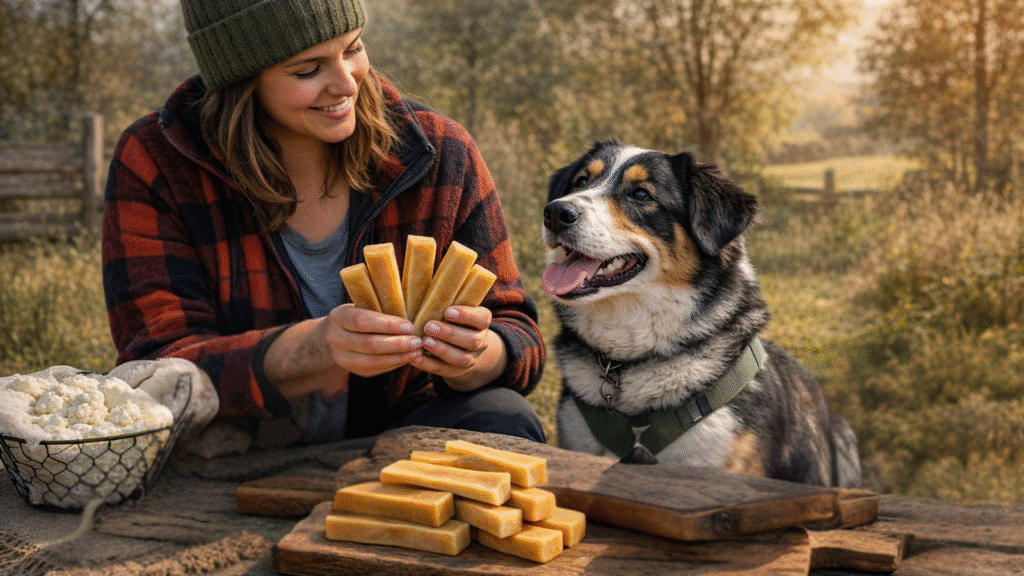
Himalayan yak chews are one of the fastest-growing segments in the natural dog treat market, now valued at USD 6.99 billion globally and projected to reach USD 14.03 billion by 2030, according to Grand View Research on the natural dog treats market report, growth driven largely by pet owners seeking ingredient-transparent, single-source protein treats over processed alternatives. Made from just 4 clean ingredients: yak milk, cow milk, lime juice, and salt, yak chews deliver a high-protein chewing experience without the risks associated with processed treats. By contrast, the FDA has documented 68 illness reports and approximately 15 dog deaths linked to commercially processed bone treats [FDA adverse event report on processed bone and rawhide-category treats], citing gastrointestinal obstruction and choking as the primary hazards. The challenge is knowing which chew is right for your dog, how to use it safely, and what separates a genuinely authentic product from a cheaply processed imitation.
How We Chose These Picks (Safety and Quality Criteria, and Who Should Skip Yak Chews)
Our picks are based on 4 core criteria: ingredient transparency, texture consistency, appropriate sizing, and verified chew behavior under pressure.
We prioritize chews that use a clean label (no additives, fillers, or artificial preservatives), demonstrate batch-to-batch consistency in hardness, and are manufactured under hygienic, tested conditions. At YforYak Dog Chews, every batch of our Himalayan yak chews goes through microbiological testing, moisture checks, and hardness profiling before it leaves our facility in Tokha, Kathmandu.
Dogs with cracked teeth, dental disease, or a history of tooth fractures are not good candidates for hard chews of any kind. Dogs that are aggressive gulpers, those who swallow large pieces rather than chewing them down, face a higher blockage risk. Puppies under 16 weeks require puffed or softened options, not full hard bars. Dogs on low-sodium veterinary diets need veterinary clearance before introducing any salt-containing chew.
Best Overall Himalayan Yak Chew (Clean Label, Consistent Texture, and Safer Sizing)
The best overall Himalayan yak chew is a medium-grade bar produced from a 4-ingredient formula with no binding agents, tested for moisture content below 15%, and sized for dogs in the 20 to 50 lb (9 to 23 kg) range.
What most brands overlook is texture consistency across a full batch. A chew that is rock-hard at one end and brittle at the other creates unpredictable fracture behavior. The most important thing to look for is even pressing density throughout the bar; this is a direct result of traditional slow-drying rather than fast industrial dehydration.
YforYak produces its original bars using the same pressing-and-drying method used in traditional Himalayan churpi production, giving each bar a firm but predictable chew surface. The result is a chew that wears down gradually rather than shattering, which is the correct safety behavior for a hard chew.
For everyday use, a full-sized medium bar weighing between 70 and 100 grams suits most adult dogs in the 25 to 45 lb (11 to 20 kg) range. Expect a chewing session to last 20 to 45 minutes for a moderate chewer. The bar is appropriate for 3 to 4 supervised sessions per week.
Best for Small Dogs and Gentle Chewers (Safer Shapes and Chew-Holder Friendly)
Small dogs and gentle chewers need a chew that is narrow enough to hold comfortably, short enough to grip safely, and sized so that even aggressive chewing produces manageable piece sizes.
The key mistake people make with small dogs is buying a standard medium bar and assuming size does not matter. A bar that is too thick creates jaw fatigue and causes the dog to press harder than necessary, increasing fracture risk to the chew surface. Small dog bars in the 30 to 50 gram range, with a cross-section width of approximately 1.5 to 2 cm, are far safer.
Chew holders are underused tools. A rubber or silicone chew holder grips the end of the bar so a small dog does not swallow the last piece whole. This step eliminates one of the most common small-dog choking incidents. At YforYak, our small-format bars are dimensioned to fit standard chew holders available in retail.
Best for Puppies, Seniors, and Sensitive Dogs (Puffed/Softer “Starter” Options)
Puffed yak chews, created by microwaving the hardened end piece, are the safest format for puppies over 16 weeks, senior dogs with worn dentition, and dogs in post-dental recovery.
Puppy teeth undergo active replacement from approximately 8 weeks of age, with most dogs completing permanent dentition by 6 months, though timing varies significantly by breed size, as documented in a 2023 study by Ghent University’s Faculty of Veterinary Medicine. Until this process is complete, hard chew bars put unnecessary mechanical stress on developing enamel. A puppy that chews a hard bar risks micro-fractures in developing enamel. Puffed nuggets offer the same chewing satisfaction with approximately 60 to 70% less bite resistance. For age-specific guidance on introducing yak chews to young dogs, see our article on the safest yak chews for puppies by age and chew stage.
Senior dogs often have worn or sensitive teeth. The puffed format gives them the mental enrichment of chewing without loading their molars the way a hard bar does. For dogs with inflammatory bowel disease (IBD) or food sensitivities, the 4-ingredient yak chew formula is one of the safest commercially available chews. It contains no gluten, no artificial flavor enhancers, and the curing process renders it effectively lactose-free.
How to Choose the Right Himalayan Dog Chew (Buyer Checklist)
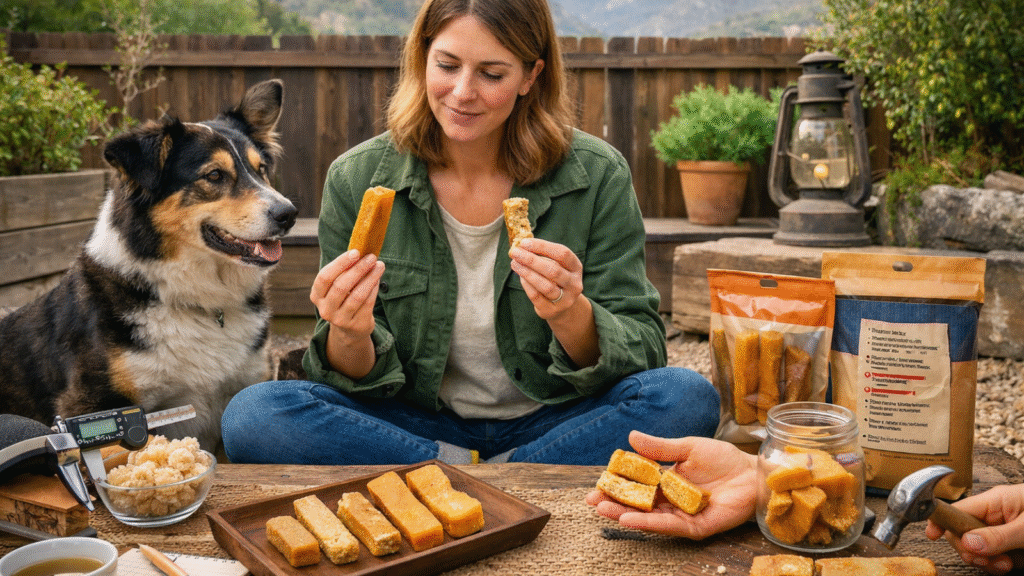
Choosing the right Himalayan dog chew is mostly about dimensions, texture, and label quality, not hype. You’ll learn simple sizing rules (length and thickness matter more than weight alone), how to spot safer textures like puffed or softer starter options, and which ingredient red flags suggest lower quality. We’ll also include quick at-home checks (like hardness and crack inspection) so you can reject risky chews before your dog ever bites down.
Sizing Rules and Quick Sizing Chart (Length, Thickness, Grams: When to Size Up)
The correct Himalayan yak chew size is determined by your dog’s body weight first and jaw strength second, not breed name alone.
| Dog Weight | Recommended Bar Weight | Approx. Bar Length | Chew Time (Moderate) |
| Under 10 lbs (4.5 kg) | 25 to 35 g | 7 to 9 cm | 15 to 25 min |
| 10 to 25 lbs (4.5 to 11 kg) | 35 to 60 g | 9 to 12 cm | 20 to 35 min |
| 25 to 50 lbs (11 to 23 kg) | 60 to 100 g | 12 to 16 cm | 25 to 45 min |
| 50 to 80 lbs (23 to 36 kg) | 100 to 150 g | 16 to 20 cm | 35 to 60 min |
| Over 80 lbs (36+ kg) | 150 g+ | 20 cm+ | 45 to 90 min |
Size up in 2 situations: your dog finishes the correct-weight bar too quickly (under 10 minutes), or the bar is visibly being bitten through rather than chewed down. A dog that bites through rather than gnaws is a power chewer; they require a thicker bar, not necessarily a longer one. For a deeper breakdown by breed and age, see our guide on choosing the right yak chew size for your dog’s breed and age.
Texture Types Explained (Classic Hard vs Softer Blends vs Puffed Yak Chews)
There are 3 primary texture types available in the Himalayan yak chew category: firstly, classic hard-pressed bars; secondly, softer or blended bars; thirdly, puffed bars and nuggets.
- Classic hard-pressed bars are the traditional format. The density and hardness come directly from the pressing pressure applied during production and the length of the drying phase. Bars that are too hard for a dog splinter rather than wear, you see thin white shards rather than rounded crumb fragments. This is a red flag.
- Softer blends incorporate a higher ratio of cow milk to yak milk, which produces a slightly less dense chew. These are not lower quality; they are a different product designed for moderate chewers or older dogs.
- Puffed bars and nuggets are created by briefly microwaving the compressed cheese. The moisture inside vaporizes and expands the structure into a crunchy, airy chew that dissolves more readily. YforYak produces puffed bars and puffed nuggets as separate stock-keeping units (SKUs), not just as a microwave tip for end pieces. If you want step-by-step instructions, our full guide on how to puff yak chews in the microwave covers wattage, timing, and cooling rules in detail.
Ingredient Label Checklist (What “Good” Looks Like and Common Red Flags)
A genuine Himalayan yak chew ingredient label lists 4 items: yak milk, cow milk, lime juice, and salt, nothing else.
The following are red flags on any yak chew label:
- Binding agents (tapioca starch, rice flour, or potato starch) indicate a low-milk-content product padded with filler
- “Natural smoke flavor” listed as a separate ingredient suggests artificial flavoring rather than traditional smoke-drying
- “Himalayan cheese” without species specification leaves the actual milk source unclear.
- Added preservatives (sodium benzoate, potassium sorbate) are unnecessary in a properly dried chew and indicate a moisture problem.
The salt content is often a concern for dog owners. A properly sized 80-gram hard chew contains approximately 100 to 150 mg of sodium, well within the safe daily range for a healthy adult dog. The sodium in yak chews comes from the curing process, not as a flavor additive. Dogs with kidney disease, hypertension, or heart conditions need veterinary guidance before introduction.
At-Home Safety Checks (Thumbnail Hardness Test, Crack Check, and Break-Behavior Cues)
The thumbnail hardness test is the fastest way to check whether a chew is appropriate for your dog: press your thumbnail firmly into the surface of the chew; it must leave a faint mark, not bounce off completely.
Chewing your thumbnail cannot be ignored at all is too hard for most dogs. This level of hardness is typical of antlers or heavily over-dried bars. A chew that sinks in easily is too soft for extended chewing and will be consumed too quickly to provide value.
Run a crack check before every session. Hold the bar at both ends and apply gentle flex pressure. It bends very slightly without cracking; that is correct behavior. It snaps clean with a sharp crack. That bar is brittle and unsafe. Remove it immediately.
Watch the first 5 minutes of any new chewing session. A dog that produces flat, smooth crumble fragments is chewing safely. A dog that produces long, thin shards is biting too aggressively. Remove the chew and size up.
Are Himalayan Yak Chews Safe? Risks, Rules, and Vet-Alert Red Flags
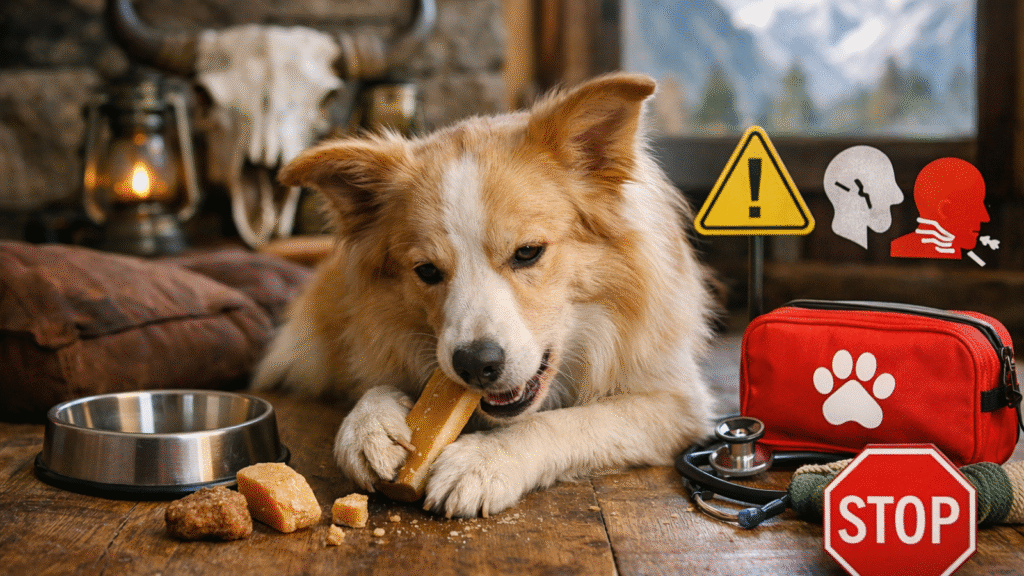
Himalayan yak chews can be safe for many dogs, but they’re still hard chews with real risks: tooth fractures, choking on small pieces, and digestive upset if chunks are swallowed. This section gives the non-negotiable rules: supervise every session, remove end-pieces early, and limit chew time to reduce over-chewing and gulping. You’ll also get clear warning signs for dental injury, choking, and possible blockage, so you know when to stop and call your vet.
Tooth Safety Reality Check (Hardness, Fracture Risk, and the Dogs Most at Risk)
Himalayan yak chews are among the safer hard chews available, but “safer” does not mean risk-free; tooth fractures remain the most serious recurring concern in veterinary dental practice.
Most veterinary dentists apply the ‘thumbnail test’ when evaluating chew hardness for dogs: you should be able to leave a visible indentation in the surface of the chew with your fingernail. If it bounces back completely, the chew is too hard and increases fracture risk, a guideline confirmed by the Cornell University College of Veterinary Medicine. Traditional hard-pressed yak bars sit at the edge of this guideline. The dogs most at risk are, firstly, dogs with pre-existing dental disease; secondly, dogs with narrow or crowded tooth anatomy (common in brachycephalic breeds); thirdly, older dogs with enamel wear. For a full risk assessment by chew type and hardness level, read our dedicated page on whether yak chews are too hard for dogs.
Tooth fractures are more common than most owners realize: peer-reviewed research published in Frontiers in Veterinary Science reports a prevalence of 20–27% in domestic dogs, with the upper fourth premolar identified as the most vulnerable tooth under compressive chewing forces, the same slab fracture pattern most often seen in hard-chew incidents. It is painful, expensive to treat, and entirely preventable with appropriate product selection and supervision. Sourcing from a responsible yak chew manufacturer that controls moisture and hardness at the batch level is one of the most effective ways to reduce this risk before the chew ever reaches your dog.
Choking Prevention (End-Piece Rule, Shard Risk, and When to Remove the Chew)
Remove the chew the moment it becomes small enough to fit entirely inside your dog’s mouth. This is the single most important choking prevention rule for yak chews.
The end-piece rule states: the moment the remaining chew reaches a length equal to the width of your dog’s snout, the chewing session ends. For a Labrador, that means removing anything shorter than approximately 5 to 6 cm. For a Chihuahua, that threshold is reached much earlier.
Shard risk is different from end-piece risk. Shards are thin splinters created by biting at an angle rather than chewing straight down the length of the bar. These are more common in dogs that approach the chew from the side. A chew holder that stabilizes the bar vertically reduces this behavior significantly.
Supervision Setup That Actually Works (Chew Holders, Safe Surfaces, Anti-Gulping Tips)
3 practical tools make supervision more effective:
- Firstly, a rubber chew holder;
- Secondly, a non-slip mat;
- Thirdly, a consistent chewing spot your dog associates with calm behavior.
The non-slip mat prevents the chew from sliding on hard floors, which causes dogs to grip and bite harder rather than chew. The consistent spot creates a chewing routine; dogs that chew in a designated area are easier to monitor and less likely to bolt to a corner with the chew out of sight.
Anti-gulping strategy: the moment you see your dog start to “mouth-carry” the chew (holding it in the side of the mouth rather than chewing), the session ends. This posture precedes swallowing attempts.
Emergency Red Flags (Broken Tooth, Choking, Blockage Signs: What to Do Next)
A broken tooth, choking episode, or suspected blockage following a chewing session requires immediate veterinary attention; do not wait to see if symptoms resolve on their own.
A broken tooth presents as a visible crack, bleeding from the gum line, or sudden reluctance to chew on one side. Choking signs include pawing at the mouth, gagging without vomiting, distress, and blue-tinged gums. Blockage signs appear 2 to 24 hours after ingestion: vomiting, lethargy, loss of appetite, and abdominal pain or bloating.
Keep your veterinary emergency contact accessible during the first 3 to 4 sessions with any new chew format. This is especially important for first-time yak chew users.
What “Real” Himalayan Yak Chew Means (Ingredients, Process, and Quality Signals)

Not all “Himalayan” chews are equal, and the word on the package doesn’t guarantee traditional processing or consistent quality. Here we break down what real yak chews are typically made from, how drying/smoking and moisture levels change hardness and break behavior, and what quality testing looks like in responsible supply chains. You’ll also learn storage and shelf-life basics because even a great chew can become unsafe if it absorbs moisture and grows mold.
What It’s Made From (Milk/Curd and Salt/Acid: What Varies by Brand and Why)
A real Himalayan yak chew is a compressed, dried, hard cheese made from yak milk, cow milk, lime juice, and salt, with no additional ingredients.
The ratio of yak milk to cow milk varies significantly between manufacturers and directly affects the final hardness, flavor, and protein content of the chew. A higher yak milk percentage produces a harder, denser bar with a richer flavor profile. Some budget products use cow milk predominantly with only trace yak milk, technically qualifying for the “Himalayan” label while delivering a meaningfully different product.
At YforYak, the milk is sourced from herder communities in Himalayan regions, maintaining both the traditional origin story and the measurable quality difference that high-altitude yak milk delivers: higher fat and protein density compared to lowland cow milk.
Lime juice acts as the acidulant, causing the milk proteins to curdle. Salt plays a dual role: it assists curing and acts as a mild preservative in the final dried product.
How It’s Made (Pressing and Drying/Smoking) and How That Affects Hardness and Splintering
The production process of a Himalayan yak chew directly determines its hardness, fracture behavior, and shelf stability, and this is where authentic manufacturers differ most from low-cost imitators.
The traditional process involves 3 stages:
- Firstly, the curdling and draining of milk;
- Secondly, the pressing of curds into bar shapes under significant mechanical pressure.
- Thirdly, the slow-drying of pressed bars over days to weeks, sometimes with smoke as part of the drying environment.
Fast industrial dehydration shortens the drying phase from weeks to hours. The result is a bar that is dry on the outside but retains uneven moisture pockets internally. These moisture pockets create fracture planes, areas where the chew cracks rather than wears. This is the manufacturing difference most responsible for unsafe splintering behavior.
Smoke-drying adds a mild flavor characteristic and assists in surface moisture removal. The smoke used in legitimate traditional production is natural wood smoke, not synthetic smoke flavoring added post-production.
Quality and Safety Testing to Look for (Microbes, Mold Risk, Batch Consistency, COAs)
When evaluating a Himalayan yak chew supplier or brand, request a Certificate of Analysis (COA) for each production batch before making a purchasing decision.
A credible COA covers 4 key parameters: firstly, total aerobic plate count; secondly, yeast and mold count; thirdly, moisture percentage; fourthly, absence of specific pathogens (Salmonella, Listeria, E. coli O157:H7). Mold risk is the most common quality failure in improperly dried or stored yak chews, visible as green, white, or black surface growth that develops within 4 to 8 weeks of opening.
YforYak manufactures under ISO 9001 certification, operates from an FDA-registered facility, and follows Hazard Analysis and Critical Control Points (HACCP) and the Department of Food Technology and Quality Control (DFTQC) compliance protocols. Buyers seeking to import for the US or European Union (EU) markets are encouraged to request full documentation at the time of order placement.
Storage and Shelf Life (Humidity Control, Mold Prevention, Packaging Trust Signals)
Store Himalayan yak chews in a cool, dry location with relative humidity below 65%. This is the single most important factor in preventing mold growth during storage.
The typical shelf life of a properly dried and sealed yak chew is 24 to 36 months from the production date. Once the packaging is opened, the shelf life drops to 4 to 6 months in optimal storage conditions. In humid climates, including much of South and Southeast Asia, storage in an airtight container with a silica gel packet extends the safe storage window significantly. Our complete yak chews storage guide covers container types, humidity thresholds, and what to do if surface mold appears.
Packaging trust signals to look for include: a printed batch code, a production date, a best-by date, and clear country-of-origin labeling. Bulk wholesale packaging from reputable manufacturers will include all of these, plus a QA sticker referencing the associated test report.
How to Use Yak Chews Correctly (Step-by-Step for Safer Chewing)
Most yak chew problems come from how they’re used, not what they’re made of: too much time, no supervision, and letting the chew shrink to a dangerous end-piece. This section shows a beginner-friendly ramp-up schedule, safer setups (chew holders, safe surfaces), and the exact moment you should remove a chew. We’ll also explain how to puff the end-piece safely so you reduce choking risk and waste less.
First-Time Schedule (Session Length, Weekly Frequency, and Ramp-Up Rules)
Start every new dog on a 10-minute supervised session, regardless of size, breed, or prior chew experience.
The ramp-up schedule for the first 2 weeks works as follows. During week 1: limit sessions to 10 to 15 minutes, 2 times per week, watching for any loose stool or digestive upset. During week 2: extend sessions to 20 to 30 minutes and increase to 3 times per week. From week 3 onwards: maintain 3 to 4 sessions per week with 20 to 45 minute durations depending on chew size and dog weight.
Digestive sensitivity is common in the first 1 to 2 sessions. This is not a sign of intolerance; it is the gut adjusting to a new high-protein food source. Persistent loose stool beyond 3 sessions warrants discontinuation and a veterinary consult. If you are also deciding how to work chews into your dog’s weekly routine long-term, our guide on how often to give your dog a yak chew covers frequency, calorie balancing, and scheduling by dog size.
When to Pause or Toss (Sharp Edges, Cracking, Small-Piece Threshold, Drool-Soaked Chews)
4 conditions mean the chew session ends immediately: firstly, a visible sharp edge or shard on the surface; secondly, an audible crack during chewing; thirdly, the chew reaching the end-piece size threshold for your dog; fourthly, a heavily saturated, soft end-piece that is disintegrating under chew pressure.
The drool-soaked chew is one of the most overlooked safety points. A chew that has been thoroughly saturated and softened over a long session loses structural integrity. The now-soft material tears rather than crumbles, creating larger pieces that a dog is more likely to swallow whole. Remove the chew after 30 to 45 minutes, even if the chew has not reached the size threshold.
How to Puff the End Piece Safely (Soak, Microwave by Wattage, and Cooling Rules)
The end piece, any remaining chew that is too small to continue chewing safely, transforms into a light, crunchy puffed treat through a simple microwave process.
The correct method involves 3 steps:
- Firstly, soak the end piece in water for 3 to 5 minutes to rehydrate the outer surface.
- Secondly, microwave the piece on high for 45 to 90 seconds, depending on microwave wattage (use 45 seconds for 1000-watt microwaves, 60 to 75 seconds for 700 to 800-watt microwaves).
- Thirdly, allow the puffed treat to cool completely on a flat surface, for a minimum of 3 to 5 minutes, before offering it to your dog.
The piece expands 3 to 5 times in volume during puffing. The internal temperature immediately after microwaving reaches high levels, and burns from premature feeding are a real risk. Always test the surface temperature with your wrist before giving the treat to your dog.
Comparisons, Myths, and the B2B/Wholesale Buying Guide
When yak chews aren’t the right match, comparing them to bully sticks, antlers, rawhide, and dental chews helps you choose based on your real goal: durability, digestibility, odor, or dental risk. We’ll also address common myths, like “fully digestible means no blockage risk,” lactose and salt concerns, and whether smoke-drying is automatically bad, so buyers can decide with confidence. For B2B, we translate quality into specs: size tolerances, batch consistency, COAs, labeling claims, and QA processes that protect brands in global markets.
Yak Chews vs Bully Sticks, Antlers, Rawhide, and Dental Chews (Goal-Based Decision Map)
| Chew Type | Primary Use Case | Hardness Level | Digestibility | Key Risk |
| Himalayan Yak Chew | Long-duration chewing, enrichment | High (hard bar) / Low (puffed) | High | Tooth fracture if too hard |
| Bully Stick | Moderate-duration, high engagement | Low to medium | High | High caloric density, odor |
| Antler (split) | Very long-duration power chewers | Very high | Low | Highest tooth fracture risk |
| Rawhide | Low-cost filler chew | Variable | Low to poor | Choking, digestive obstruction, chemical processing |
| Dental Chew (enzymatic) | Oral hygiene maintenance | Very low | High | Low enrichment value, additives |
The goal-based decision map works as follows. Choose a yak chew for mental enrichment and long-duration chewing in a dog with healthy teeth and a moderate chew style. For a more detailed side-by-side analysis, our article on yak chews vs bully sticks breaks down calorie density, odor, engagement time, and fracture risk across both options. Avoid rawhide for dogs with any history of digestive sensitivity; the chemical processing involved in whitened rawhide production adds no value and introduces unnecessary risk.
Common Myths Answered (Digestibility vs Blockage, Salt/Sodium, Lactose Sensitivity, Smoke-Drying Concerns)
- Himalayan yak chews are highly digestible; they are a cured dairy protein product, not a collagen-based or connective tissue product like rawhide. The fragments produced during chewing break down in the digestive system the way any high-protein food would. Blockage risk is real only in dogs that swallow large pieces without chewing.
- The salt content in a standard serving is safe for healthy adult dogs. A 100-gram yak chew bar contains approximately 120 to 180 mg of sodium. Sodium concerns are often overstated when it comes to yak chews. According to the AAFCO nutrient profiles for adult dog maintenance, the minimum recommended sodium concentration is 0.08% on a dry matter basis, and no maximum sodium level has been established for healthy adult dogs. AAFCO notes that palatability typically declines before sodium reaches harmful levels in most healthy dogs, making moderate sodium levels in natural chews less concerning than many buyers assume. Dogs with kidney disease, hypertension, or cardiac conditions are a genuine exception and require veterinary guidance.
- A dog does not consume the entire bar in one session; actual sodium intake per session is a fraction of the total bar content.
- Lactose sensitivity is not a barrier for most dogs. The curing and drying process breaks down the vast majority of lactose in the milk base. Dogs with documented dairy allergies (a protein allergy, not a lactose issue) are different; these dogs react to casein or whey proteins and need a protein-free alternative.
- Smoke-drying concerns are valid only for artificial smoke flavoring. Traditional slow smoke-drying does not introduce harmful compounds at the levels present in a dog chew. The concern originates from large-scale processed meats, a category with no meaningful comparison to hand-processed yak bars.
Wholesale Spec Checklist (Grades, Size Tolerances, Texture Consistency, Break Behavior Standards)
For buyers sourcing Himalayan yak chews at wholesale volume, a product specification sheet with the following parameters protects quality consistency across every shipment.
Grade definitions vary between manufacturers. At a minimum, request documentation for 5 parameters:
- Firstly, bar weight tolerance (e.g., ±5 grams per stated size);
- Secondly, moisture content (target 10 to 14%, maximum 16%);
- Thirdly, hardness grade (measured on a standardized pressure scale per batch);
- Fourthly, color consistency (golden-brown, no white bloom indicating surface mold);
- fifthly, break behavior standard (crumble or rounded fragments under pressure, no sharp splinter production).
Texture consistency across a shipment is one of the most common pain points for first-time importers. Batch-to-batch variation in hardness is common in small-scale production. YforYak’s production capacity of up to 50,000 kg per month operates with batch-level quality control recording to minimize this variation. Request batch records alongside the physical shipment.
Importer/Private Label Requirements (COA Expectations, Batch Codes, Labeling Claims, QA Agreements, Audits)
Private label and import buyers sourcing Himalayan yak chews for the United States, European Union, or United Kingdom markets need a structured quality assurance (QA) agreement in place before the first production run.
The minimum documentation package for a compliant shipment to the US market includes 5 items:
- Firstly, the COA from an accredited third-party laboratory;
- Secondly, a US Food and Drug Administration (FDA) facility registration number for the manufacturing site;
- Thirdly, the Certificate of Origin (CoO) issued by the relevant Nepalese authority;
- Fourthly, a Veterinary Health Certificate signed by the exporting country’s competent authority;
- Fifthly, ingredient and nutritional information aligned with the labeling format required by the destination country.
Labeling claims requires careful management. Terms such as “lactose-free,” “high protein,” “natural,” and “grain-free” all carry regulatory implications in destination markets. Any claim that appears on retail packaging needs substantiation through laboratory data attached to the QA agreement.
YforYak supports private label buyers through the full export documentation process, including customs paperwork, sanitary certificates, and batch code traceability aligned to our production records. Buyers importing for the US market specifically can refer to our step-by-step guide on how to import Himalayan yak chews into the US for FDA registration requirements, labeling standards, and documentation checklists. Buyers seeking to audit the facility before first order placement are encouraged to contact us directly to schedule a factory visit or request our current certification documentation package.
Are Himalayan yak chews safe for puppies?
Himalayan yak chews are often too hard for puppies under 6 months because their teeth are still developing. Hard chews can increase the risk of cracked baby teeth or gum irritation. Use puffed yak treats or softer starter chews in 5–10-minute supervised sessions. Remove small end pieces to prevent choking.
Can Himalayan yak chews crack a dog’s teeth?
Himalayan yak chews can crack or chip a dog’s teeth, especially in aggressive chewers that bite down with their molars. Extremely hard or overly dry chews increase fracture risk. Use the thumbnail test and avoid rock-hard chews. Stop immediately if you notice bleeding gums, tooth sensitivity, or one-sided chewing.
What size Himalayan dog chew should I buy?
Choose a Himalayan dog chew that is longer than your dog’s mouth width and thick enough that it cannot fit fully between the back teeth. Size by mouth width and chewing strength, not only weight. Power chewers should size up. Use a chew holder to control the final 1–2-inch end piece.
How long should my dog chew a yak chew per session?
Limit yak chew sessions to 5–15 minutes under supervision. Longer sessions increase the risk of swallowed chunks, gum irritation, and tooth wear in hard chewers. Build duration gradually if your dog tolerates it well and drinks water normally afterward. Shorten sessions if your dog chews frantically.
How often can dogs have Himalayan yak chews?
Give Himalayan yak chews 2–3 times per week for most healthy adult dogs. Frequent long sessions increase calorie intake and digestive stress. Monitor stool quality, vomiting, or gas after each chew. Adjust daily food portions to account for chew calories, which can range from 50 to 150 calories per chew.
Are yak chews fully digestible?
Yak chews are more digestible than rawhide because they are made from compressed milk proteins, but they are not risk-free. Large swallowed chunks can cause vomiting, diarrhea, or intestinal blockage. Prevent chunk swallowing through supervision, 5–15 minute sessions, and early removal of small pieces.
What should I do with the yak chew end piece?
Remove the yak chew when the end piece measures about 1–2 inches or fits fully in your dog’s mouth. Puff the end piece into a crunchy treat to reduce choking risk. Soak for 5 minutes, microwave in 30–60 second intervals, and cool completely before serving.
How do I puff a Himalayan yak chew safely?
Puff a Himalayan yak chew by soaking the end piece for 5–10 minutes, then microwaving for 30–90 seconds, depending on wattage. The chew should expand and turn light and crunchy. Cool for at least 5 minutes before serving because the center retains heat. Discard burned or partially puffed pieces.
Why does my yak chew smell, crack, or get moldy?
Yak chews smell or grow mold when exposed to moisture from drool or humid storage. Mold can develop within 3–7 days in damp conditions. Cracking occurs when chews are overly dry or inconsistently cured. Store chews in sealed packaging below 70°F (21°C) and discard any with visible mold or sharp shards.
What should B2B buyers ask a yak chew supplier before ordering?
B2B buyers should request size tolerances, moisture targets (typically 10–14%), and texture grading standards. Require batch coding, Certificates of Analysis, and safety testing documentation. Confirm labeling compliance for your market. Test samples from at least 3 batches to evaluate break behavior and consistency.